Za'atar: Flavor Profile, Health Benefits & Culinary Uses
By the QuiteRecipes team (Jamy & Kaïna)
Za'atar is a tricky word that names both a wild herb and a beloved blend — here is what is really in the jar, and the easiest ways to start using it tomorrow morning.
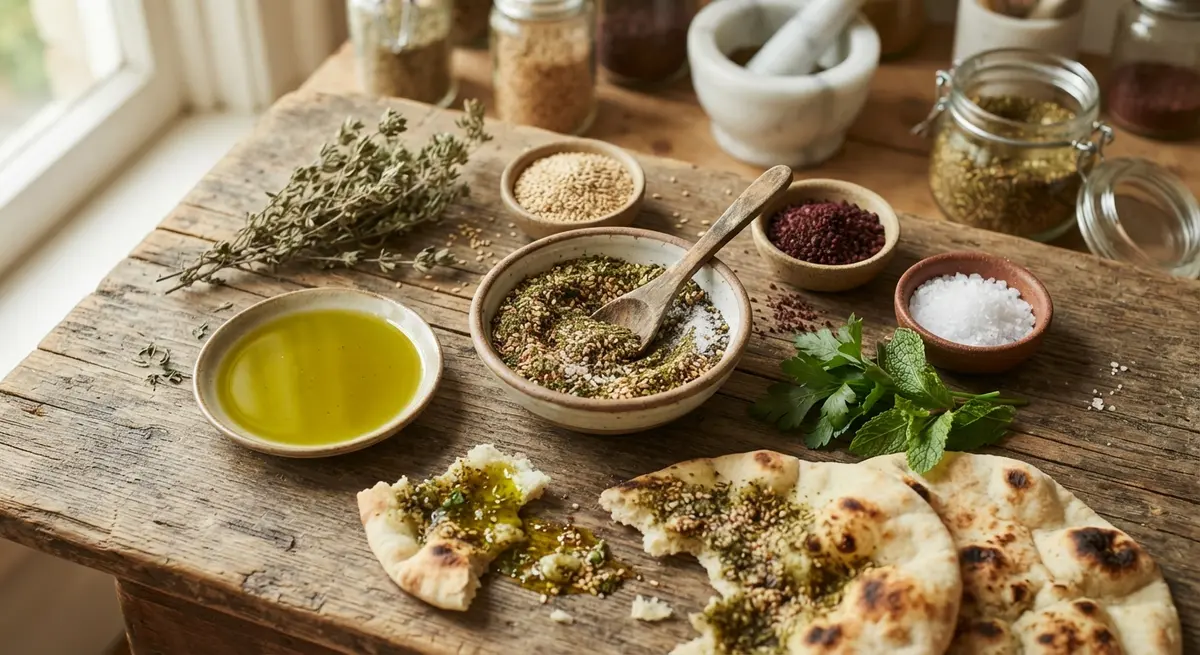
Za'atar is a tricky word, because it names two things at once: the wild herbs of the Middle East's hills and the ground blend made from them. I want to talk about the blend you meet in a jar, because that is the one you will eat on most mornings. It varies from house to house, but the soul is constant — dried oregano or thyme, toasted sesame seeds, sumac sourness, and salt.
When za'atar is good, it tastes like a sunny hillside with someone's grandmother taking charge of the spices. It is savory, sour, nutty, and aromatic all at once, and it is the rare blend that works both sprinkled on top and baked into bread. Buy it dark green, not dusty brown, and give the jar a sniff before you commit.
Flavor Profile & Notes
The dominant note is herbal, built on wild thyme or oregano, with the warm nuttiness of toasted sesame rising underneath. Sumac cuts through both with a lemony sourness, and good salt ties the whole thing together. Blends differ wildly — some heavy on sesame, some nearly all herb, some sharply sour; sesame-heavy jars lean Lebanese, herb-forward ones closer to the Palestinian style. Za'atar is durable in a pan — bake it into dough, sprinkle it on eggs, and it stays friendly; toasting it briefly in oil or butter turns it into a paste.
Health Benefits & Nutrition
Za'atar is mostly herbs, so the nutrients ride on the oregano and thyme family, spiked with the trace minerals of sesame seeds — calcium, magnesium, and zinc among them. The compounds that give thyme its aroma, thymol and carvacrol, are studied for antioxidant and antimicrobial activity. In food terms, za'atar pairs beautifully with olive oil and fats, which is exactly the healthy direction. No miracle here: a teaspoon over olive oil and bread is a fine everyday habit, but it is seasoning, not a supplement.
Best Culinary Pairings
The classic breakfast is flatbread brushed with olive oil, dipped into za'atar, and eaten with tea. Manakish — dough pressed with oil and za'atar, then baked — is the pride of Levantine bakeries and simple to approximate at home. Beyond bread, it shines on labneh and yogurt, over fried eggs, and dusted onto roasted zucchini or eggplant. It finishes grilled chicken, sparkles on tomato and cucumber salad, and a spoonful in rice pilaf makes plain rice taste considered.
Quick Substitutes
Because it is a blend, the honest substitute is a DIY one: two parts dried thyme or oregano, one part toasted sesame, one part ground sumac, salt to taste. In a pinch, sprinkle sumac and dried oregano together — you get the sour-herbal character without the sesame crunch. If a recipe calls for za'atar and you only have dried thyme, add lemon zest and salt and you will land closer than you expect.
FAQ / Quick Facts
- How long does it keep? Six months to a year in a sealed jar; the sesame can turn bitter or rancid faster, so sniff before using.
- What does it taste like? Savory herbs, toasted sesame, and lemony sumac with salt — sour, nutty, aromatic, no heat.
- Botanical family / Form: A blend, not a single plant — Origanum or Thymus herbs, sesame seeds, and Rhus sumac. Use as a sprinkle, a dip, or a baked topping.
Related Articles
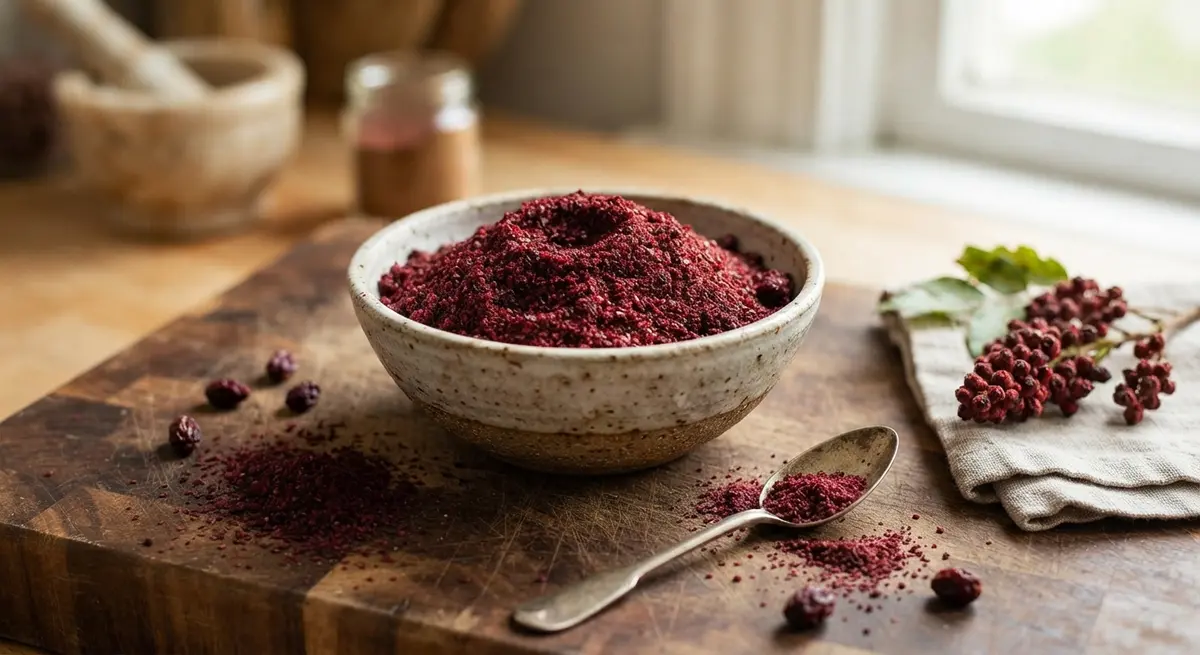
Sumac: Flavor Profile, Health Benefits & Culinary Uses
Why sumac belongs on every Mediterranean and Middle Eastern shelf: the story of the sour red berry, its best partners, and honest substitutes when the jar runs out.
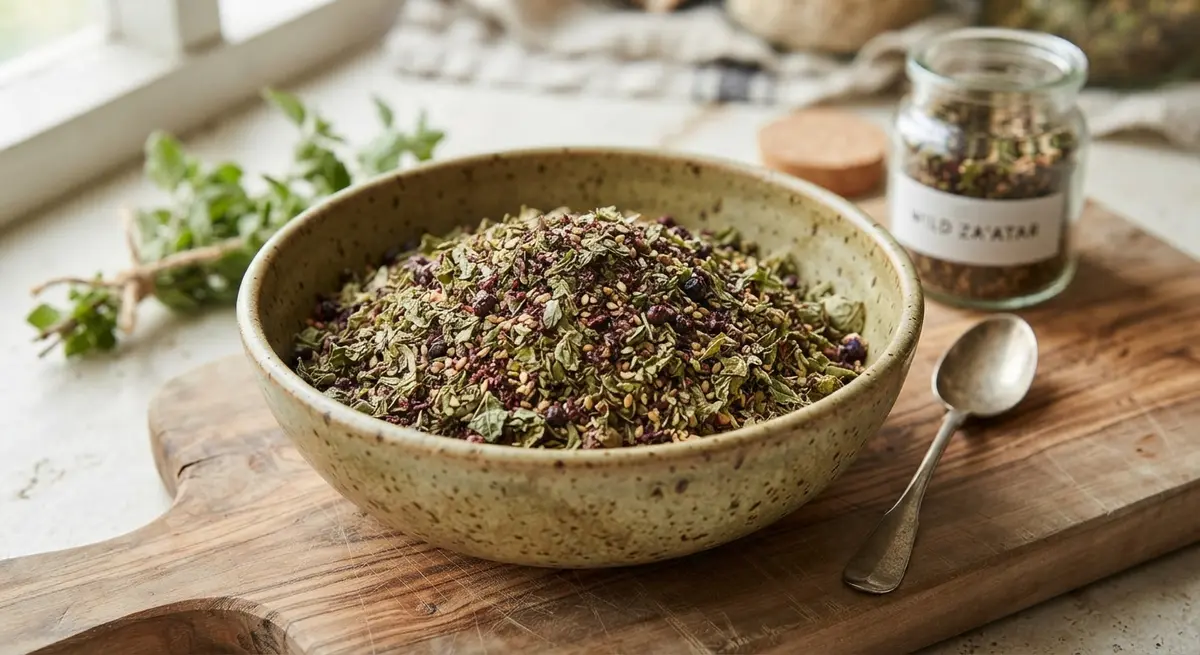
Wild Za'atar: Flavor Profile, Health Benefits & Culinary Uses
Every za'atar jar starts as a wild hillside herb — meet Origanum syriacum, the thyme-like green leaf that gave the famous blend its name and soul.
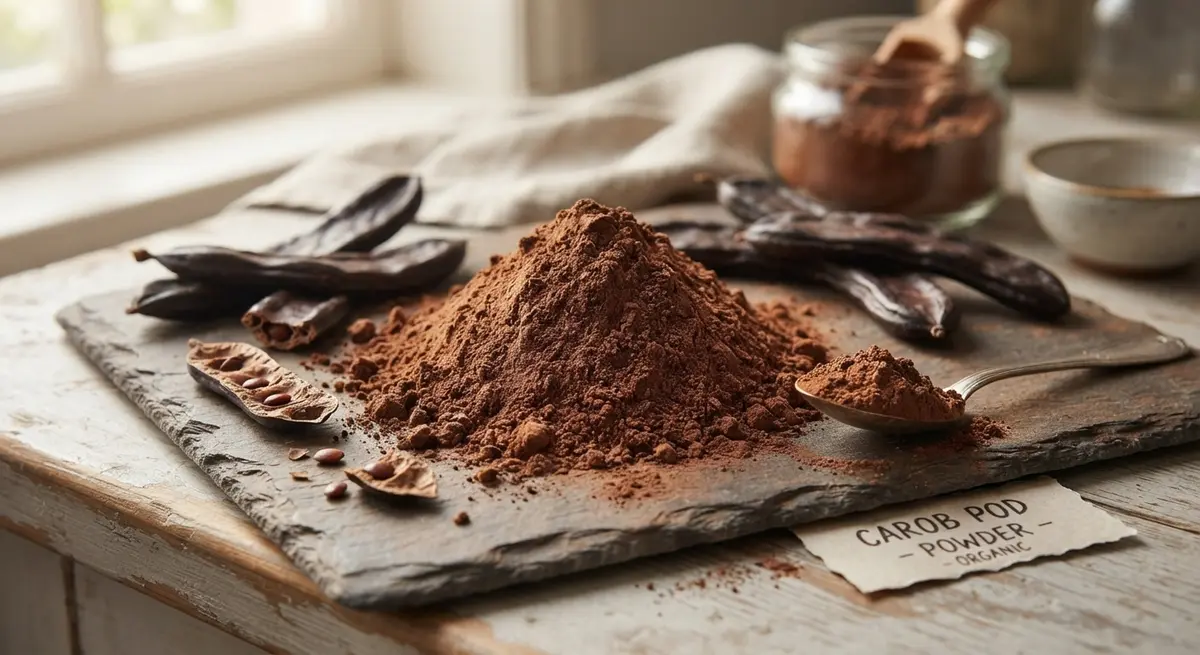
Carob Pod Powder: Flavor Profile, Health Benefits & Culinary Uses
Naturally sweet, caffeine-free carob comes from roasted Mediterranean pods — a toasty, malty brown powder that is not chocolate but deserves a pantry spot anyway.
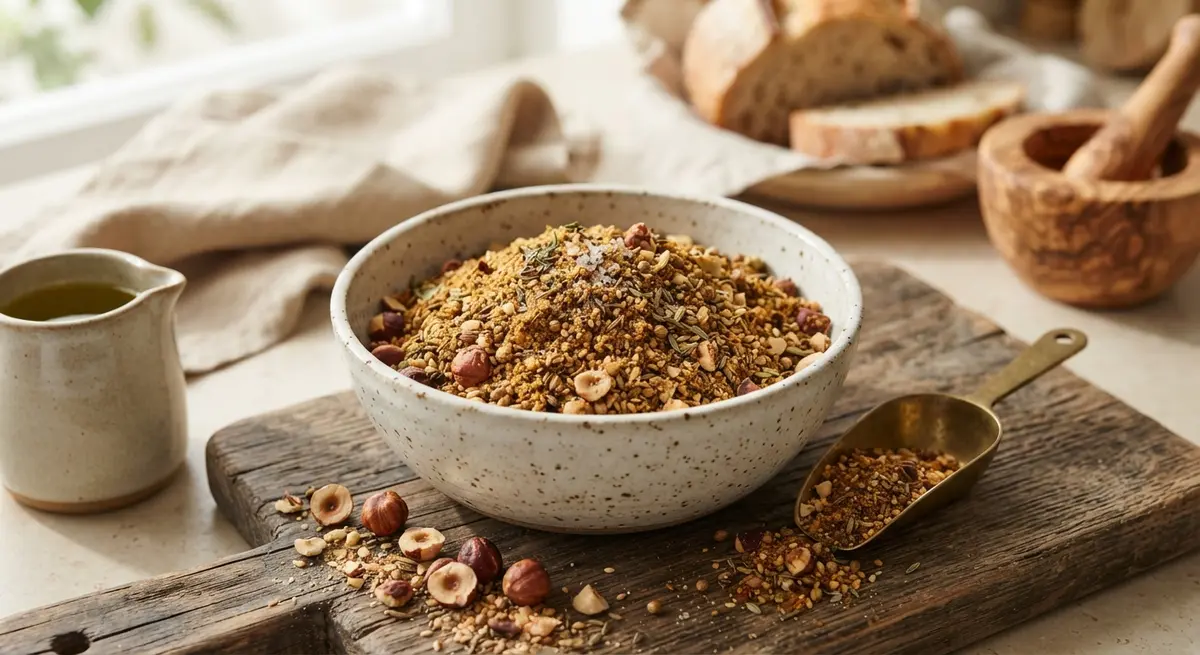
Dukkah: Flavor Profile, Health Benefits & Culinary Uses
An Egyptian dip that conquered snack bowls worldwide: toasted nuts, sesame, coriander, and cumin, crushed into the crumbly garnish made for olive oil and bread.
About the Authors
This recipe and guide was developed, tested, and approved in our home kitchen and daily life. Jamy is a retired Food Service District Manager and Early Childhood Program Manager who spent his career overseeing multi-site restaurant operations, large-scale culinary production, and daycare menu management. Kaïna brings the ultimate real-world test: making sure it brings ease and joy to our kids on a busy weeknight.
Read more about our professional background and philosophy →