Carob Pod Powder: Flavor Profile, Health Benefits & Culinary Uses
By the QuiteRecipes team (Jamy & Kaïna)
Naturally sweet, caffeine-free carob comes from roasted Mediterranean pods — a toasty, malty brown powder that is not chocolate but deserves a pantry spot anyway.
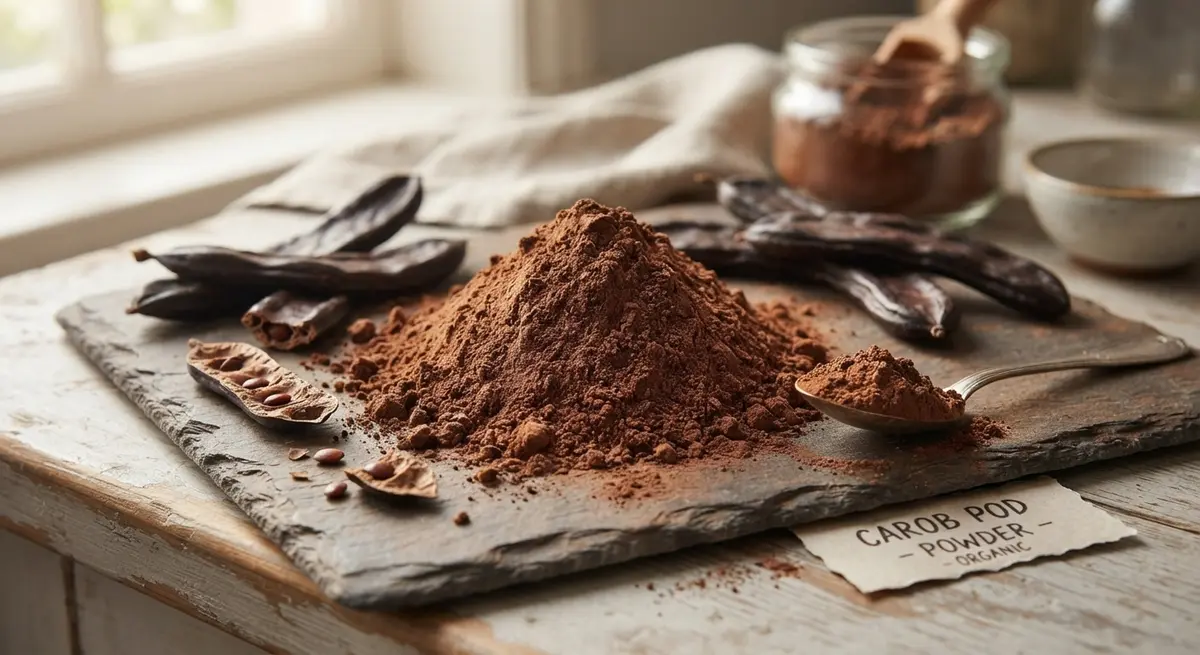
Carob powder is the kid in the chocolate aisle people keep underestimating. It comes from the roasted, ground pods of the carob tree, Ceratonia siliqua, the same tree that yields those glossy leathery pods across the Mediterranean and that some legends say fed John the Baptist in the wilderness.
Roasted carob powder is naturally sweet, naturally caffeine-free, and naturally brown, which is why health-food bakers drafted it as a chocolate stand-in decades ago. It is not chocolate, and pretending it is will only disappoint you. Used for what it is, it is a quietly wonderful thing.
Flavor Profile & Notes
Carob tastes like a sweet, roasted cocoa with the bitterness removed — toasty, malty, faintly caramel, with a fig and date fruit character underneath. It is the scorched sweetness you get from roasted barley or dark treacle. Because it lacks cacao's bitter bite and acids, it behaves differently in the kitchen: it is naturally sweeter, so recipes usually need less sugar, and it is far less sharp against milk and cream. It turns custards and smoothies warm and caramelly. One caution — it goes flat and dusty if you overuse it, so treat it as a nutty brown seasoning, not a chocolate swap spoon for spoon.
Health Benefits & Nutrition
Carob wears the label that makes grocery store nerds happy: no caffeine, high fiber, some calcium, with roughly a third of its weight in natural sugars. The fiber and tannins in the powder help it work as a satisfying thickener, and the total absence of caffeine makes it a genuinely good bedtime drink for kids and anyone who skips coffee after dinner. Its tannins also give a faint, tea-like drying note. All of that is fine and genuine — just remember it is a sweet treat with some fiber, not a superfood.
Best Culinary Pairings
Carob shines in warm drinks — a mug of carob "hot chocolate" with cinnamon and a pinch of salt — and in baking, where it pairs with bananas, dates, and molasses. It loves orange zest, vanilla, ginger, and coconut. Stir a spoonful into overnight oats or Greek yogurt, blend it into smoothies with peanut butter, or work it into energy balls. For a real treat, make carob brownies using dates for sweetness; the maltiness carries the whole dessert.
Quick Substitutes
The honest swap is cocoa, with adjustments: start at half the cocoa a carob recipe lists and add sweetener, because carob's natural sugars do real work. For drinks, chicory root powder brings a similar roasted, molasses warmth without caffeine. If you need the deep brown color and mild sweetness together for a sauce, cocoa plus a little sugar and a pinch of cinnamon is the closest quick fix.
FAQ / Quick Facts
- Is carob caffeine-free? Yes, completely — a good reason it became the classic kids' cocoa alternative.
- Does it taste like chocolate? No — it is sweet and toasty-malty with date and fig notes, much less bitter than cocoa.
- Botanical family / Form: Fabaceae — the roasted, ground pods of the carob tree (Ceratonia siliqua). Sold as powder, broken pods, or syrup.
Related Articles
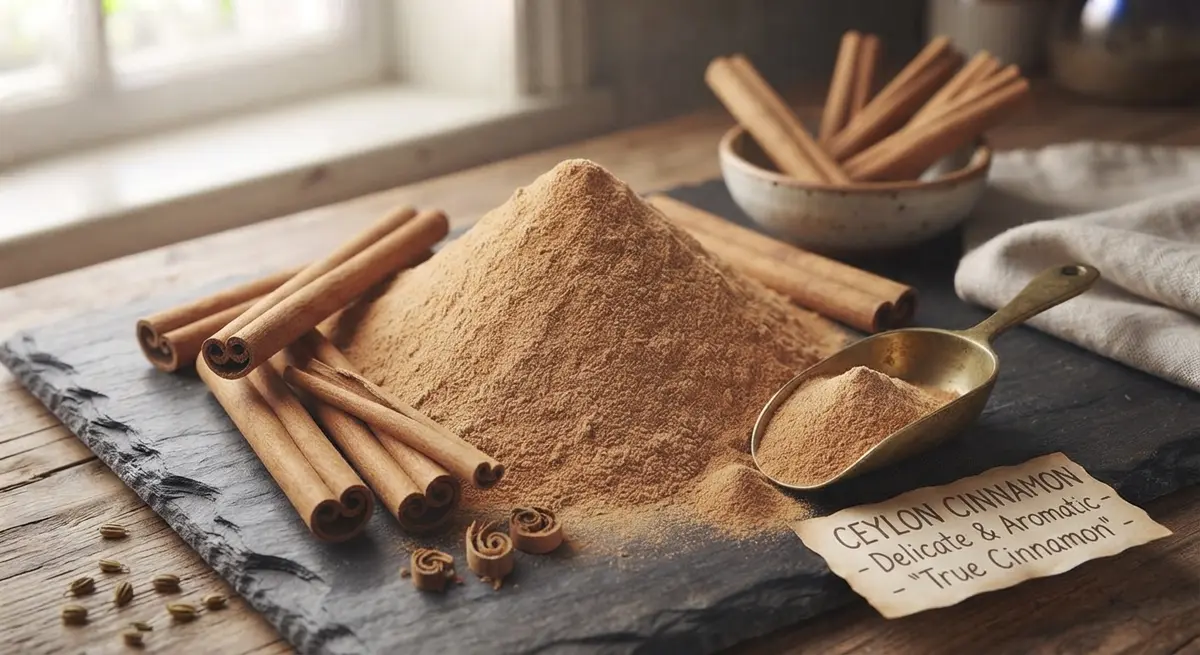
Ceylon Cinnamon: Flavor Profile, Health Benefits & Culinary Uses
Ceylon is the delicate, low-coumarin 'true cinnamon' from Sri Lanka. Here is how to tell it apart, cook with it, and know when it is worth the money.
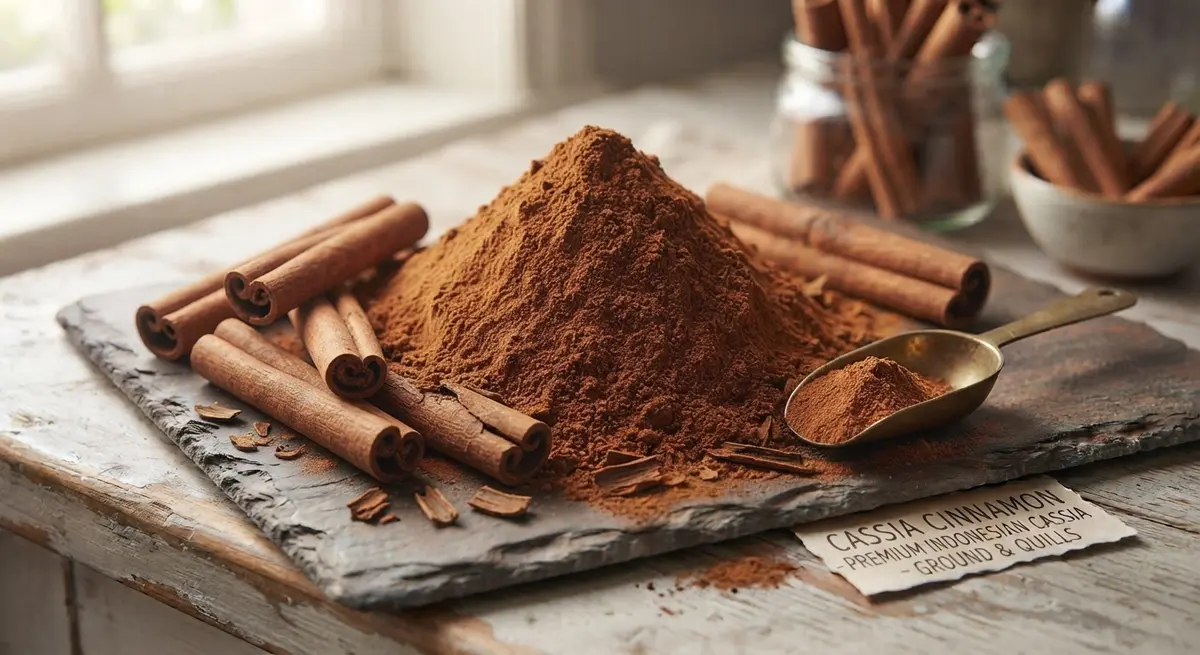
Chinese Cassia Cinnamon: Flavor Profile, Health Benefits & Culinary Uses
The tall, dark, strongly spicy jar on American shelves is usually cassia, not true cinnamon. Here is its flavor, best uses, and the honest coumarin facts.
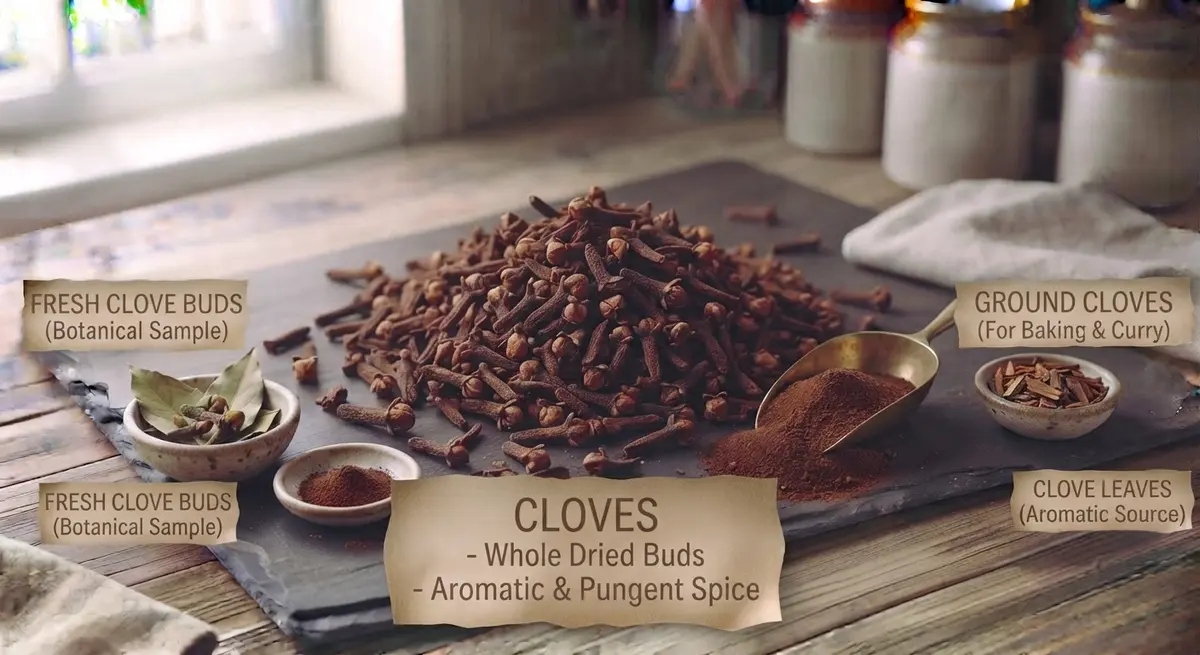
Cloves: Flavor Profile, Health Benefits & Culinary Uses
Those little nails in the jar are dried flower buds, and their eugenol content means a little goes a long way. Here is where cloves belong and what they replace.
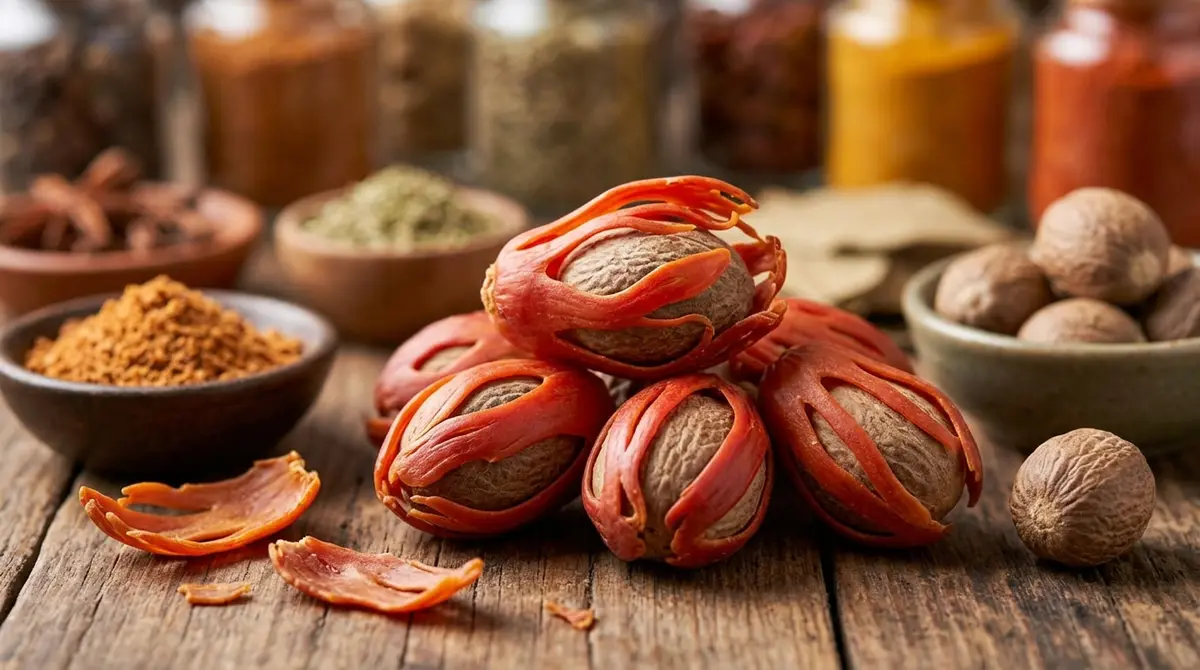
Mace (Nutmeg Husk): Flavor Profile, Health Benefits & Culinary Uses
Mace is nutmeg's refined sibling: the lacy husk that wraps the seed, brighter and more delicate in flavor. Here is when to use blades and ground mace.
About the Authors
This recipe and guide was developed, tested, and approved in our home kitchen and daily life. Jamy is a retired Food Service District Manager and Early Childhood Program Manager who spent his career overseeing multi-site restaurant operations, large-scale culinary production, and daycare menu management. Kaïna brings the ultimate real-world test: making sure it brings ease and joy to our kids on a busy weeknight.
Read more about our professional background and philosophy →