Dukkah: Flavor Profile, Health Benefits & Culinary Uses
By the QuiteRecipes team (Jamy & Kaïna)
An Egyptian dip that conquered snack bowls worldwide: toasted nuts, sesame, coriander, and cumin, crushed into the crumbly garnish made for olive oil and bread.
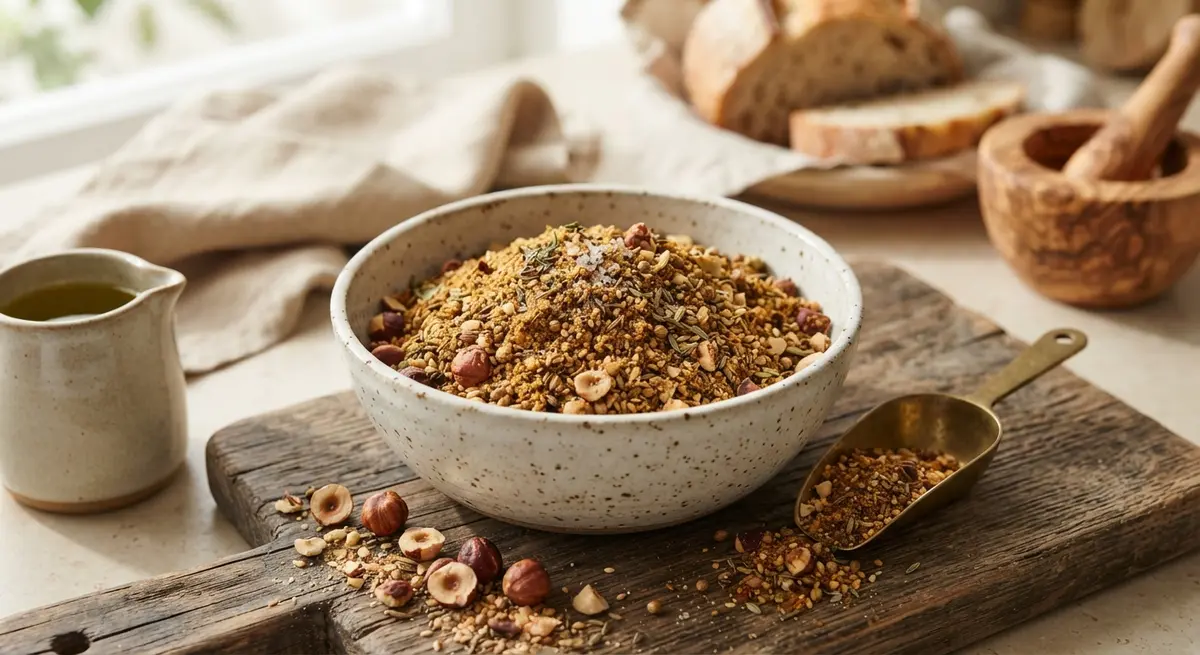
Dukkah is an Egyptian dip that has quietly taken over the world's snack bowls: a coarsely crushed mix of nuts, seeds, and spices, toasted and ground into glorious crumb, traditionally eaten by dipping bread first in olive oil and then directly into the bowl.
Every Egyptian family has a recipe. Hazelnuts or walnuts, sesame, coriander, cumin, salt, and often a little dried mint — the name comes from the Arabic word for pounding, which is exactly how you are supposed to make it, with a mortar and pestle.
Flavor Profile & Notes
At its best, dukkah is savory, woody, nutty, and fragrant: toasted hazelnuts and sesame, the citrusy warmth of coriander, a cumin undernote, and a flick of chili in some home versions. Texture is the whole point — you want uneven, characterful crumbs, not powder. Toast each element until fragrant, cool, then pound or pulse briefly, leaving some crunch. The flavors develop as it rests, so make it an hour ahead if you can. A spoonful warmed in olive oil makes the simplest dip suddenly feel composed.
Health Benefits & Nutrition
Dukkah rides the nut-health wave honestly: nuts bring unsaturated fats, plant protein, fiber, and vitamin E, and the sesame carries a little calcium and iron into the bargain. Because it is calorie-dense — it is mostly ground nuts, after all — the honest advice is moderation, not abstinence. A shallow bowl with olive oil and bread is a traditional Mediterranean pattern, which is exactly the style of eating nutritionists applaud: plants, good fats, and satisfaction. Treat it as a garnish and you get the best of both.
Best Culinary Pairings
The classic refrain is olive oil, bread, dukkah, and repeat. Beyond the table: dust it over roasted vegetables like carrots and cauliflower, roll soft cheese or avocado toast in it, rub it into chicken or lamb before grilling, or use it as a crunchy crust for fish. It is wonderful scattered over salads, stirred through yogurt, and sprinkled on eggs and rice pilafs. Every one of these uses works because the crumb adds both texture and flavor, which most single spices cannot do.
Quick Substitutes
Making your own is a ten-minute project: toast half a cup of nuts and a third of a cup of sesame, add two teaspoons coriander, a teaspoon cumin, salt, and pulse briefly. If you have no nuts at all, toasted sesame with ground coriander and cumin gets you most of the way. Za'atar is not dukkah — it is herbal and sour rather than nutty — but it fills the bread-and-oil role in a pinch, so it is a legitimate emergency swap.
FAQ / Quick Facts
- How is dukkah different from za'atar? Dukkah is nutty and savory-crunchy; za'atar is herbal, sesame-sour, and finer. Both love bread and olive oil.
- What does it taste like? Warm toasted hazelnut and sesame with citrusy coriander, earthy cumin, and a fleck of salt.
- Form / storage: A coarse crushed blend of nuts, seeds, and spices; keep airtight and it stays crunchy for a month or two.
Related Articles
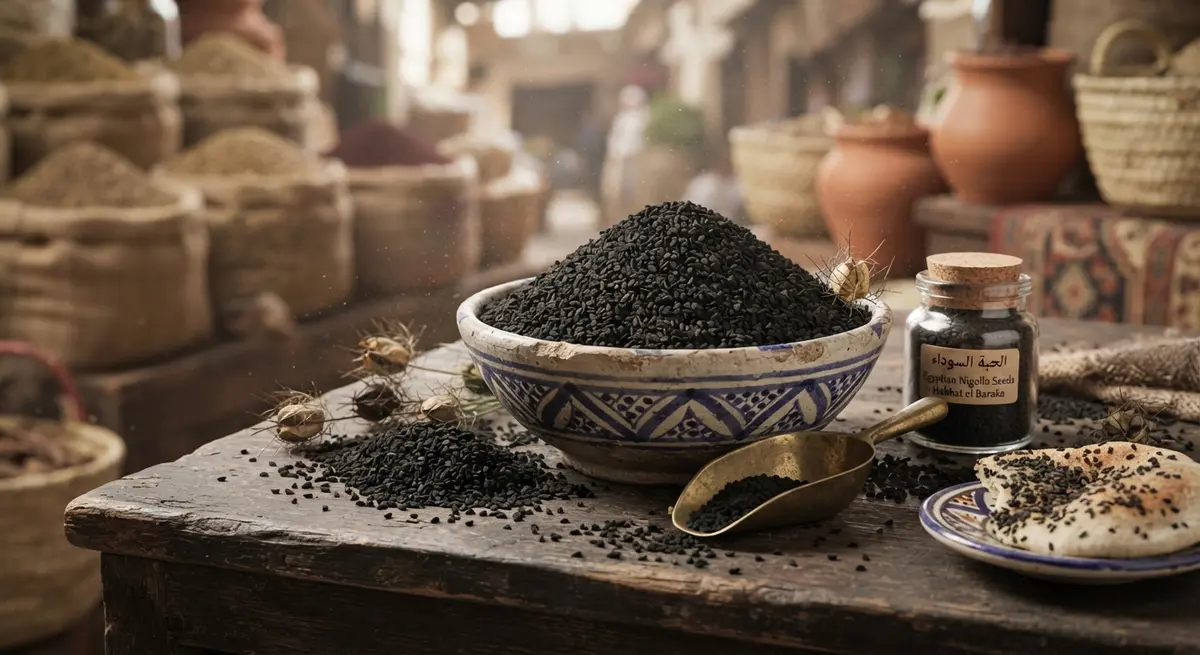
Egyptian Nigella Seeds: Flavor Profile, Health Benefits & Culinary Uses
Matte-black seeds that belong to a flower, not a cumin plant: nigella's onion-thyme warmth on bread, lamb, and roasted vegetables, with the myths sorted out.
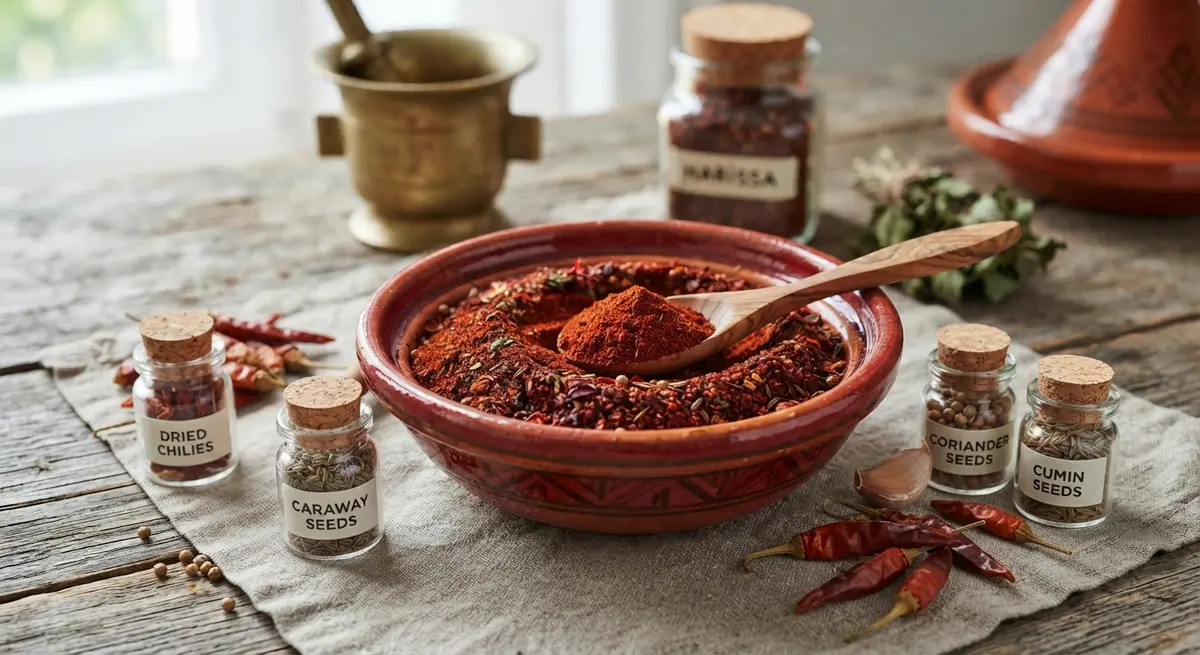
Harissa Spice Powder: Flavor Profile, Health Benefits & Culinary Uses
Tunisia sent the world a paste, and the fire traveled as a powder: harissa is chile heat, toasted coriander, and the caraway note that makes it sing.
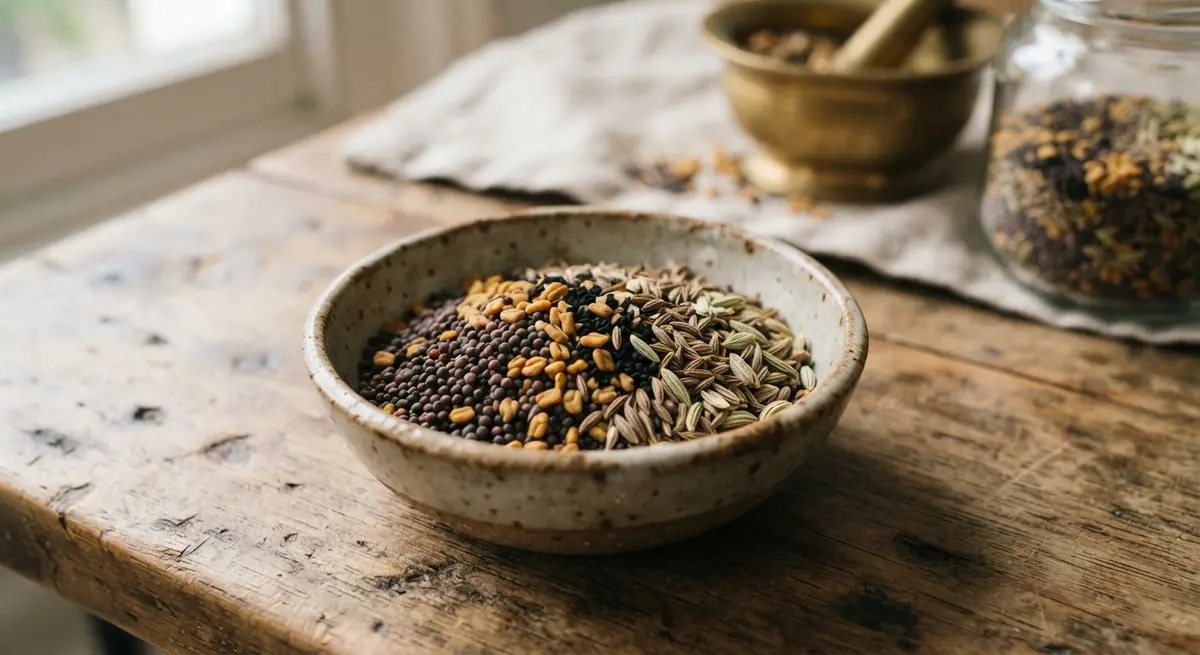
Panch Phoron: Flavor Profile, Health Benefits & Culinary Uses
Five seeds, one pan of hot oil, and every Bengali dish gets its aroma. Here is how panch phoron works, who put it together, and how to blend your own.
Ras el-Hanout: Flavor Profile, Health Benefits & Culinary Uses
'Head of the shop' is what the name promises and the jar delivers: a warm, sweet, complex Moroccan blend that makes anything taste intentional.
About the Authors
This recipe and guide was developed, tested, and approved in our home kitchen and daily life. Jamy is a retired Food Service District Manager and Early Childhood Program Manager who spent his career overseeing multi-site restaurant operations, large-scale culinary production, and daycare menu management. Kaïna brings the ultimate real-world test: making sure it brings ease and joy to our kids on a busy weeknight.
Read more about our professional background and philosophy →