Ras el-Hanout: Flavor Profile, Health Benefits & Culinary Uses
By the QuiteRecipes team (Jamy & Kaïna)
'Head of the shop' is what the name promises and the jar delivers: a warm, sweet, complex Moroccan blend that makes anything taste intentional.
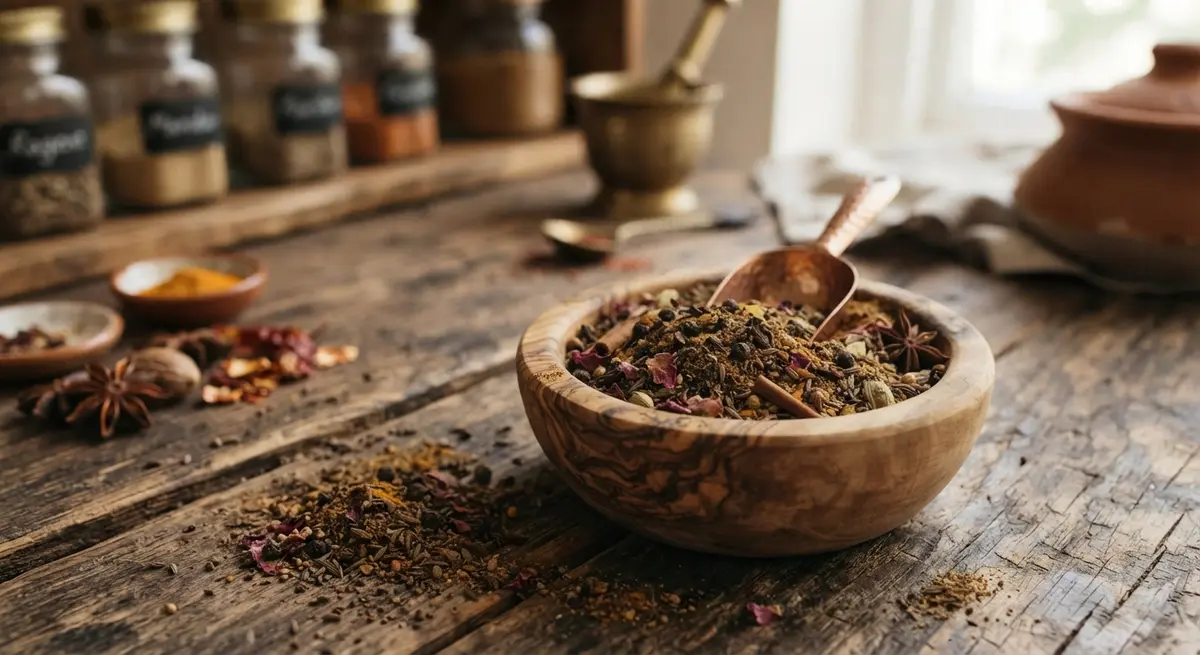
Ras el hanout translates as "head of the shop" in Arabic — the top of the merchant's counter, meaning the very best spice mix at the market. And that is exactly what it used to be: every Moroccan spice merchant blended his own, and every one claimed his was the pinnacle.
There is no fixed recipe. Some blends count twelve ingredients, some forty. What holds them all together is warm, sweet, earthy, and faintly exotic — cumin, cardamom, cinnamon, ginger, turmeric, nutmeg, and the occasional guest star from rose petals to dried lavender.
Flavor Profile & Notes
Ras el hanout is a study in balance: warm and sweet on top, where cinnamon, nutmeg, and cardamom live; earthy and savory underneath, where cumin, turmeric, and coriander do the work; and a ghost of heat plus a final floral whisper. Bloom a spoonful in warm oil and your kitchen smells like a Moroccan spice-souk doorway. The blends run sweet-leaning to savory depending on the maker, so sniff before you buy and adjust salt accordingly. It is potent enough to carry a whole pot of stew, yet gentle enough that nothing reads as "cinnamon food."
Health Benefits & Nutrition
As a blend of a dozen spices, the health story is compound interest: every ingredient contributes its own modest antioxidants, and ras el hanout typically contains turmeric and black pepper together — a pair studied for the way pepper boosts turmeric's absorption. No single molecule is doing magic, and that is fine. What ras el hanout genuinely does is make vegetables, grains, and lean meat taste like a celebration, which is the most effective way to get anyone to eat more of them. Use it generously on roasted squash and call it a day.
Best Culinary Pairings
Moroccan tagines of lamb or chicken with apricots and dates are the flagship, but the blend travels well beyond them. Rub it on lamb chops, stir it into couscous, roast squash and carrots under its blanket, or build a Moroccan-spiced bean stew in an afternoon. It loves sweet-and-savory meetings — chicken with ras el hanout and honey, eggplant with chickpeas and raisins, rice pilaf with toasted almonds. Dates, dried apricots, and preserved lemon all sing with it.
Quick Substitutes
Garam masala is the closest cousin — warm and sweet-leaning — so it works in a pinch; add a pinch of cinnamon and a scrape of turmeric to nudge it toward North Africa. A DIY blend of two teaspoons cinnamon, cumin, coriander, and allspice, with one of ginger, turmeric, nutmeg, and black pepper, lands in convincing territory. If you have a decent garam masala and a little sumac, the combination reads surprisingly Moroccan.
FAQ / Quick Facts
- How many spices are in ras el hanout? Anywhere from a dozen to forty, depending on the merchant — there is no single recipe.
- Is it very hot? Rarely — it is warm and aromatic, sweet-leaning, with heat as an accent rather than the point.
- What does it taste like? Warm cinnamon-cardamom sweetness over earthy cumin and turmeric, with a floral finish and a whisper of heat.
Related Articles
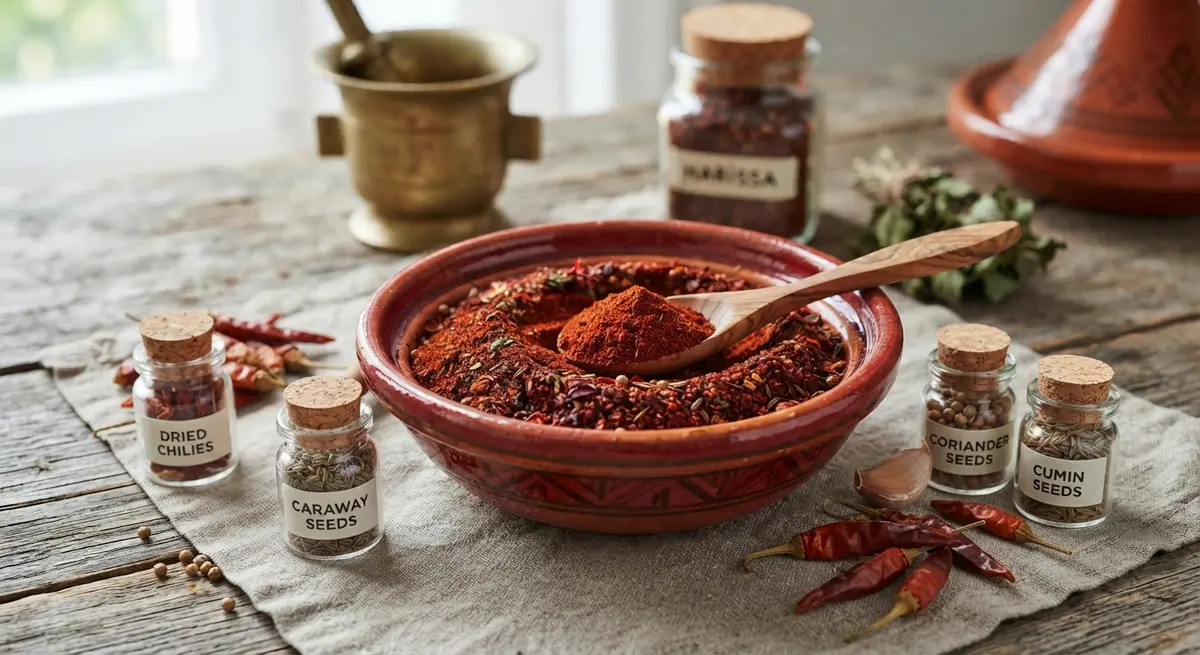
Harissa Spice Powder: Flavor Profile, Health Benefits & Culinary Uses
Tunisia sent the world a paste, and the fire traveled as a powder: harissa is chile heat, toasted coriander, and the caraway note that makes it sing.
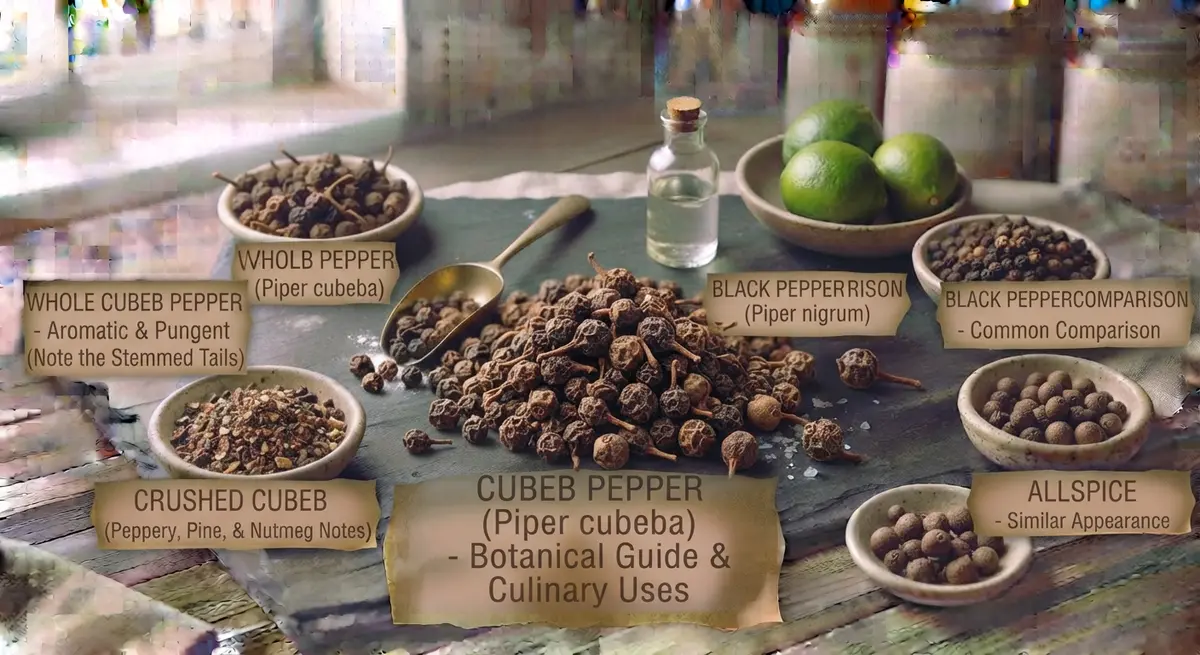
Cubeb Pepper: Flavor Profile, Health Benefits & Culinary Uses
With its telltale stem, cubeb tastes like black pepper whisked into allspice, clove, and a cool minted edge, and it stars in ras el hanout and Moroccan lamb.
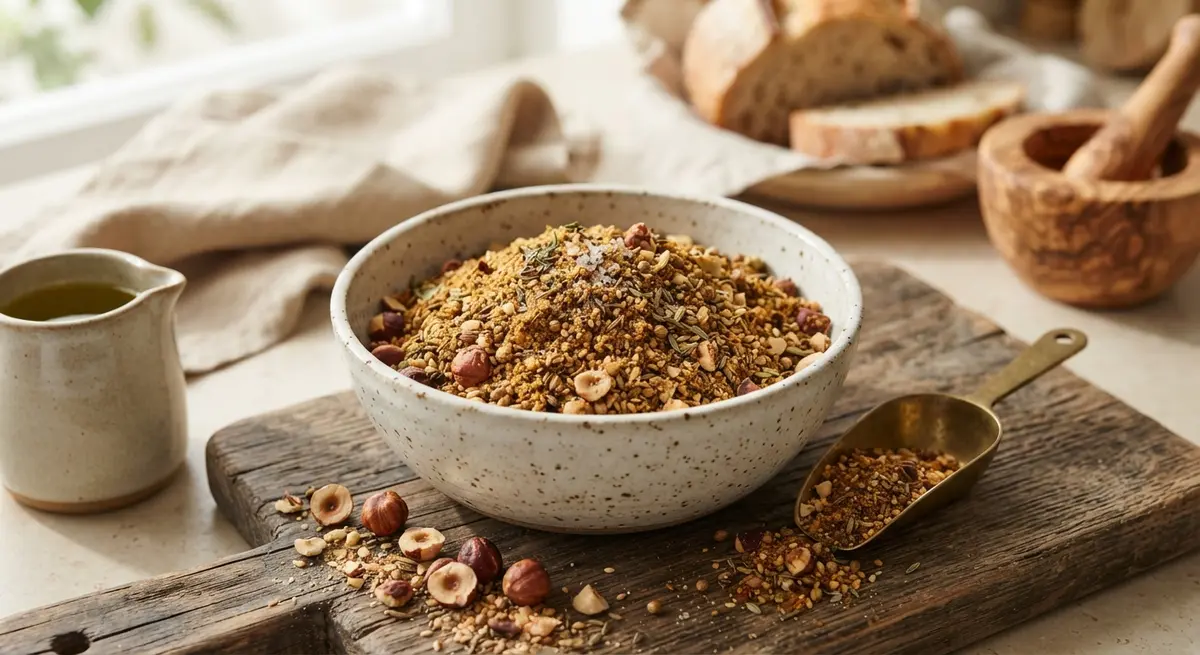
Dukkah: Flavor Profile, Health Benefits & Culinary Uses
An Egyptian dip that conquered snack bowls worldwide: toasted nuts, sesame, coriander, and cumin, crushed into the crumbly garnish made for olive oil and bread.
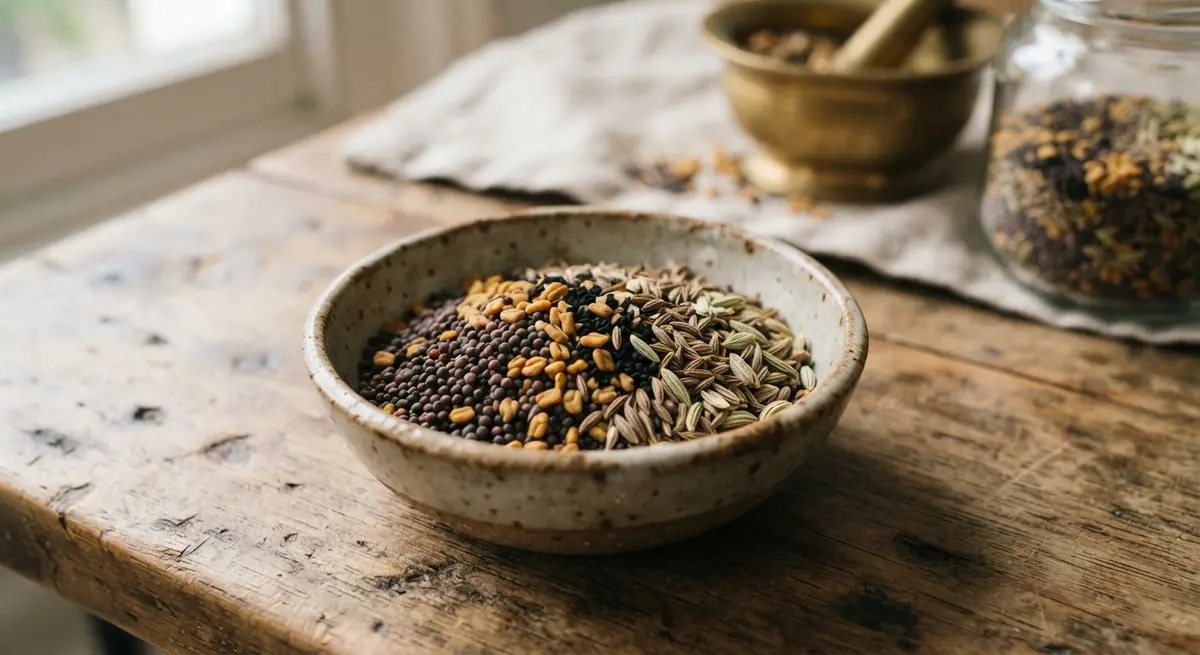
Panch Phoron: Flavor Profile, Health Benefits & Culinary Uses
Five seeds, one pan of hot oil, and every Bengali dish gets its aroma. Here is how panch phoron works, who put it together, and how to blend your own.
About the Authors
This recipe and guide was developed, tested, and approved in our home kitchen and daily life. Jamy is a retired Food Service District Manager and Early Childhood Program Manager who spent his career overseeing multi-site restaurant operations, large-scale culinary production, and daycare menu management. Kaïna brings the ultimate real-world test: making sure it brings ease and joy to our kids on a busy weeknight.
Read more about our professional background and philosophy →