Cubeb Pepper: Flavor Profile, Health Benefits & Culinary Uses
By the QuiteRecipes team (Jamy & Kaïna)
With its telltale stem, cubeb tastes like black pepper whisked into allspice, clove, and a cool minted edge, and it stars in ras el hanout and Moroccan lamb.
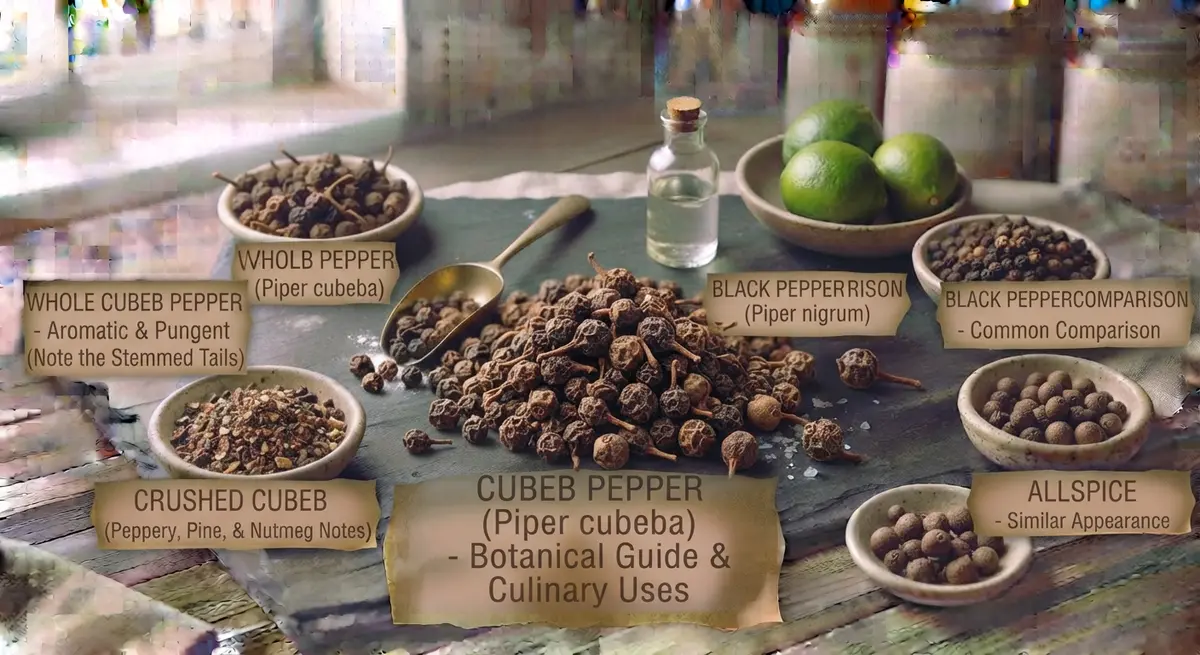
Cubeb pepper is the spice that looks like it forgot to finish growing. Each small, wrinkled, peppercorn-sized berry carries a slender stem, so a jar of cubeb resembles a handful of tiny clubs or a jar of pepper with tails, which is exactly how it has been known for centuries: the tailed pepper, once so desirable in medieval Europe that it rode the spice routes every bit as far as black pepper did. It grows in Indonesia and the wider Southeast Asian region, and it tastes the way you would expect a pepper crossed with a spice cabinet to taste — black pepper's warmth braided with clove and allspice, plus a cool, almost mentholated finish that lingers long after the burn fades.
It still does daily work in the Indonesian islands and Moroccan spice markets, and it is overdue for a resurrection everywhere else.
Flavor Profile & Notes
Slightly sweet and pungent, like allspice leading with pepper heat, finishing with a distinct, cooling, pine-like menthol sensation. The heat is moderate and rounded, closer to a warm amber glow than a sharp kick. Grind cubeb fresh — the sterned berries take a heavy-duty mill or a mortar and pestle happily — and bloom the powder in hot oil or butter to open its volatile oils. It is ground into blends and simmered whole in braises alike.
Health Benefits & Nutrition
Cubeb has lived a double life as a traditional remedy for coughs and digestion in Southeast Asia, and it contains a modest store of antioxidants and the same piperine heat compound as black pepper. The honest table summary is that it is a bold, low-salt way to make food taste exotic and complete, with no need for medical billing. If traditional herbal uses interest you, tuck the folklore alongside the flavor and let a professional answer the health questions.
Best Culinary Pairings
Cubeb is a secret ingredient in Moroccan ras el hanout, where its clove-meets-pepper character binds the whole blend together. Use it in lamb tagines, couscous, or a slow-spiced chickpea stew; grind it into a marinade for chicken with yogurt and garlic; or drop whole berries into a simmering curry broth. It also makes a striking edge for mulled wine or spiced cider in winter, and a tiny pinch works wonders in ginger-forward desserts like spiced biscuits.
Quick Substitutes
Black pepper plus a pinch of allspice and a whisper of ground clove covers the main chords convincingly. For the cool finish, add a small crumble of dried mint to the same blend. Whole cubeb is not hard to find online, so this is one worth buying for real when a Moroccan or Indonesian recipe calls for it.
FAQ / Quick Facts
- How long does it keep? Whole berries with stems keep for about a year sealed; ground cubeb fades within months.
- Why does it have a tail? The small stem is a natural feature of the ripe Piper cubeba berry and became its trademark.
- What does it taste like? Black pepper heat with allspice, clove, and a cooling, slightly minty finish.
- Botanical family / Form / Best uses: Piper cubeba (Piperaceae) / whole berried with stems or ground / ras el hanout, tagines, curries, and spiced drinks.
Related Articles
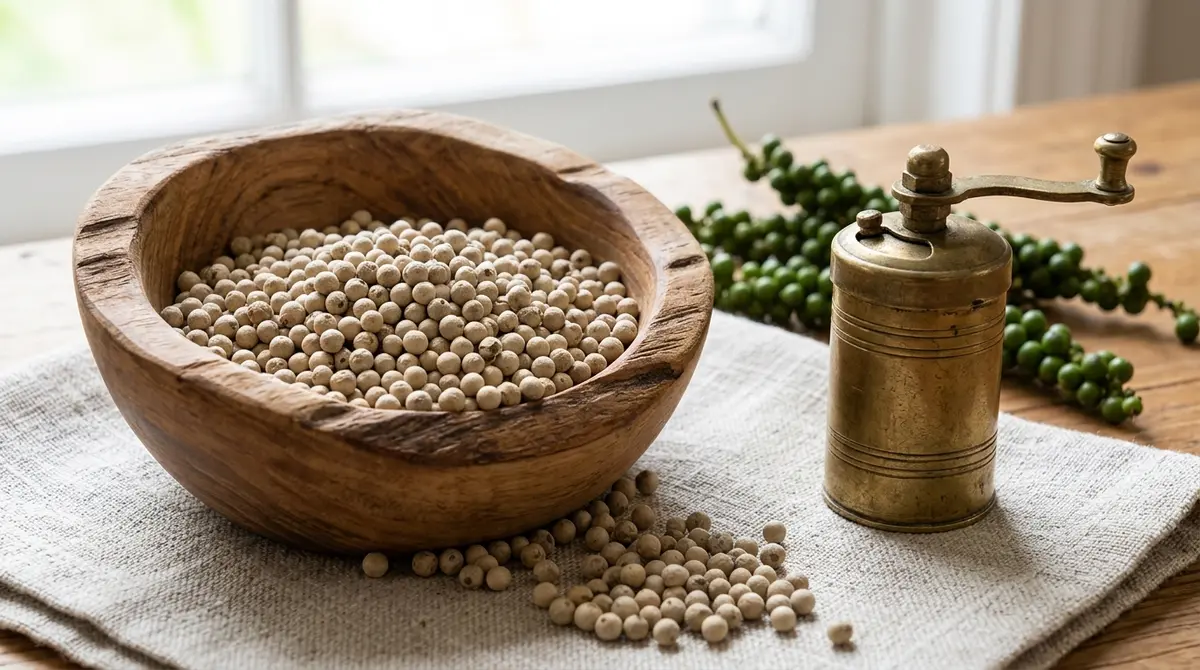
Muntok White Pepper: Flavor Profile, Health Benefits & Culinary Uses
The creamy, musty, quietly potent pepper that Indonesia has shipped for centuries: what makes Muntok white pepper different from black, and where it excels.
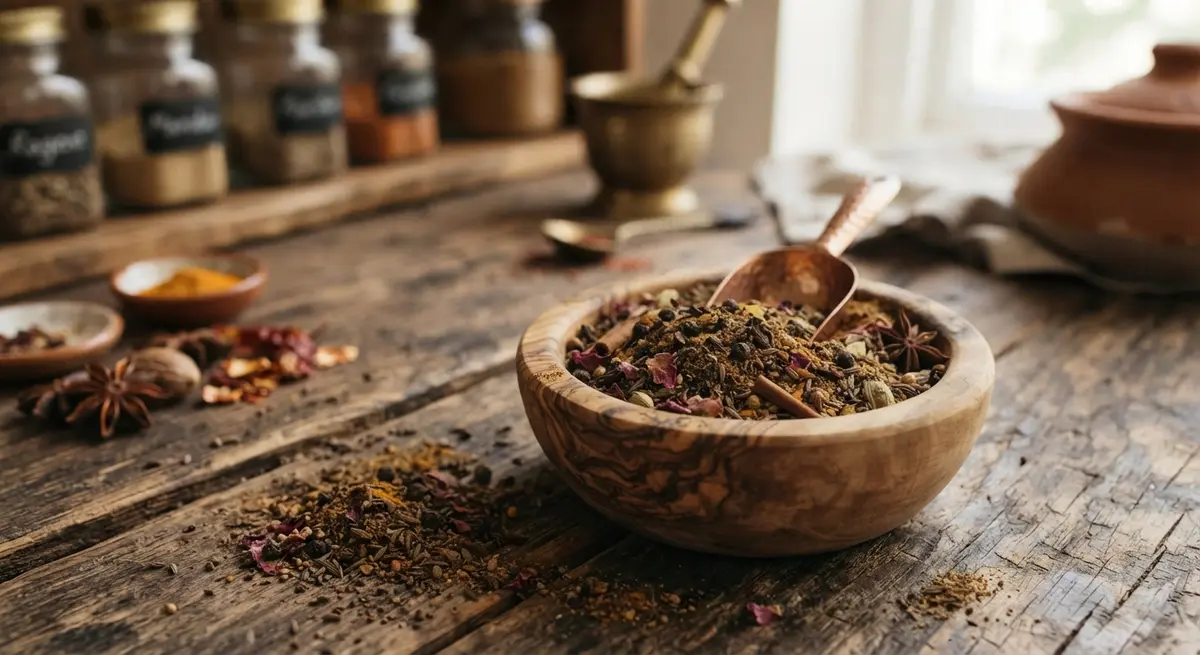
Ras el-Hanout: Flavor Profile, Health Benefits & Culinary Uses
'Head of the shop' is what the name promises and the jar delivers: a warm, sweet, complex Moroccan blend that makes anything taste intentional.
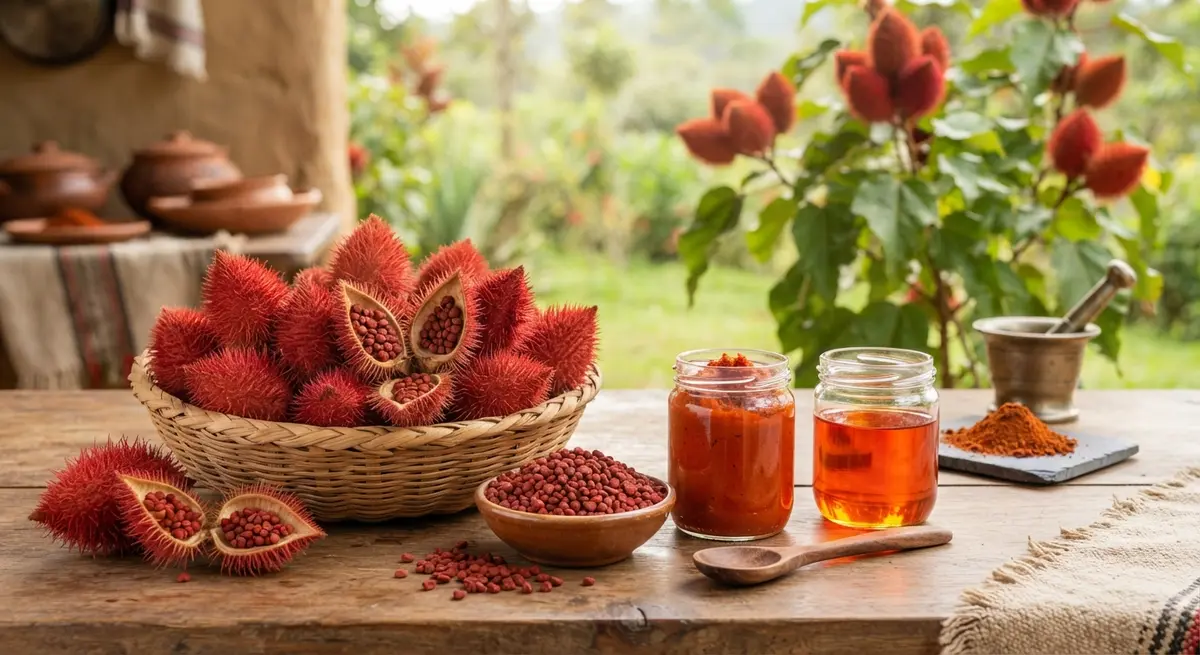
Achiote (Annatto): Flavor Profile, Health Benefits & Culinary Uses
Tiny coral-red seeds that paint food golden: the annatto tree's achiote, how to use the seeds and the Yucatan paste, and honest color substitutes.
Ajwain (Carom) Seeds: Flavor Profile, Health Benefits & Culinary Uses
A tiny gray-brown seed that tastes like thyme, oregano, and cumin had a baby with a timer fuse. Here is how and why Indian kitchens use ajwain.
About the Authors
This recipe and guide was developed, tested, and approved in our home kitchen and daily life. Jamy is a retired Food Service District Manager and Early Childhood Program Manager who spent his career overseeing multi-site restaurant operations, large-scale culinary production, and daycare menu management. Kaïna brings the ultimate real-world test: making sure it brings ease and joy to our kids on a busy weeknight.
Read more about our professional background and philosophy →