Muntok White Pepper: Flavor Profile, Health Benefits & Culinary Uses
By the QuiteRecipes team (Jamy & Kaïna)
The creamy, musty, quietly potent pepper that Indonesia has shipped for centuries: what makes Muntok white pepper different from black, and where it excels.
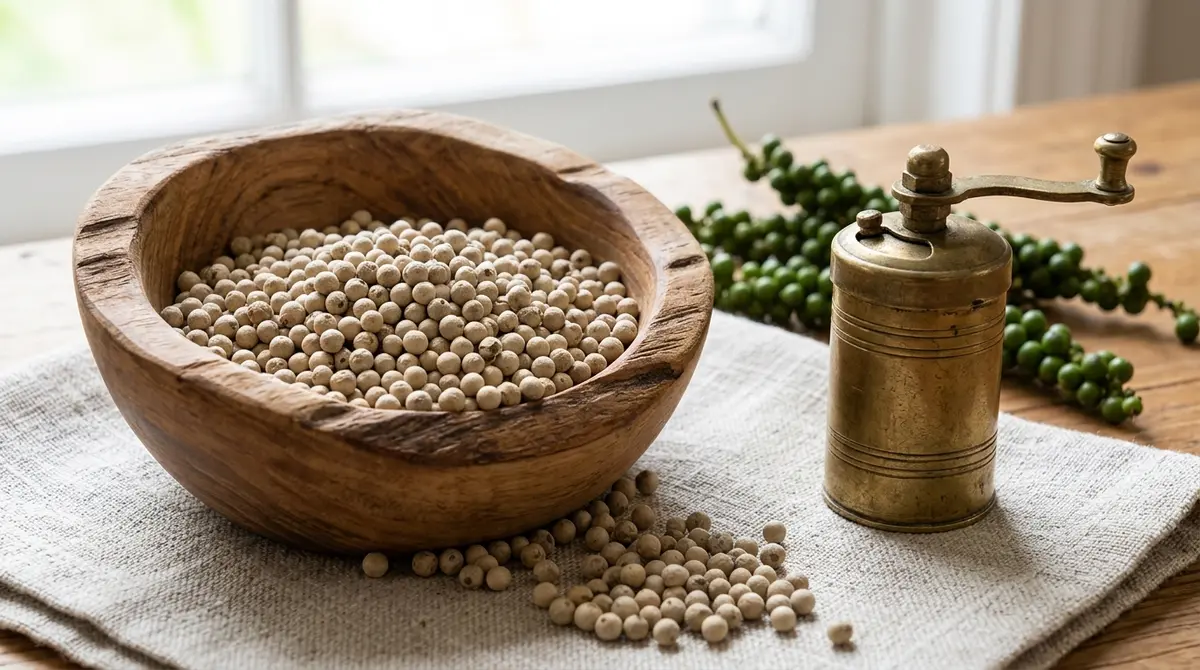
Black pepper looks bold, but the introducers of the spice world are the white ones. Muntok white pepper is the pale, creamy-toned peppercorn named after Muntok, the port on Indonesia's Bangka Island that has been shipping it to the world for centuries. To make it, ripe peppercorns soak and ferment in water until the dark outer skin slips away, leaving the pale inner seed — which is then polished dry. That little bit of processing changes everything: what remains is an earthier, mustier, rounder heat, with the bright smoky sharpness of black pepper replaced by something creamily assertive. Where black pepper cracks, white pepper purrs.
Flavor Profile & Notes
Muntok white pepper smells softly of hay and musky spice, and its heat arrives more gradually than black pepper's — a warm, persistent burn rather than a snap. It is less floral, more the hammer-sweetness of toasted grain, with a slightly musty cellar note that serious cooks call "complex." Because it is so characterful, quality matters: good Indonesian white pepper, ground fresh, is miles from the sad dust in supermarket tins. Muntok is often considered the benchmark grade of Indonesia's white pepper because of its consistent pale color and clean, hot, fruity-musty profile. Grind it fresh and you will taste why white pepper became a legend at all.
Health Benefits & Nutrition
Like black pepper, white pepper's heat rides on piperine, the alkaloid that has earned the spice family its reputation — laboratory research has pointed repeatedly at piperine's antioxidant and anti-inflammatory activity, and it famously helps the body absorb other nutrients, including turmeric's curcumin. The seeds themselves are nearly fat-free and carry a little fiber and manganese. For all of that, white pepper remains a seasoning, and any benefit comes in culinary amounts as part of food you were cooking anyway. That is the scaling claim to trust; a health tonic it is not.
Best Culinary Pairings
White pepper's finest hours are in pale and creamy dishes, where it seasons without dotting them with black specks: mashed potatoes, béchamel and cream soups, potato-leek soup, and French potato gratins all take it beautifully. Chinese and Thai cooking rely on it for clear soups, egg drop soup, and fried rice, where black flecks would look wrong and taste louder. It has a permanent seat in classic seasoning blends, is a quiet genius in sautéed mushrooms and pan-seared fish, and it works in vinaigrettes where black pepper can dominate. If you want pepper that presents food rather than interrupts it, this is the one.
Quick Substitutes
Black pepper substitutes for white in nearly every application — same heat family, different personality — and recipes rarely collapse. To actually mimic white pepper's character, grind black pepper very fine and accept the specks. A pinch of ground coriander with the pepper softens and rounds the finish. For creamy pale dishes, cooks allergic to specks know the hack: black pepper steeped briefly in hot liquid and strained keeps the seeds in their role.
FAQ / Quick Facts
- How long does it keep? Whole white peppercorns hold their heat for years in a sealed jar; ground, they fade within months.
- What does it taste like? Earthy, musty, and boldly warm — rounder and less sharp than black pepper, with a persistent, creamy burn.
- Botanical family / Form: Piperaceae; the skinned, dried inner seed of Piper nigrum from Indonesia. Best uses: white and creamy sauces, soups, mashed potatoes, and Chinese cooking.
Related Articles
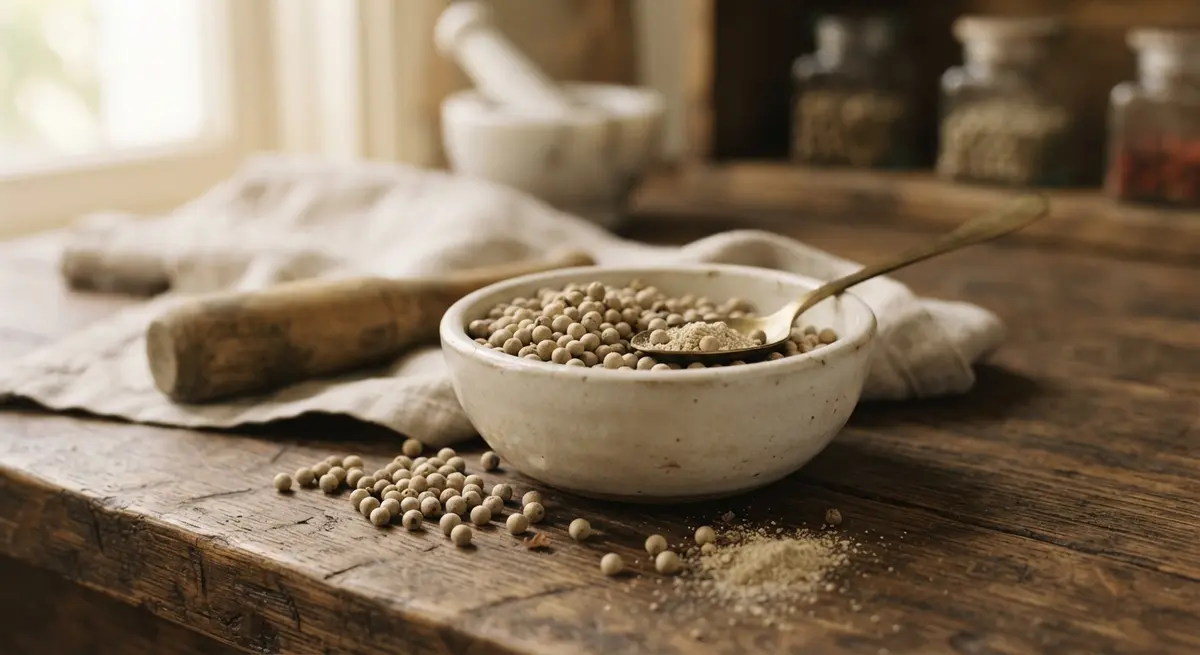
White Pepper: Flavor Profile, Health Benefits & Culinary Uses
The same Piper nigrum vine gives us black and white pepper. White pepper is milder in aroma but sharper in heat, made for light sauces and pale dishes.
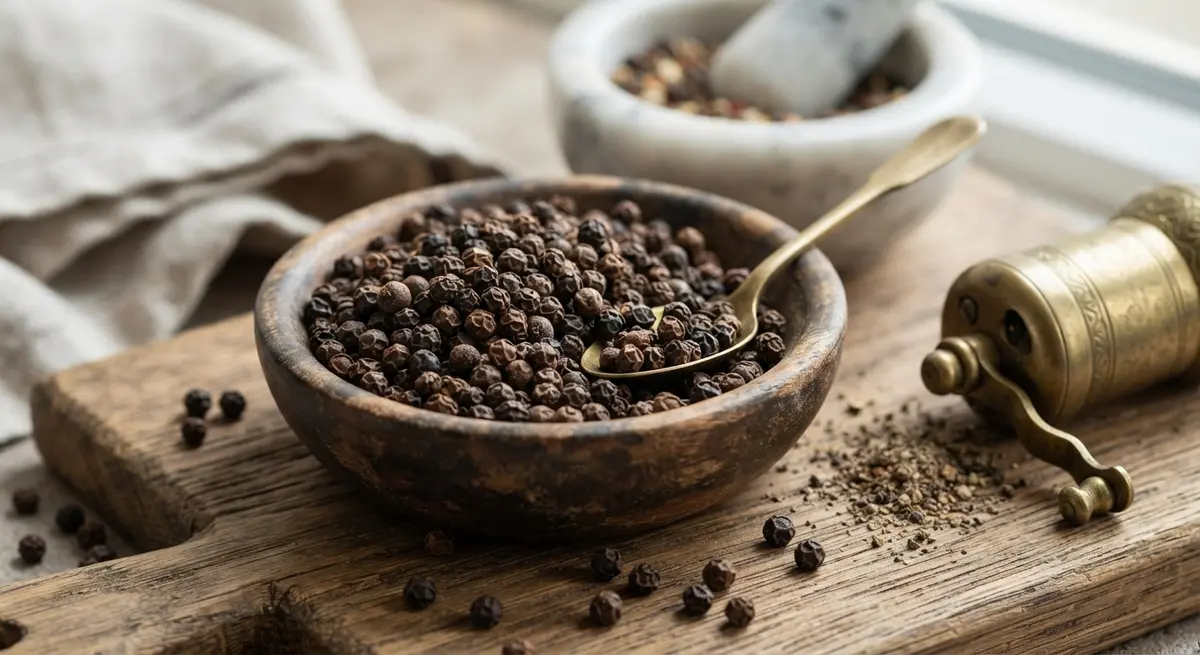
Black Pepper: Flavor Profile, Health Benefits & Culinary Uses
The dusty jar of pre-ground pepper is not the same spice as one you grind at the table. Here is how to get the most from black pepper in every meal you cook.
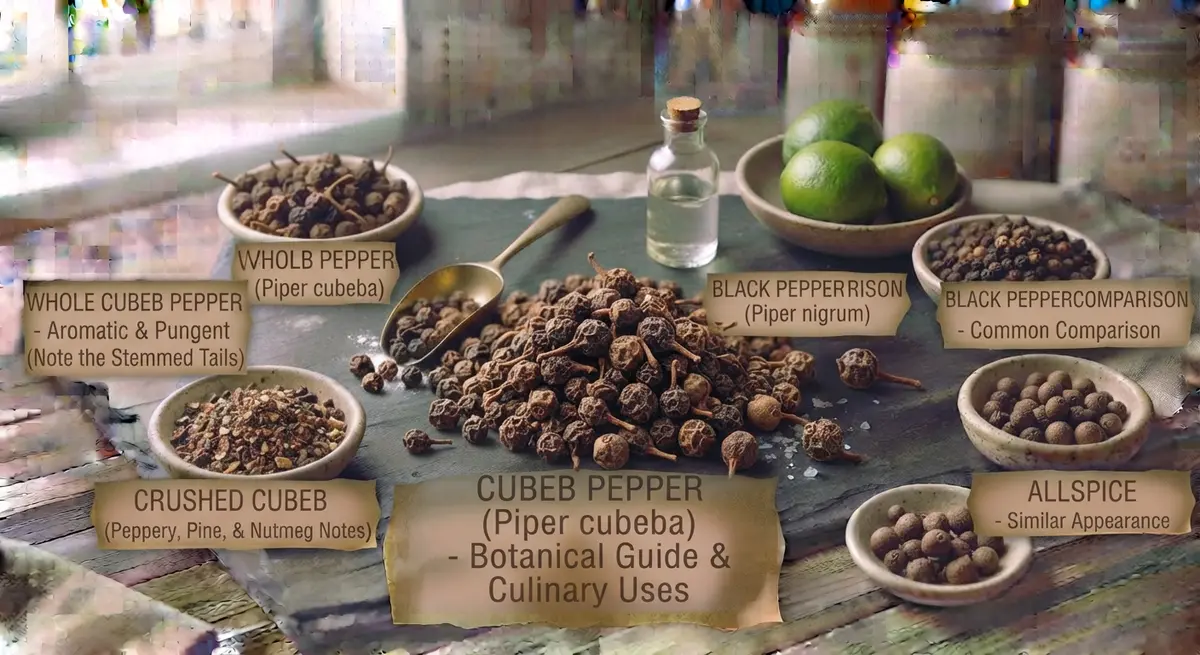
Cubeb Pepper: Flavor Profile, Health Benefits & Culinary Uses
With its telltale stem, cubeb tastes like black pepper whisked into allspice, clove, and a cool minted edge, and it stars in ras el hanout and Moroccan lamb.
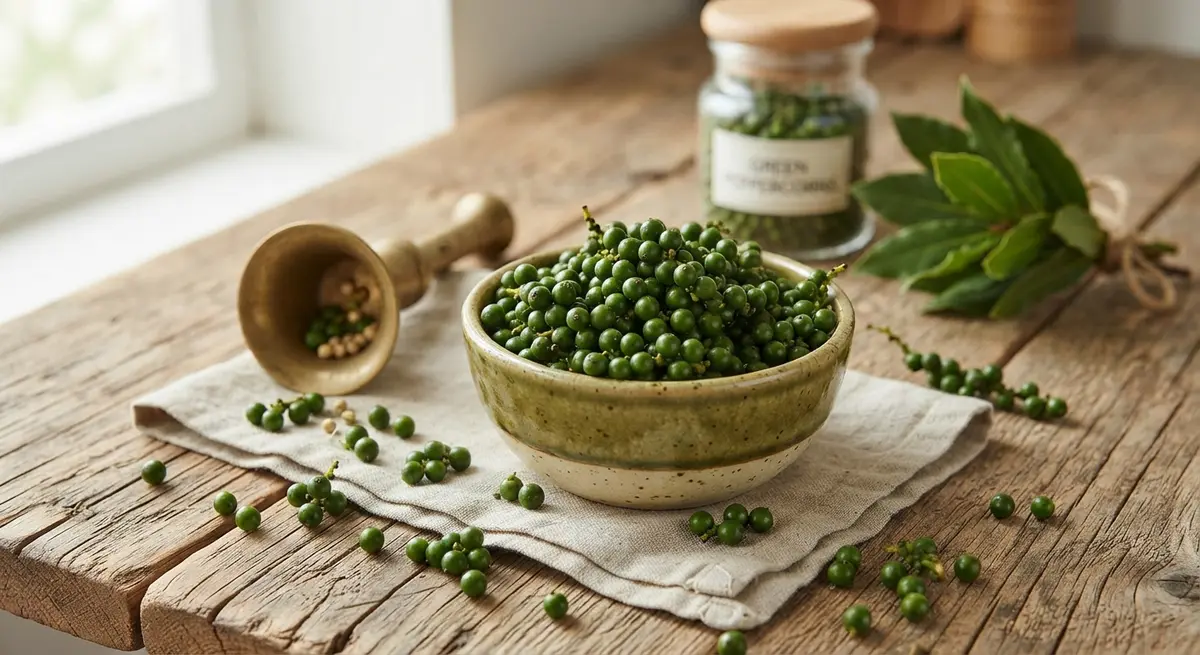
Green Peppercorns: Flavor Profile, Health Benefits & Culinary Uses
Green peppercorns are the same Piper nigrum berries picked young. They are fresher, fruitier, and milder than black pepper, perfect for creamy sauces and crusts.
About the Authors
This recipe and guide was developed, tested, and approved in our home kitchen and daily life. Jamy is a retired Food Service District Manager and Early Childhood Program Manager who spent his career overseeing multi-site restaurant operations, large-scale culinary production, and daycare menu management. Kaïna brings the ultimate real-world test: making sure it brings ease and joy to our kids on a busy weeknight.
Read more about our professional background and philosophy →