White Pepper: Flavor Profile, Health Benefits & Culinary Uses
By the QuiteRecipes team (Jamy & Kaïna)
The same Piper nigrum vine gives us black and white pepper. White pepper is milder in aroma but sharper in heat, made for light sauces and pale dishes.
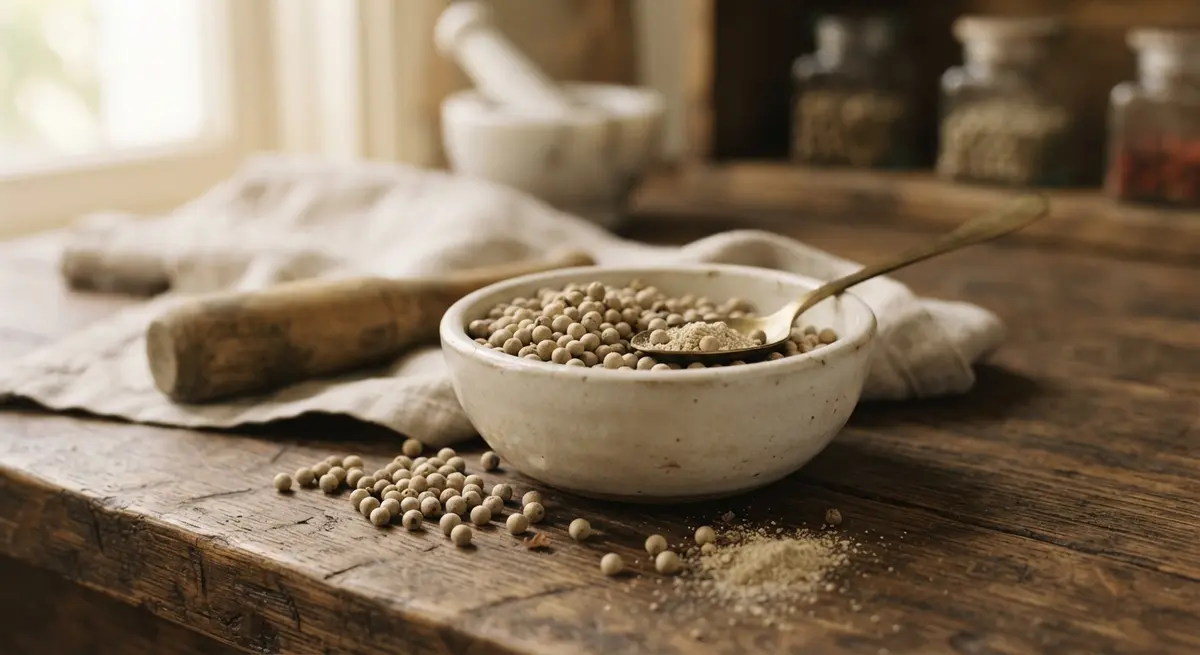
White pepper is black pepper's overlooked sibling. It comes from the very same vine, Piper nigrum, but the berries are picked riper, then soaked until the dark outer skin softens and can be rubbed away. What remains is the pale inner seed, dried into the smooth cream-colored spheres you see in the jar. Longer processing, a gentler look, and a personality that turns out to be quite different.
French chefs and Chinese home cooks reach for it for the same reason: it seasons without leaving black specks behind. Once you know that, the jars of white pepper hidden in restaurant kitchens start making sense.
Flavor Profile & Notes
White pepper is sharper and more direct on the tongue than black pepper, with a cleaner burn that arrives quickly and moves on. What it loses is the fruity, floral complexity of the black berry's skin — the funny trade-off is that white pepper tastes hotter but smells less interesting. That makes it ideal where you want gentle background warmth: pale cream sauces, light soups, and delicate fish. In hot and sour soup and classic Cantonese cooking, it is simply the right pepper.
Health Benefits & Nutrition
Nutritionally, white pepper is close to black: decent amounts of manganese and iron, plus piperine, which is what gives both the familiar heat. Piperine is most celebrated for helping the body absorb curcumin from turmeric, a partnership that works whether the pepper is black or white. White pepper is used in smaller amounts than black because of its sharper bite, which is honestly fine — it is a seasoning, not a supplement.
Best Culinary Pairings
White pepper shines in dishes where black specks would look wrong or where heat should not announce itself. Try it in mashed potatoes or cauliflower purée, bechamel and velouté sauces, seafood chowder, and stirred through scrambled eggs with plenty of butter. In Chinese cooking it is essential in hot and sour soup, wonton filling, and simple steamed fish. A small pinch in canned soup or Mac and cheese is the instant dinner upgrade nobody notices but everyone tastes.
Quick Substitutes
If a dark speck will not ruin the dish, freshly ground black pepper is the most honest swap; use a little less, since black reads milder in aroma but similar in heat. For pale sauces where color really matters, season with a whisper of ground ginger or a fine grind of mace instead. Neither tastes like white pepper, but both add warmth without changing the dish's face.
FAQ / Quick Facts
- How long does it keep? Ground white pepper keeps for a few months before softening; buy small and replace often.
- Why is it in pale dishes? It seasons like pepper without leaving dark flecks in bechamel, soups, and mash.
- Know your spice: Piperaceae family; ground form; a cornerstone of hot and sour soup and French white sauces.
Related Articles
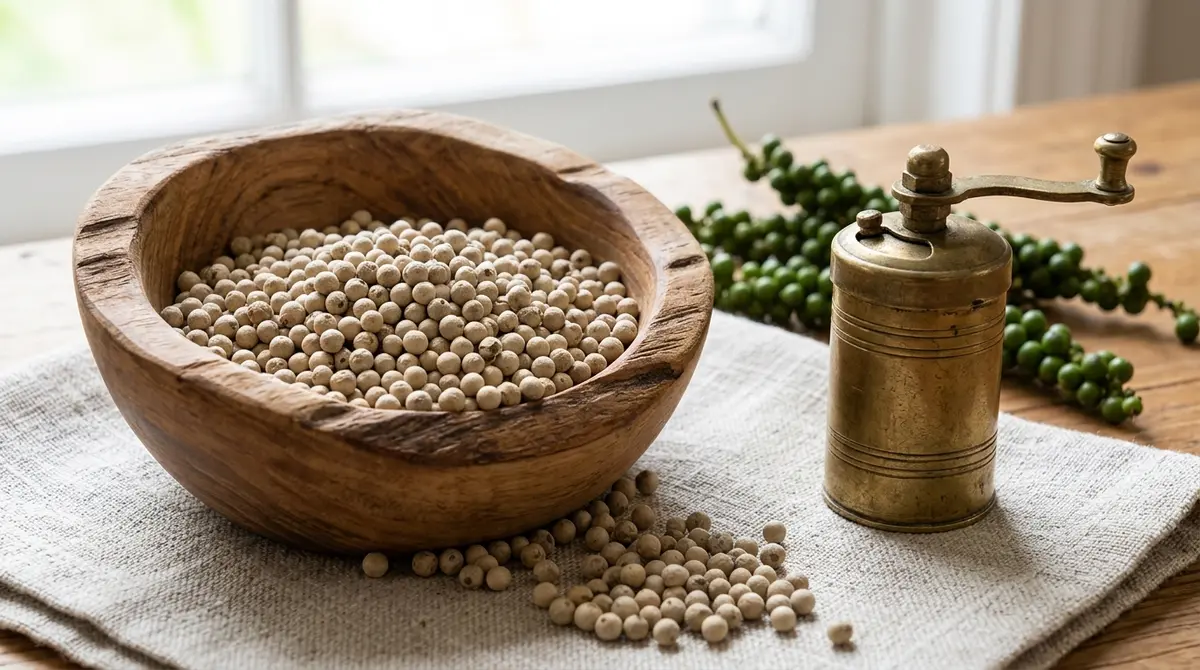
Muntok White Pepper: Flavor Profile, Health Benefits & Culinary Uses
The creamy, musty, quietly potent pepper that Indonesia has shipped for centuries: what makes Muntok white pepper different from black, and where it excels.
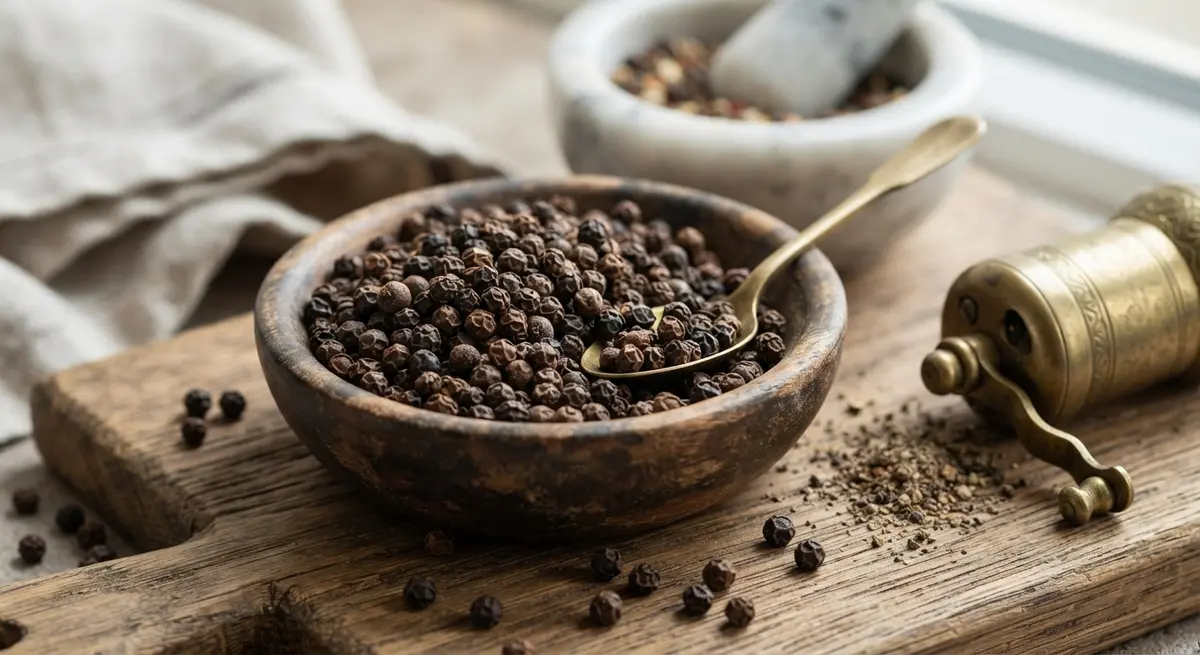
Black Pepper: Flavor Profile, Health Benefits & Culinary Uses
The dusty jar of pre-ground pepper is not the same spice as one you grind at the table. Here is how to get the most from black pepper in every meal you cook.
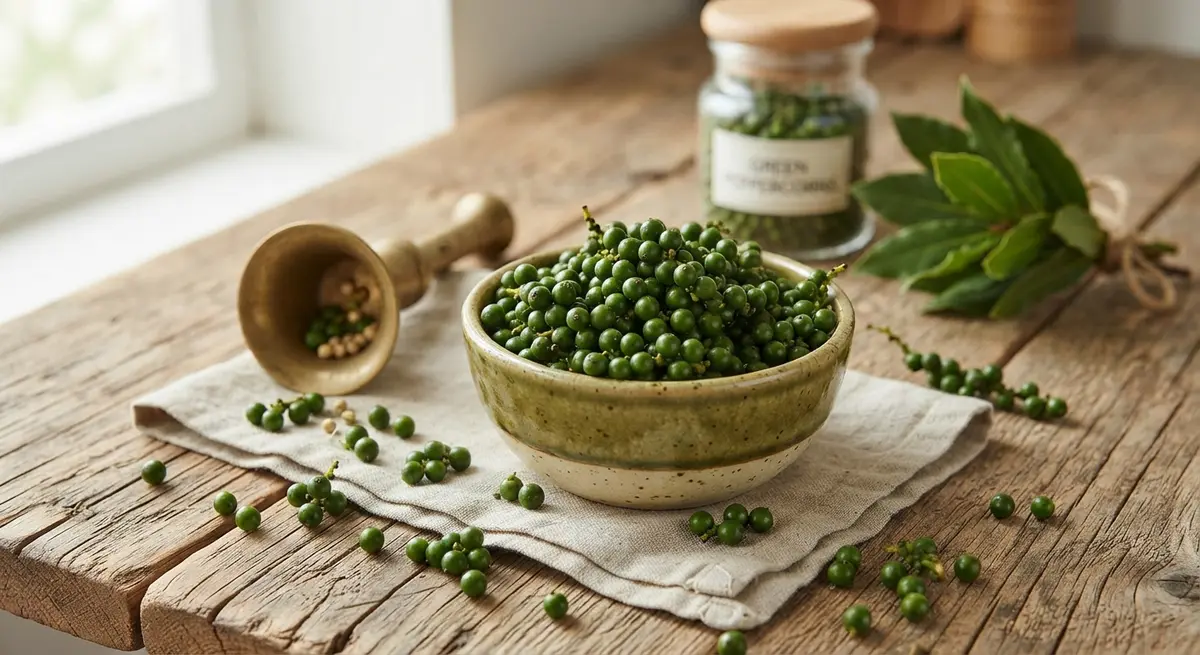
Green Peppercorns: Flavor Profile, Health Benefits & Culinary Uses
Green peppercorns are the same Piper nigrum berries picked young. They are fresher, fruitier, and milder than black pepper, perfect for creamy sauces and crusts.
Lotus Root Powder: Flavor Profile, Health Benefits & Culinary Uses
A whisper-sweet root starch from the lotus that gives soups body and batters crunch. Here is what lotus root powder is, how to cook with it, and what to swap it for.
About the Authors
This recipe and guide was developed, tested, and approved in our home kitchen and daily life. Jamy is a retired Food Service District Manager and Early Childhood Program Manager who spent his career overseeing multi-site restaurant operations, large-scale culinary production, and daycare menu management. Kaïna brings the ultimate real-world test: making sure it brings ease and joy to our kids on a busy weeknight.
Read more about our professional background and philosophy →