Lotus Root Powder: Flavor Profile, Health Benefits & Culinary Uses
By the QuiteRecipes team (Jamy & Kaïna)
A whisper-sweet root starch from the lotus that gives soups body and batters crunch. Here is what lotus root powder is, how to cook with it, and what to swap it for.
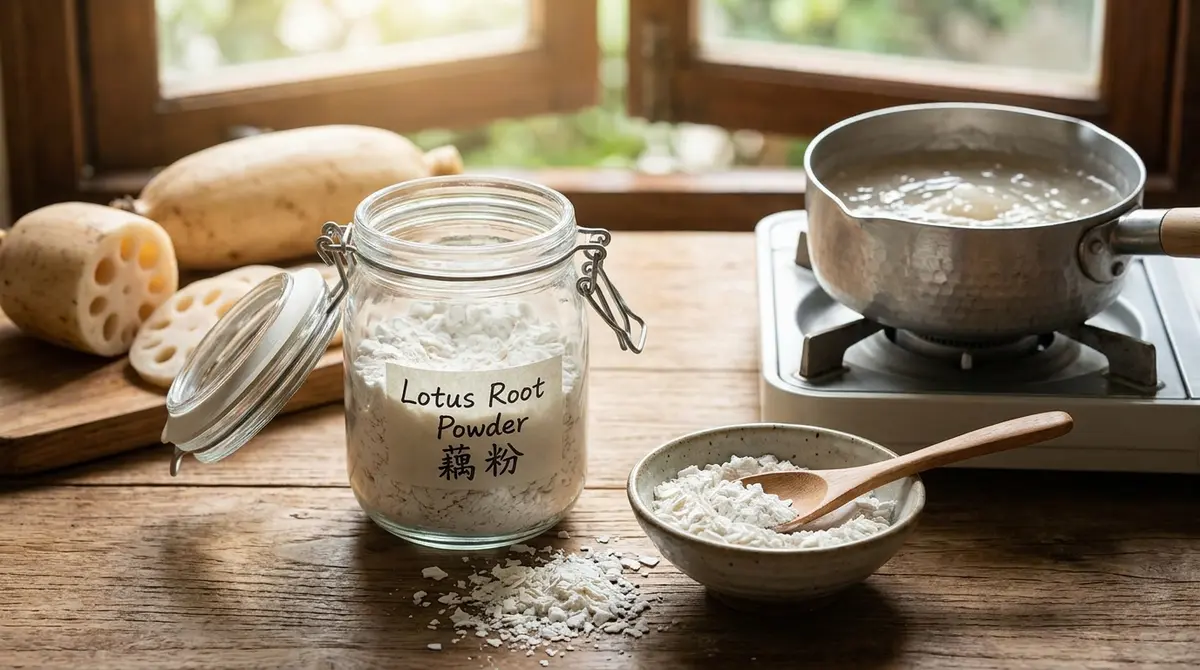
Most Western cooks meet lotus first as the crossword-puzzle vegetable — a coin of white rhizome with a ring of airy holes, fried until it is crisp and lightly sweet. Lotus root powder is the same plant, Nelumbo nucifera, dried and ground into a fine, pale starch that has quietly done heavy lifting in Chinese kitchens for centuries. If you have ever wondered how a restaurant soup gets that silkiness that is not cream and not slurry, this powder is often the answer. It is starchy, mild, and a little sweet, with none of the exotic aroma people expect.
Flavor Profile & Notes
The powder tastes faintly nutty and gently sweet, with a clean finish that lets it disappear behind what you cook it with. It is more about texture than taste: dissolved in hot water it turns opalescent and glossy, thickening the way good cornstarch does but with a finer, more velvety pull. Fried in batters it sets up crisp and light. Because it is so neutral, lotus root powder is the workhorse — it thickens, coats, crisps, and settles, and the bigger the dish, the more you appreciate that it never fights the flavors around it.
Health Benefits & Nutrition
Lotus root in any form is a genuinely respectable pantry food: high in fiber, low in fat, with a decent supply of vitamin C, potassium, and copper in the fresh root. The powder itself is mostly starch with a little protein and fiber, so it works as a gluten-free thickener and binder. Traditional Chinese practice has used it in soups for digestion and as a gentle soothing ingredient for generations. The honest framing: it is a good starch to have on hand, particularly when someone at the table eats gluten-free, but it is fuel and fiber more than a cure for anything.
Best Culinary Pairings
Give it to soups and stews where you want body without dairy — a spoonful stirred into a corn and chicken soup, or into the broth of braised pork, turns it glossy and rich. It shines in sweetened desserts: lotus root paste sweetened with a little sugar is a classic filling, and it works beautifully in a silken dessert soup with red dates and goji berries. In batters, mix it into tempura or into the coating for fried fish and vegetables for extra shatter and crunch. It also binds dumpling fillings the way a little egg does.
Quick Substitutes
Cornstarch or potato starch thickens almost identically in soups and sauces, with slightly less sweetness. Arrowroot powder gives the same glossy clarity and is equally trustworthy gluten-free. Tapioca starch fries a touch more chewy but crunches up fine in batters. If a recipe calls for fresh lotus root and you only have powder, do not try the swap — the powder is for thickening, not for that fried-coin texture.
FAQ / Quick Facts
- How long does it keep? Sealed in a dry jar, lotus root powder keeps for a year or two without trouble.
- What does it taste like? Faintly nutty and gently sweet — mostly, it tastes like silky texture.
- Botanical family / Form: Nelumbonaceae; dried starch powder. Best uses: gluten-free thickening, batters, and dessert soups.
Related Articles
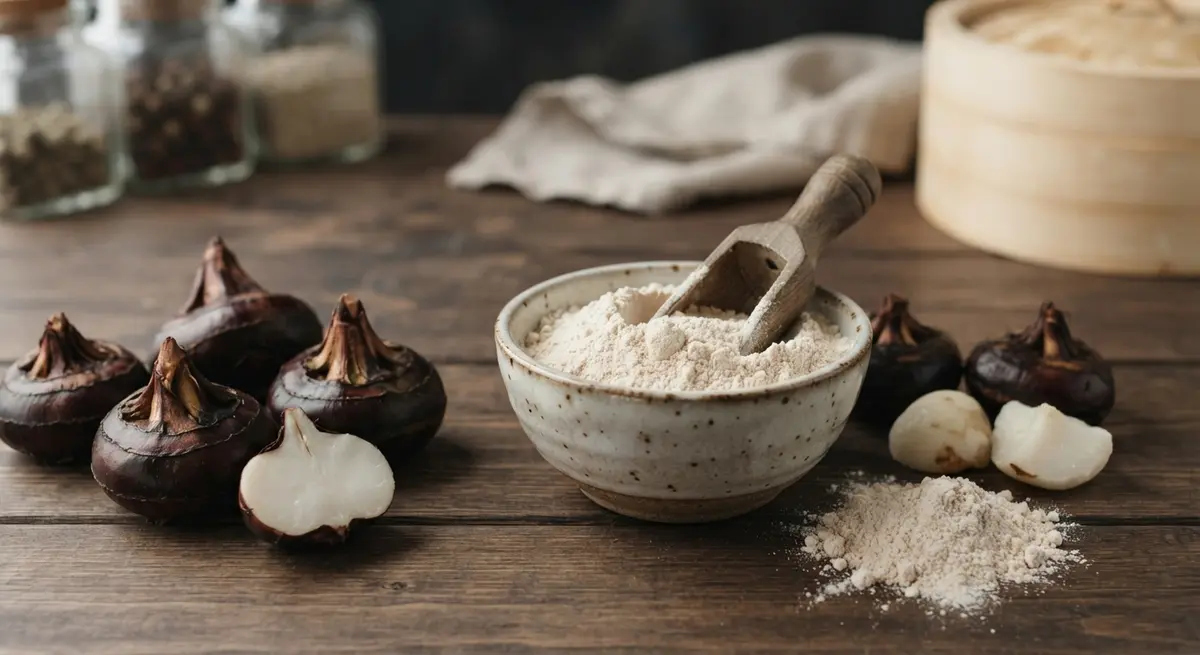
Water Chestnut Powder: Flavor Profile, Health Benefits & Culinary Uses
The starch and flour of the crunchy aquatic water chestnut: how to thicken, batter, and bake with it, from Chinese stir-fries to Indian fasting kitchens.
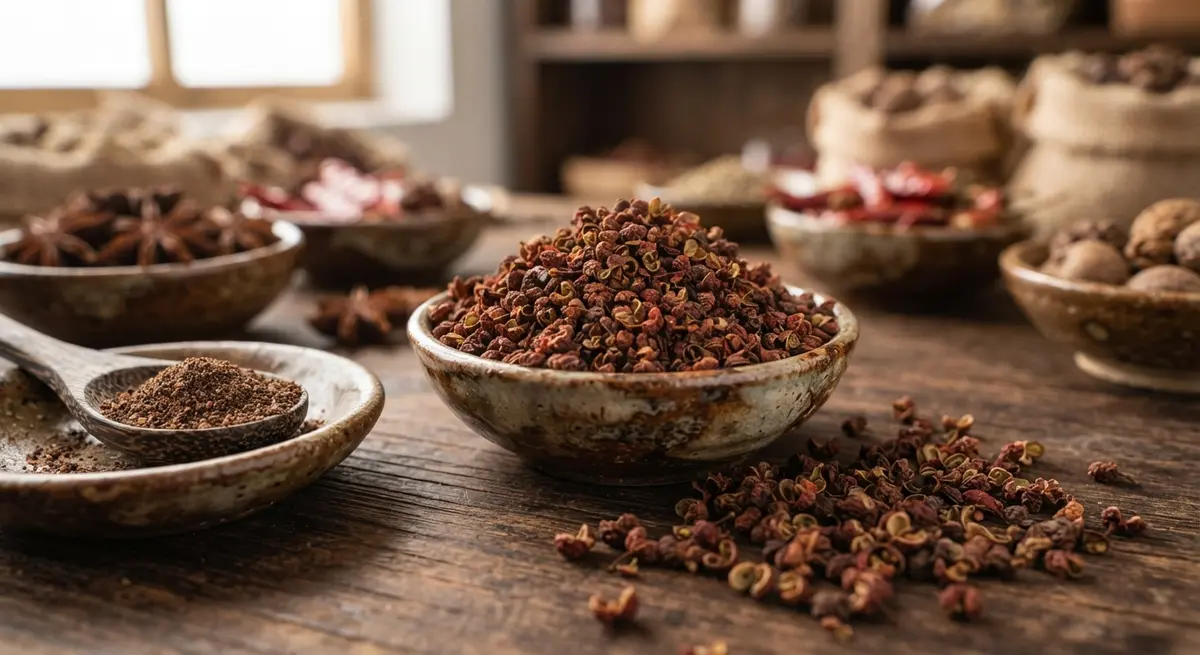
Sichuan Pepper: Flavor Profile, Health Benefits & Culinary Uses
The tingly, vibrating mouthfeel called ma is unique to Sichuan pepper, and it turns out to be easier to work with than most cooks expect once you stop scorching it.
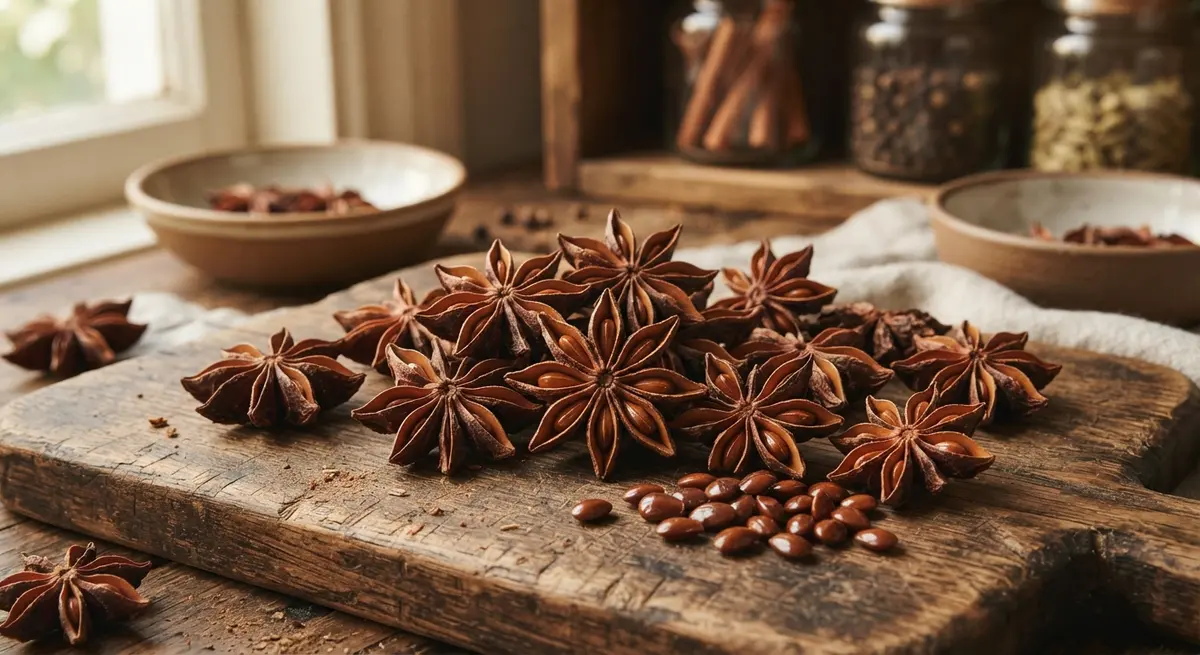
Star Anise: Flavor Profile, Health Benefits & Culinary Uses
The eight-pointed stars in pho broth and Chinese five-spice are star anise, a resinous licorice-spice from a small evergreen tree. Here is how to cook with it.
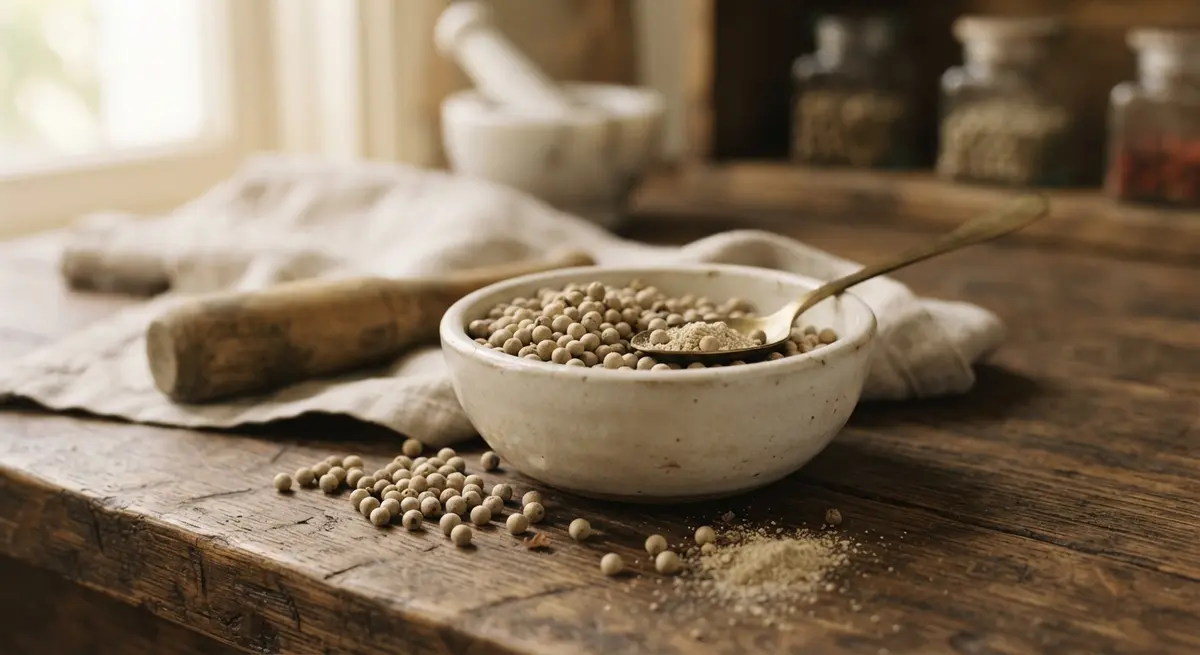
White Pepper: Flavor Profile, Health Benefits & Culinary Uses
The same Piper nigrum vine gives us black and white pepper. White pepper is milder in aroma but sharper in heat, made for light sauces and pale dishes.
About the Authors
This recipe and guide was developed, tested, and approved in our home kitchen and daily life. Jamy is a retired Food Service District Manager and Early Childhood Program Manager who spent his career overseeing multi-site restaurant operations, large-scale culinary production, and daycare menu management. Kaïna brings the ultimate real-world test: making sure it brings ease and joy to our kids on a busy weeknight.
Read more about our professional background and philosophy →