Wild Za'atar: Flavor Profile, Health Benefits & Culinary Uses
By the QuiteRecipes team (Jamy & Kaïna)
Every za'atar jar starts as a wild hillside herb — meet Origanum syriacum, the thyme-like green leaf that gave the famous blend its name and soul.
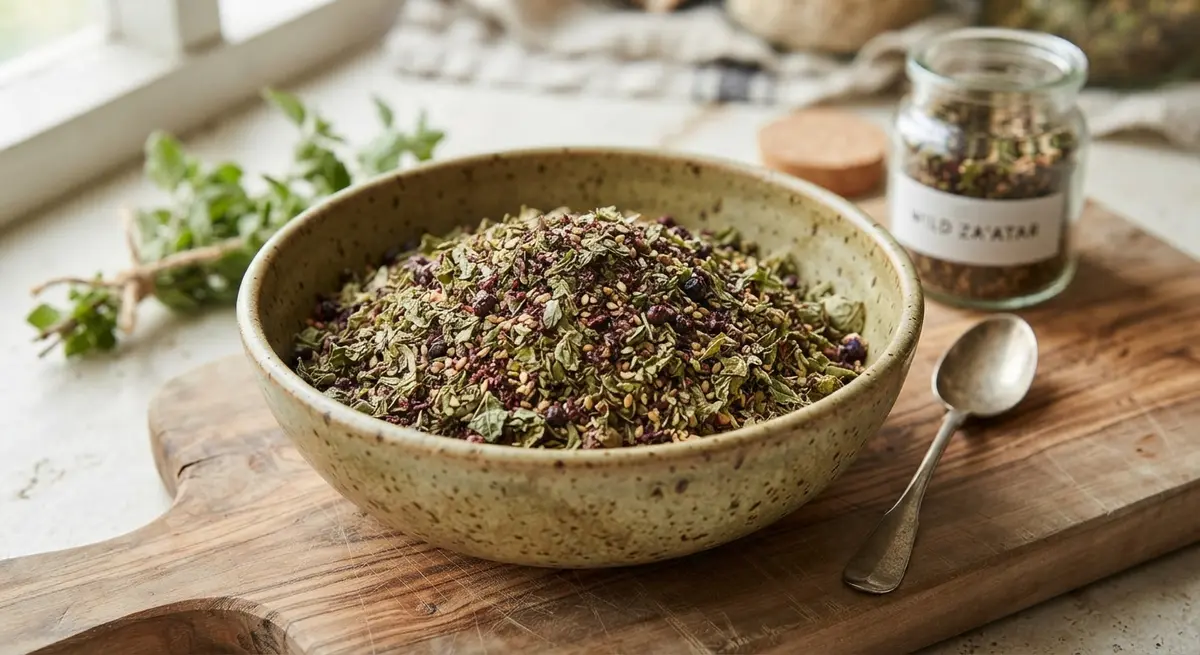
Every jar of za'atar started somewhere, and that somewhere is a small, scrubby, extremely aromatic plant that grows wild across the hills of the eastern Mediterranean — green za'atar, known to botanists as Origanum syriacum. The famous blend takes its name from it.
Wild za'atar is the original. It is a low-growing relative of oregano that smells of thyme, oregano, and the mountain itself, picked wild by villagers across Palestine, Syria, Lebanon, and Jordan, then sun-dried into the leafy green flakes you find in markets. If you taste the herb before it meets sumac and sesame, you understand why cooks build a whole cuisine's flavor memory around it.
Flavor Profile & Notes
Wild za'atar is thyme-forward and savory, with an oregano's herbal depth and a faint mint brightness on the finish — like a handshake between thyme and mint, sharpened by a light camphor note. Dried, it stays greener and more floral than standard oregano, with a crispness that makes it an instant base for salads rather than only cooked dishes. The flavor is intense, so a little leaf goes a long way. Like its cultivated relatives, it blooms when warmed in olive oil, turning a plain flatbread into manakish in minutes. Buy from reliable sources: wild gathering is a beloved but diminishing tradition, and cultivated za'atar now fills most jars honestly.
Health Benefits & Nutrition
Wild za'atar carries the same aromatic compounds as its oregano and thyme cousins — thymol and carvacrol, the molecules studied for antioxidant and antimicrobial activity, which are the reason the Levant has brewed it into tea for colds and digestion for generations. Modern research on the Origanum family backs some of that reputation, though studies on wild za'atar specifically are thin. As an everyday herb it is a rich-flavored, zero-calorie way to season vegetables and bread, which is the healthiest thing you can say about any spice: it makes good food taste better.
Best Culinary Pairings
Manakish is the entire reason to own it — flatbread pressed with wild za'atar and olive oil, baked until the edges crack. It shines fresh in fattoush and over tomatoes and cucumber, scattered on labneh, folded into eggs, and dusted over roasted chicken. Steeped as a mountain tea with honey, it warms a cold evening. It pairs naturally with olive oil, yogurt, lemon, sumac, and toasted sesame — the whole za'atar blend, reassembled at your table.
Quick Substitutes
Dried Greek oregano, or better, Syrian oregano, is the closest leaf-for-leaf swap; add a pinch of dried mint to recover that herbal brightness. If a recipe calls for the herb and you only have the za'atar blend, use the blend — the flavor memory the recipe is chasing is already there. A mix of thyme, oregano, and a sprinkle of mint lands you in the same hillside neighborhood in a hurry.
FAQ / Quick Facts
- Is wild za'atar the same as the za'atar blend? No — it is the single herb at the blend's heart, which then meets sumac, sesame, and salt.
- What does it taste like? Thyme and oregano with a bright mint finish and a light camphor sharpness.
- Botanical family / Form: Lamiaceae — Origanum syriacum, dried leaves. Use in flatbreads, salads, teas, and with olive oil.
Related Articles
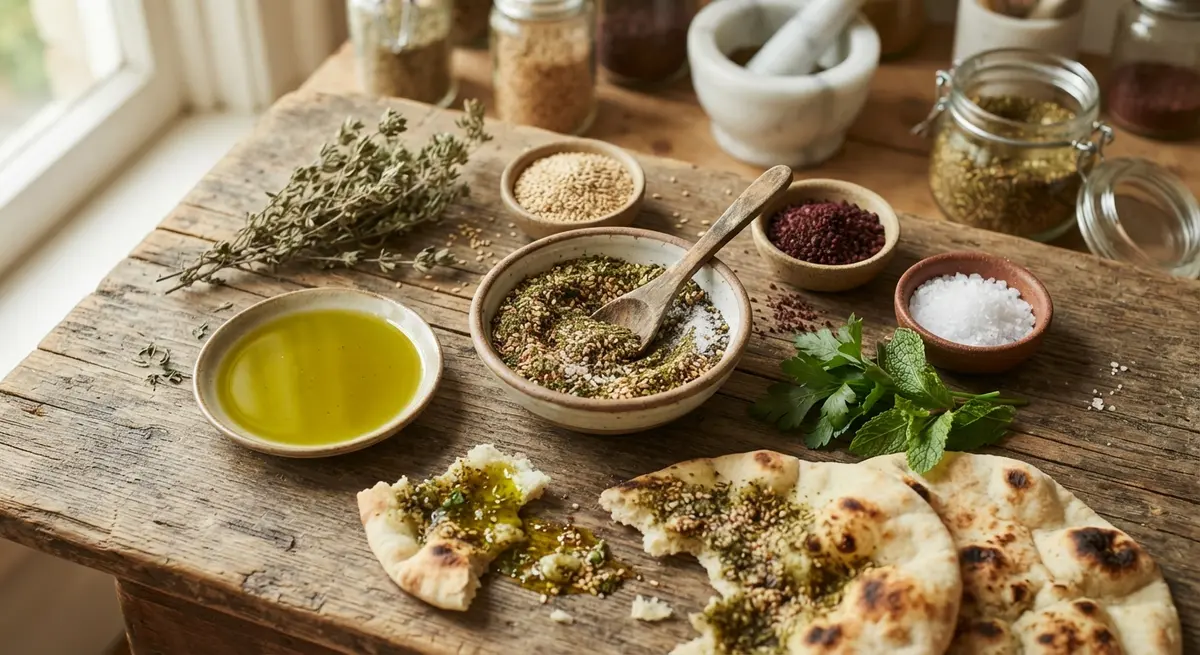
Za'atar: Flavor Profile, Health Benefits & Culinary Uses
Za'atar is a tricky word that names both a wild herb and a beloved blend — here is what is really in the jar, and the easiest ways to start using it tomorrow morning.
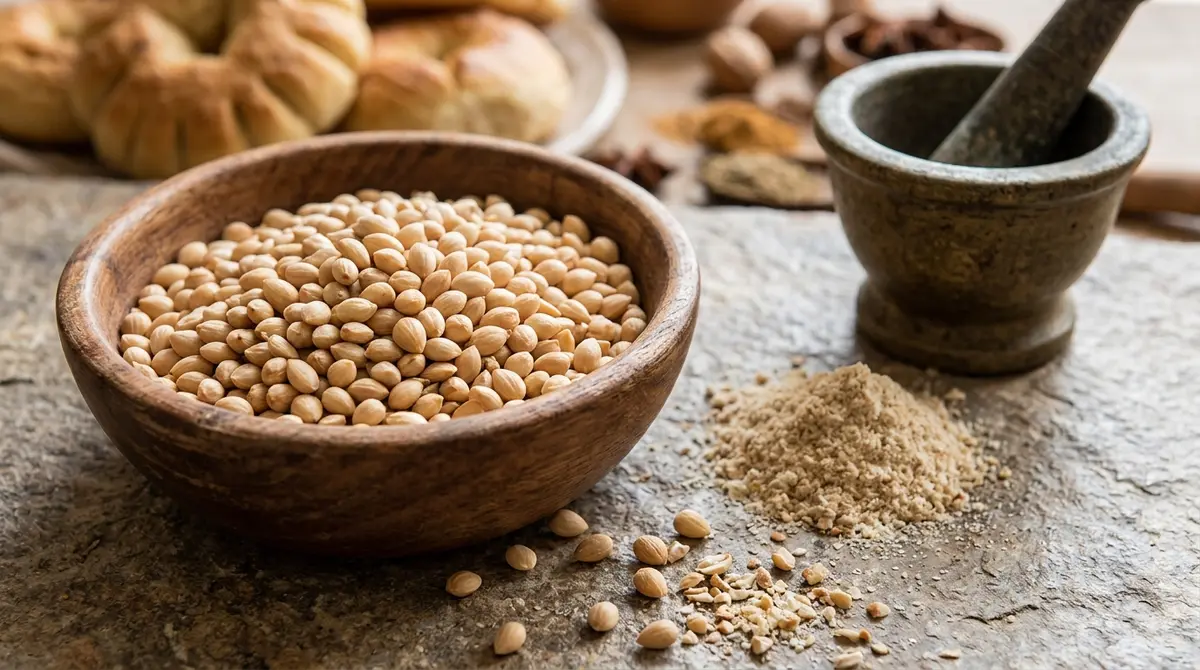
Mahlab: Flavor Profile, Health Benefits & Culinary Uses
Meet the quiet secret of Middle Eastern baking: the ground pits of the St. Lucie cherry, which make breads and cookies taste of almonds, rose, and faint cherry.
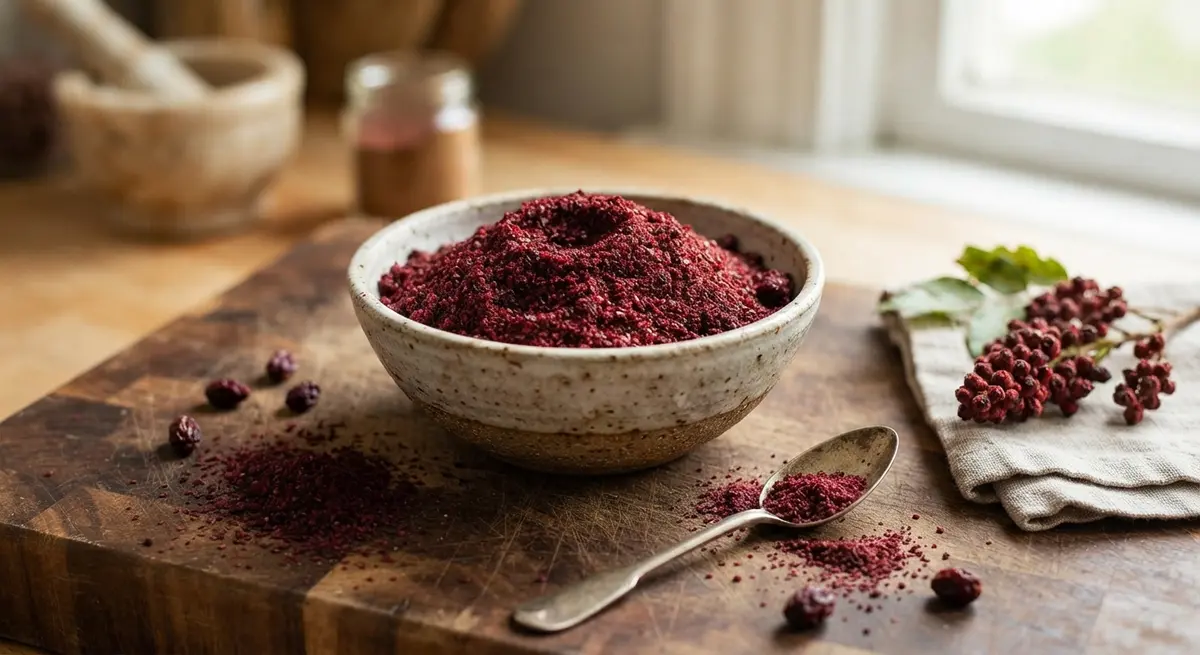
Sumac: Flavor Profile, Health Benefits & Culinary Uses
Why sumac belongs on every Mediterranean and Middle Eastern shelf: the story of the sour red berry, its best partners, and honest substitutes when the jar runs out.
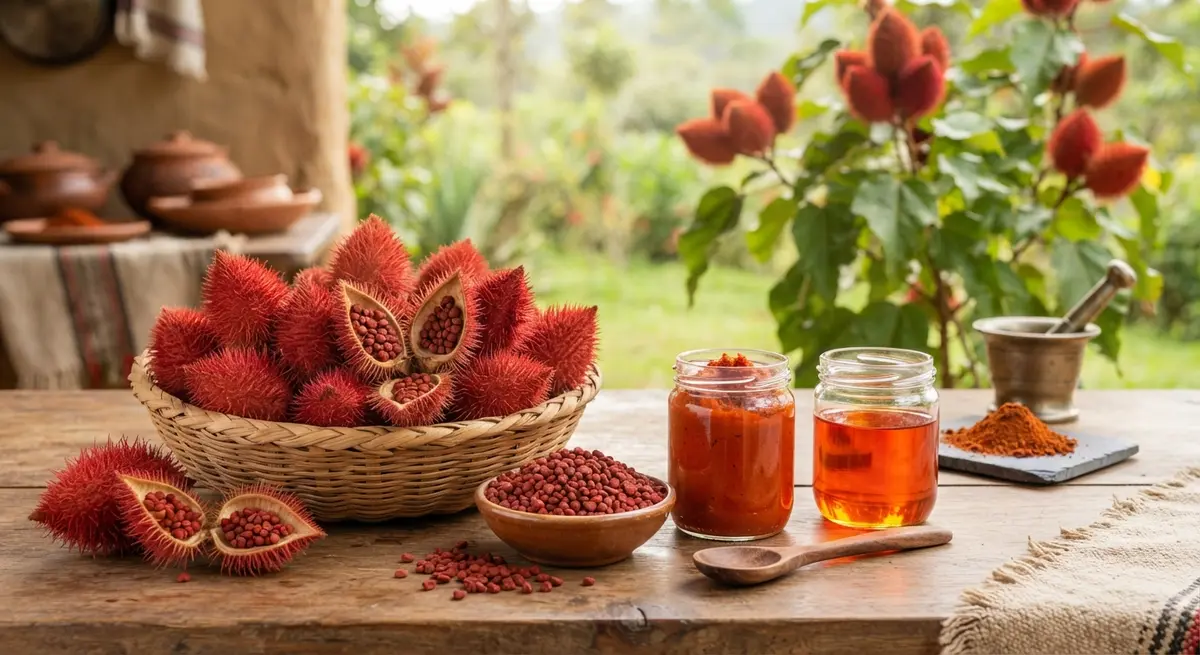
Achiote (Annatto): Flavor Profile, Health Benefits & Culinary Uses
Tiny coral-red seeds that paint food golden: the annatto tree's achiote, how to use the seeds and the Yucatan paste, and honest color substitutes.
About the Authors
This recipe and guide was developed, tested, and approved in our home kitchen and daily life. Jamy is a retired Food Service District Manager and Early Childhood Program Manager who spent his career overseeing multi-site restaurant operations, large-scale culinary production, and daycare menu management. Kaïna brings the ultimate real-world test: making sure it brings ease and joy to our kids on a busy weeknight.
Read more about our professional background and philosophy →