Tamarind: Flavor Profile, Health Benefits & Culinary Uses
By the QuiteRecipes team (Jamy & Kaïna)
Tamarind is the sour-sweet soul of pad thai, sambar, and a thousand chutneys — what the pods are, how to buy them, and the honest substitutes.
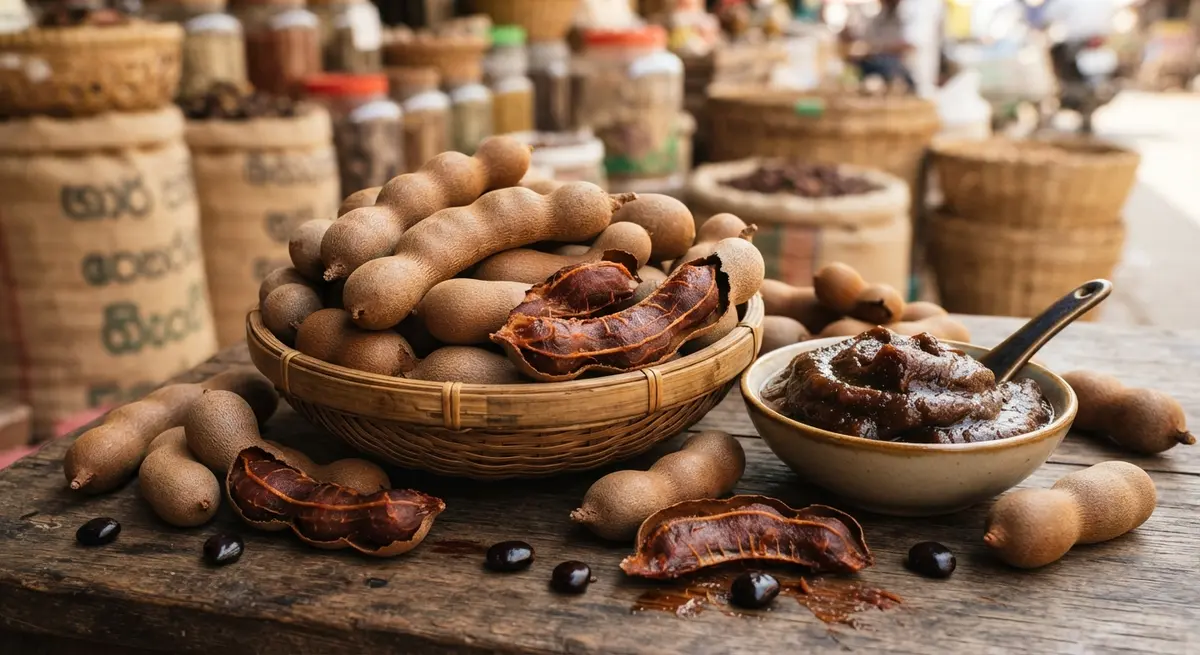
There is a sourness that wakes a whole dish up, and a sourness that slaps it down, and tamarind has mastered the first one. It comes from the sticky brown pulp inside the fat pods of the tamarind tree — Tamarindus indica, a legume that grew its way from Africa across India and all of Southeast Asia, where it became one of the most dependable ingredients in the kitchen. Indian sambar, pad thai, sweet-and-sour soups, refreshing drinks, sticky chutneys — a startling share of the world's great sour-flavored food is tamarind wearing different outfits. Every cook who owns a block of it understands why.
Flavor Profile & Notes
Tamarind's personality is a balancing act: sour, fruity, and faintly sweet, with a caramel-ish warmth that no citrus can imitate. The pulp tastes of apricot and date and lemon all at once, and the tartaric acid — tamarind's signature — gives that clean, mouth-watering tang. Immature pods lean sharply sour; ripened pulp deepens into something almost jammy. Buy it three ways. Whole pods mean the most work. Pressed blocks of sticky seed-studded pulp are the everyday choice — you soak a piece in warm water and squeeze. Concentrated paste or jarred pulp is the fastest. Powder is the weakest and least flavorful of the lot and fine for dry rubs only.
Health Benefits & Nutrition
Tamarind is genuinely nutritious in way the tropics often gift us: a good source of magnesium, potassium, and thiamin, plus respectable fiber, and it has no fat to speak of. Its tartaric and other organic acids are what traditional systems reached for as a mild digestive and cooling ingredient, and modern kitchens simply repeat that instinct when tamarind goes into lentils that need to sit easy. It is also high in natural sugars, so a little goes a long way. The honest note: it is a fruit, not a medicine, and its role in your life is best as the brilliant sour in your pot.
Best Culinary Pairings
South Indian cooking uses it as naturally as salt: sambar, rasam, and tamarind rice all lean on it. Thai cooks draw on it for pad thai sauce, tom yum, and massaman curry. Mexican and Filipino kitchens keep it in sweet-and-sour stews and sauces. Stir a spoonful into lentil soup, glaze salmon or roasted carrots with it, or simmer it with brown sugar and chili for a chutney that belongs on everything. Balance the rule: tamarind wants salt and a little heat beside it, and a touch of sweetness if the batch tastes too sharp.
Quick Substitutes
Lime juice plus a pinch of brown sugar gets you the brightness and the sweetness, though not the fruity depth. Amchur (dried green mango powder) works dry where tamarind works wet. A splash of pomegranate molasses adds the dark, fruity tang in glazes. None of these are tamarind — the caramel note is uniquely its own — but each holds a dish together when the pantry has failed you.
FAQ / Quick Facts
- How long does a tamarind block keep? Wrapped airtight, a pressed block keeps for a year or more in the pantry.
- What does it taste like? Sour and fruity with a caramel-sweet warmth — like apricot, date, and lemon together.
- Botanical family / Form: Fabaceae (legume family); pods, pressed pulp block, paste, concentrate, and powder. Best uses: sambar, chutneys, pad thai, and tangy stews.
Related Articles
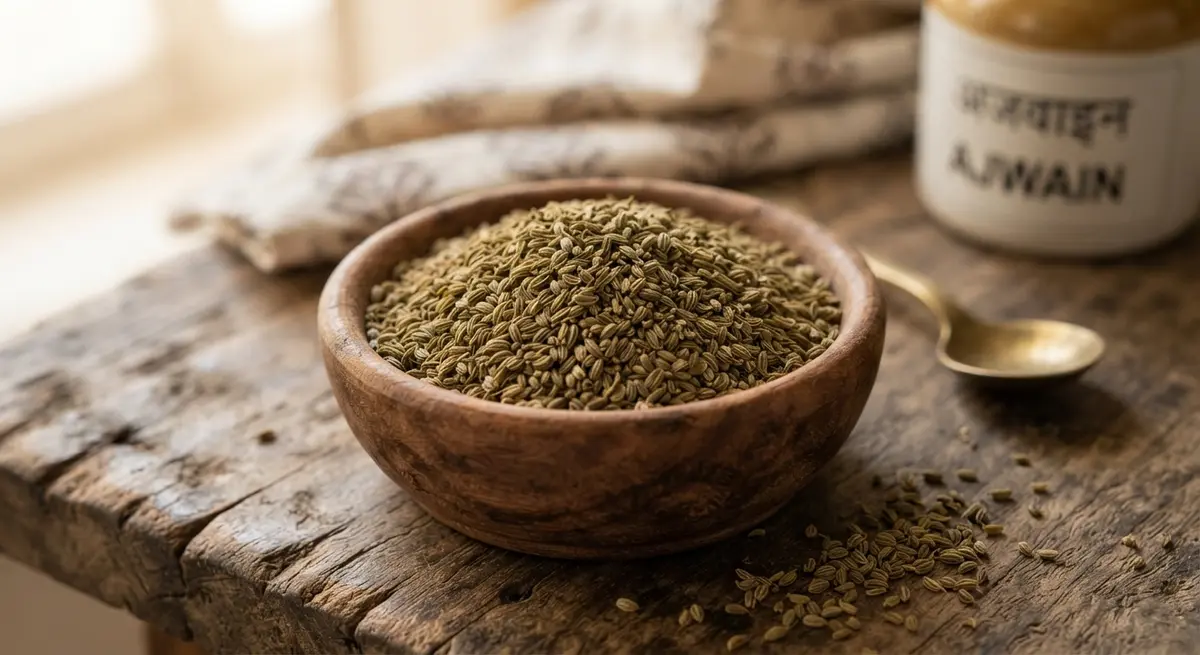
Ajwain (Carom) Seeds: Flavor Profile, Health Benefits & Culinary Uses
A tiny gray-brown seed that tastes like thyme, oregano, and cumin had a baby with a timer fuse. Here is how and why Indian kitchens use ajwain.
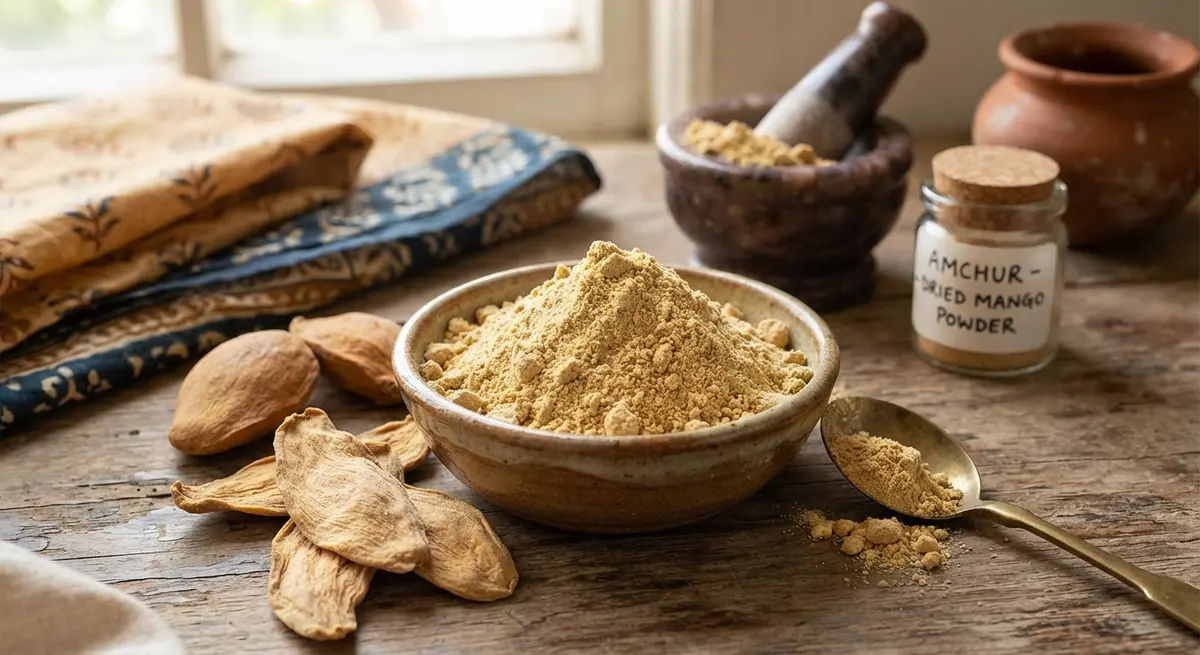
Amchur (Green Mango Powder): Flavor Profile, Health Benefits & Culinary Uses
Powdered green mango that adds bright sour notes without a drop of liquid. Amchur turns snack mixes, dry rubs, and curries tart in one shake.
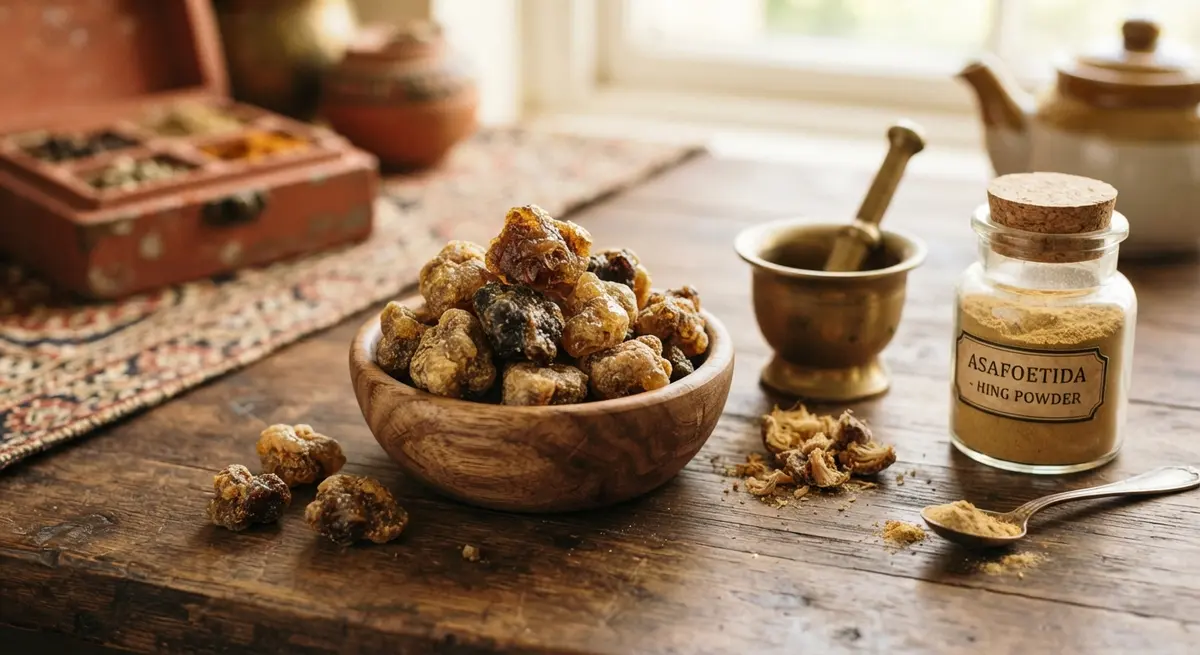
Asafoetida (Hing): Flavor Profile, Health Benefits & Culinary Uses
The worst-smelling raw spice in the world turns into quiet onion-garlic gold the moment it hits hot oil. Here is the one rule for using hing without fear.
Bird's Eye Chili: Flavor Profile, Health Benefits & Culinary Uses
Small, searing, and the soul of Thai heat: what bird's eye chili is, how hot it really is, and how to use it politely in curries, sauces, and stir-fries.
About the Authors
This recipe and guide was developed, tested, and approved in our home kitchen and daily life. Jamy is a retired Food Service District Manager and Early Childhood Program Manager who spent his career overseeing multi-site restaurant operations, large-scale culinary production, and daycare menu management. Kaïna brings the ultimate real-world test: making sure it brings ease and joy to our kids on a busy weeknight.
Read more about our professional background and philosophy →