Amchur (Green Mango Powder): Flavor Profile, Health Benefits & Culinary Uses
By the QuiteRecipes team (Jamy & Kaïna)
Powdered green mango that adds bright sour notes without a drop of liquid. Amchur turns snack mixes, dry rubs, and curries tart in one shake.
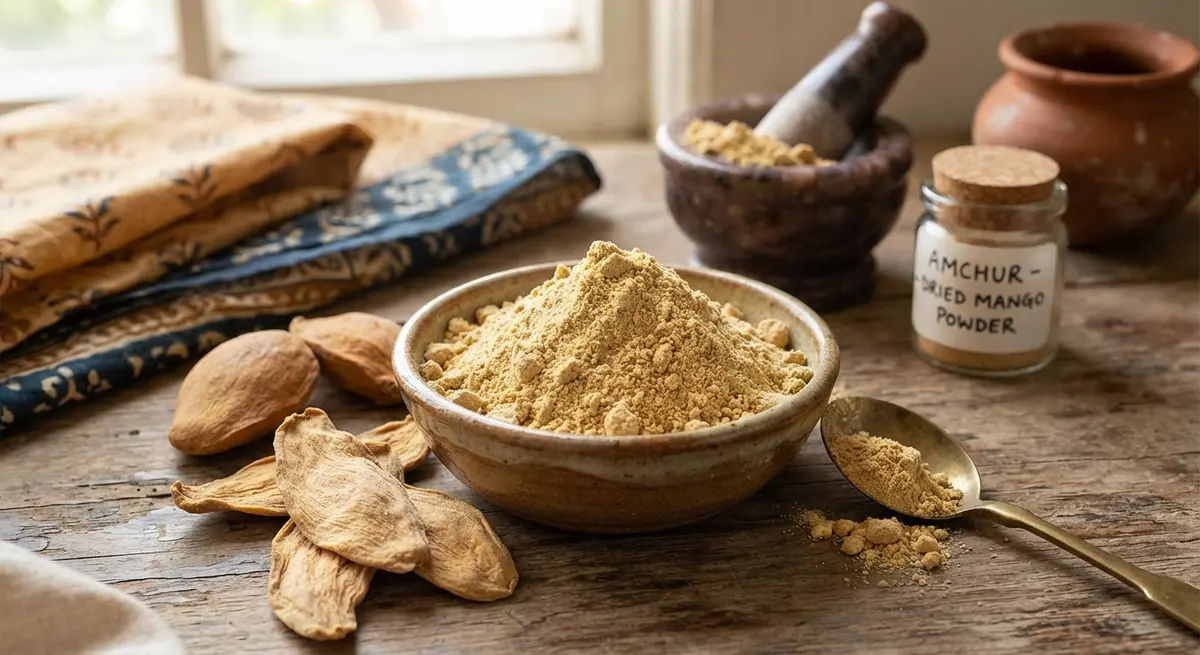
Some of the best ideas in cooking are also the laziest, and amchur proves it. Someone in north India centuries ago looked at a pile of unripe green mangoes in the hot sun and thought: dry those, grind them, and you can have sour on demand forever. Amchur (also spelled amchoor) is exactly that — tart, unripe mangoes sliced paper-thin, sun-dried until pale and leathery, then ground into a fine, almost chalky powder. It is the dehydrated lemon of the Indian pantry, and it solves a problem every cook has: what do you use when a dish needs sour but absolutely cannot take more liquid?
Flavor Profile & Notes
Amchur tastes like a green fruit at its tartest: bright, sharp, and faintly sweet underneath, with that clean fruity sourness that citrus powder never quite gets. It is not bitter, and it carries none of mango's floral perfume — drying sees that off. What survives is pure acid brightness. Because it is a powder, amchur dissolves into dishes slowly, works in anything dry, and never thins a sauce the way lemon juice does. A whisper of it brightens without announcing itself; a heavier hand makes a dish properly puckery.
Health Benefits & Nutrition
A dried green fruit keeps a decent share of its mango nutrients, and amchur comes with vitamin C, fiber, and potassium along for the ride. Traditional Ayurvedic food practice treats sour, drying ingredients like this as natural digestive aids, and there is nothing mystical about enjoying a tart powder that gets the mouth watering before the meal. The honest truth: amchur is mostly a flavor tool, and the quantities in a bowl of chaat are modest. If you want the vitamin C, eat the fresh fruit; if you want the tang, reach for the powder.
Best Culinary Pairings
Chaat is its kingdom — sprinkle it over crispy, spicy street-snack mixes with a pinch of chaat masala and it makes the whole bowl sing. It is the secret sour in many Indian curries, where it rounds out tomato and spice without changing the texture. In dry rubs for roasted or pan-seared vegetables and paneer, amchur works where vinegar cannot, giving a meat-free or creamy dish the same lift lemon gives fish. Stir it into yogurt-based raita, or into chutneys and marinades, and let it sit — the powder needs a few minutes to wake up.
Quick Substitutes
Lemon or lime juice is the everyday stand-in, added after cooking so the dish keeps its brightness — use roughly a teaspoon of juice for a half teaspoon of amchur. Tamarind paste works in wet dishes. Sumac is the surprise cousin: it is another dry, fruity sour and the closest powder-for-powder swap. For dry rubs, sumac is the only honest substitute, since juice would wreck the coating.
FAQ / Quick Facts
- How long does it keep? A year or more in a dry jar, and it is forgiving of kitchen heat.
- What does it taste like? Bright, tart green mango — sour and faintly sweet, never bitter.
- Botanical family / Form: Anacardiaceae (cashew family); sun-dried unripe mango, ground to powder. Best uses: chaat, dry rubs, curries, and raita.
Related Articles
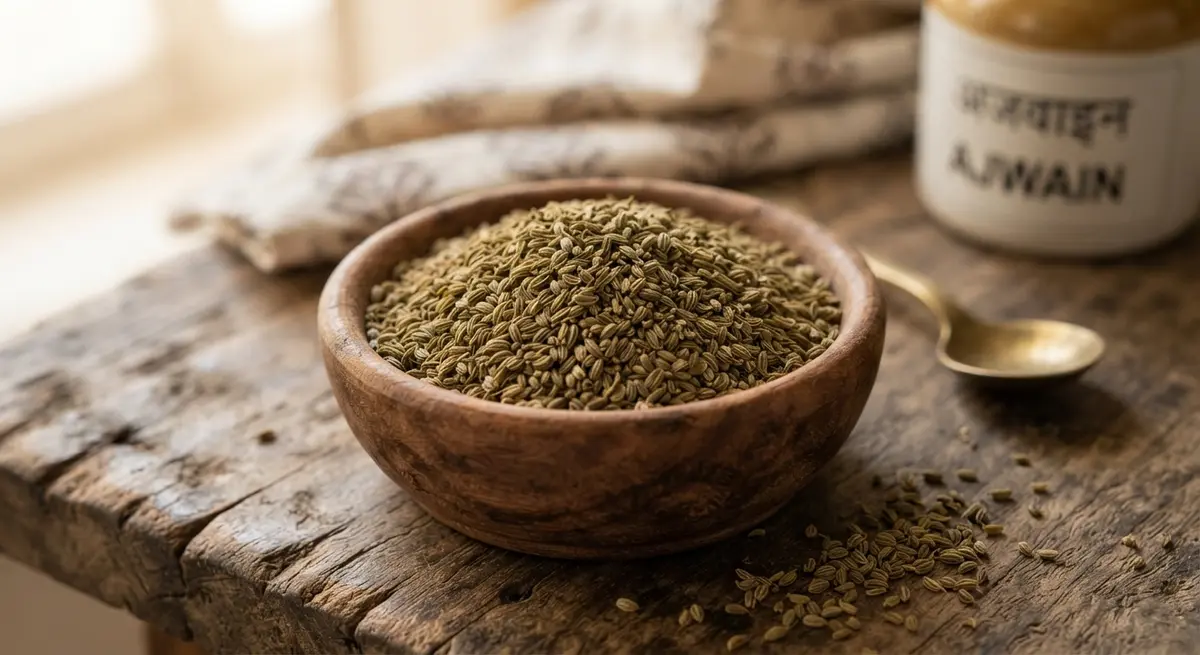
Ajwain (Carom) Seeds: Flavor Profile, Health Benefits & Culinary Uses
A tiny gray-brown seed that tastes like thyme, oregano, and cumin had a baby with a timer fuse. Here is how and why Indian kitchens use ajwain.
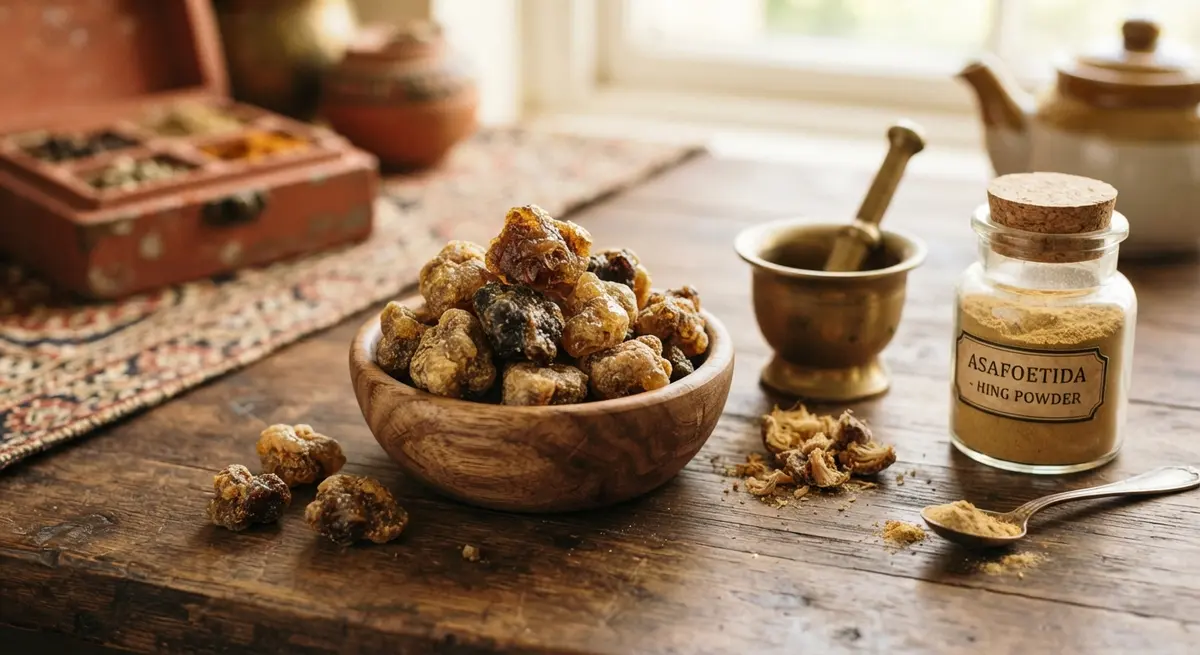
Asafoetida (Hing): Flavor Profile, Health Benefits & Culinary Uses
The worst-smelling raw spice in the world turns into quiet onion-garlic gold the moment it hits hot oil. Here is the one rule for using hing without fear.
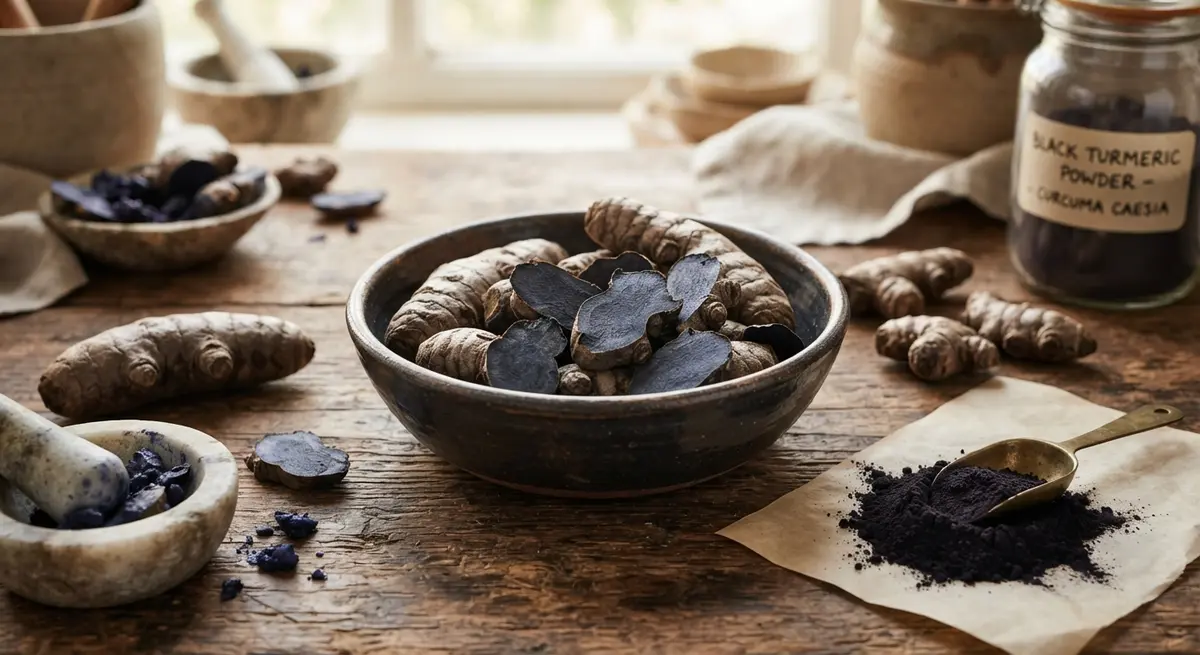
Black Turmeric: Flavor Profile, Health Benefits & Culinary Uses
The wild dark turmeric of eastern India, camphor-strong and almost blue inside: what black turmeric is, how it stuns cooks, and its honest uses in the kitchen.
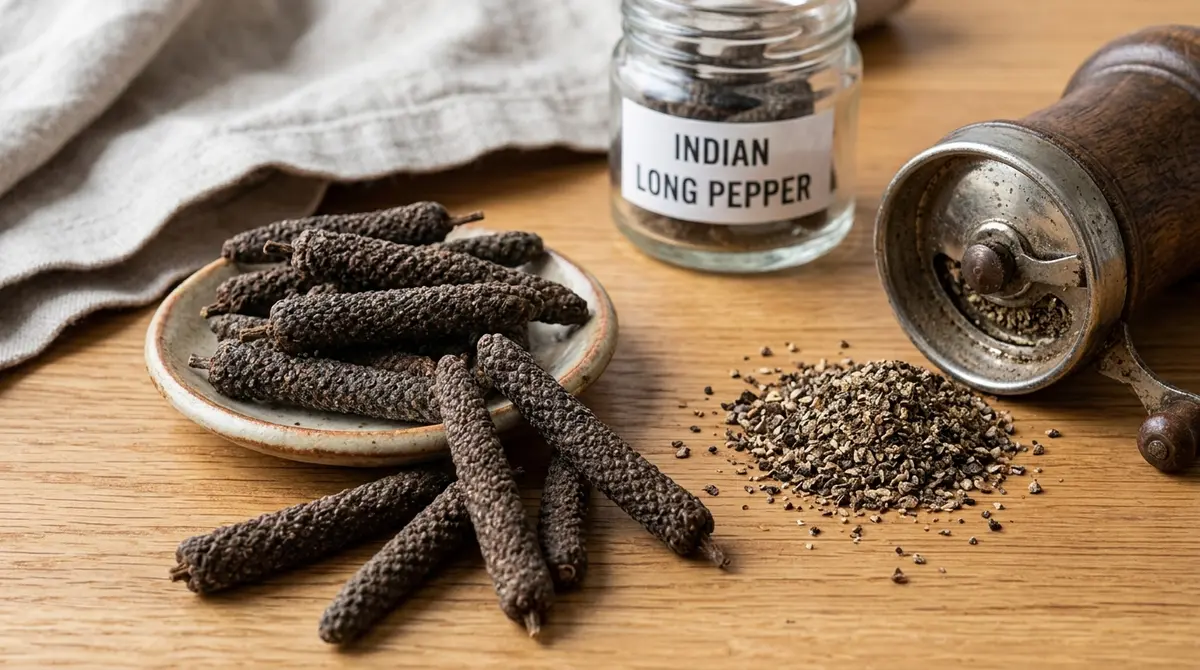
Indian Long Pepper: Flavor Profile, Health Benefits & Culinary Uses
Before black pepper took over Europe, long pepper was the prize, and pippali is still a quiet star in Ayurvedic spice mixes and warming winter dals.
About the Authors
This recipe and guide was developed, tested, and approved in our home kitchen and daily life. Jamy is a retired Food Service District Manager and Early Childhood Program Manager who spent his career overseeing multi-site restaurant operations, large-scale culinary production, and daycare menu management. Kaïna brings the ultimate real-world test: making sure it brings ease and joy to our kids on a busy weeknight.
Read more about our professional background and philosophy →