Indian Long Pepper: Flavor Profile, Health Benefits & Culinary Uses
By the QuiteRecipes team (Jamy & Kaïna)
Before black pepper took over Europe, long pepper was the prize, and pippali is still a quiet star in Ayurvedic spice mixes and warming winter dals.
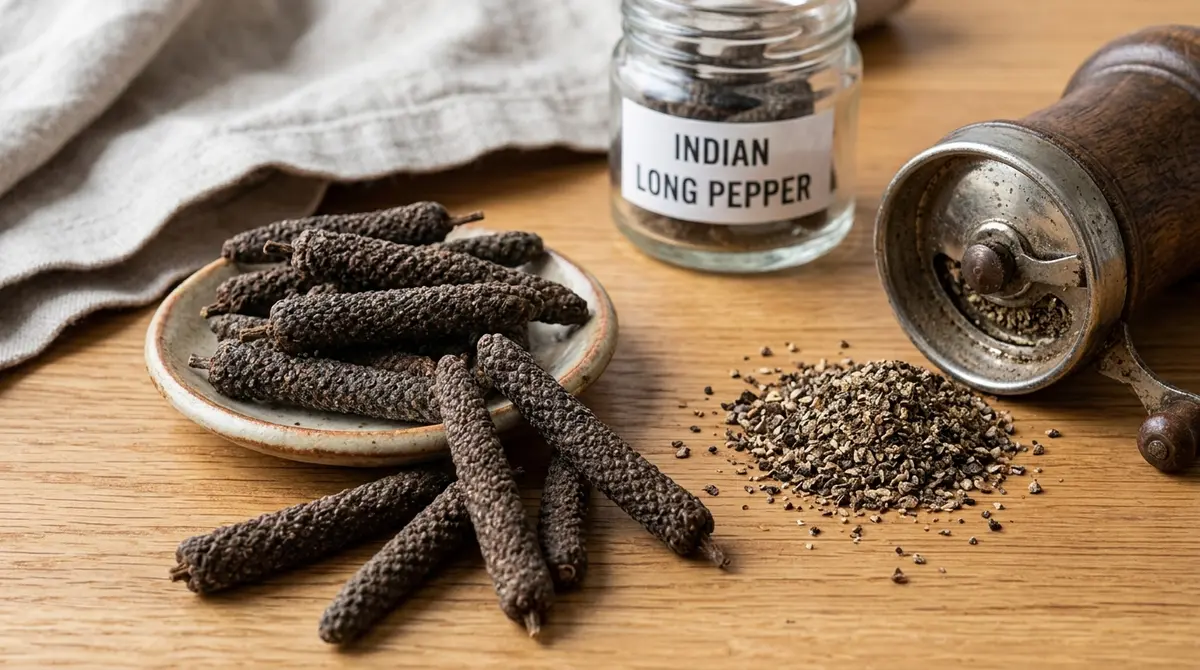
Long pepper is the pepper that history forgot. Black pepper famously made the spice trade possible, but long pepper ruled the Roman table centuries earlier — and it was the more expensive spice on the market, prized precisely because it was rarer and more complex. It grows in India as Piper longum, a true pepper plant that flowers into a distinctive slender spike like no pepper you have seen: think of a tight, reddish-brown pinecone the length of your pinky. Crushed, it delivers a deep, tobacco-like, faintly piny warmth that reads closer to spice blend than to plain pepper.
It is also the pippali of Ayurvedic tradition, part of trikatu, the classic triple-warming blend alongside ginger and black pepper. That heritage is real and worth knowing, but in the pan it simply brings something no other pepper can: complexity and caramel depth without overwhelming heat.
Flavor Profile & Notes
Earthy, woody, and warmly pungent with a quiet piny or tobacco edge and lingering heat that builds slowly rather than slapping. Interestingly, its fire is said to intensify with cooking, so a little goes further in a simmering curry than you might expect. Grind it with a mortar and pestle rather than a standard mill; the fibrous, pinecone-like spike can clog blade grinders. Toast briefly in a dry pan first, then grind for the richest aroma.
Health Benefits & Nutrition
In Ayurveda, pippali is classically used as a digestive and respiratory tonic, and it is included in trikatu blends for that reason. The modern science is thin and mostly preliminary, so it is best described accurately: long pepper contains piperine, the same warming compound found in black pepper, and adding it to food is a harmless way to support digestion. It is a seasoning with a honorable tradition, not a substitute for medical advice. Enjoy it in your cooking and let herbalists carry the clinical claims.
Best Culinary Pairings
Indian long pepper belongs in dishes that want depth without heavy heat: lentil soups and rasam, braised winter vegetables, chana masala, and vegetable curries. It is a classic member of garam masala-style blends, where a small piece ground with the other spices rounds out the whole. It also pairs remarkably well with sweet heat — a pinch in a spiced carrot soup or chutney echoes its Ayurvedic roots beautifully.
Quick Substitutes
Black pepper is the honest everyday swap: use about half the amount of black peppercorns, then add a pinch of ground coriander and a whisper of cinnamon to approximate long pepper's woody warmth. For a richer substitute, mix black pepper with a little allspice or a piece of star anise. None of these replicate the exact tobacco depth, but they get you dinner.
FAQ / Quick Facts
- How long does it keep? Whole long pepper spikes keep well for a year or more in a sealed jar; ground, use within a few months.
- What does it taste like? Woody, warm, and gently piny with slow-building heat and a caramel-like depth.
- What is trikatu? A classic Ayurvedic trio of long pepper, ginger, and black pepper used as a warming blend.
- Botanical family / Form / Best uses: Piper longum (Piperaceae) / whole dried fruit spikes / curries, dals, spice blends, and warm soups.
Related Articles
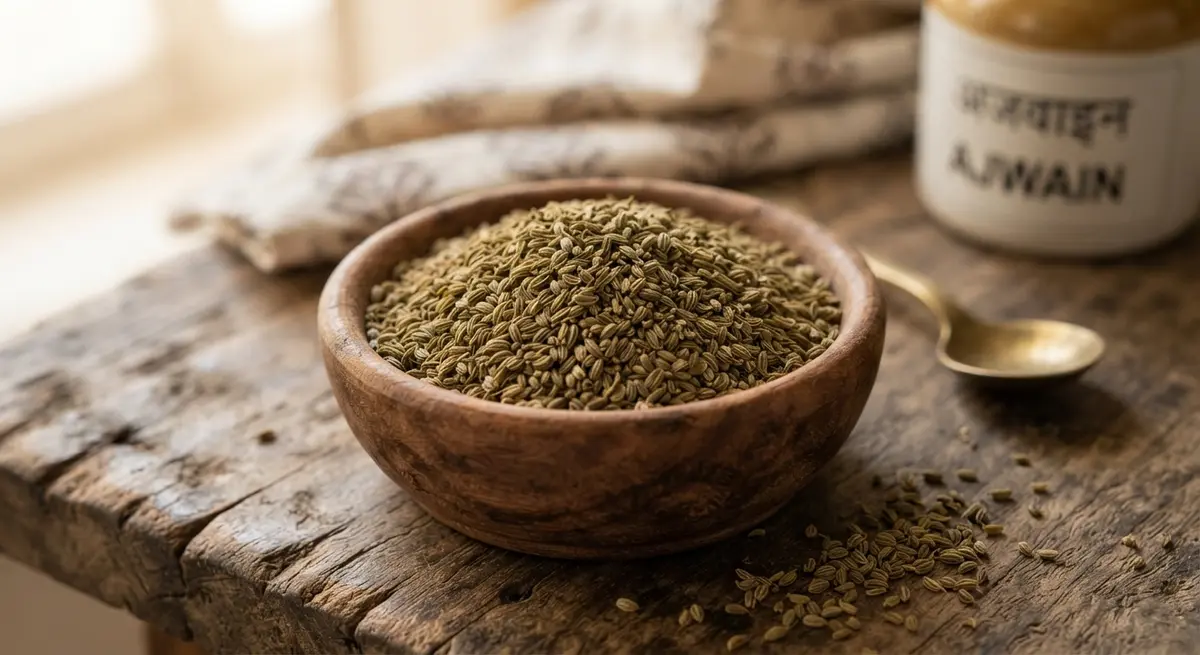
Ajwain (Carom) Seeds: Flavor Profile, Health Benefits & Culinary Uses
A tiny gray-brown seed that tastes like thyme, oregano, and cumin had a baby with a timer fuse. Here is how and why Indian kitchens use ajwain.
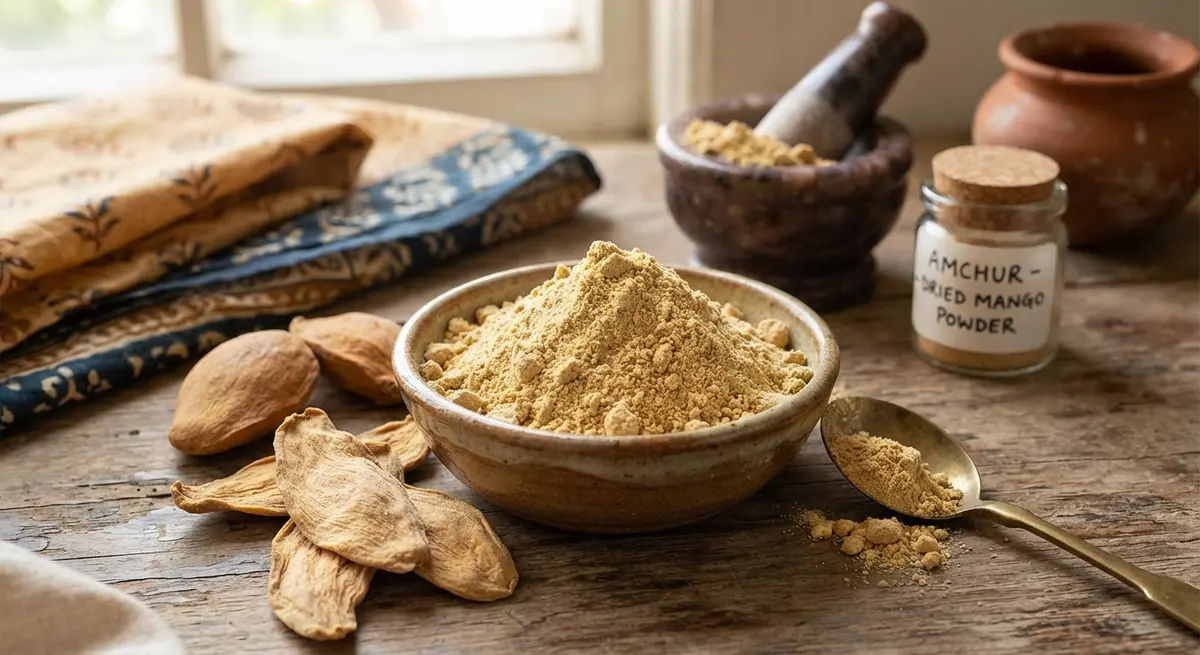
Amchur (Green Mango Powder): Flavor Profile, Health Benefits & Culinary Uses
Powdered green mango that adds bright sour notes without a drop of liquid. Amchur turns snack mixes, dry rubs, and curries tart in one shake.
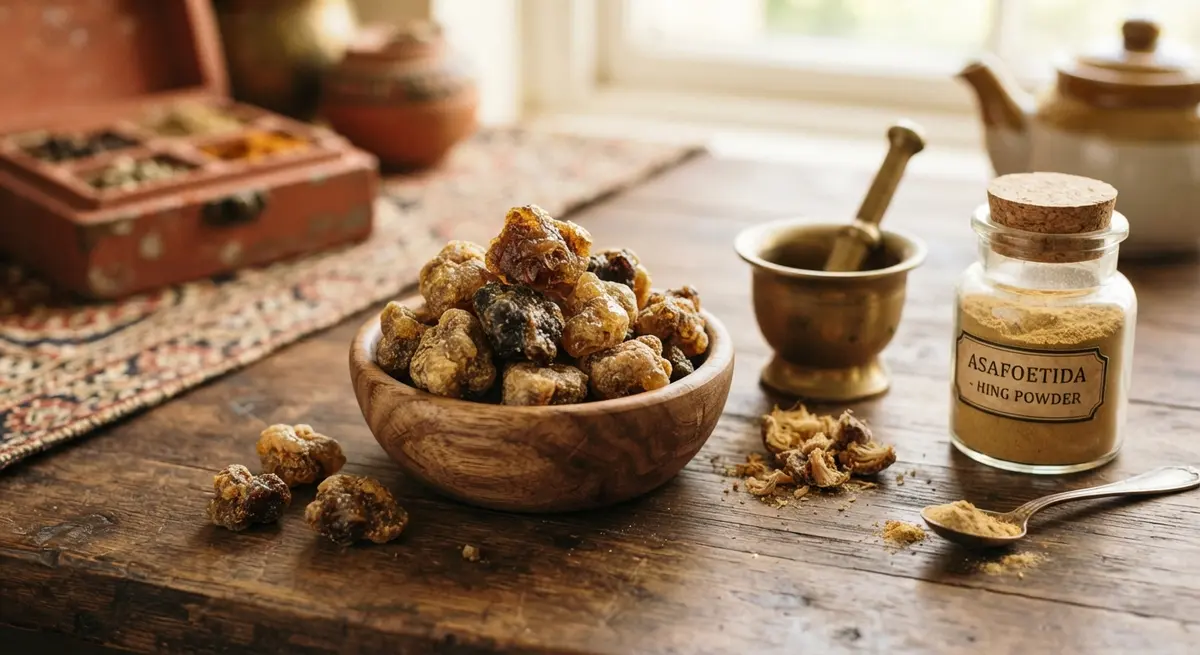
Asafoetida (Hing): Flavor Profile, Health Benefits & Culinary Uses
The worst-smelling raw spice in the world turns into quiet onion-garlic gold the moment it hits hot oil. Here is the one rule for using hing without fear.
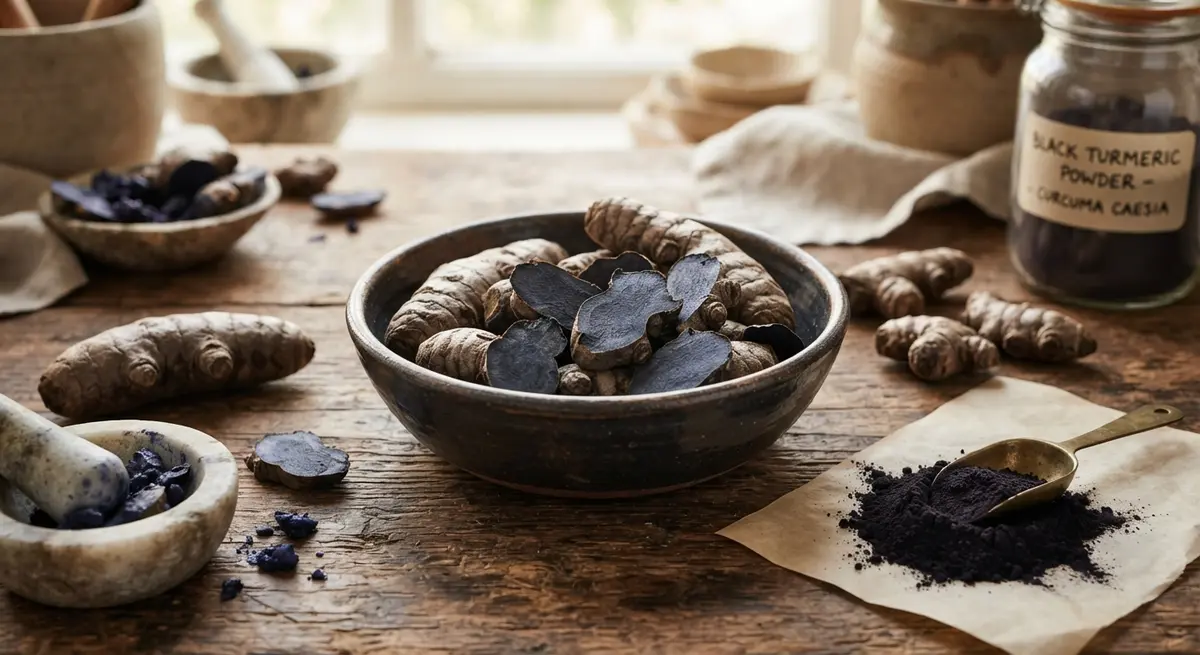
Black Turmeric: Flavor Profile, Health Benefits & Culinary Uses
The wild dark turmeric of eastern India, camphor-strong and almost blue inside: what black turmeric is, how it stuns cooks, and its honest uses in the kitchen.
About the Authors
This recipe and guide was developed, tested, and approved in our home kitchen and daily life. Jamy is a retired Food Service District Manager and Early Childhood Program Manager who spent his career overseeing multi-site restaurant operations, large-scale culinary production, and daycare menu management. Kaïna brings the ultimate real-world test: making sure it brings ease and joy to our kids on a busy weeknight.
Read more about our professional background and philosophy →