Black Turmeric: Flavor Profile, Health Benefits & Culinary Uses
By the QuiteRecipes team (Jamy & Kaïna)
The wild dark turmeric of eastern India, camphor-strong and almost blue inside: what black turmeric is, how it stuns cooks, and its honest uses in the kitchen.
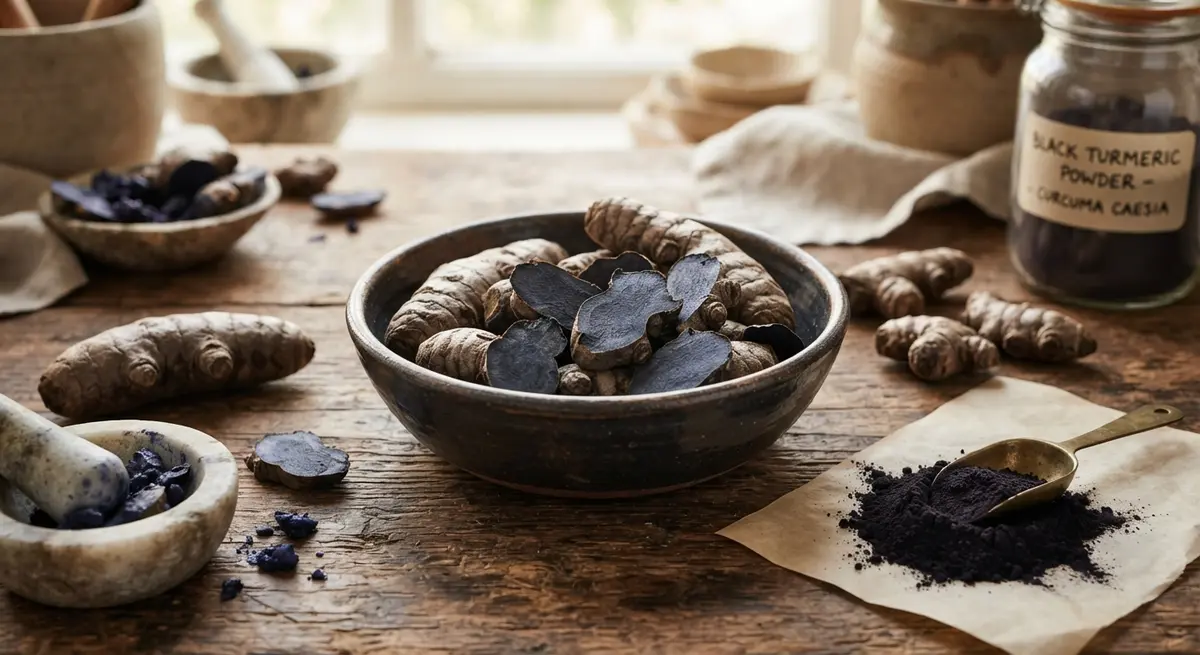
Cut open a black turmeric and you will do a double take: the outside is a modest, earthy brown, but the inside is a dramatic shade of dark violet-blue, like the strangest beet you have ever met. This is Curcuma caesia, the black turmeric of eastern and central India — the rare, slow-growing cousin of the golden turmeric every chai stand knows. It is almost never the turmeric in your curry powder. Instead it has long lived a double life: a bold, camphor-laced aromatic cooked in small amounts in regional dishes and pickles, and a central player in traditional remedy across the states where it grows naturally. The color alone guarantees an opinion.
Flavor Profile & Notes
Black turmeric's signature is unmistakable — fireplace camphor dominates, with notes of sharp ginger, pine, and a damp, foresty earthiness that has nothing in common with golden turmeric's warm brightness. It is pungent and slightly bitter, more herb than spice, and nothing like the comfort-flavor of a turmeric latte. Milder rhizomes exist but most are strongly camphorous, which is exactly why cooks use it in small slices and grind it carefully. Dried, it darkens further and the camphor intensifies. Meet it at a specialty market or a friend's regional pantry rather than a conventional grocery shelf — its scarcity shows.
Health Benefits & Nutrition
Black turmeric belongs to the same curcuminoid family as its golden sister, and tradition across Assam, Bengal, and Chhattisgarh has treated it as a warming, respiratory-comforting root and a household remedy for coughs and digestion — uses that trace back generations. Modern laboratories have confirmed antioxidant and anti-inflammatory activity in the rhizome's compounds, which keeps the wheel of interest turning. The honest words, though: the amounts used in cooking are small, the evidence trails far behind the tradition, and this is no more a treatment than any other root is. Anyone planning to take it like medicine should ask their doctor first. In food, treat it as the rare, striking aromatic it is.
Best Culinary Pairings
Regional Indian kitchens put it to use in pickles and chutneys, where a few small slices steep alongside sour fruit and chili; in some home traditions the fresh root joins lentil and potato preparations for its sharp warmth. Because the camphor note is anything but gentle, the operative ratio is "a little at a time": try a thin slice simmered in a chunky vegetable curry or poached in a simple lentil dish, tasting as you go. It stands up boldly to mustard oil, green chilies, and nigella seeds. Its color barely carries into food, so think of it as a flavor-herb rather than a colorant.
Quick Substitutes
Golden turmeric toasts to a warming, earthy character that stands in for the milder mood; add a whisper of camphor from a fresh bay leaf or galangal to close the gap. Fresh galangal gets you the sharp-pine bite. If a recipe simply wants turmeric color, ordinary turmeric does the job completely — and honestly, black turmeric bought for culinary flair has no exact stand-in, so enjoy it as what it is: a special-occasion root.
FAQ / Quick Facts
- What does black turmeric taste like? Strong camphor with sharp ginger and pine — pungent, bitter, and nothing like golden turmeric.
- Is it rare? Yes — slow-growing and wild-harvested in eastern India, it is a specialty-market root, far scarcer and dearer than common turmeric.
- Form / Best uses: Fresh or dried rhizome; slices in pickles, chutneys, and regional curries — used in small amounts.
Related Articles
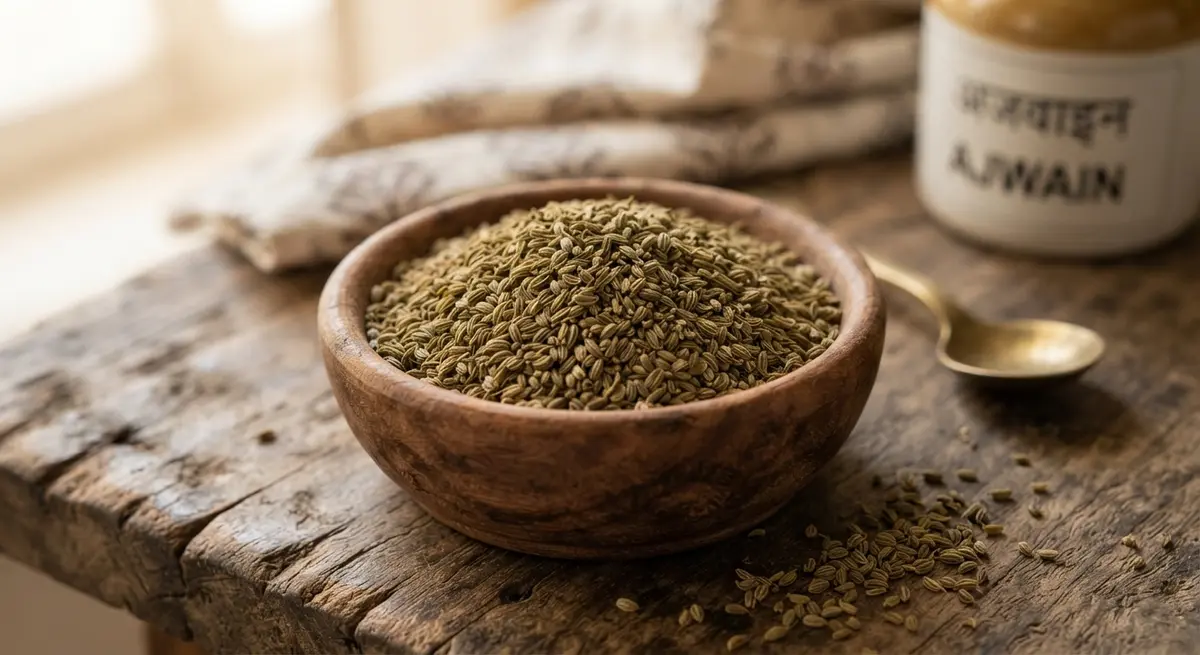
Ajwain (Carom) Seeds: Flavor Profile, Health Benefits & Culinary Uses
A tiny gray-brown seed that tastes like thyme, oregano, and cumin had a baby with a timer fuse. Here is how and why Indian kitchens use ajwain.
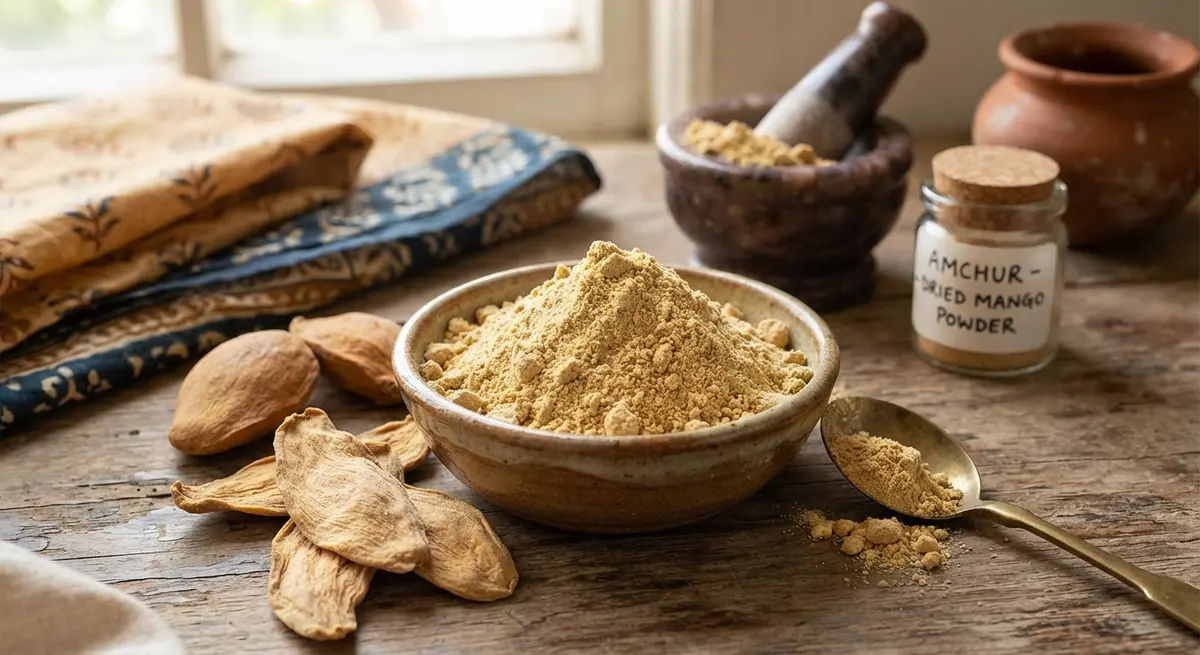
Amchur (Green Mango Powder): Flavor Profile, Health Benefits & Culinary Uses
Powdered green mango that adds bright sour notes without a drop of liquid. Amchur turns snack mixes, dry rubs, and curries tart in one shake.
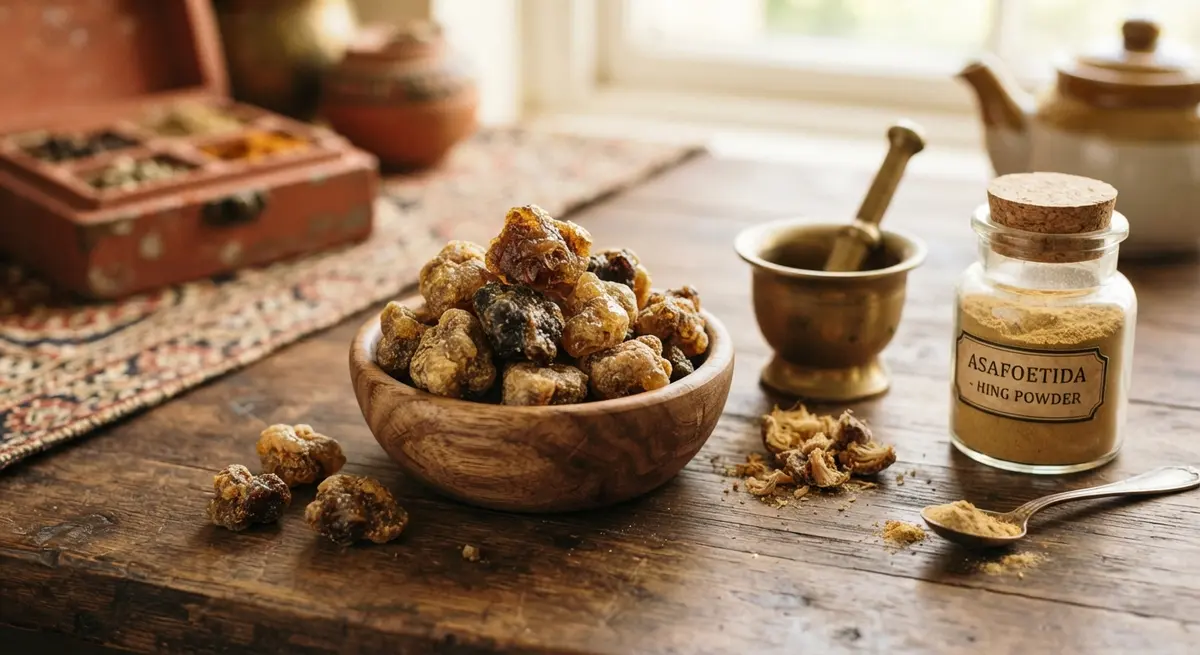
Asafoetida (Hing): Flavor Profile, Health Benefits & Culinary Uses
The worst-smelling raw spice in the world turns into quiet onion-garlic gold the moment it hits hot oil. Here is the one rule for using hing without fear.
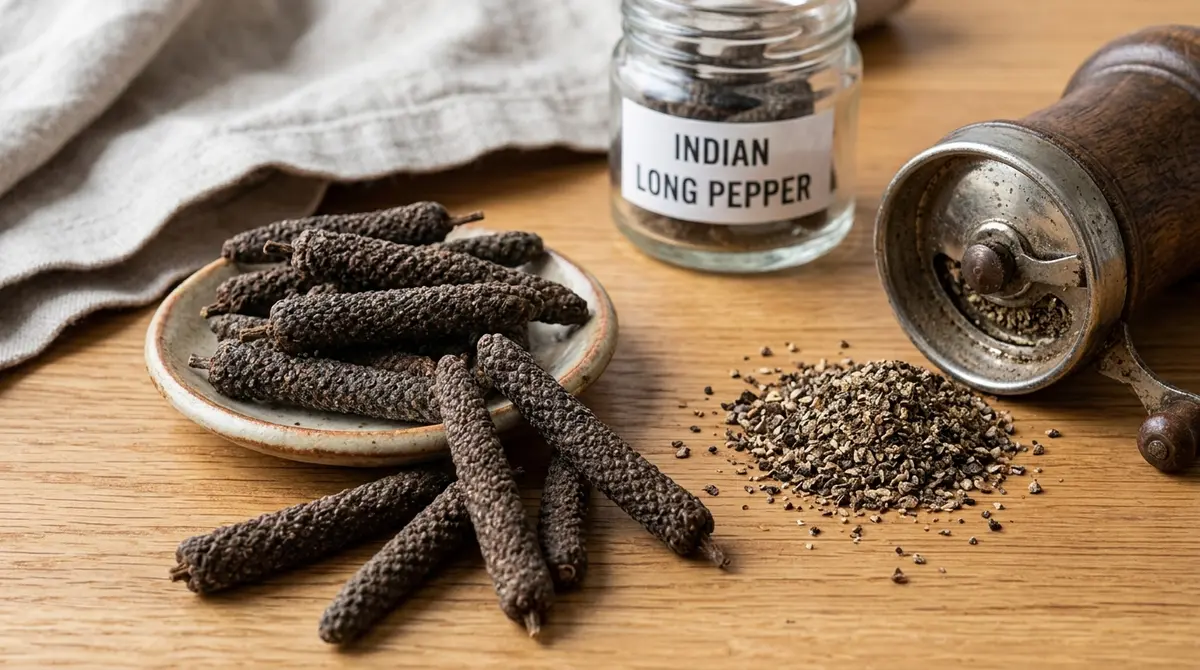
Indian Long Pepper: Flavor Profile, Health Benefits & Culinary Uses
Before black pepper took over Europe, long pepper was the prize, and pippali is still a quiet star in Ayurvedic spice mixes and warming winter dals.
About the Authors
This recipe and guide was developed, tested, and approved in our home kitchen and daily life. Jamy is a retired Food Service District Manager and Early Childhood Program Manager who spent his career overseeing multi-site restaurant operations, large-scale culinary production, and daycare menu management. Kaïna brings the ultimate real-world test: making sure it brings ease and joy to our kids on a busy weeknight.
Read more about our professional background and philosophy →