Bird's Eye Chili: Flavor Profile, Health Benefits & Culinary Uses
By the QuiteRecipes team (Jamy & Kaïna)
Small, searing, and the soul of Thai heat: what bird's eye chili is, how hot it really is, and how to use it politely in curries, sauces, and stir-fries.
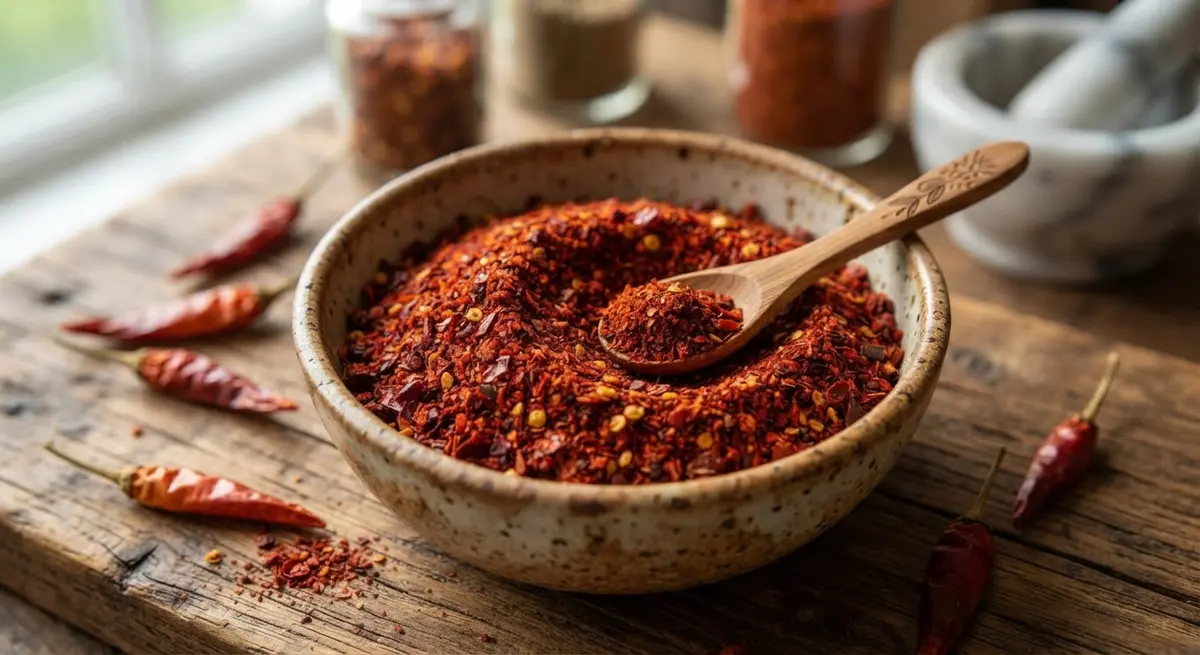
The first time I cooked with bird's eye chilies I treated them like bell peppers — destined for a generous chop — and the person who ate my food is still recounting the story. Bird's eye chilies are small, pointy, and anywhere-sharp, roughly a half to an inch long, and they are the standard bearer of heat across Thailand, Vietnam, and Southeast Asia. They punch in the neighborhood of 50,000 to 100,000 Scoville units — far beyond a serrano, somewhere in the company of cayenne, at a fraction of the size. You take them seriously, the way you take a paper cut seriously.
Flavor Profile & Notes
Under the fire there is a genuinely good taste: bright, fruity, and slightly grassy, with a quick, clean burn that lands immediately and fades faster than the heavy heat of larger chilies. That is why Thai cooking loves them — they deliver searing intensity without the soggy, bitter vegetal weight a big chili brings. Red ones are riper and fruitier, green ones brighter and sharper. Dried, they deepen into a sweet-smoky heat that is the backbone of sambal and nam prik pastes. The flavor underneath the flame is worth paying attention to, because that is the part the home cook usually misses by chopping too many.
Health Benefits & Nutrition
Like all chilies, bird's eyes carry capsaicin — the compound behind the burn — which the research keeps finding interesting things about: it is the reason chili-eaters report more heat-related comfort and, in broad population studies, a modestly lower coronary risk. Chilies also deliver a surprising slug of vitamin C and vitamin A in fresh form. The honest side: eating chilies is a flavor and habit, not a treatment, and sensitive stomachs will never be told otherwise by any paper. The practical advice is about the cooking, not the chemistry — wear gloves when seeding a big batch, and know your guests.
Best Culinary Pairings
Thai food would be unthinkable without them: pound them with garlic and shrimp paste into green and red curry pastes, slice them into nam pla prik (fish sauce, lime, and chili) for the table's essential condiment, or toss whole ones into stir-fries and let them sit politely next to their dinner companions — Thai cooks leave chilies whole precisely because the inflected heat is friendlier than the chopped kind. They star in sambal oelek, som tam, and laksa. Use them with vinegar, lime, fish sauce, coconut milk, and herbs, and treat them as the sharp end of a sweet, savory, salty whole.
Quick Substitutes
Serrano peppers substitute at a friendlier heat level and a similar brightness — use two or three times as many for the same punch. Cayenne powder brings comparable heat with less aroma in pastes. For the bright fruitiness without the fire, take a serrano and rub it with a pinch of something sweetly citrusy (lime zest) to approach the ideal. The truth Thai cooks will tell you: the fruitiness is theirs to keep, so if recipes depend on bird's eye character, find an Asian market and buy the real thing.
FAQ / Quick Facts
- How hot are they? Roughly 50,000 to 100,000 Scoville units — far hotter than jalapeños, comparable to cayenne at a fraction of the size.
- How can you tame the heat? Leave them whole in curries and stir-fries, seed them for half the burn, and always let coconut milk or broth soften the party.
- Form / Best uses: Fresh or dried; in Thai curry pastes, nam pla prik, sambal, and stir-fries.
Related Articles
Lemongrass: Flavor Profile, Health Benefits & Culinary Uses
The tropical grass that tastes like lemon but never goes sour: how lemongrass perfumes soups, curries, and tea, with honest notes on using the dry version.
Tamarind: Flavor Profile, Health Benefits & Culinary Uses
Tamarind is the sour-sweet soul of pad thai, sambar, and a thousand chutneys — what the pods are, how to buy them, and the honest substitutes.
Achiote (Annatto): Flavor Profile, Health Benefits & Culinary Uses
Tiny coral-red seeds that paint food golden: the annatto tree's achiote, how to use the seeds and the Yucatan paste, and honest color substitutes.
Ajwain (Carom) Seeds: Flavor Profile, Health Benefits & Culinary Uses
A tiny gray-brown seed that tastes like thyme, oregano, and cumin had a baby with a timer fuse. Here is how and why Indian kitchens use ajwain.
About the Authors
This recipe and guide was developed, tested, and approved in our home kitchen and daily life. Jamy is a retired Food Service District Manager and Early Childhood Program Manager who spent his career overseeing multi-site restaurant operations, large-scale culinary production, and daycare menu management. Kaïna brings the ultimate real-world test: making sure it brings ease and joy to our kids on a busy weeknight.
Read more about our professional background and philosophy →