Smoked Chipotle Chili: Flavor Profile, Health Benefits & Culinary Uses
By the QuiteRecipes team (Jamy & Kaïna)
A jalapeno that ripened red and walked through smoke for a few days — chipotle's campfire flavor, friendly heat, and the two ways it reaches your kitchen.
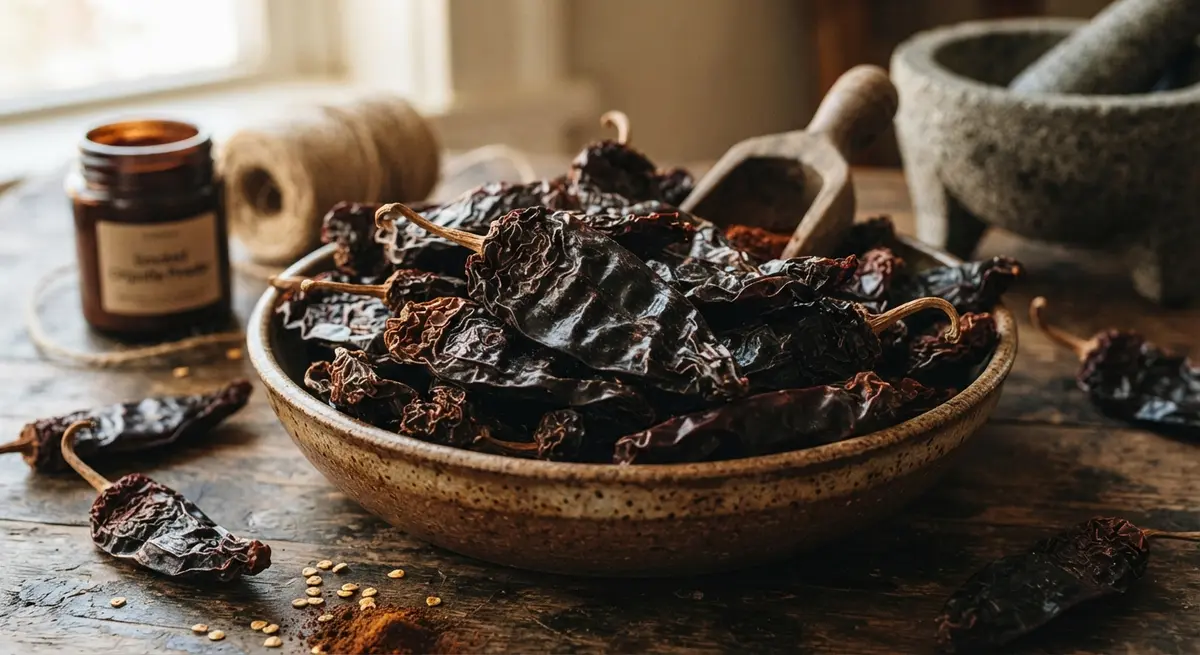
Chipotle is a jalapeno that lived a more interesting life. It ripened to red, then spent days in wood smoke, drying into a leathery, wrinkle-skinned pod that tastes like a campfire decided to become a spice. The Aztecs had the idea, and the rest of us have been catching up ever since.
Two versions reach the kitchen: dried pods, and canned "in adobo," which swims in a sweet-sour sauce of tomato, vinegar, and garlic. Both deliver the same hit of smoke and gentle fruit heat, and both belong in everyday Mexican cooking.
Flavor Profile & Notes
Chipotle's flavor is smoky first and chile second — that dried red jalapeno warmth wrapped in mesquite and oak, earthy and faintly sweet, like bacon in powder form. The heat is friendly, roughly 2,500 to 8,000 Scoville units, which reads as noticeable but comfortable to most people. The dried form grinds into a powder that seasons beans and rubs evenly; the adobo form brings vinegar, garlic, and a little tomato with it. Dried chipotles benefit from a quick toast in a dry pan before grinding or soaking; the smell alone will wake up the whole kitchen. A little goes far — one adobo pepper can flavor an entire pot.
Health Benefits & Nutrition
Like most chiles, chipotle carries a modest dose of capsaicin along with fiber and a few trace minerals, though drying removes most of the fresh vitamin C. The honest health note is about the smoke itself: chipotle is produced by slow smoking, the same process behind barbecue's famous aroma. That means it is a wonderful everyday seasoning in the same spirit as bacon — treat it as rich flavor, not a daily health food, and it will treat you well. For anyone watching sodium, the dried powder is the plain option; the canned adobo version brings added salt and sugar.
Best Culinary Pairings
This is the chile of beans — pinto, black, and refried — and of chili con carne, where its smoke does the heavy lifting. It is the backbone of chipotle-marinated chicken, of barbacoa, and of adobo pork. Whisk a minced adobo chipotle into mayonnaise or sour cream for a sandwich spread or a sauce for grilled corn. A spoonful of the adobo sauce upgrades ketchup, quesadillas, and mac and cheese in seconds. Lime, garlic, honey, and cumin are its native friends.
Quick Substitutes
Smoked paprika gives the smoke without the chile, so pair it with a pinch of cayenne or ancho powder to rebuild the heat. Ancho chili alone is the closest flavor sibling — same dried pepper family, same sweetness — minus the smoke, which a few drops of liquid smoke can restore. For the canned version, combine tomato paste, vinegar, a little sugar, and smoky paprika. In every case, season to heat, not to recipe volume.
FAQ / Quick Facts
- What exactly is chipotle? A red jalapeno, slowly dried over wood smoke until leathery.
- How hot is it? About 2,500 to 8,000 Scoville units — a friendly, medium warmth with a smoky sweetness.
- Form / cooking note: Whole dried pods, ground powder, or canned in adobo sauce; toast the dried ones quickly in a hot dry pan before using to wake up the flavor.
Related Articles
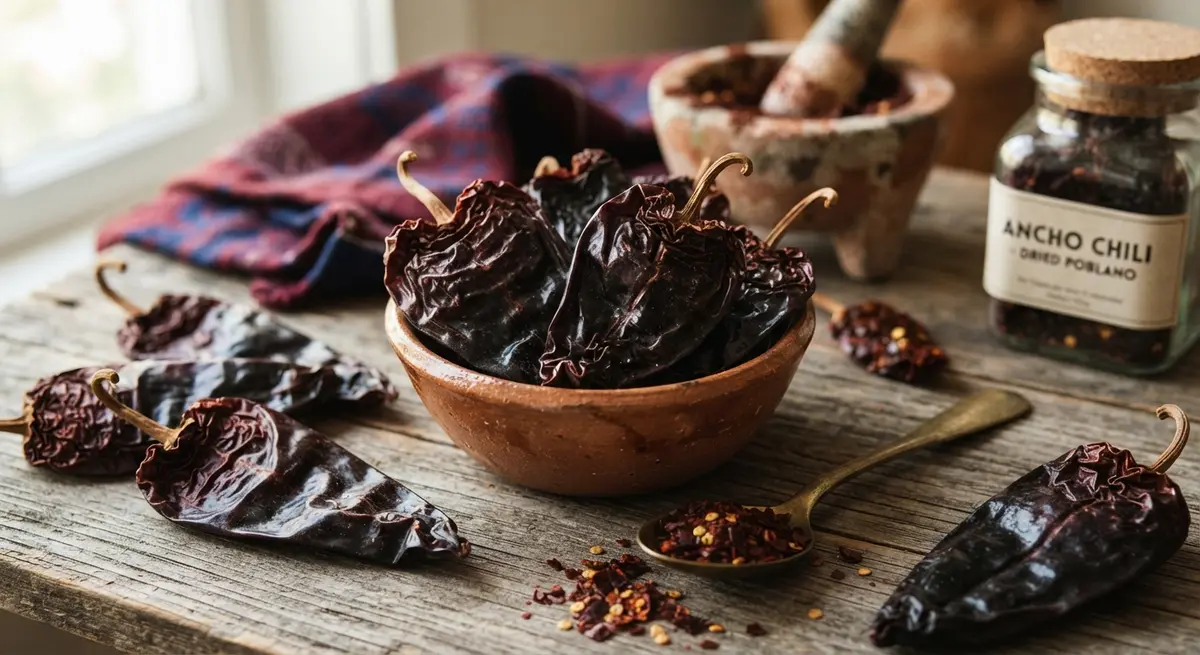
Ancho Chili: Flavor Profile, Health Benefits & Culinary Uses
The mildest, sweetest of Mexico's famous dried chiles: ancho is the raisiny soul of mole whether whole, ground, or soaked into silky sauces.
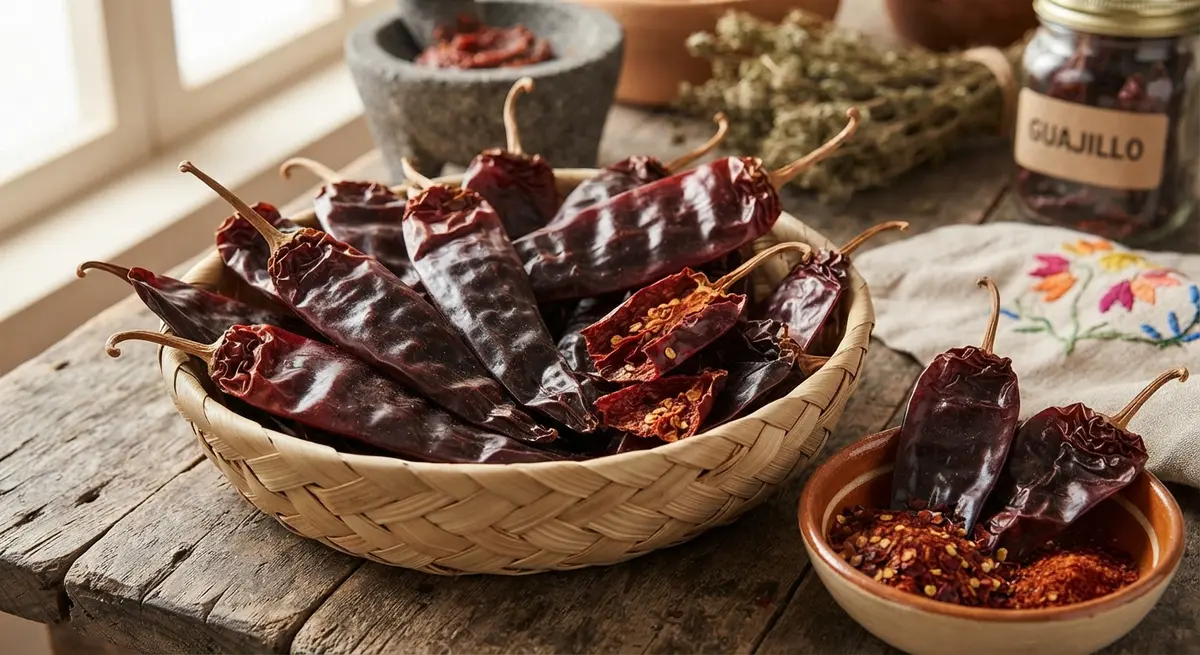
Guajillo Chili: Flavor Profile, Health Benefits & Culinary Uses
Bright, brick-red, and everywhere — guajillo is the dried mirasol behind enchilada sauce and stews, with a cranberry tang no other chili quite matches.
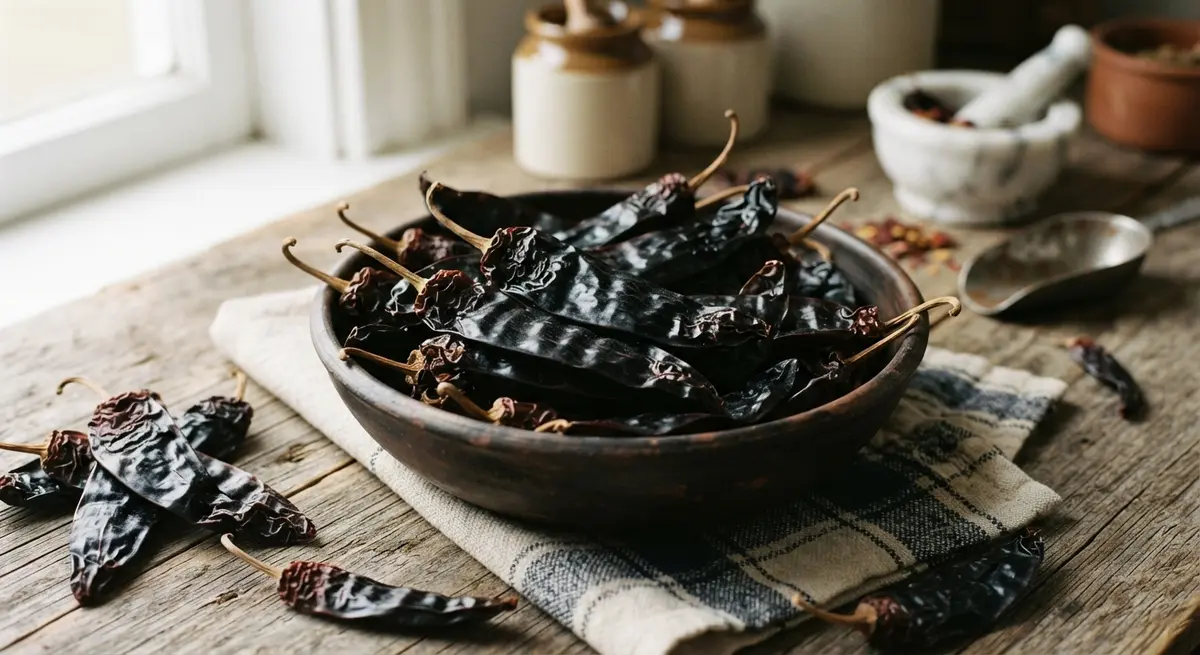
Pasilla Chili: Flavor Profile, Health Benefits & Culinary Uses
The 'little raisin' of Mexican dry chiles: pasilla is the dried chilaca, dark and mild, bringing prune-espresso depth to moles and braised meats.
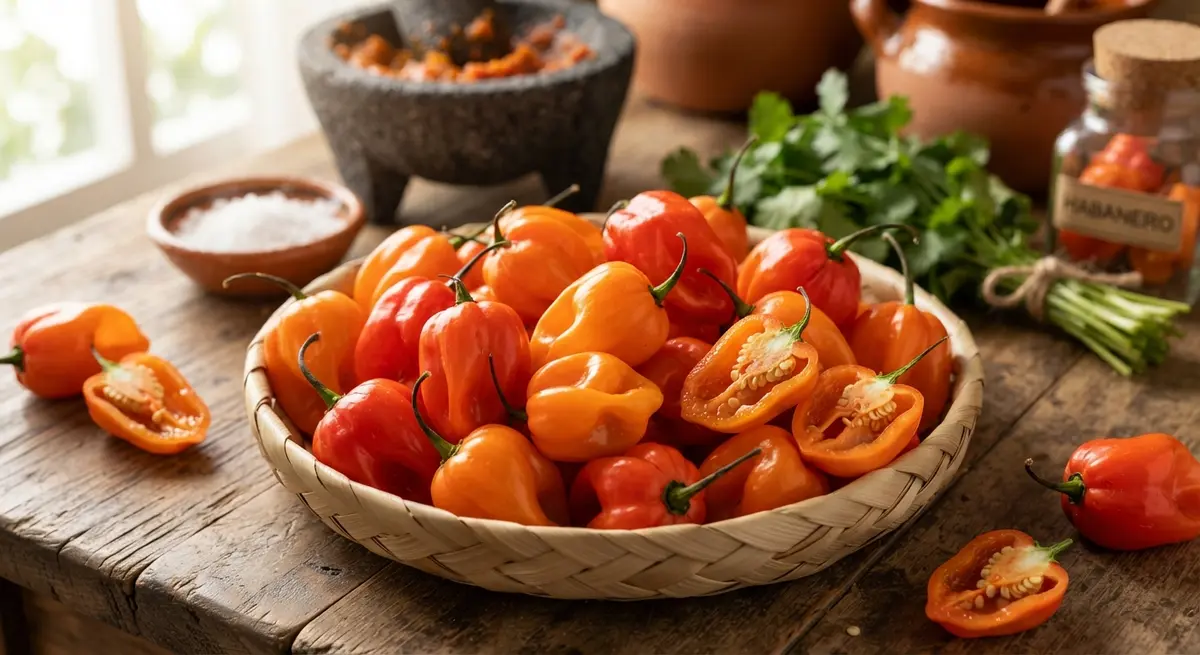
Habanero Chili: Flavor Profile, Health Benefits & Culinary Uses
One pepper that smells like apricots and tastes like a bonfire: habanero's real heat level, how to handle it safely, and the Caribbean dishes it owns.
About the Authors
This recipe and guide was developed, tested, and approved in our home kitchen and daily life. Jamy is a retired Food Service District Manager and Early Childhood Program Manager who spent his career overseeing multi-site restaurant operations, large-scale culinary production, and daycare menu management. Kaïna brings the ultimate real-world test: making sure it brings ease and joy to our kids on a busy weeknight.
Read more about our professional background and philosophy →