Ancho Chili: Flavor Profile, Health Benefits & Culinary Uses
By the QuiteRecipes team (Jamy & Kaïna)
The mildest, sweetest of Mexico's famous dried chiles: ancho is the raisiny soul of mole whether whole, ground, or soaked into silky sauces.
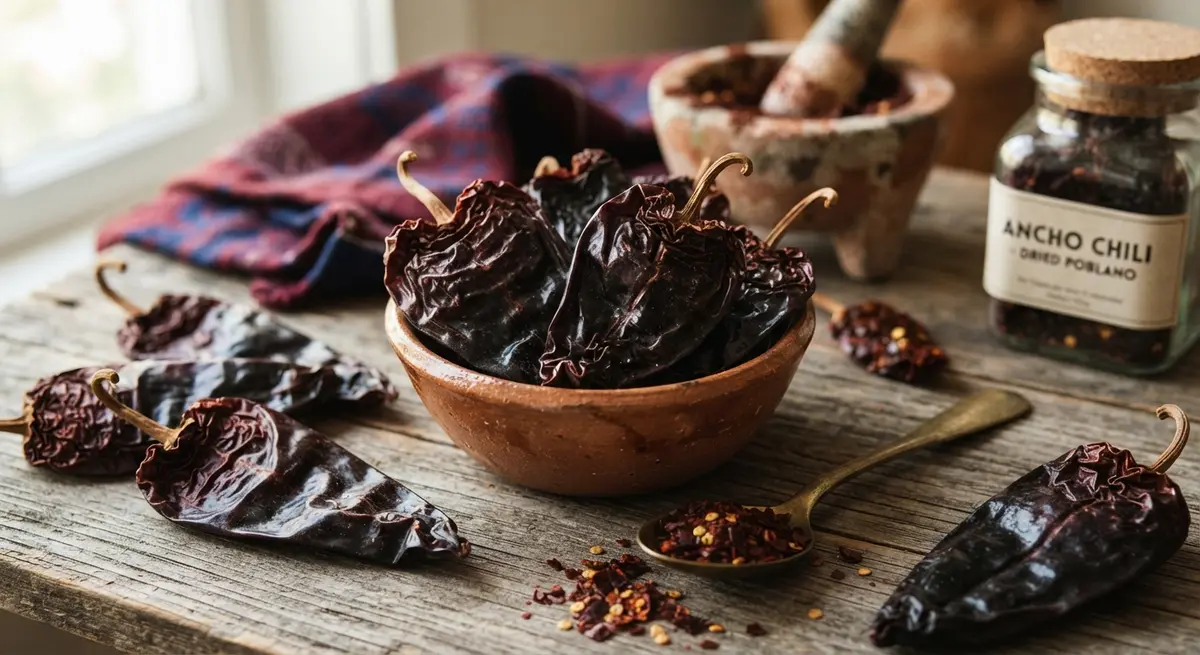
Ancho is what happens when a poblano pepper grows up and dries into history. In Mexican markets, vendors stack the dark, wrinkled, shovel-shaped pods like folded leather, and the smell — sweet, raisiny, faintly floral — fills the whole dry-goods corner.
As the mildest of the famous dried trio, ancho is the one to start with and the one to build moles around. If you taste only one dried chile in your life, this is the one.
Flavor Profile & Notes
The flavor is nearly all up front: dried fruit, raisin, date, a wisp of licorice and tobacco, with just a whisper of heat at the back. At roughly 1,000 to 1,500 Scoville units, it is genuinely mild — a warm tingle, not a burn. When soaked and pureed, the thick flesh turns velvety and dark, the backbone of mole sauce, chile colorado, and adobo. Toast whole pods briefly in a dry skillet — seconds, not minutes — until fragrant, then soak them in hot water before pureeing. Never scorch them black; that bitterness cannot be fixed. Ground ancho powder is the convenient everyday form.
Health Benefits & Nutrition
Ancho is one of the more nutritious dried chiles. Drying concentrates its beta-carotene, the orange pigment that becomes vitamin A, and the pods carry real fiber plus the same capsaicinoids studied across the pepper family — in gentler doses, which makes it a friendly chile for people who avoid heat. Researchers continue to look at these pigments' antioxidant activity, though as always, the honest summary is the simple one: it is a delicious, low-calorie way to add deep flavor to vegetables and lean meat, not a pill.
Best Culinary Pairings
Mole poblano is the star, and ancho is its chocolate-and-chile soul; the same sweet-dark character lifts enchiladas and chilaquiles. Braised short ribs and pork shoulder take on a whole new depth from a soaked ancho puree. Ground ancho powder seasons chili con carne, meat rubs, and barbecue sauce, and it pairs famously with chocolate — that is the mole trick, sneaked into a chili or even a spice-rubbed steak. Tomatoes, garlic, cumin, and the other dried chiles are its partners.
Quick Substitutes
Guajillo plus a pinch of sugar is the closest sibling swap — guajillo is a touch brighter and hotter, so adjust. Mulato, a smoked ancho, is the truest sweet-dark cousin when you can find it. For ancho powder specifically, ground pasilla chile powder works with similar heat, though a little less sweetness. In a real pinch, smoked paprika and a pinch of cocoa powder brings the sweet-smoky depth, if not the chile's exactness.
FAQ / Quick Facts
- What is an ancho chili? A ripe poblano pepper, dried until dark and wrinkled.
- How hot is it? Mild — roughly 1,000 to 1,500 Scoville units, warm rather than spicy.
- Form / technique: Whole pods, powder, or paste; toast pods in a dry pan for seconds, soak in hot water, then puree for sauces.
Related Articles
Guajillo Chili: Flavor Profile, Health Benefits & Culinary Uses
Bright, brick-red, and everywhere — guajillo is the dried mirasol behind enchilada sauce and stews, with a cranberry tang no other chili quite matches.
Pasilla Chili: Flavor Profile, Health Benefits & Culinary Uses
The 'little raisin' of Mexican dry chiles: pasilla is the dried chilaca, dark and mild, bringing prune-espresso depth to moles and braised meats.
Smoked Chipotle Chili: Flavor Profile, Health Benefits & Culinary Uses
A jalapeno that ripened red and walked through smoke for a few days — chipotle's campfire flavor, friendly heat, and the two ways it reaches your kitchen.
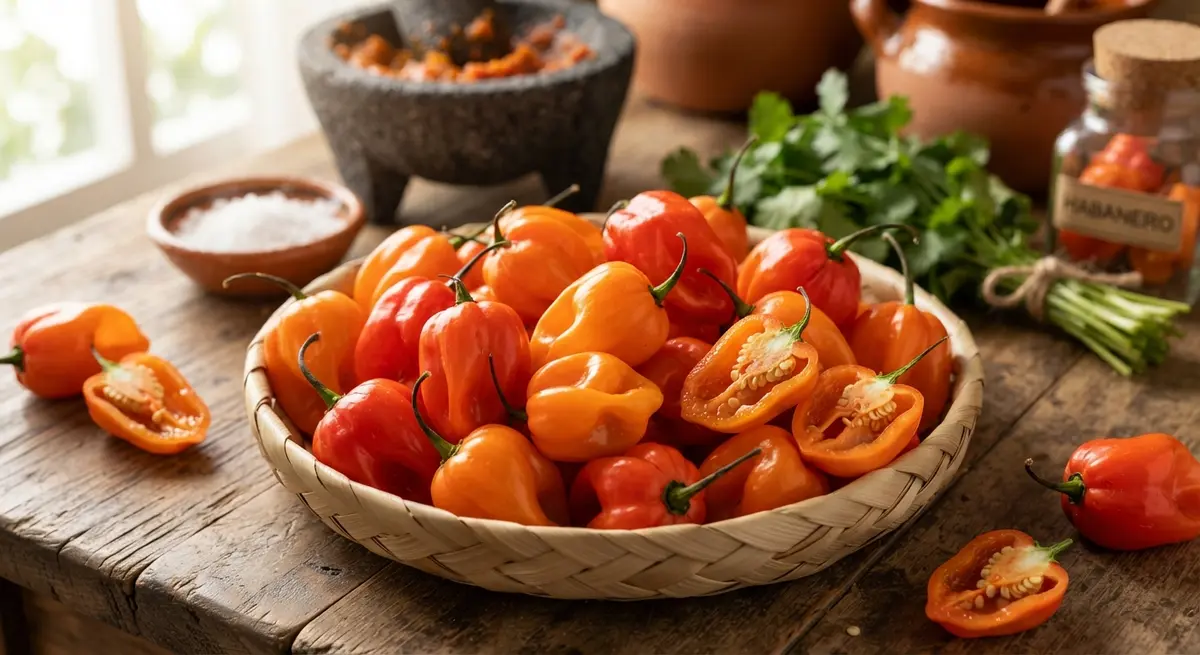
Habanero Chili: Flavor Profile, Health Benefits & Culinary Uses
One pepper that smells like apricots and tastes like a bonfire: habanero's real heat level, how to handle it safely, and the Caribbean dishes it owns.
About the Authors
This recipe and guide was developed, tested, and approved in our home kitchen and daily life. Jamy is a retired Food Service District Manager and Early Childhood Program Manager who spent his career overseeing multi-site restaurant operations, large-scale culinary production, and daycare menu management. Kaïna brings the ultimate real-world test: making sure it brings ease and joy to our kids on a busy weeknight.
Read more about our professional background and philosophy →