Pasilla Chili: Flavor Profile, Health Benefits & Culinary Uses
By the QuiteRecipes team (Jamy & Kaïna)
The 'little raisin' of Mexican dry chiles: pasilla is the dried chilaca, dark and mild, bringing prune-espresso depth to moles and braised meats.
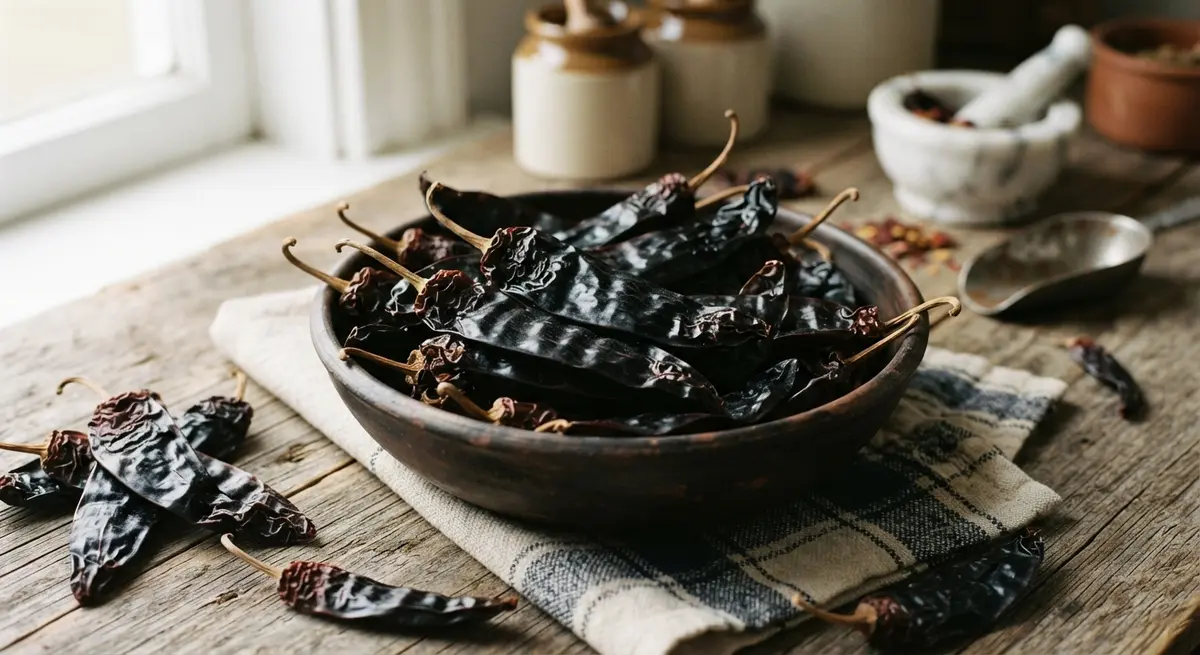
Pasilla is the "little raisin" — pa-SEE-ya — and the nickname does the work of a thousand words. Long, dark, wrinkled pods, almost black-brown and glossy, smelling of dark dried fruit and espresso. It is the dried form of the chilaca chile, a long pepper grown across Mexico for this exact transformation.
In Mexico City, pasilla is the heart of the deepest moles and of salsa borracha, the beer-and-cheese sauce of tacos de plaza. For home cooks it brings the most sophisticated darkness of the dried chile trio.
Flavor Profile & Notes
The flavor is dark, sweet, and complex: raisin and prune, with notes of leather, espresso, and a hint of licorice smoke that lingers. Heat is gentle at roughly 1,000 to 2,500 Scoville units — a backdrop warmth rather than any kind of burn. Rehydrated and pureed, pasilla turns into an inky, silky paste that reads like the sauce equivalent of a good dark beer. One caution: because the dried pods are so dark, they are occasionally sold under confusing names in general stores — the true pasilla is the dried chilaca, so buy from a real Mexican market or a trusted source online.
Health Benefits & Nutrition
Like its dried cousins, pasilla concentrates beta-carotene as it dries, along with fiber and modest amounts of the pepper-family capsaicinoids — all in a package mild enough for people who usually avoid heat. The deep, inky color comes from anthocyanins, the same antioxidant pigments behind blackberries and purple cabbage. All of which is to say: this is a flavorful, low-calorie way to deepen a sauce without sugar or fat. It is cooking nutritional sense, not medicine — and none the worse for it.
Best Culinary Pairings
Pasilla belongs in complex moles, especially the Oaxaca-style ones where its darkness balances sweetness, and in salsa negra and salsa borracha. It takes braised lamb and duck to a deep place, and it is a sneaky partner for chocolate — mole's favorite trick. Stir pasilla puree into beans or a pot of lentil stew and the dish suddenly tastes layered. Cinnamon, cloves, roasted garlic, raisins, and chocolate all amplify its character rather than drowning it out.
Quick Substitutes
Ancho replaces pasilla in most recipes with the least fuss — same silhouette, a little less darkness. To rebuild the smoky depth, add a pinch of cocoa powder and a single drop of liquid smoke for a braise. Mulato, a smoked ancho, is the truest cousin when you find it. Guajillo is too bright; keep it for other sauces. If your recipe calls for pasilla powder, ancho powder with a whisper of espresso powder and cinnamon lands remarkably close.
FAQ / Quick Facts
- What is pasilla chili? The dried chilaca chile, long and dark, nicknamed the "little raisin."
- How hot is it? Mild — about 1,000 to 2,500 Scoville units — with a dark, raisiny sweetness rather than heat.
- Form / technique: Whole pods or powder; toast seconds in a dry pan, soak in hot water, and puree for sauces that want depth and silk.
Related Articles
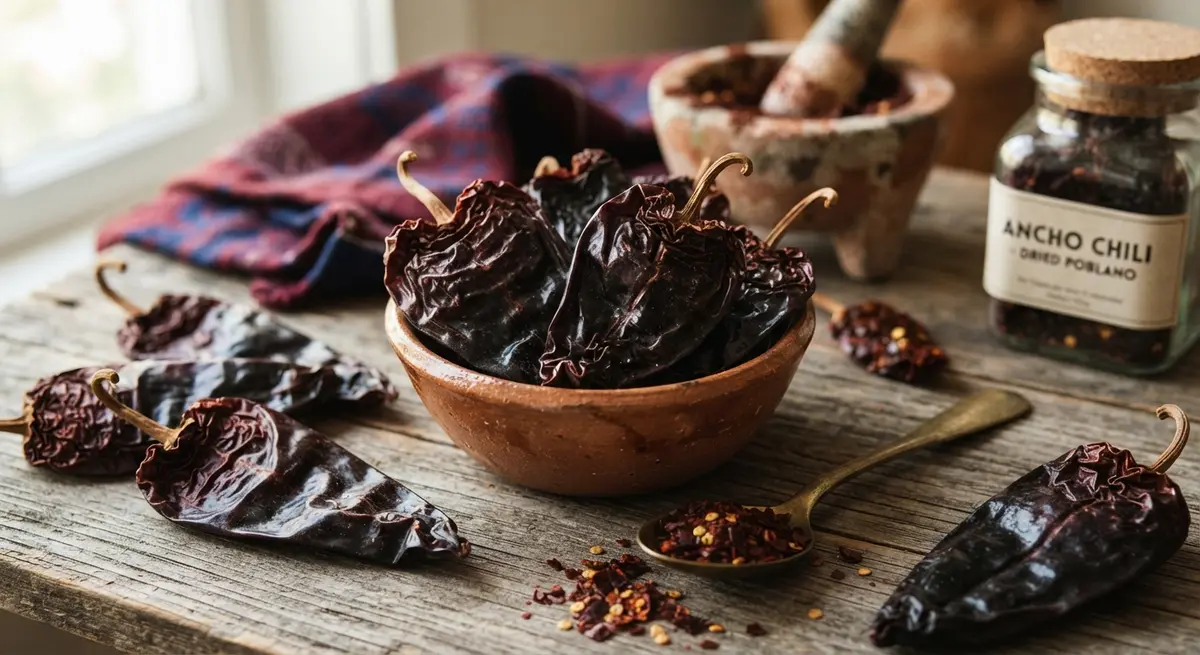
Ancho Chili: Flavor Profile, Health Benefits & Culinary Uses
The mildest, sweetest of Mexico's famous dried chiles: ancho is the raisiny soul of mole whether whole, ground, or soaked into silky sauces.
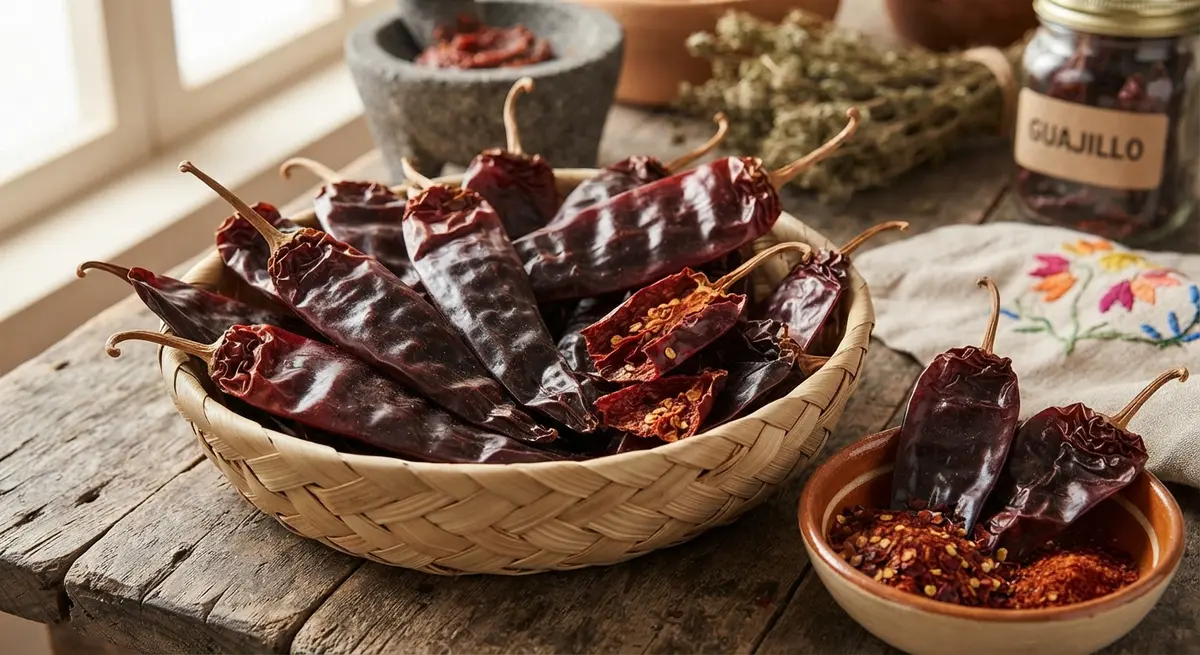
Guajillo Chili: Flavor Profile, Health Benefits & Culinary Uses
Bright, brick-red, and everywhere — guajillo is the dried mirasol behind enchilada sauce and stews, with a cranberry tang no other chili quite matches.
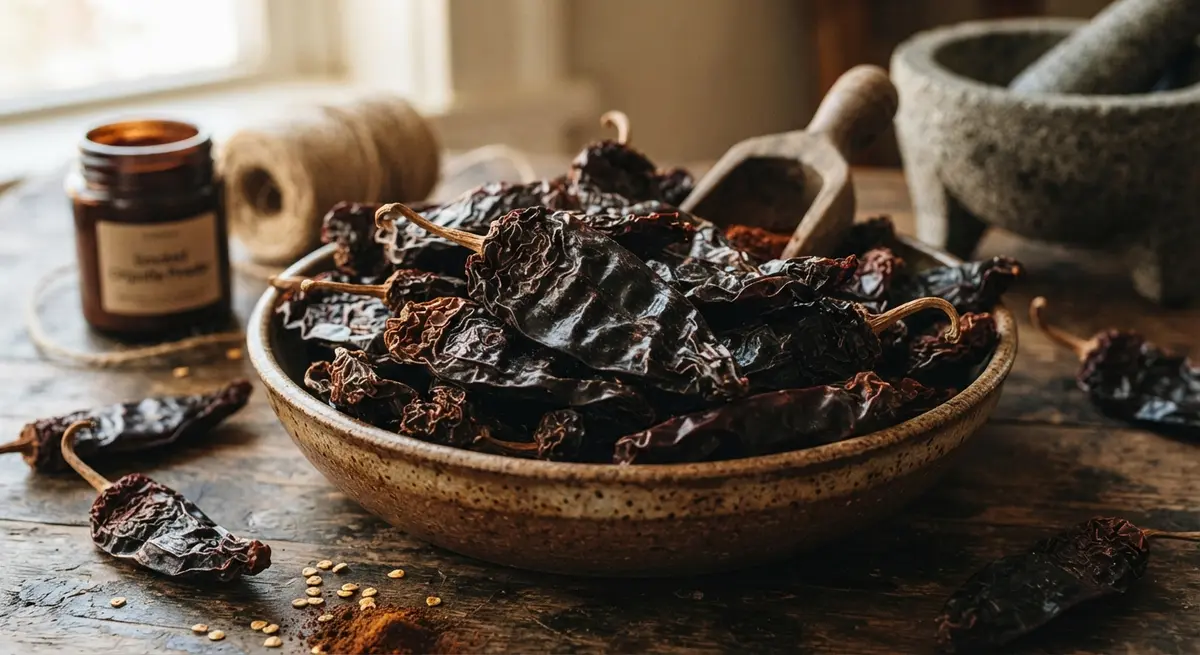
Smoked Chipotle Chili: Flavor Profile, Health Benefits & Culinary Uses
A jalapeno that ripened red and walked through smoke for a few days — chipotle's campfire flavor, friendly heat, and the two ways it reaches your kitchen.
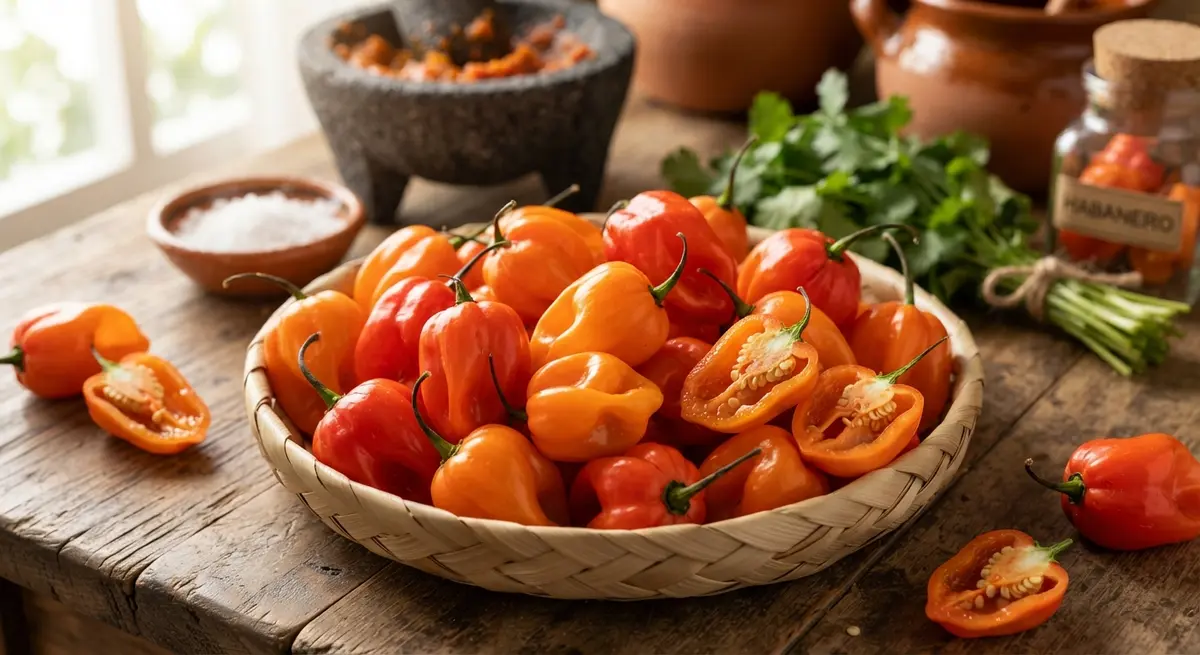
Habanero Chili: Flavor Profile, Health Benefits & Culinary Uses
One pepper that smells like apricots and tastes like a bonfire: habanero's real heat level, how to handle it safely, and the Caribbean dishes it owns.
About the Authors
This recipe and guide was developed, tested, and approved in our home kitchen and daily life. Jamy is a retired Food Service District Manager and Early Childhood Program Manager who spent his career overseeing multi-site restaurant operations, large-scale culinary production, and daycare menu management. Kaïna brings the ultimate real-world test: making sure it brings ease and joy to our kids on a busy weeknight.
Read more about our professional background and philosophy →