Guajillo Chili: Flavor Profile, Health Benefits & Culinary Uses
By the QuiteRecipes team (Jamy & Kaïna)
Bright, brick-red, and everywhere — guajillo is the dried mirasol behind enchilada sauce and stews, with a cranberry tang no other chili quite matches.
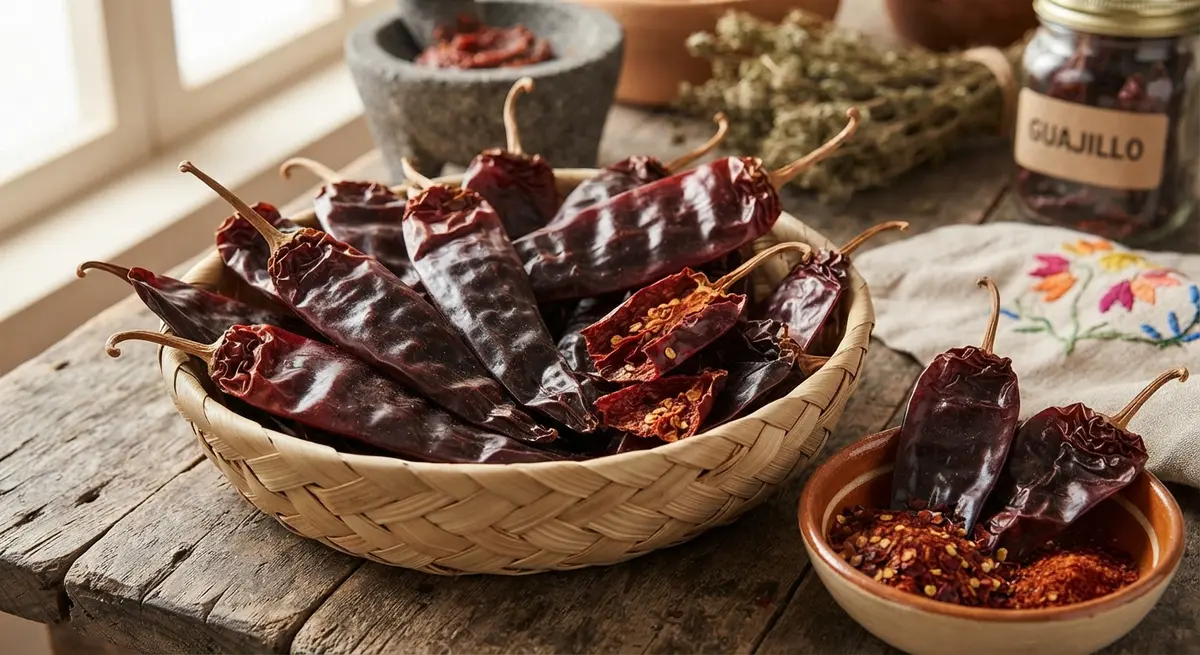
Guajillo is the workhorse of Mexican dried chiles — shiny, brick-red, smooth, and everywhere, because it is the flavor shortcut behind more sauces than any other chile on the rack. It is the dried form of the mirasol chile, a long, tapering pepper that grows pointing up at the sun.
Guajillo sits between ancho and arbol in heat, but its personality is all about brightness. If ancho is the raisin and pasilla the prune, guajillo is the cranberry — tangy, sweet, and a little sharp.
Flavor Profile & Notes
Smooth and glossy with a brick-red skin, guajillo offers clean, fruity tartness: dried cranberries, a hint of green tea, and a vegetal brightness, over a gentle 2,500 to 5,000 Scoville warmth. Inside, the flesh glows translucent red-orange, and it purees into a sauce that both flavors and thickens — the reason red enchilada sauce and tinga lean on it so hard. Like all dried chiles, it wakes up after a few seconds in a dry pan, then softens in hot water. The heat tingles politely, enough to notice, never enough to dominate. Some blends use guajillo alone as a door-sized welcome to Mexican cooking.
Health Benefits & Nutrition
Guajillo inherits the pepper family's honest virtues: drying concentrates beta-carotene, the yellow-orange pigment that becomes vitamin A, and the flesh carries fiber you simply will not get from a fresh pepper in this quantity. Its capsaicin content is moderate, so the heat-related perks are present without the burn that puts people off stronger chiles. A guajillo puree is also a low-calorie way to build sauce body — you get silkiness and flavor without cream or much oil. As always, that is a good everyday ingredient, not a health treatment.
Best Culinary Pairings
This is the chile of enchilada sauce poured over stacked tortillas, of the chile-thickened broth of pozole, and of tamales and birria. Stir a spoonful of guajillo puree into beans, chili, or even barbecue sauce for a bright lift. It works best alongside ancho and pasilla in moles, where each does its own job. Garlic, cumin, oregano, tomatoes, and a squeeze of lime are its standard companions, and it loves fatty cuts of meat that it can cut through.
Quick Substitutes
Ancho is milder and sweeter — pair it with a pinch of cayenne to restore the tingle. Dried New Mexico red chiles are a close, beloved cousin with the same family warmth. Pasilla runs darker and is less bright. For heat alone, arbol is nothing but fire; use a little with ancho to mimic guajillo's fruit-and-tingle balance. In every substitution, season to color and taste rather than swapping one for one.
FAQ / Quick Facts
- What is guajillo chili? The dried mirasol chile, a long sweet-hot pepper named for the way it grew facing the sun.
- How hot is it? About 2,500 to 5,000 Scoville units — tangy and pleasant, more bright than fiery.
- Form / technique: Whole pods or powder; toast briefly in a dry pan, soak in hot water, and puree for sauces.
Related Articles
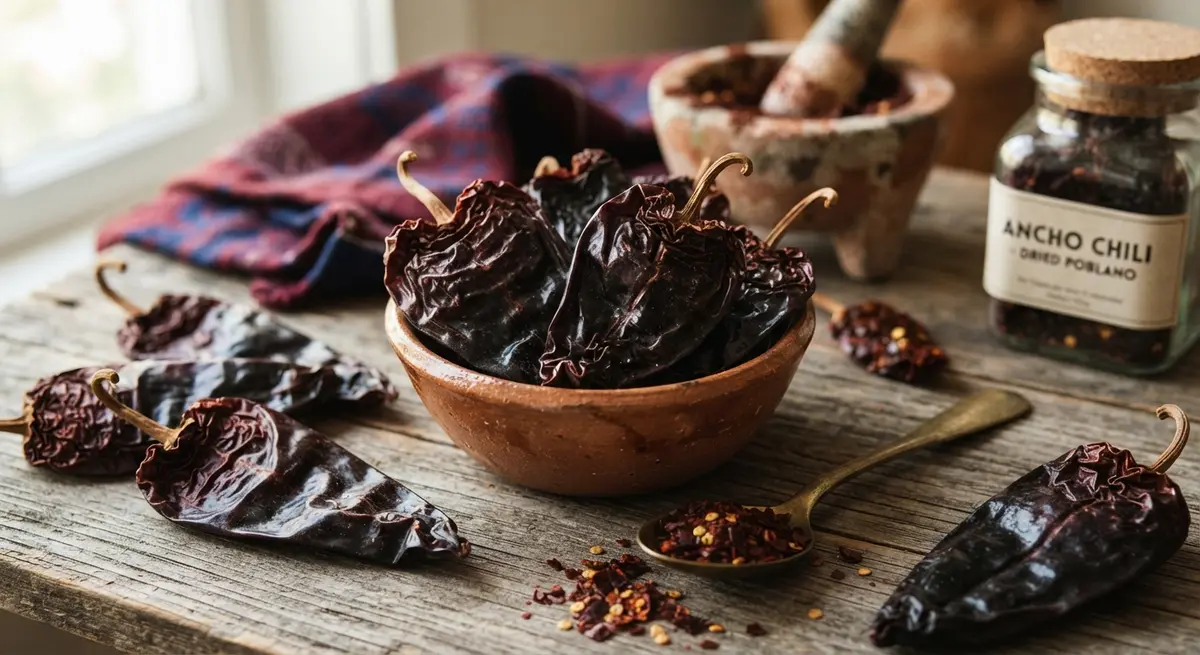
Ancho Chili: Flavor Profile, Health Benefits & Culinary Uses
The mildest, sweetest of Mexico's famous dried chiles: ancho is the raisiny soul of mole whether whole, ground, or soaked into silky sauces.
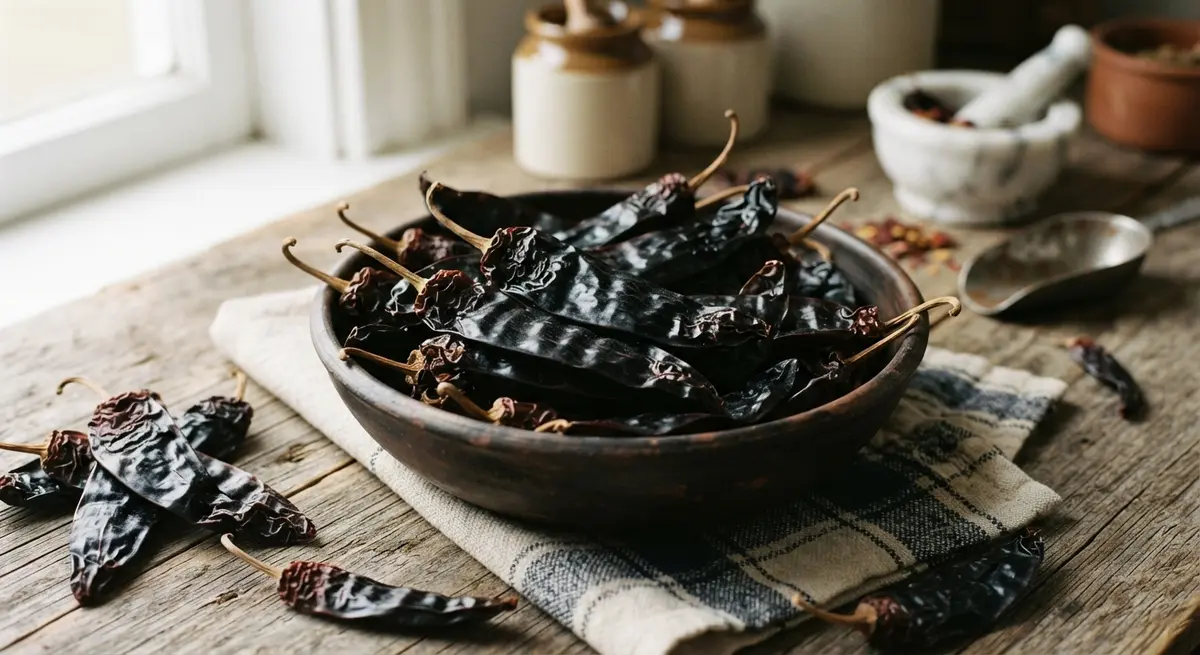
Pasilla Chili: Flavor Profile, Health Benefits & Culinary Uses
The 'little raisin' of Mexican dry chiles: pasilla is the dried chilaca, dark and mild, bringing prune-espresso depth to moles and braised meats.
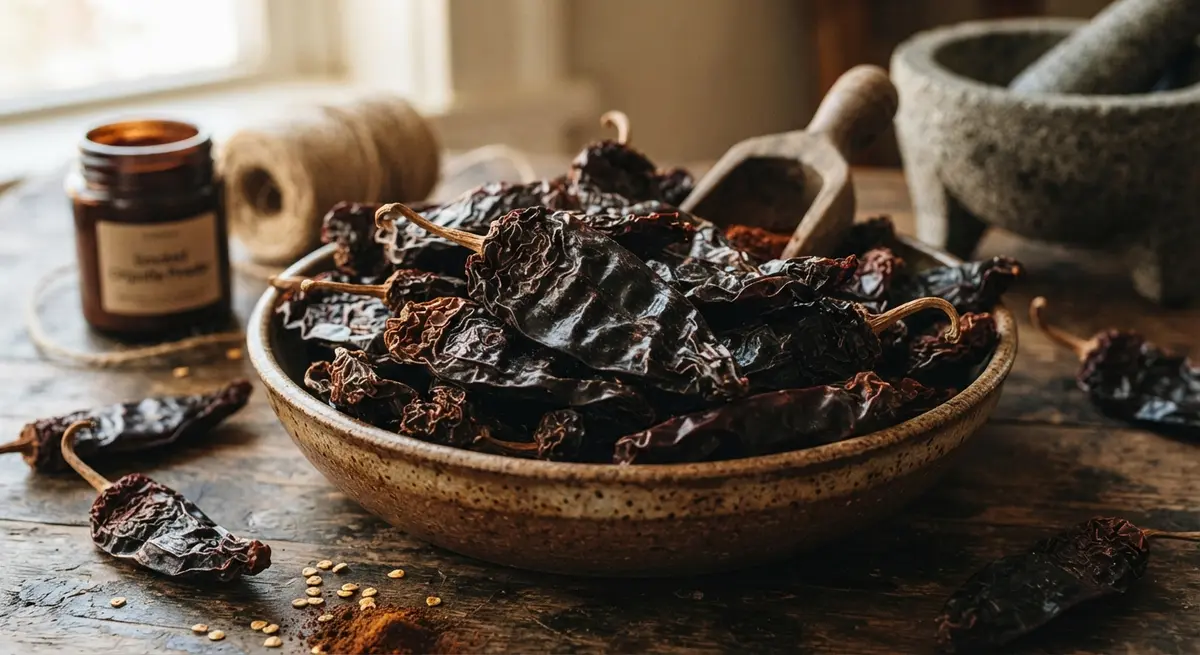
Smoked Chipotle Chili: Flavor Profile, Health Benefits & Culinary Uses
A jalapeno that ripened red and walked through smoke for a few days — chipotle's campfire flavor, friendly heat, and the two ways it reaches your kitchen.
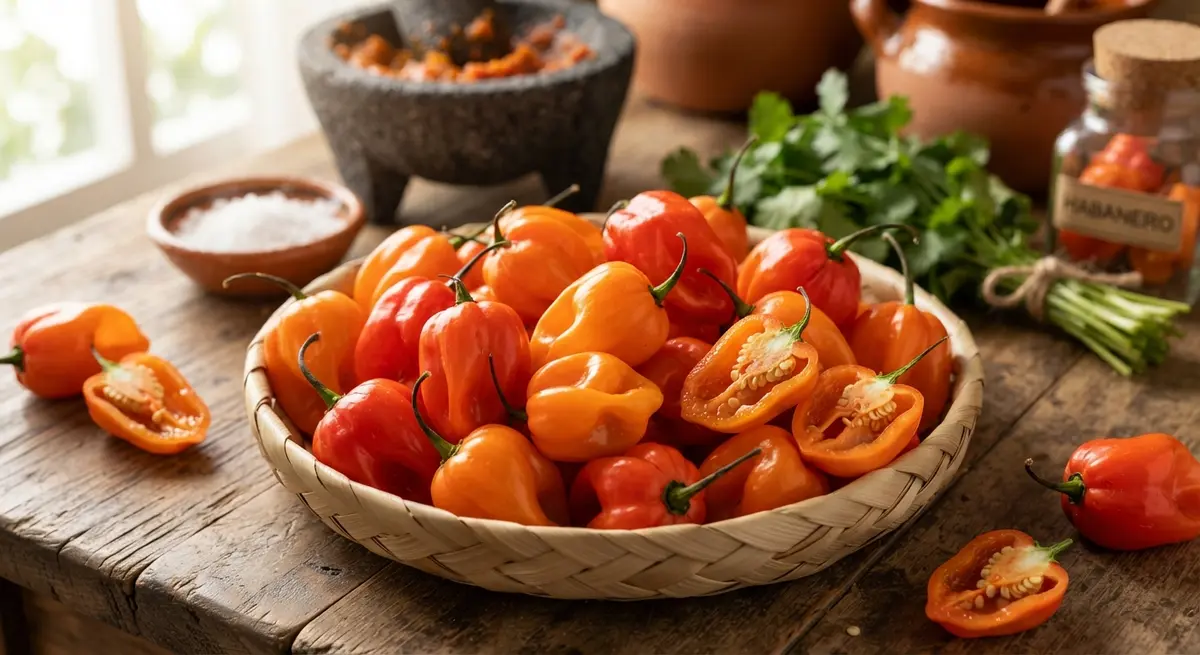
Habanero Chili: Flavor Profile, Health Benefits & Culinary Uses
One pepper that smells like apricots and tastes like a bonfire: habanero's real heat level, how to handle it safely, and the Caribbean dishes it owns.
About the Authors
This recipe and guide was developed, tested, and approved in our home kitchen and daily life. Jamy is a retired Food Service District Manager and Early Childhood Program Manager who spent his career overseeing multi-site restaurant operations, large-scale culinary production, and daycare menu management. Kaïna brings the ultimate real-world test: making sure it brings ease and joy to our kids on a busy weeknight.
Read more about our professional background and philosophy →