Saigon Cinnamon: Flavor Profile, Health Benefits & Culinary Uses
By the QuiteRecipes team (Jamy & Kaïna)
The cowboy of cinnamons — hot, sweet, and dramatically aromatic straight out of Vietnam. Why Saigon cinnamon behaves differently and how to use it well.
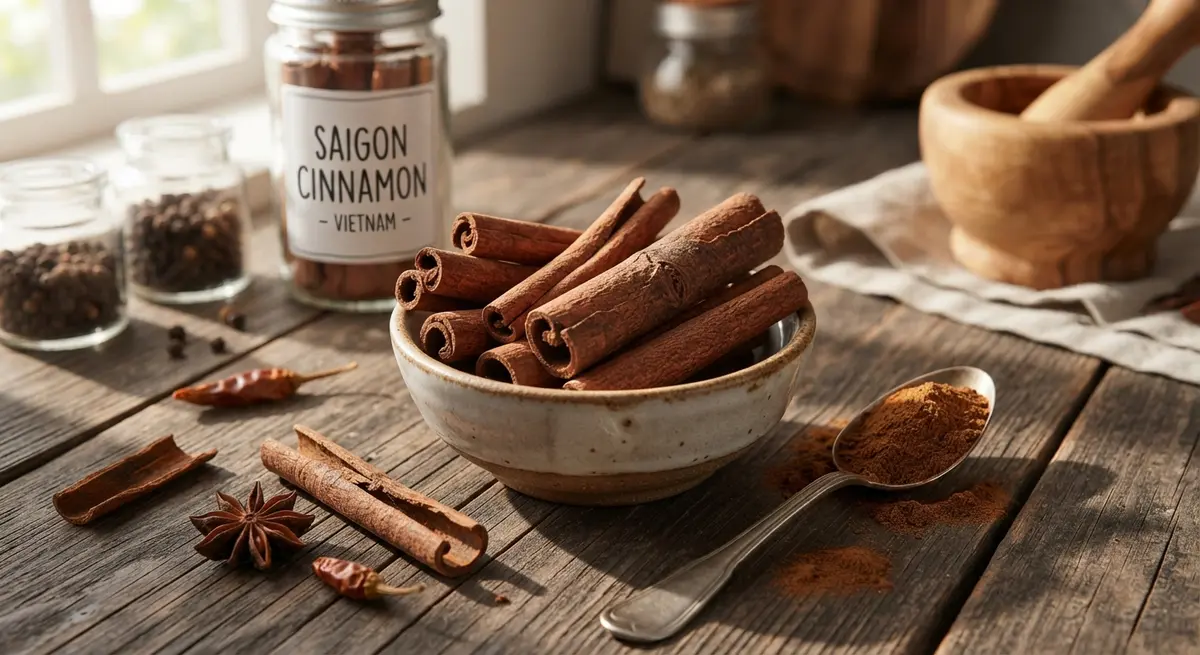
If the cinnamon aisle had an amplifier, Saigon cinnamon would be standing in front of it. It is the cinnamon that Vietnamese cooks have taken for granted for centuries — the bark of Cinnamomum loureiroi, a cassia-family tree grown in the mountains of Vietnam — and it is dramatically the most aromatic cinnamon you will meet in a Western market. That reputation is chemistry: Saigon cinnamon carries more cinnamaldehyde, the compound responsible for cinnamon's hot, spicy bite, than just about any sibling species. One sniff of a good jar next to average cinnamon and the difference announces itself without a word being said.
Flavor Profile & Notes
Saigon cinnamon hits the tongue with warmth before the sweetness lands — sharp, spicy, and almost peppery up front, then cinnamon's classic mellow sweetness, then a long, clean finish that has made it the darling of serious bakers. Between the Vietnamese varieties, Saigon tends to be the boldest: some describe its heat as noticeably punchy next to softer Indonesian types. Because it is powerful, it does not hide in dishes the way plain cinnamon can. You will taste it as cinnamon clearly, at higher volume. That is excellent news for strong, spicy baked goods and a note of caution for anything delicate.
Health Benefits & Nutrition
Cinnamon in general is one of the genuinely useful pantry spices: decent minerals in the form of manganese and a bit of calcium, low calories, and the famous record of being studied for its effects on blood sugar control. Saigon cinnamon is no exception — the extra cinnamaldehyde means the aromatics are the story. The honest footnote is one every cinnamon lover should hear once: cassia-type cinnamons including Saigon and Chinese have more coumarin than the pricier Ceylon cinnamon, and heavy daily doses of coumarin are something your liver would rather not meet. Normal cooking amounts are not a concern; eating spoonfuls a day as a fad is the wrong idea.
Best Culinary Pairings
It is a star in spice-forward baking: apple and pumpkin desserts, cinnamon rolls, and snickerdoodles, where its heat holds its own against butter and sugar. Use slightly less than a recipe calls for if your jar is boldly aromatic. It elevates coffee, cocoa, and mulled wine, and proves itself in chili, braised meats, and slow-smoked rubs, where its spiciness performs like a minor flavor event. Vietnamese pho teas and hot bowls of cacao deepen beautifully with a stick simmered in. For delicate custards or subtle pastries, you may prefer a milder cinnamon — this one wants an audience.
Quick Substitutes
Regular cassia cinnamon (the common grocery-store kind) is the closest swap at a slightly larger amount; it lands softer and less spicy. Vietnamese cinnamon powder substitutes for the sticks by weight. Ceylon dissolves into the gentler, sweeter side of things — fine for light bakes, wrong for recipes built on Saigon's bite. Star anise and a little clove can hint at the heat but will not replace the cinnamon sweetness. When a recipe says "cinnamon" without a qualifier, Saigon usually makes it better; when it says Saigon explicitly, it means it.
FAQ / Quick Facts
- How long does it keep? Ground lasts one to two years sealed; whole sticks hold their aroma far longer.
- What does it taste like? Hot, sweet, and deeply aromatic — the most intense, peppery cinnamon most markets sell.
- Botanical family / Form: Lauraceae (laurel family); bark of Cinnamomum loureiroi, sold ground or in sticks. Best uses: bold baking, coffee, chili, and braised dishes.
Related Articles
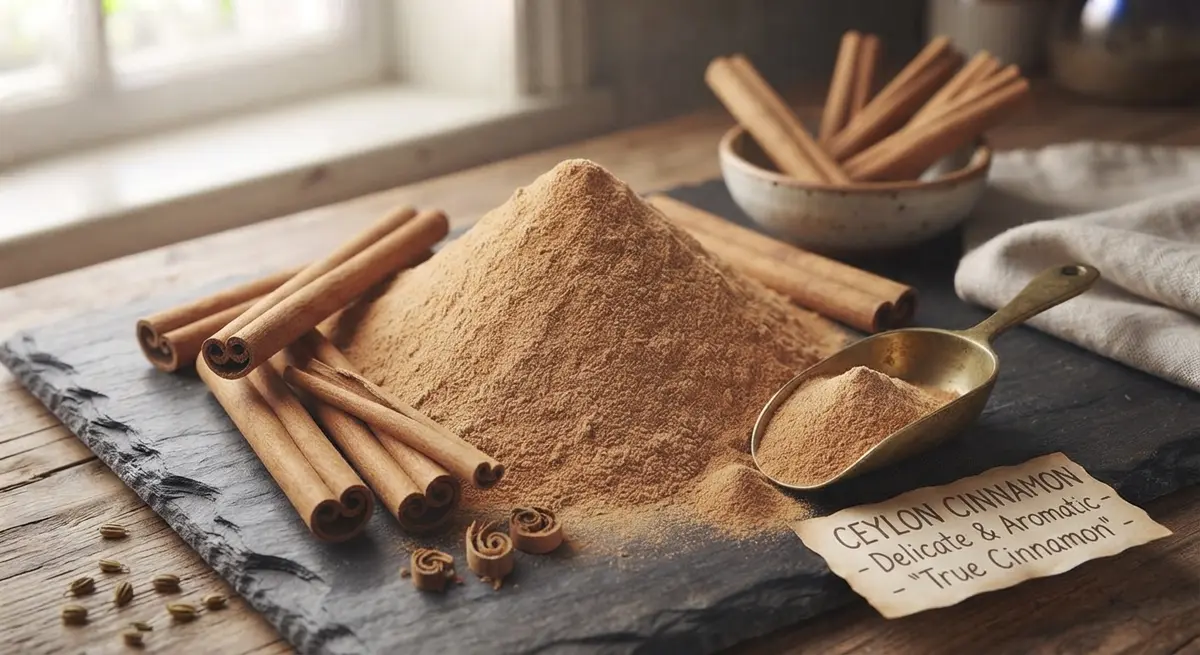
Ceylon Cinnamon: Flavor Profile, Health Benefits & Culinary Uses
Ceylon is the delicate, low-coumarin 'true cinnamon' from Sri Lanka. Here is how to tell it apart, cook with it, and know when it is worth the money.
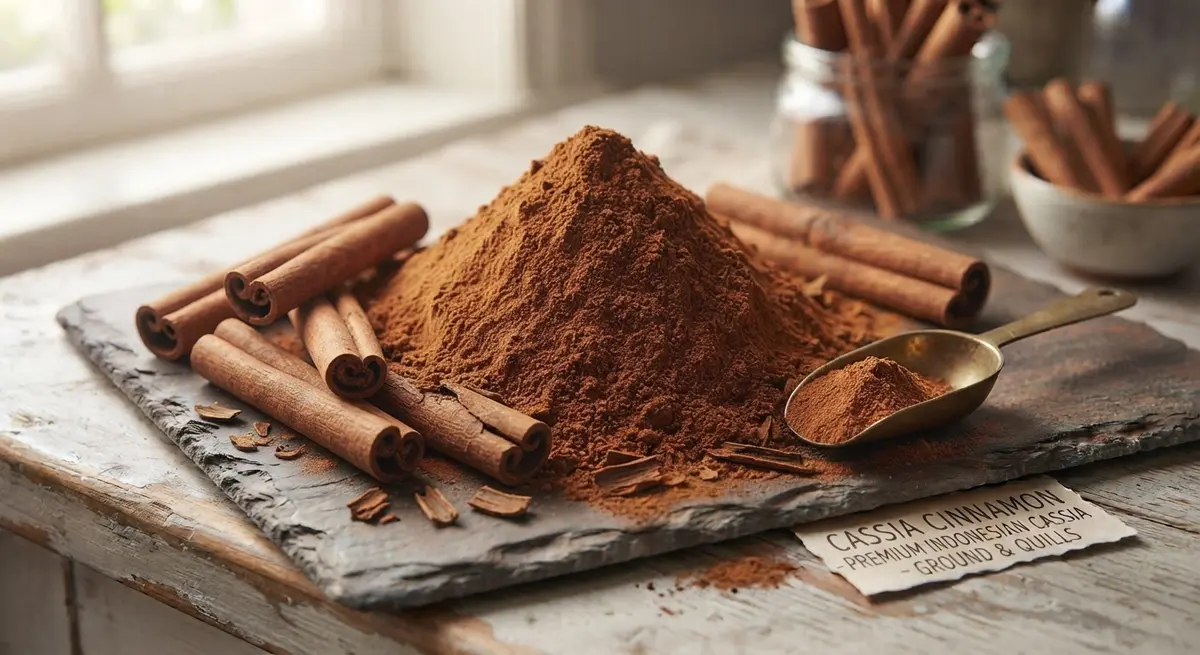
Chinese Cassia Cinnamon: Flavor Profile, Health Benefits & Culinary Uses
The tall, dark, strongly spicy jar on American shelves is usually cassia, not true cinnamon. Here is its flavor, best uses, and the honest coumarin facts.
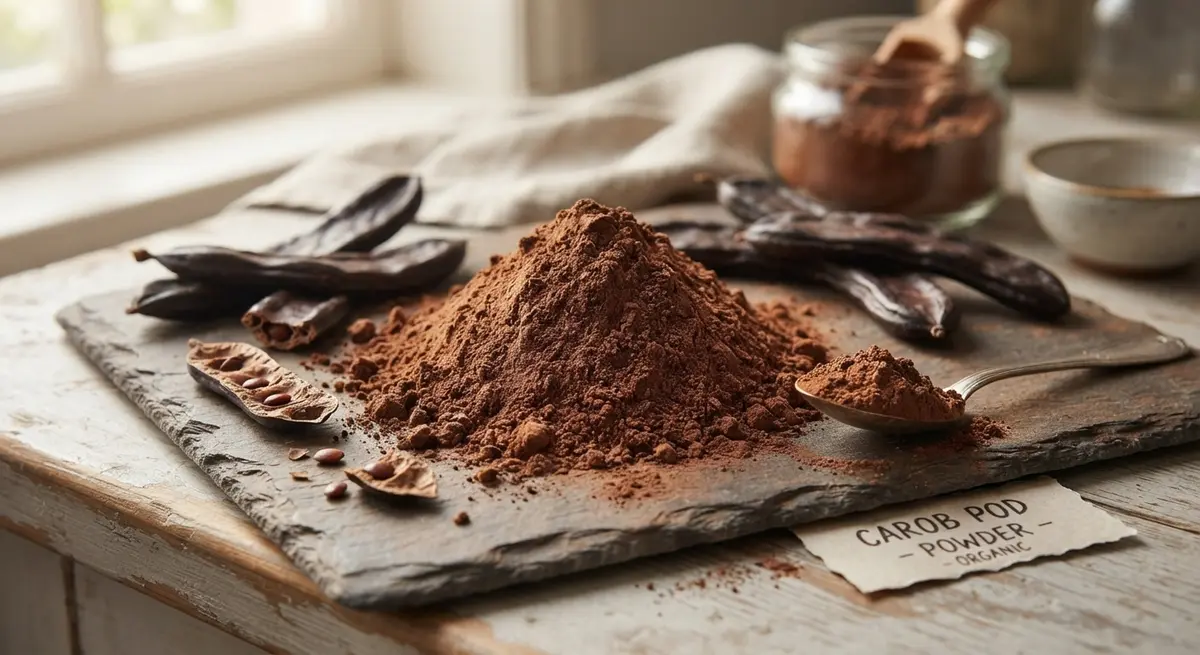
Carob Pod Powder: Flavor Profile, Health Benefits & Culinary Uses
Naturally sweet, caffeine-free carob comes from roasted Mediterranean pods — a toasty, malty brown powder that is not chocolate but deserves a pantry spot anyway.
Cloves: Flavor Profile, Health Benefits & Culinary Uses
Those little nails in the jar are dried flower buds, and their eugenol content means a little goes a long way. Here is where cloves belong and what they replace.
About the Authors
This recipe and guide was developed, tested, and approved in our home kitchen and daily life. Jamy is a retired Food Service District Manager and Early Childhood Program Manager who spent his career overseeing multi-site restaurant operations, large-scale culinary production, and daycare menu management. Kaïna brings the ultimate real-world test: making sure it brings ease and joy to our kids on a busy weeknight.
Read more about our professional background and philosophy →