Roasted Pumpkin Seed Powder (Pepitas): Flavor Profile, Health Benefits & Culinary Uses
By the QuiteRecipes team (Jamy & Kaïna)
Toast pepitas, grind them fine, and you have a golden nutty dust that thickens moles, feeds granola, and quietly fortifies everything it touches.
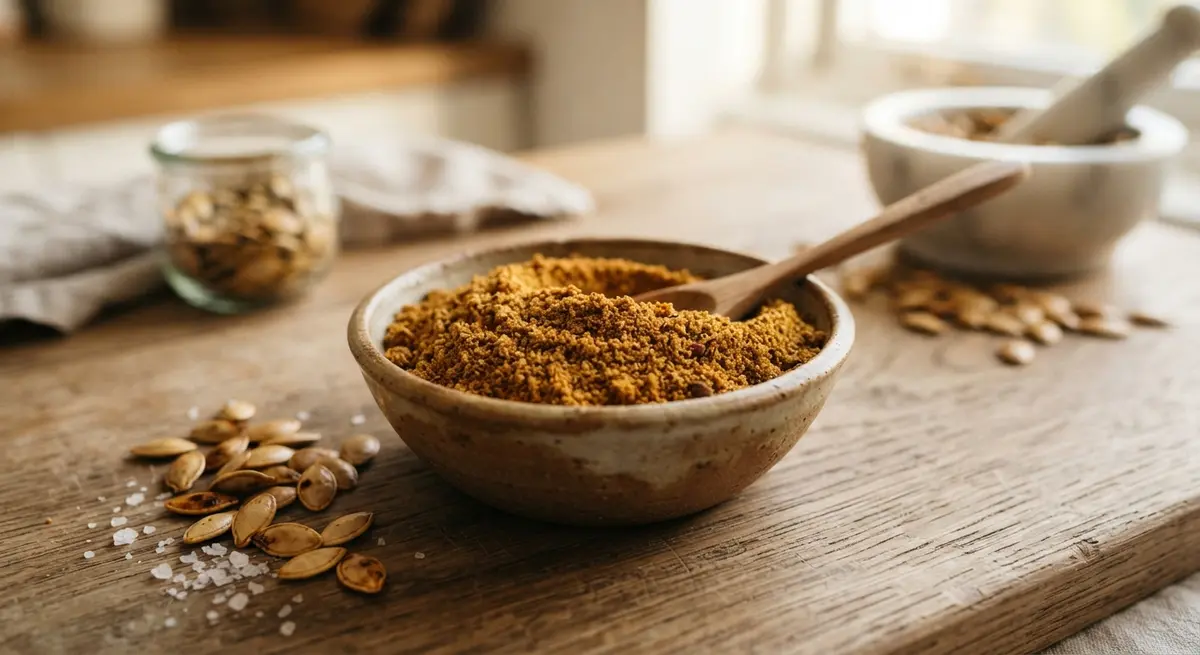
Pepitas are the green, hulled seeds of the squash family, and roasted pumpkin seed powder is what happens when you grind the golden, fragrant roasted seeds into a fine nutty dust. In Mexico, where the seed is a national ingredient, the powder is simply part of the pantry.
Toast pepitas in a dry skillet, grind them fine, and you have the secret layer in moles, in pipian, and in some very surprised granola. It is one of the easiest homemade "spices" you will ever make, and it does more than any single jar has a right to.
Flavor Profile & Notes
Roasted pepitas taste deep, nutty, and slightly sweet, with a toasted-cereal note and a whisper of earth — like a green almond that went to a bonfire and came back polished. Ground fine, the powder is fluffy and drinks up liquid, thickening sauces and adding body without any dairy. Finely ground it makes desserts rich, in the way almond meal does but with more character; coarsely crushed, it becomes a crunchy topping. Toast the seeds in a dry pan until they puff and smell nutty — five to seven minutes — cool them completely, then grind. Processed too far, they release their oils into a butter, which is delicious but is not what you want for a dry pantry dust.
Health Benefits & Nutrition
This is one of the better-for-you spice rack residents. Pepitas are a genuine source of plant protein, healthy unsaturated fats, fiber, magnesium, zinc, and iron, and roasting keeps most of that intact while bringing out flavor. Magnesium is the fun fact everyone quotes, and it is true: a small handful makes a real dent in a day's needs. Because pepitas are hulled, they are lighter on fiber than whole-in-shell seeds; grind the unhulled kind if fiber is your goal, accepting a grainier texture. None of this is medicine, but it is legitimately nourishing cooking.
Best Culinary Pairings
Mole verde and pipian are the Mexican headquarters — the powder thickens and enriches the sauce until it coats the back of a spoon. In everyday kitchens, a spoonful stirred into soups and stews thickens them, a dusting on granola and yogurt adds crunch, and a handful folded into hummus makes it nuttier. It works as a gluten-free breading for fish, a base for pesto when you are out of pine nuts, and a silent layer of richness in energy balls, pancakes, and salad dressings.
Quick Substitutes
Finely ground roasted almonds are the closest swap texture-wise, a little sweeter and subtler. Ground toasted sunflower seeds stand in well if you need a nut-free option; keep them skinned or the powder turns gray-green. Tahini adds the same nuttiness but too much wetness — thin it if substituting. For thickening alone, a regular flour and butter roux does the job with none of the personality, which is why the seed powder tends to win on flavor.
FAQ / Quick Facts
- How do I make it? Toast green pepitas in a dry skillet five to seven minutes, cool completely, then grind in a food processor or spice grinder.
- What does it taste like? Deep, nutty, and faintly sweet with a toasted cereal character.
- Form / best uses: Fine powder for thickening and baking, coarse crush for topping; store airtight and it keeps for months.
Related Articles
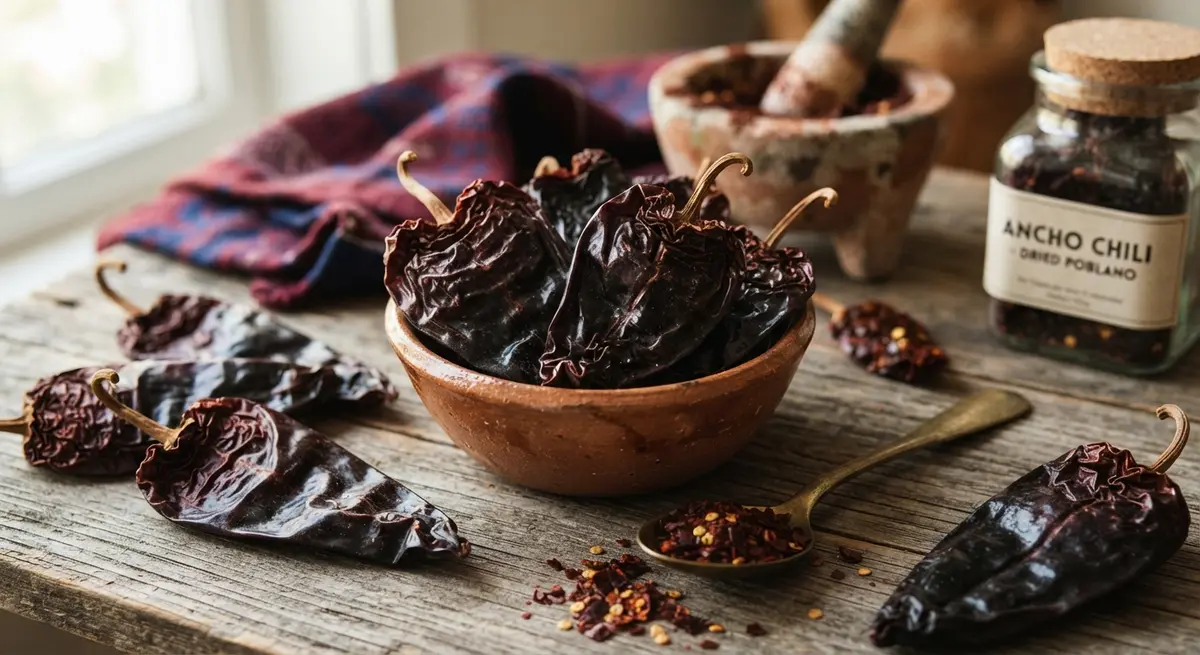
Ancho Chili: Flavor Profile, Health Benefits & Culinary Uses
The mildest, sweetest of Mexico's famous dried chiles: ancho is the raisiny soul of mole whether whole, ground, or soaked into silky sauces.
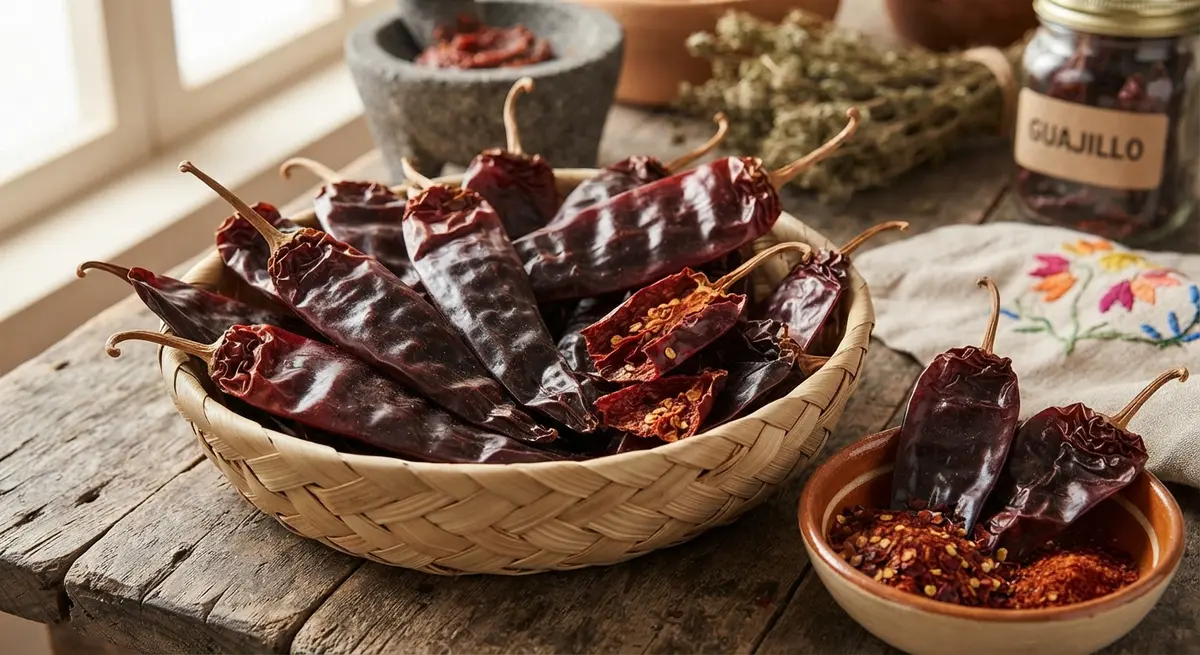
Guajillo Chili: Flavor Profile, Health Benefits & Culinary Uses
Bright, brick-red, and everywhere — guajillo is the dried mirasol behind enchilada sauce and stews, with a cranberry tang no other chili quite matches.
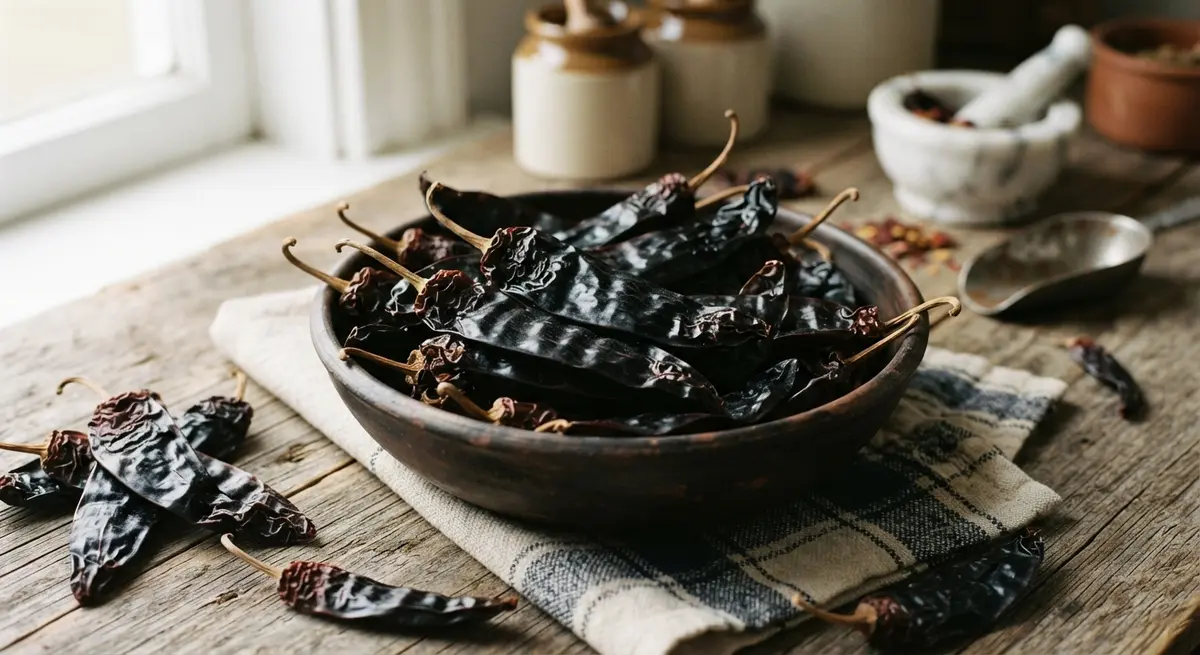
Pasilla Chili: Flavor Profile, Health Benefits & Culinary Uses
The 'little raisin' of Mexican dry chiles: pasilla is the dried chilaca, dark and mild, bringing prune-espresso depth to moles and braised meats.
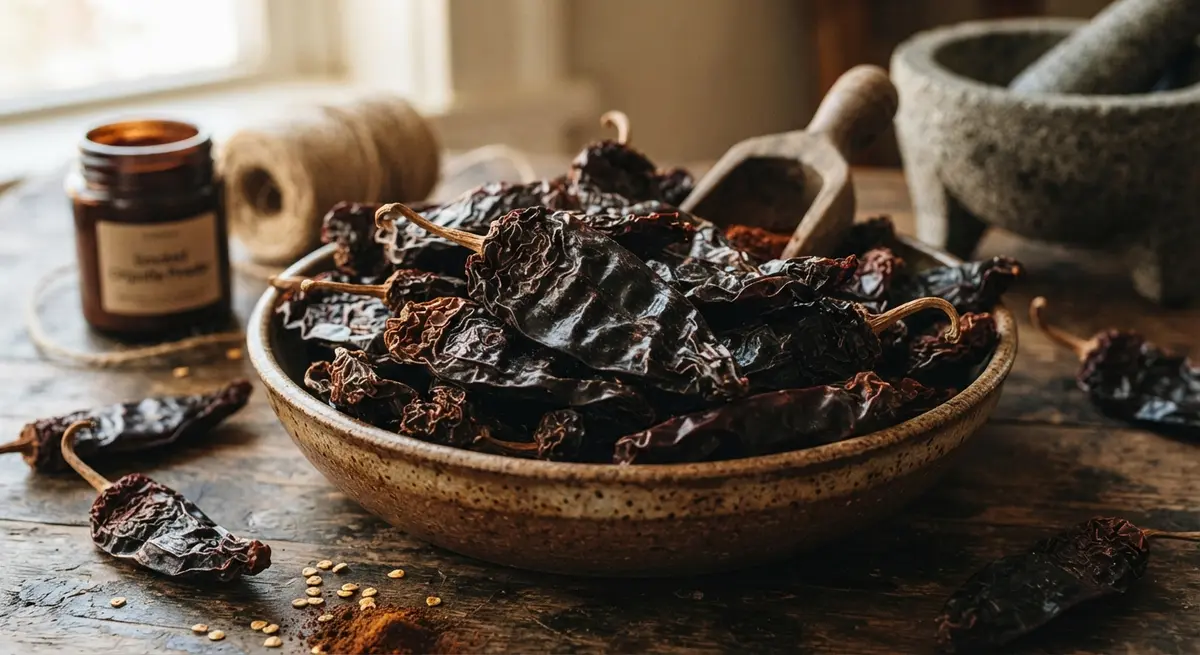
Smoked Chipotle Chili: Flavor Profile, Health Benefits & Culinary Uses
A jalapeno that ripened red and walked through smoke for a few days — chipotle's campfire flavor, friendly heat, and the two ways it reaches your kitchen.
About the Authors
This recipe and guide was developed, tested, and approved in our home kitchen and daily life. Jamy is a retired Food Service District Manager and Early Childhood Program Manager who spent his career overseeing multi-site restaurant operations, large-scale culinary production, and daycare menu management. Kaïna brings the ultimate real-world test: making sure it brings ease and joy to our kids on a busy weeknight.
Read more about our professional background and philosophy →