Radhuni: Flavor Profile, Health Benefits & Culinary Uses
By the QuiteRecipes team (Jamy & Kaïna)
A tiny seed, half celery and half ajwain, that Bengalis treat as a kitchen secret. Radhuni is easier to meet in panch phoron than by its own name.
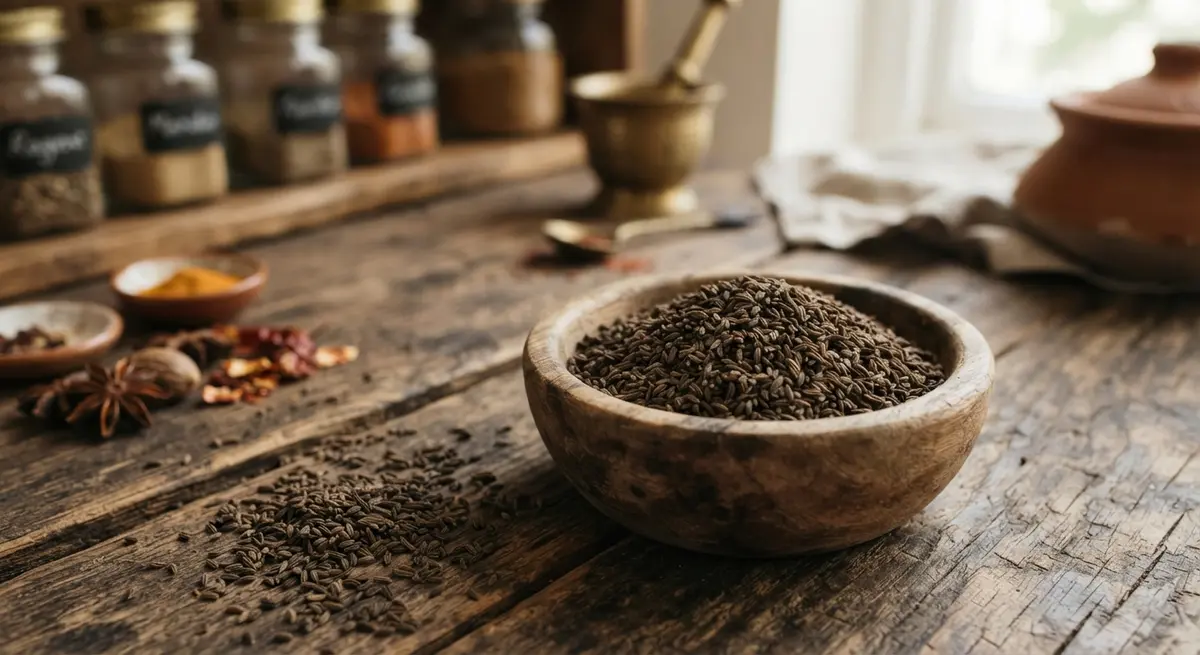
If you have cooked Bengali food at all, you have probably already met radhuni without knowing its name. It is often one of the quiet members of the Bengali five-spice mix, where it plays second fiddle to a louder seed. Stand it alone, though, and radhuni is its own creature: a tiny brown seed from Trachyspermum roxburghianum — close kin to ajwain — that tastes like a cross between celery seed and carom, with a bitter, warming snap. Bengali cooks prize it especially in fish curries, where that distinct, almost lovage-like savor nods politely at the flavor of the fish.
Flavor Profile & Notes
Radhuni opens like celery seed — that warm, peppery, slightly lovage-like greenness — and finishes like ajwain, with a sharp, thyme-y bitterness. It is not as aggressive as ajwain and not as leafy as celery seed; it sits in the middle with its own footnotes. In hot oil, briefly bloomed, it turns nutty and mellow, its bite softening into a savory warmth that reads as very Bengali. Because a little goes a very long way, radhuni is typically used by the pinch, and its contribution is presence rather than quantity.
Health Benefits & Nutrition
Radhuni is a member of the essential-oil-heavy carrot family that respectably includes ajwain, celery seed, and caraway, and it carries the same family reputation: aromatic seeds used in traditional practice after heavy meals, and a traditional stomach-friendly habit in Bengali households, where a pinch or two in a bowl of leafy greens or lentils was a quiet everyday ritual. In modern science terms, that family's oils have broad antioxidant and antimicrobial activity. Be honest about the portional reality: you eat radhuni in tiny amounts purely for flavor, so treat its wellness legacy as a nice story on the side, nothing more.
Best Culinary Pairings
Bengali fish and lentil dishes are its natural stage. Try it blooming in oil with nigella seeds and green chilies before a fish curry — the combination is so classically Bengali it has its own name: phoron, the tempering. It seasons leafy green dishes like shorshe shaak, and it appears in panch phoron, where some versions swap it for ajwain. Sprinkle a pinch into a mild lentil stew and the seeds send up warm, celery-tinged steam as they cook. It is one of those spices you dose once, taste, and then understand immediately.
Quick Substitutes
Celery seed plus a pinch of caraway is the closest pantry approximation, hitting both the celery note and the slight bitterness. Ajwain substitutes in a pinch but dials up the thyme-like bite. If a recipe calls for radhuni and you use celery seed alone, you will get something decent but greener — the distinctive warming snap is what you lose. For authentic Bengali cooking, a small jar of radhuni is cheap and lasts years.
FAQ / Quick Facts
- How long does it keep? Two to three years in a sealed jar — the essential oils fade slowly and revive when fried.
- What does it taste like? Celery seed crossed with ajwain: warm, green, and gently bitter.
- Botanical family / Form: Apiaceae (parsley family); dried seeds of Trachyspermum roxburghianum. Best uses: Bengali fish curries, greens, and panch phoron.
Related Articles
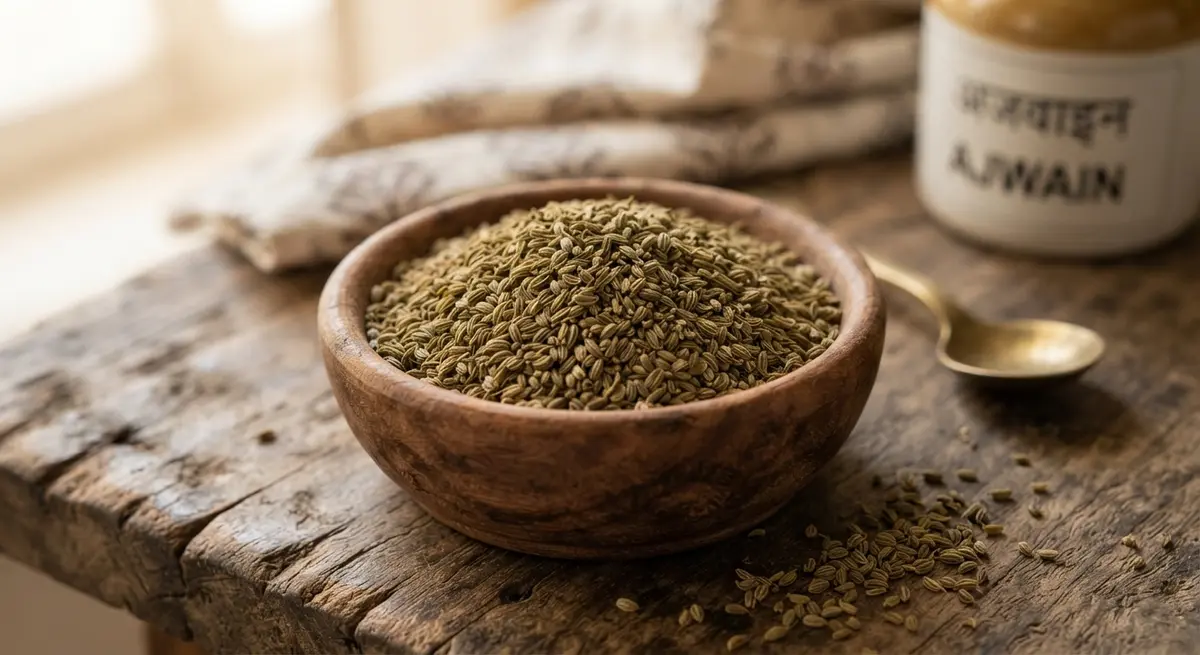
Ajwain (Carom) Seeds: Flavor Profile, Health Benefits & Culinary Uses
A tiny gray-brown seed that tastes like thyme, oregano, and cumin had a baby with a timer fuse. Here is how and why Indian kitchens use ajwain.
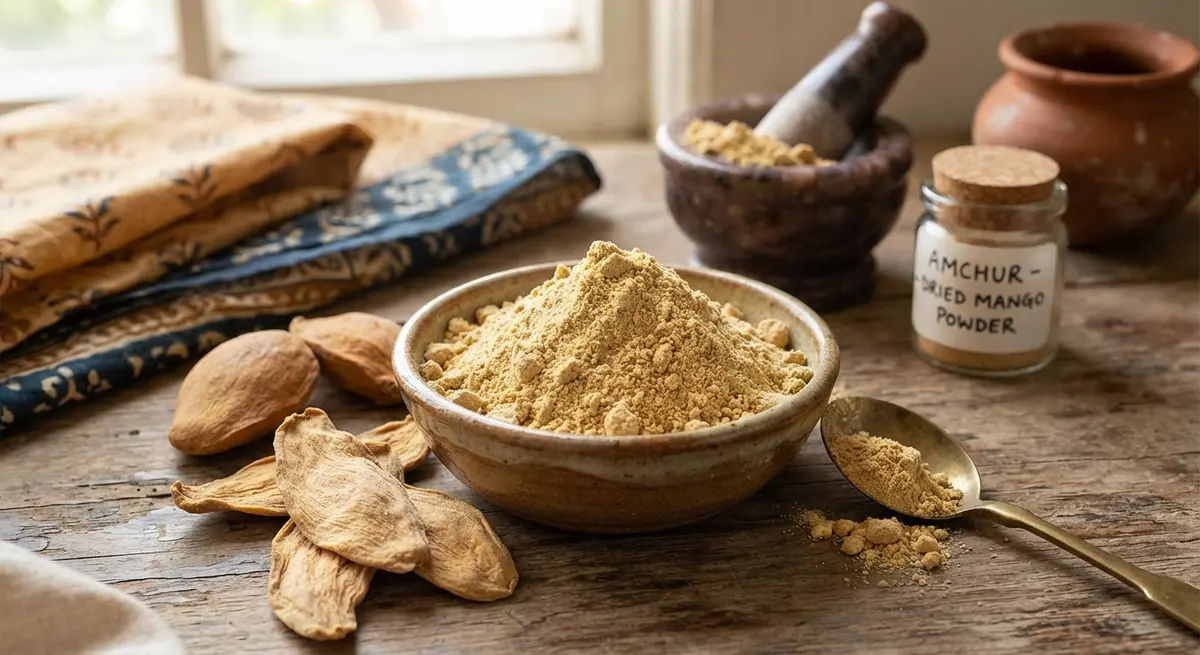
Amchur (Green Mango Powder): Flavor Profile, Health Benefits & Culinary Uses
Powdered green mango that adds bright sour notes without a drop of liquid. Amchur turns snack mixes, dry rubs, and curries tart in one shake.
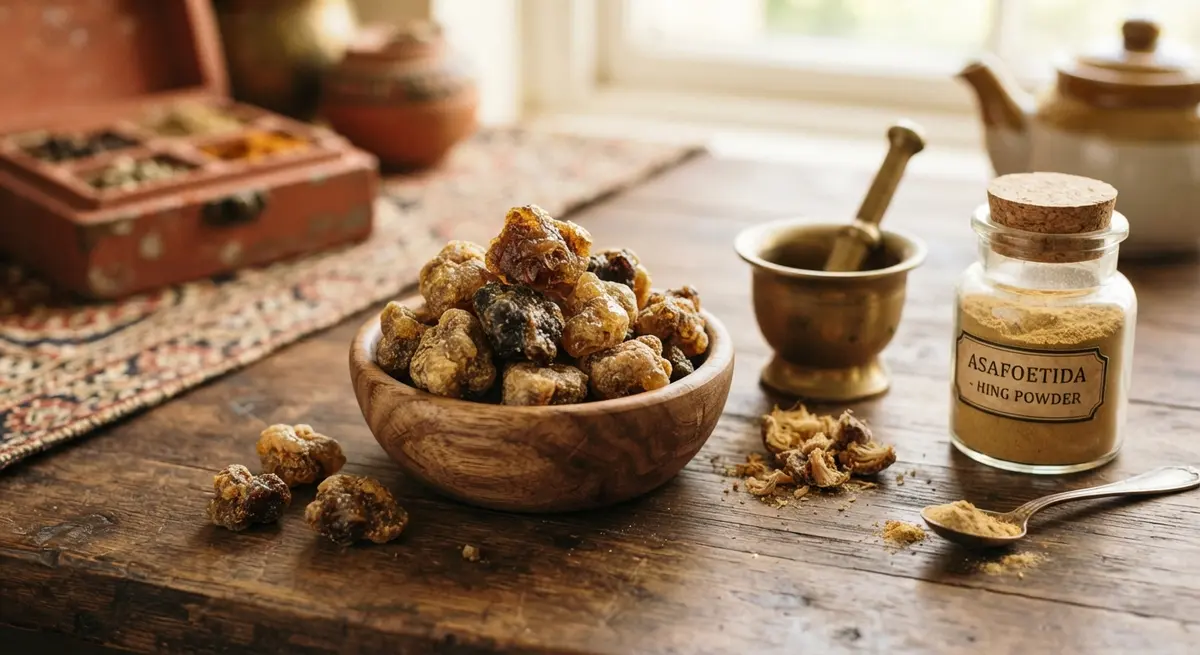
Asafoetida (Hing): Flavor Profile, Health Benefits & Culinary Uses
The worst-smelling raw spice in the world turns into quiet onion-garlic gold the moment it hits hot oil. Here is the one rule for using hing without fear.
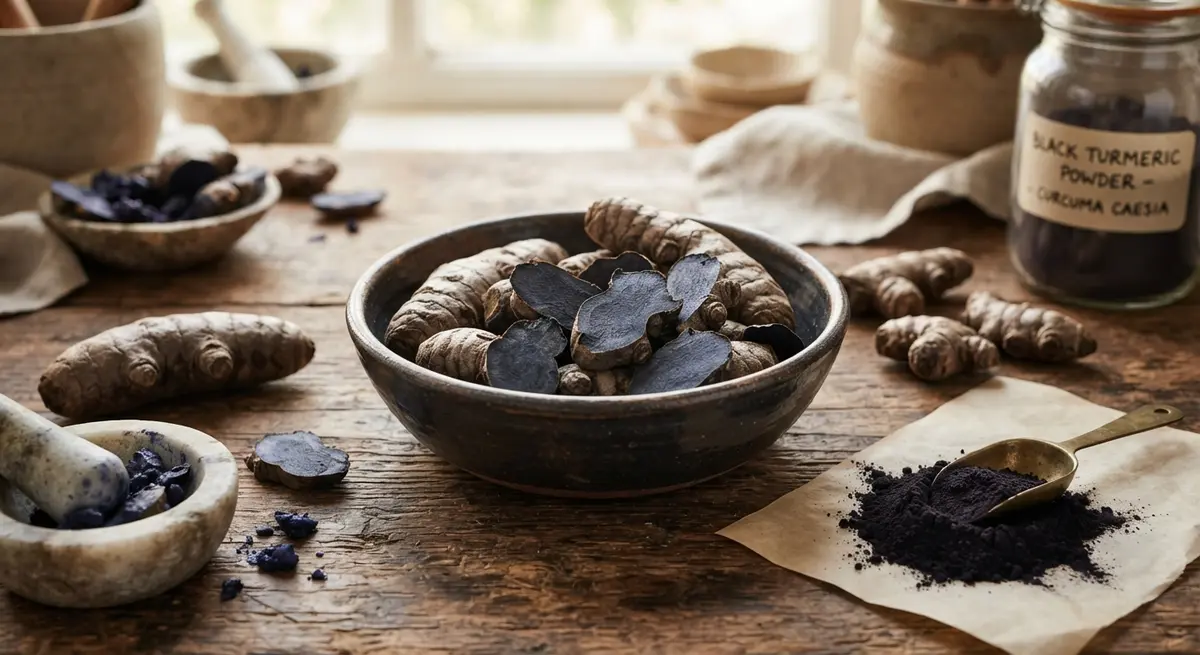
Black Turmeric: Flavor Profile, Health Benefits & Culinary Uses
The wild dark turmeric of eastern India, camphor-strong and almost blue inside: what black turmeric is, how it stuns cooks, and its honest uses in the kitchen.
About the Authors
This recipe and guide was developed, tested, and approved in our home kitchen and daily life. Jamy is a retired Food Service District Manager and Early Childhood Program Manager who spent his career overseeing multi-site restaurant operations, large-scale culinary production, and daycare menu management. Kaïna brings the ultimate real-world test: making sure it brings ease and joy to our kids on a busy weeknight.
Read more about our professional background and philosophy →