Dried Orange Blossom (Neroli): Flavor Profile, Health Benefits & Culinary Uses
By the QuiteRecipes team (Jamy & Kaïna)
The essence of the flower, not the fruit: neroli's sweet-citrus honey in pastry, tea, and creams. Strength warnings, blends, and honest swaps.
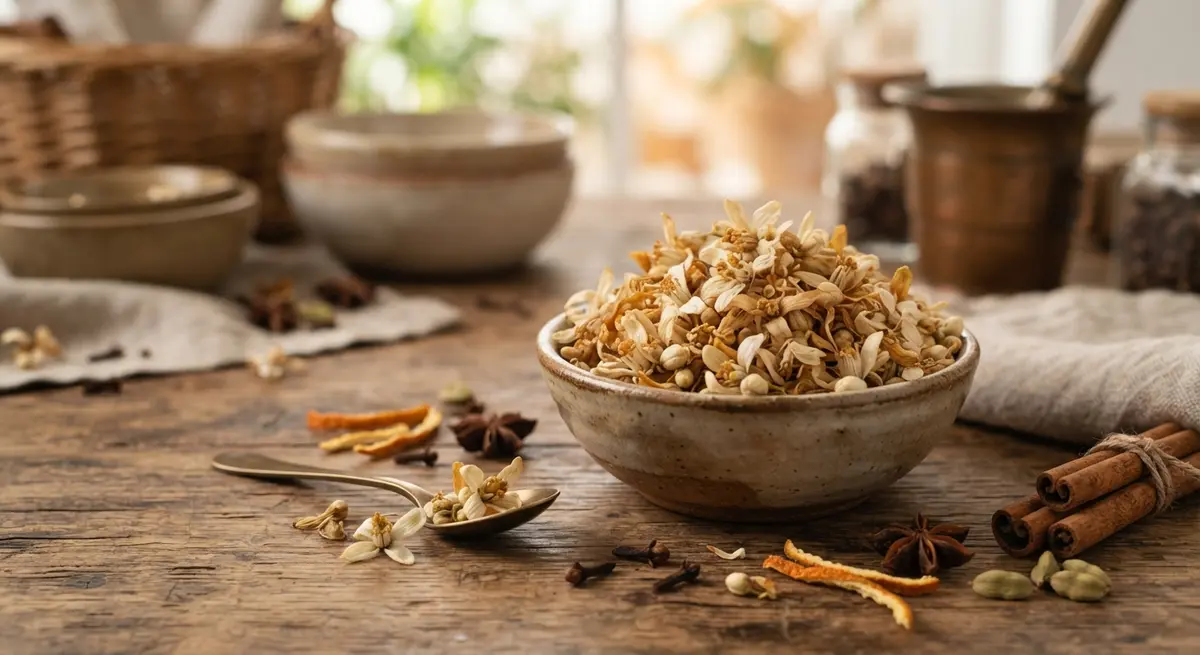
Orange blossom, or neroli, is the white flower of the bitter orange tree (Citrus aurantium) whose distilled water has perfumed Middle Eastern and Mediterranean desserts for centuries. It is to orange what rose water is to rose: the essence of the flower, not the fruit — sweet, heady, and faintly citrus. In North African and French pastry, it is indispensable.
One blossom goes a long way in food, which is the entire craft of using it: a teaspoon of blossom water perfumes a whole batch of dough, and more tastes like cologne.
Flavor Profile & Notes
Orange blossom water is sweetly floral with bright citrus top notes and a thick, honeyed base — like orange zest stirred into jasmine honey. Dried blossoms carry the same family of aroma with more bite; they brew into a gentle, fragrant tea with a meadow-sweet finish. Blossom essence, the extract, is far more concentrated than the water, so recipes specifying one are not interchangeable. The flavor rounds out desserts and softens the sharpness of yogurt and citrus — an elegant partner that turns anything into a memory of a Mediterranean evening.
Health Benefits & Nutrition
A small, honest story: orange blossom has a folk tradition as a gentle calmative — it appears in sedative-nervine herbal blends — and neroli oil is used in aromatherapy. The compounds limonene and linalool underlie some of that reputation. In food, though, you use it for flavor and a moment of calm, not measurable medicine. It is caffeine-free and low-calorie; overuse causes nothing but flavor. Those who are pregnant or taking medication should treat concentrated extracts with care and check in with a clinician — eat the water, rarely the oil.
Best Culinary Pairings
Classic territory: French madeleines and rice puddings, Moroccan and Algerian pastries, Middle Eastern milk desserts, plum tarts, and strawberry dresses. A splash in pancake batter, French toast, or a yogurt-honey parfait is the fastest weeknight luxury. It pairs with orange, lemon, honey, almond, pistachio, vanilla, rose, and coffee. For drinks, a dash in lemonade, jasmine tea, or a simple orange-forward cocktail brings out the fruit. Try it in whipped cream over poached apricots — the easiest transformation in the kitchen.
Quick Substitutes
For floral citrus ease, a teaspoon of orange zest plus a drop of rose water comes close. Jasmine syrup or honeyed linden tea covers the sweet floral side. If a recipe calls for orange blossom and you have only triple sec or orange peel, use grated zest plus a whisper of vanilla. Rose water alone changes the profile toward rose, so pair it with a little orange extract. None beat real blossom water in the classic French-Maghreb sweets; buy a small bottle and keep the flavor memory intact.
FAQ / Quick Facts
- Is it the same as neroli? Yes — neroli is the distilled essence of bitter orange flower; orange blossom water is its culinary dilution.
- How strong is it? Very. Add a teaspoon at a time and taste; it can dominate fast.
- What does it taste like? Sweetly floral with an orange-blossom-honey heart and a citrus veil.
- Botanical family: Rutaceae / Form: blossom water, dried blossoms, extract / Best uses: Middle Eastern and French pastries, teas, creams.
Related Articles
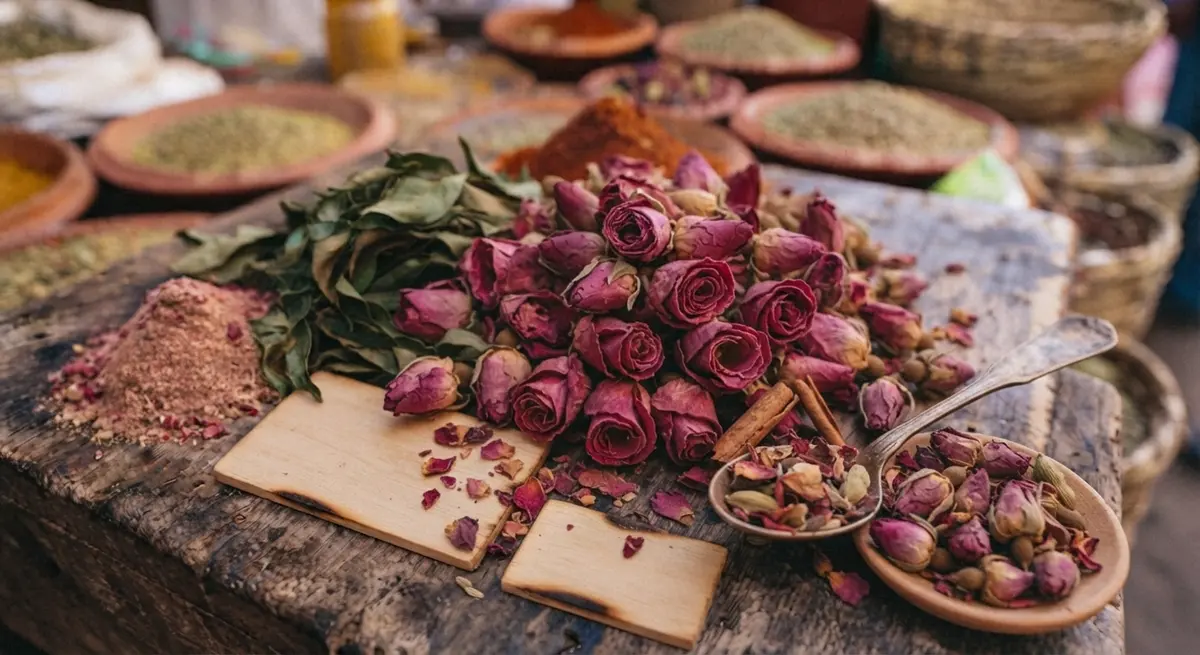
Damask Rose Buds: Flavor Profile, Health Benefits & Culinary Uses
The rose of Damascus, dried into concentrated buds. Its honeyed clove-spice flavor, rose water math, and how to keep it elegant in sweets.
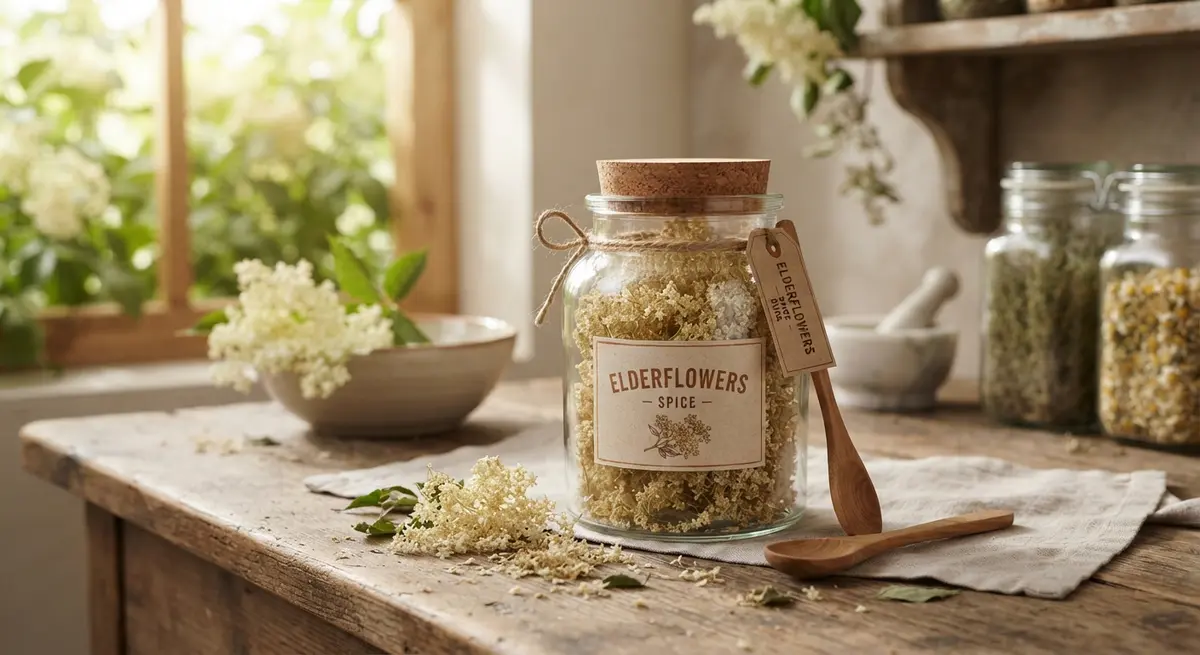
Dried Elderflowers: Flavor Profile, Health Benefits & Culinary Uses
The invisible backbone of a perfect summer: cream blooms with honey-pear perfume. Drying it, steeping cordial, and the lookalike cautions.
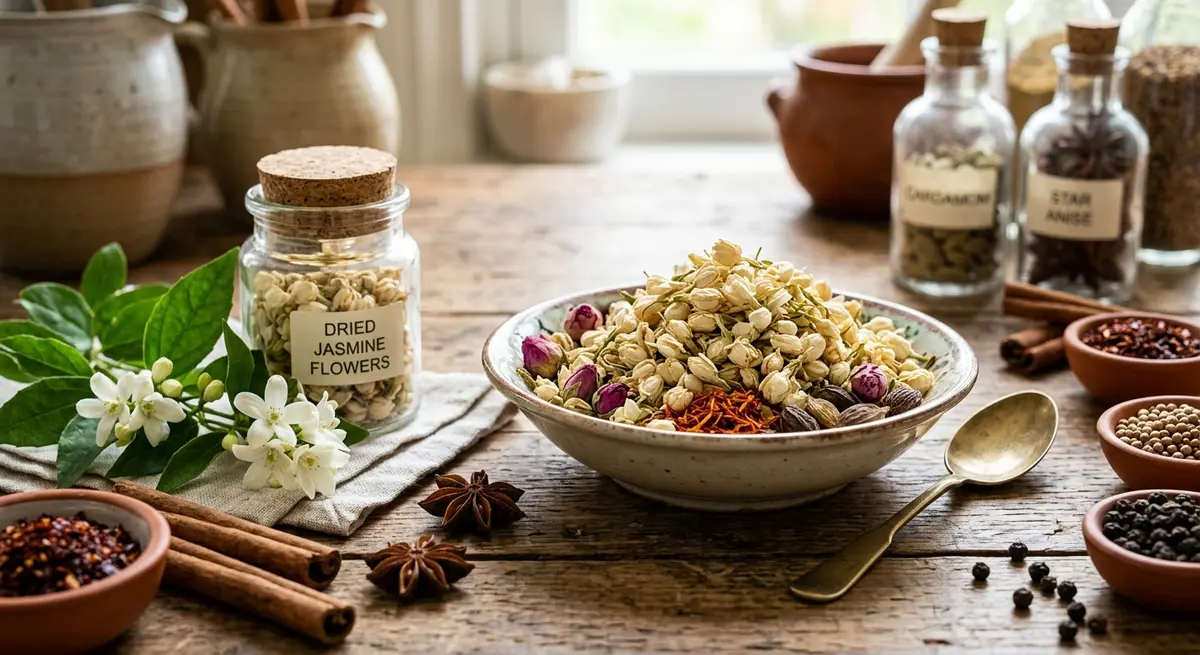
Dried Jasmine Flowers: Flavor Profile, Health Benefits & Culinary Uses
The night garden's gift to the kitchen: white petals that perfume tea and cream. Buying food-grade flowers, cold-brewing, and honing the restraint.
True Lavender Pistils: Flavor Profile, Health Benefits & Culinary Uses
The only culinary lavender worth trusting is Lavandula angustifolia. What it tastes like, how a pinch behaves, and why sachet lavender stays out.
About the Authors
This recipe and guide was developed, tested, and approved in our home kitchen and daily life. Jamy is a retired Food Service District Manager and Early Childhood Program Manager who spent his career overseeing multi-site restaurant operations, large-scale culinary production, and daycare menu management. Kaïna brings the ultimate real-world test: making sure it brings ease and joy to our kids on a busy weeknight.
Read more about our professional background and philosophy →