Dried Elderflowers: Flavor Profile, Health Benefits & Culinary Uses
By the QuiteRecipes team (Jamy & Kaïna)
The invisible backbone of a perfect summer: cream blooms with honey-pear perfume. Drying it, steeping cordial, and the lookalike cautions.
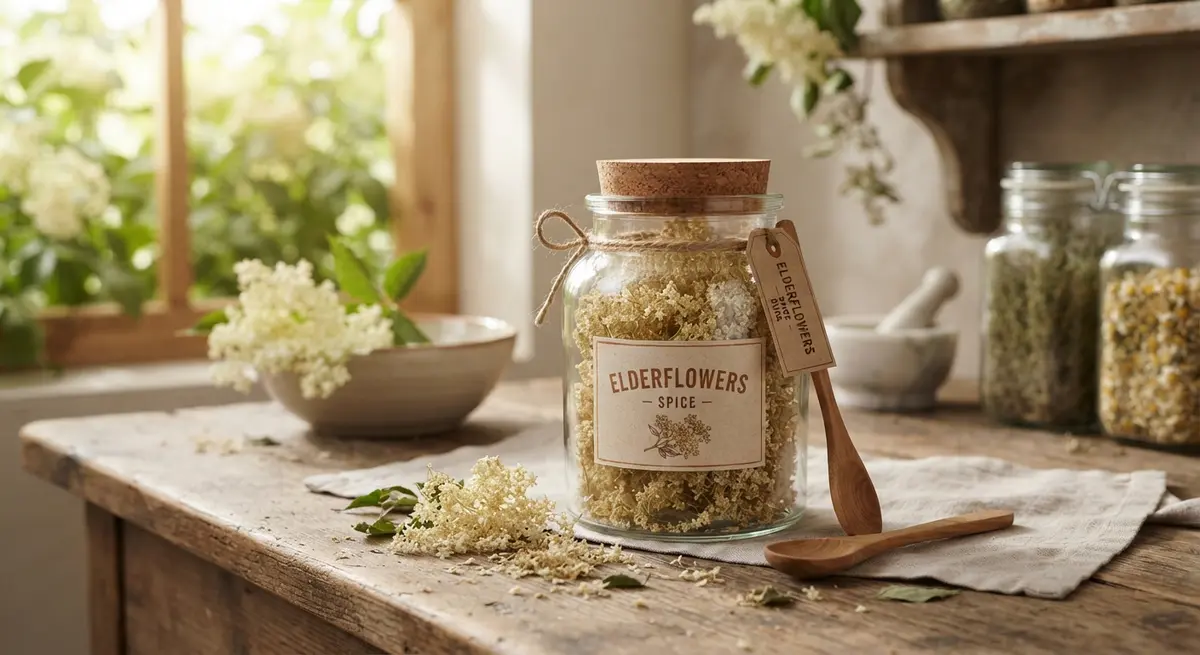
Elderflowers are the invisible backbone of a perfect summer. The creamy, lace-like blooms of the elder tree (Sambucus nigra) make the famous elderflower cordial, float in cocktails, and perfume cakes from Scandinavia to Britain and beyond. Harvested in that two-week window when the bush smells like honey and green grapes, they dry well and scare no one who has tried the real thing.
The kitchen golden rule with elderflowers: use the correct, culinary species — black elder, Sambucus nigra — from clean sites, and don't confuse white flower clusters with toxic lookalikes like hemlock, or with elder's own unripe berries.
Flavor Profile & Notes
Fresh elderflowers smell like standing inside a pale, honeyed orchard — sweet and musky with notes of pear, lychee, and freshly cut grass. Dried, the aroma compounds hold reasonably: the blossoms taste faintly of honey-sweet pear with a whisper of lemon and almond. The real star is an infusion: steep the blooms in simple syrup for hours and you get elderflower cordial — sweet, floral, faintly musky, unmistakable. Dried flowers also brew a pale, soothing tea with a honey-wine quality. The berries are a different story (unripe, toxic-ish) until fully cooked.
Health Benefits & Nutrition
Elderflowers share some of elderberry's antioxidant profile — flavonoids like quercetin — and carry a folk reputation for respiratory and immune support that has modest research interest. Practical cooking note: raw elderberries are mildly toxic (they contain cyanogenic glycosides) and only become safe with thorough cooking; the flowers themselves are the kitchen's gentle part. For most adults, elderflower tea or cordial is a pleasant, low-risk botanical. Anyone pregnant, nursing, or on immune-modulating medication should treat concentrated products cautiously and consult a doctor — flowers are not a substitute for medicine.
Best Culinary Pairings
Chord the cordial: mix elderflower syrup with sparkling water, wine, or gin; freeze it into popsicles or drizzle it over pancakes. Steep dried flowers in milk for elderflower rice pudding or panna cotta, fold them into cake batter and scones, or whisk them into honey for a floral drizzle. It pairs with lemon, gooseberries, strawberries, cucumber, thyme, and white chocolate. A strong simple-syrup infusion dressed with mint over peaches is summer in a glass. For a savory day, a few blossoms float in a light vinaigrette over goat cheese.
Quick Substitutes
For the honeyed calm in tea, linden (lime blossom) comes closest; chamomile brings floral softness with fewer notes. In drinks, elderflower cordial is justly irreplaceable — closest is a light hibiscus-lemon-mint syrup. For baking, orange blossom water or a drop of rose water with honey carries the floral lift. Black locust (robinia) flowers are the sweetest honey-scented blossom, but confirm identification before foraging any white flower cluster.
FAQ / Quick Facts
- Are the berries as safe as the flowers? Raw elderberries are mildly toxic and must be fully cooked; the flowers are the safe, gentle part.
- How should I dry them? Spread on racks away from sun and moisture; store in a sealed jar for up to a year.
- What do they taste like? Honeyed pear and lychee with a musky, sweet-tea aroma.
- Botanical family: Adoxaceae / Form: fresh blooms, dried flowers, cordial / Best uses: cordials, cakes, tea, cocktails.
Related Articles
Damask Rose Buds: Flavor Profile, Health Benefits & Culinary Uses
The rose of Damascus, dried into concentrated buds. Its honeyed clove-spice flavor, rose water math, and how to keep it elegant in sweets.
Dried Corn Silk: Flavor Profile, Health Benefits & Culinary Uses
The golden fringe from fresh corn brews a gentle, hay-sweet tisane. How to dry it, steep it, and blend it, plus honest cautions.
Dried Fir Bud & Spruce Powder: Flavor Profile, Health Benefits & Culinary Uses
Ground spruce tips are a fine-dining forest spice. When to dust, when to steep, how to identify safe conifers, and what plays well with pine.
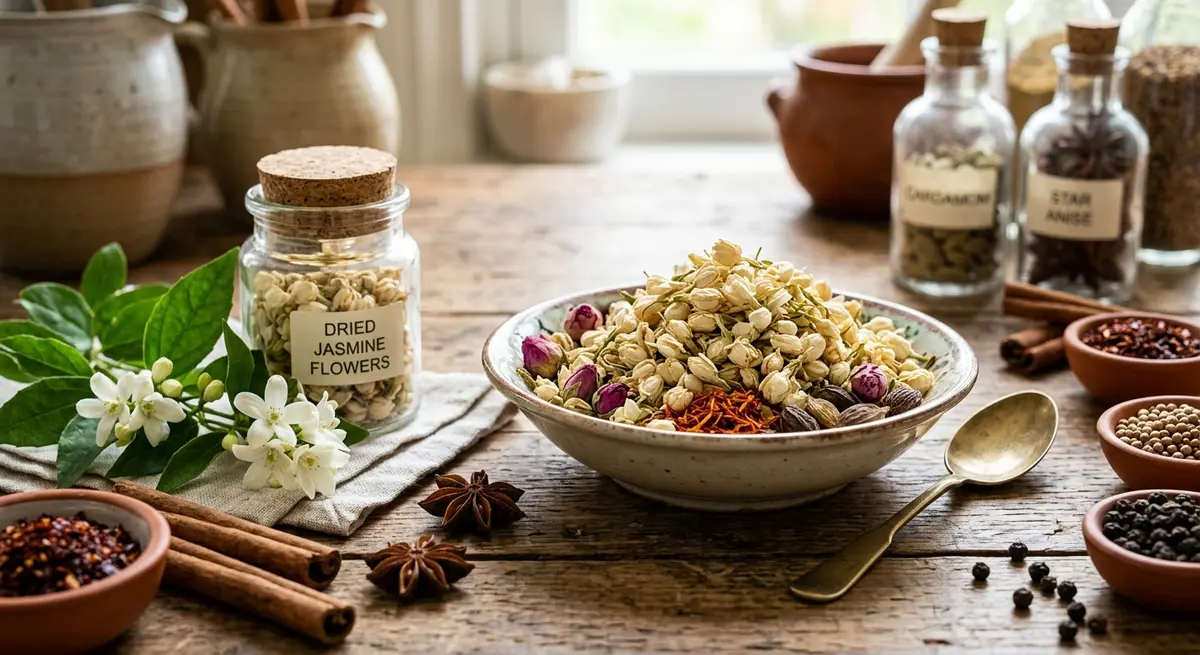
Dried Jasmine Flowers: Flavor Profile, Health Benefits & Culinary Uses
The night garden's gift to the kitchen: white petals that perfume tea and cream. Buying food-grade flowers, cold-brewing, and honing the restraint.
About the Authors
This recipe and guide was developed, tested, and approved in our home kitchen and daily life. Jamy is a retired Food Service District Manager and Early Childhood Program Manager who spent his career overseeing multi-site restaurant operations, large-scale culinary production, and daycare menu management. Kaïna brings the ultimate real-world test: making sure it brings ease and joy to our kids on a busy weeknight.
Read more about our professional background and philosophy →