Dried Corn Silk: Flavor Profile, Health Benefits & Culinary Uses
By the QuiteRecipes team (Jamy & Kaïna)
The golden fringe from fresh corn brews a gentle, hay-sweet tisane. How to dry it, steep it, and blend it, plus honest cautions.
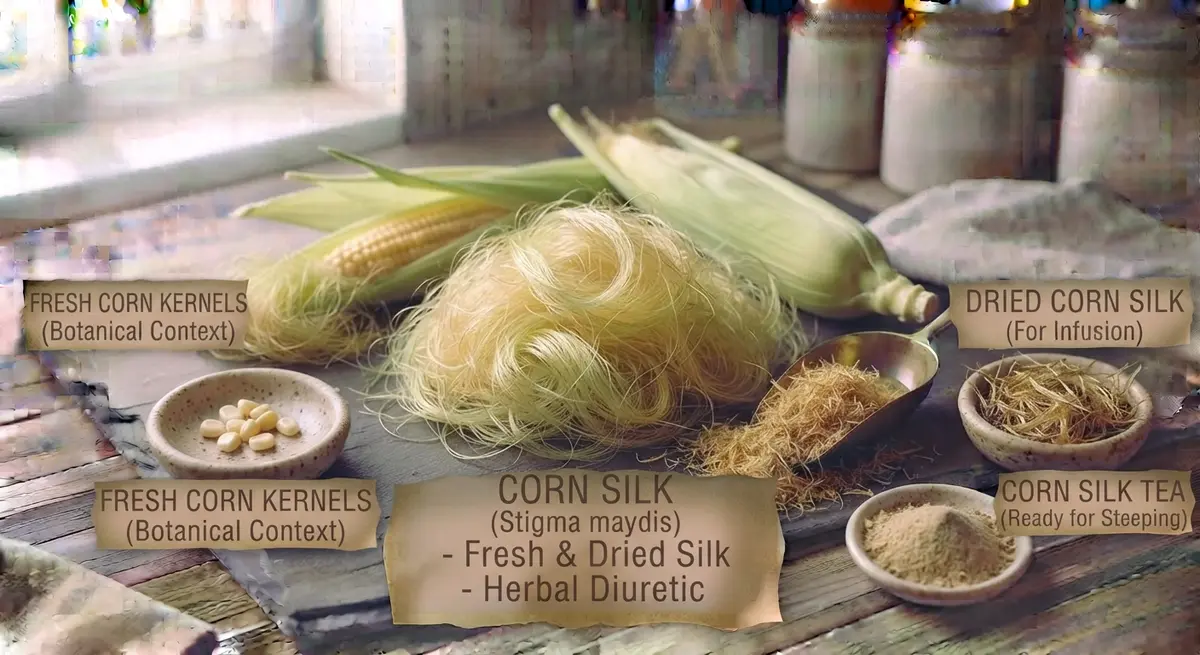
Corn silk is the golden fringe that hangs from fresh corn, usually thrown in the compost without a second thought. But foragers and herbalists have used Zea mays silk for centuries as a mild, soothing "kidney herb" — a tea with history in many Native American traditions and eternal availability whenever corn is in season.
For the cook it is a gentle botanical curiosity, like chamomile for a calm cup: a soft, hay-sweet tisane with a faint vanilla-corn note. Dried, it keeps for months and brews a golden, soothing cup.
Flavor Profile & Notes
Fresh corn silk smells like sweet corn and cut grass, with a faint minerality. Dried, it becomes straw-gold, mild, and grassy-sweet, brewing into a pale golden infusion that tastes like corn husk and honey water with a whisper of vanilla. It is among the most neutral-tasting edible botanicals — almost no bitterness, a light earthy finish, easy to drink straight or to stretch a blend. Longer steeping brings out a slightly almondy sweetness; abused with boiling water it turns haylike and flat, so use near-boiling water and a five-minute steep for the bright version.
Health Benefits & Nutrition
Herbalists have long recommended corn silk tea as a gentle, traditional comfort for occasional urinary imbalance — mild hydration-supporting and soothing properties are why it appears in kidney-support blends. The scientific record is thin but respectful: research has looked at mild diuretic and antioxidant properties of compounds like maysin and flavonoids, with no dramatic results to market. It is a pleasant, low-risk botanical for most adults; pregnant women and people with kidney or blood-sugar conditions should check in with a doctor before replacing medical care with tea. Keep the culinary honesty: drink it as a gentle ritual, not a therapy.
Best Culinary Pairings
Corn silk plays best as a supporting note: blend it with mint, lemon balm, ginger, or chamomile; sweeten with honey and a squeeze of lime. It takes nods from cinnamon and cardamom in a winter tea. In cooking, fresh silk can simmer into corn soups, chowders, and broths, where its grassy-corn sweetness supports the corn rather than stealing the show. Some traditional cooks fold fresh silk into tamale husk wrappers to perfume the steam. Otherwise, treat it as tea-cabinet material, not a spice rack.
Quick Substitutes
For the gentle-golden-tisane slot, use chamomile (florally sweet), lemongrass (citrus-grassy), or barley tea (toasty and corn-adjacent). Fresh corn husks steeped in milk approximate the sweet-corn essence silk would add. A pinch of toasted dried corn mimics the nuttier side. Mint covers most bland herbs if all you need is a calming hot drink. None carry corn silk's exact sweet-grass tradition; for the ritual, dry your own from clean, organic corn.
FAQ / Quick Facts
- How do I dry it? Rinse, spread on a tray, and dry at low temperature or in the sun until crisp; store in a sealed jar.
- Is it safe to drink regularly? In moderate tea amounts for most adults, it is traditional — but check with a doctor if pregnant or managing kidney or blood-sugar conditions.
- What does it taste like? Mildly sweet, grassy-corn, with a whisper of honey and vanilla.
- Botanical family: Poaceae / Form: fresh or dried silk / Best uses: herbal tea, gentle broths.
Related Articles
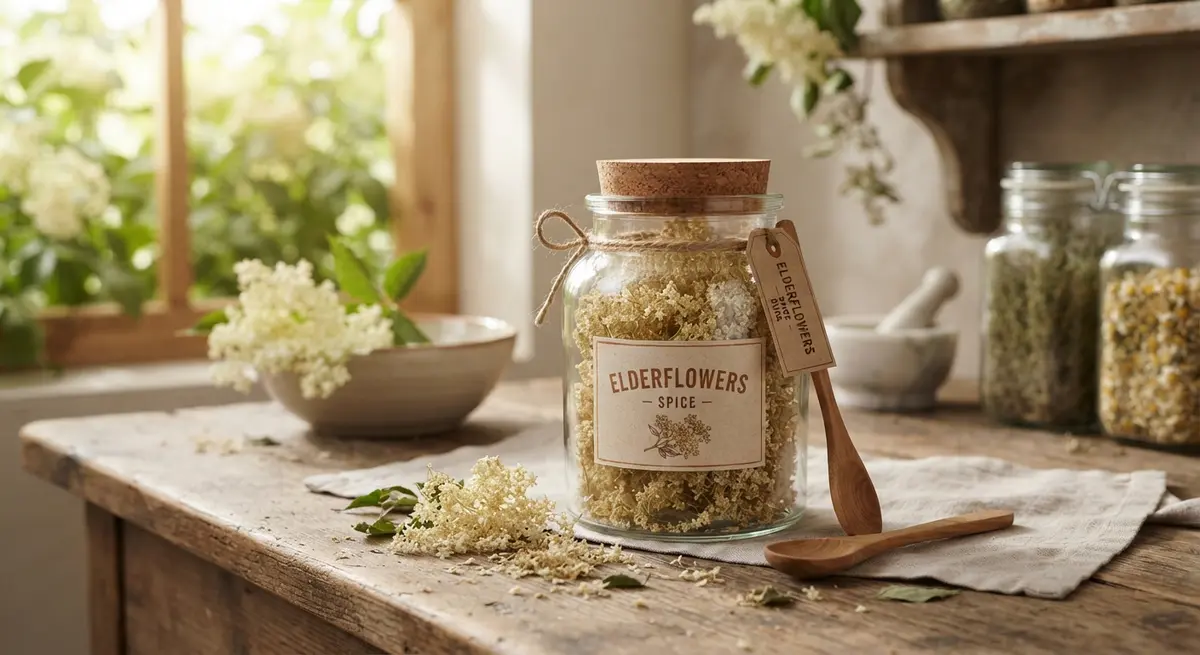
Dried Elderflowers: Flavor Profile, Health Benefits & Culinary Uses
The invisible backbone of a perfect summer: cream blooms with honey-pear perfume. Drying it, steeping cordial, and the lookalike cautions.
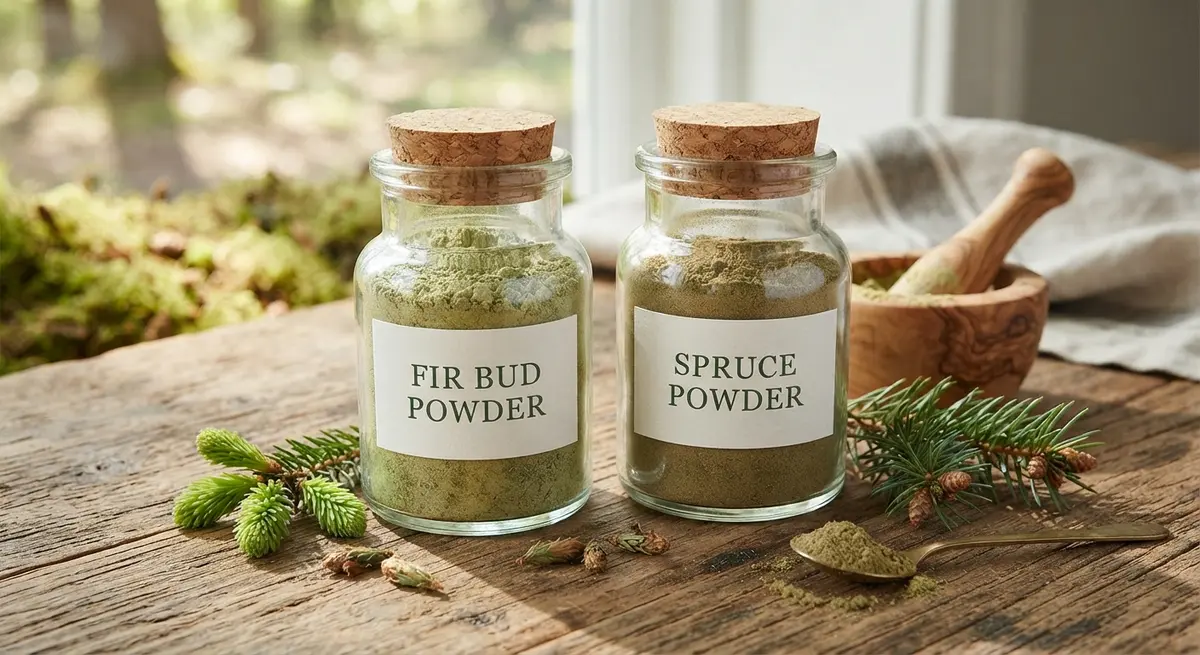
Dried Fir Bud & Spruce Powder: Flavor Profile, Health Benefits & Culinary Uses
Ground spruce tips are a fine-dining forest spice. When to dust, when to steep, how to identify safe conifers, and what plays well with pine.
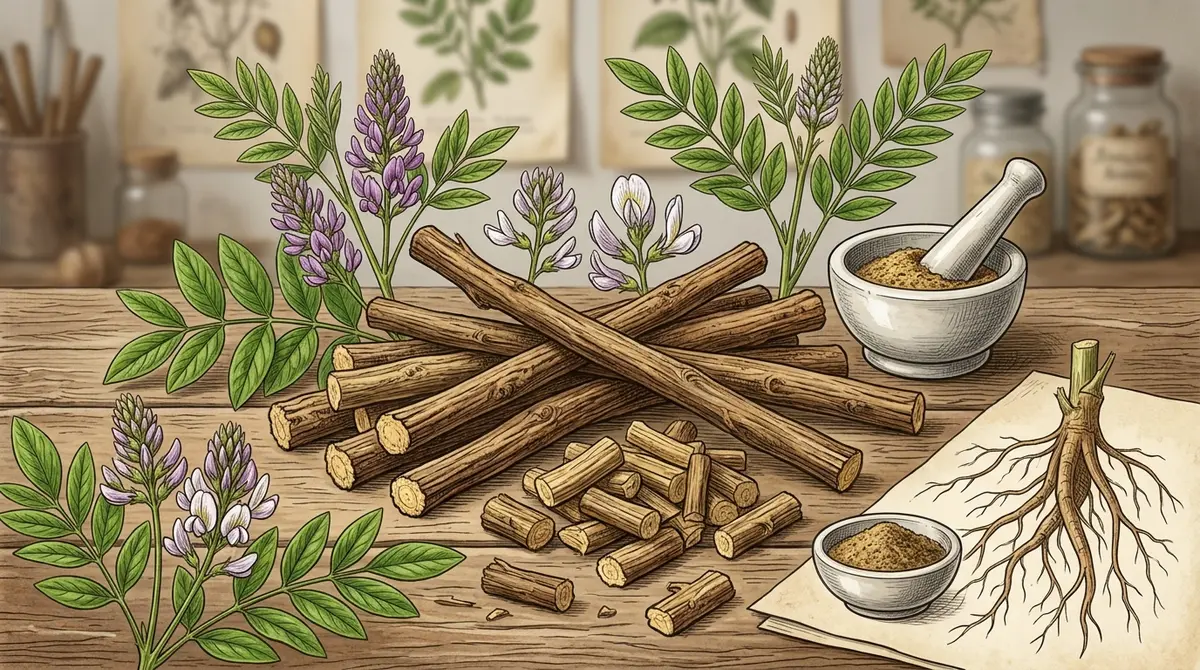
Licorice Root: Flavor Profile, Health Benefits & Culinary Uses
The root that whispers, surprisingly of sweetness: what licorice tastes like, where it shows up in drinks and spice blends, and the blood-pressure line you should respect.
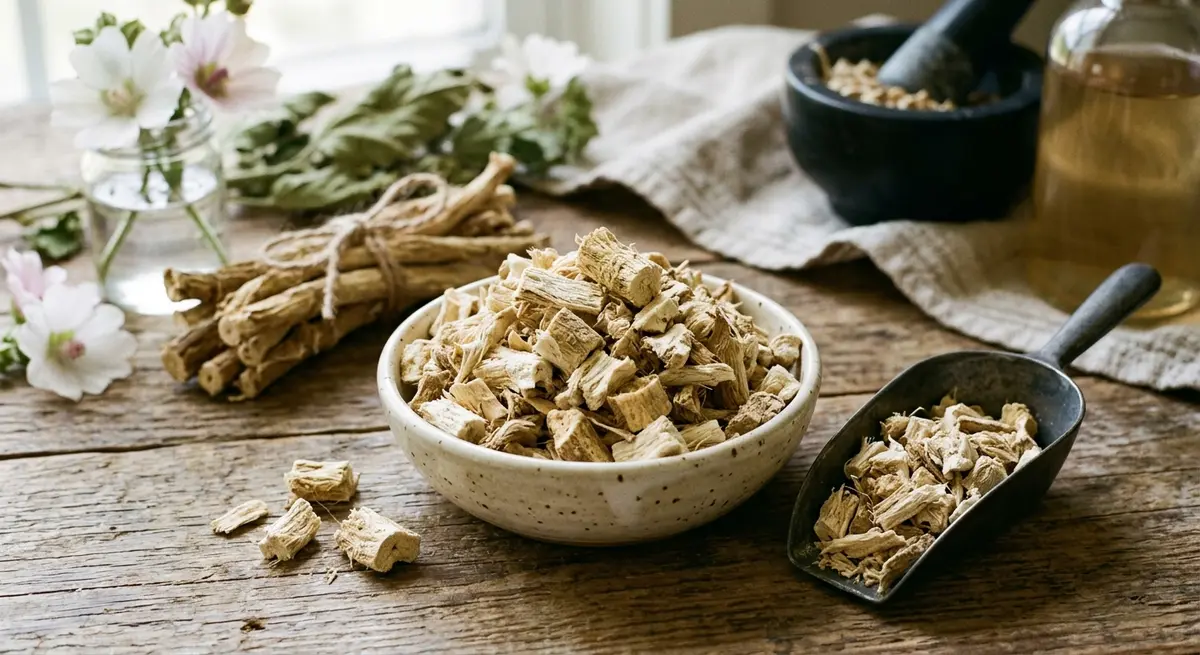
Marshmallow Root: Flavor Profile, Health Benefits & Culinary Uses
An almost-tasteless root whose whole gift is its gel. How to steep the mucilage, where it thickens, and why it is a comfort, not a medicine.
About the Authors
This recipe and guide was developed, tested, and approved in our home kitchen and daily life. Jamy is a retired Food Service District Manager and Early Childhood Program Manager who spent his career overseeing multi-site restaurant operations, large-scale culinary production, and daycare menu management. Kaïna brings the ultimate real-world test: making sure it brings ease and joy to our kids on a busy weeknight.
Read more about our professional background and philosophy →