Dried Fir Bud & Spruce Powder: Flavor Profile, Health Benefits & Culinary Uses
By the QuiteRecipes team (Jamy & Kaïna)
Ground spruce tips are a fine-dining forest spice. When to dust, when to steep, how to identify safe conifers, and what plays well with pine.
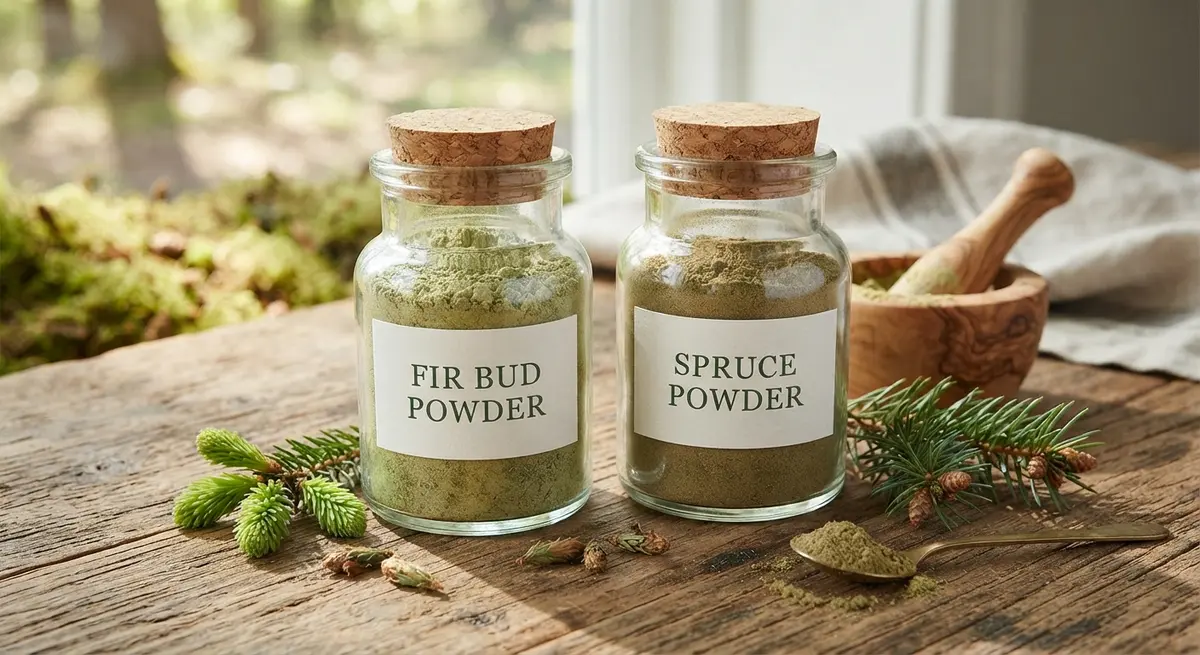
Fir bud and spruce powder taste like winter smells: pine, citrus, and resin, bright as a forest floor after snow. Spruce tips — the pale new growth of Norway or black spruce — have been foraged for centuries for spruce beer, syrups, and candy across Scandinavia and New England, and lately fine-dining chefs have been dusting them over desserts like sorrel dust gone green. Dried and ground, they become a spice with real terroir.
The caution is simple and practical: use food-grade, properly identified conifers in small amounts. Free, seasonal, and gorgeous — but a spoonful a day is not the pattern. Treat conifer powder like saffron in the pantry: precious in spirit, not in volume.
Flavor Profile & Notes
Fir bud powder captures spruce tips before they mature: lemony and piney up front, with a bittersweet resin finish and the faint soda-pop brightness of spruce gum. Norway spruce tips lean citrus; Douglas fir buds lean deeper and greener; hemlock (Tsuga — not the poisonous water hemlock) is the sweetest and most anise-adjacent. Dried, the color turns olive-green and the aroma concentrates. It is intensely tannic, so a dusting goes far — over vanilla cream it is a revelation, in a thick savory sauce it can turn woody.
Health Benefits & Nutrition
Conifer tips are genuinely nutrient-rich: spruce tips carry vitamin C (foragers once used them against scurvy), and the resinous acids have traditional antimicrobial and respiratory uses — the reason spruce tea is a Scandinavian cold-day classic. There is no major evidence that culinary quantities are harmful, but the resin oils are potent and safety depends on correct species identification. Foraged cones from roadsides and sprayed trees should be skipped, and anyone with allergies should approach cautiously, as with any herbal product. Eat small, forage smart, and keep your doctor looped in if you lean on it daily.
Best Culinary Pairings
Spruce powder's best partner is gentle fat: fold a pinch into butter for grilled seafood, dust it on panna cotta, lemon tarts, or white chocolate, and stir a little into whipped cream for Christmas morning. On the savory side, it brightens game, roast goose, mushroom risotto, and braised cabbage. It is the heart of spruce-tip syrup, spruce beer, and spruce-kissed gin. It pairs with citrus, vanilla, cardamom, cinnamon, and honey — build sweet dishes around that winter-pine note and you will never hunt for holiday seasoning again.
Quick Substitutes
The closest everyday swap is thyme plus lemon zest plus a whisper of ground juniper. Fresh rosemary with lemon approximates the resin-lemon note. Juniper berry, ground, gives the pine without the fruit. For sweet dishes, a little pine-infused simple syrup or citrus blossom water covers some of the lift. No single pantry item replaces the forest; blend thyme, lemon, and a touch of rosemary in desserts as the practical stand-in.
FAQ / Quick Facts
- What is the difference between fir buds, spruce tips, and pine? Different conifer species — spruce and fir tips are the culinary favorites; pine needles are stronger and more resinous.
- How do I use the powder? Sprinkle over desserts, whisk into butter, or steep a pinch in tea with honey.
- Is foraging safe? Yes for properly identified spruce or fir — but never gather from treated trees or roadways, and confirm the species with a good guide.
- Botanical family: Pinaceae / Form: dried, ground tips / Best uses: dessert dusting, syrups, game, mushroom dishes.
Related Articles
Damask Rose Buds: Flavor Profile, Health Benefits & Culinary Uses
The rose of Damascus, dried into concentrated buds. Its honeyed clove-spice flavor, rose water math, and how to keep it elegant in sweets.
Dried Corn Silk: Flavor Profile, Health Benefits & Culinary Uses
The golden fringe from fresh corn brews a gentle, hay-sweet tisane. How to dry it, steep it, and blend it, plus honest cautions.
Dried Elderflowers: Flavor Profile, Health Benefits & Culinary Uses
The invisible backbone of a perfect summer: cream blooms with honey-pear perfume. Drying it, steeping cordial, and the lookalike cautions.
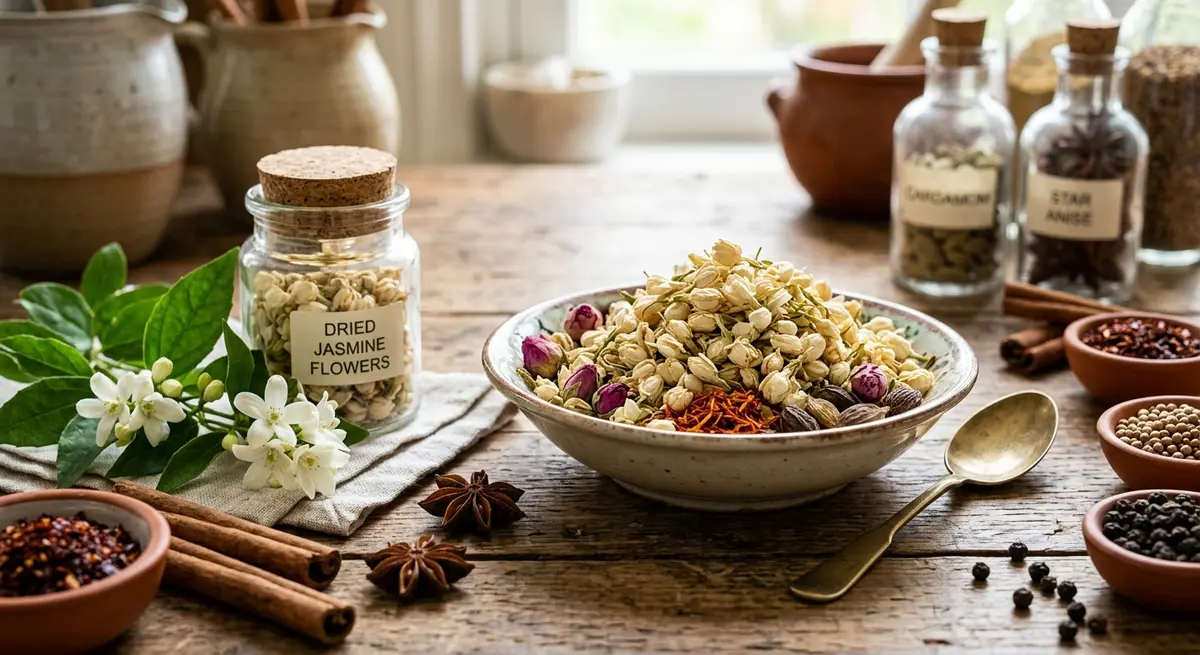
Dried Jasmine Flowers: Flavor Profile, Health Benefits & Culinary Uses
The night garden's gift to the kitchen: white petals that perfume tea and cream. Buying food-grade flowers, cold-brewing, and honing the restraint.
About the Authors
This recipe and guide was developed, tested, and approved in our home kitchen and daily life. Jamy is a retired Food Service District Manager and Early Childhood Program Manager who spent his career overseeing multi-site restaurant operations, large-scale culinary production, and daycare menu management. Kaïna brings the ultimate real-world test: making sure it brings ease and joy to our kids on a busy weeknight.
Read more about our professional background and philosophy →