Dried Jasmine Flowers: Flavor Profile, Health Benefits & Culinary Uses
By the QuiteRecipes team (Jamy & Kaïna)
The night garden's gift to the kitchen: white petals that perfume tea and cream. Buying food-grade flowers, cold-brewing, and honing the restraint.
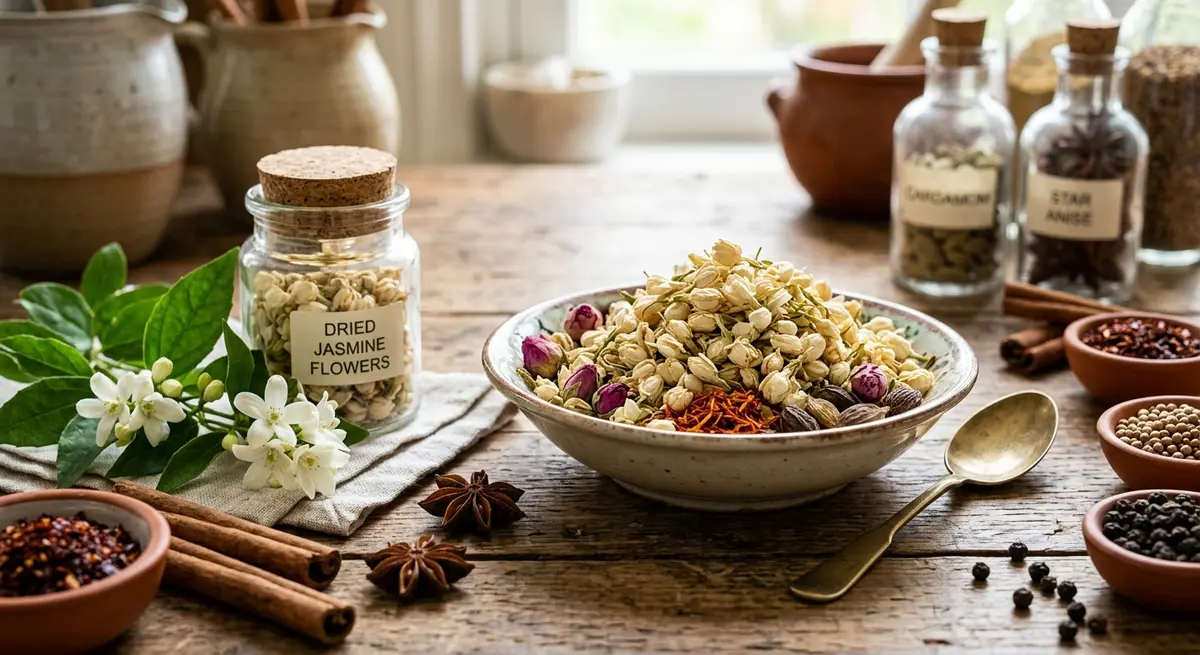
Jasmine flowers are China's teapot and the night garden's gift to the kitchen. The small white petals of Jasminum sambac, which perfume entire evenings, are most famous for scenting jasmine tea, where blossoms are layered with green tea leaves until their fragrance transfers. The loose dried flowers themselves brew a delicate floral infusion and perfume sugar, syrups, and creams at the end of cooking to capture that snow-white essence.
The honest rule for jasmine, like all floral cooking: use petals handled for food purposes, use them sparingly, and let the flavor be a whisper, not a flood.
Flavor Profile & Notes
Jasmine's smell is intoxicating: sweet, heady, honey-laced, and faintly musky like a warm evening. Dried petals taste of that perfume, though weaker — a subtle stewed-fruit and white-flower honey with a faint green tea note. Cold infusions pull the cleanest floral aroma; boiling water crushes the delicate oils into mild astringency, so keep the water just below a boil and steep briefly. The petals pair magically with green tea leaves (the classic) and with white chocolate, peach, lychee, coconut, and ginger, where their sweetness and aroma carry the dessert.
Health Benefits & Nutrition
Jasmine flowers held a small but genuine place in traditional Chinese materia medica as a gentle antioxidant and light sedative item, and modern work looks at their soothing compounds. The honest line is modest: jasmine tea offers the well-being benefits of the tea you are already drinking plus a fragrant, calming ritual. For most people, jasmine in culinary quantities is safe; essential oil is far too concentrated for ingestion, and anyone pregnant, breastfeeding, or on sedative-type medication should check with a clinician before regular jasmine-flower tea. Let it be a lovely evening cup, not a tonic.
Best Culinary Pairings
Master the jasmine syrup: simmer flowers with sugar and water, then use it in lemonades, iced teas, cocktails, and rice puddings. Bloom jasmine into cream for panna cotta, fold a few petals into a cheesecake base, and infuse it into white chocolate or honey. Use it in the savory world sparingly — a pinch over steamed fish, or a petal or two in a light vinaigrette with cucumber. The classic jasmine green tea is the entry point; cold-brew it overnight for a refreshing, barely-sweet elixir.
Quick Substitutes
For that night-blooming sweetness, a drop of food-grade jasmine flavoring or jasmine syrup approximates it instantly, though real flowers are subtler and better. Rose petals or orange blossom water offer a different floral musk that covers similar culinary ground. Dried linden or elderflower bring honeyed sweetness without jasmine's headiness. If a recipe relies on jasmine tea specifically, substitute a good jasmine-scented green tea — that is the honest pantry move.
FAQ / Quick Facts
- Can I use any jasmine flowers? Only food-grade dried petals from a trusted source; many ornamental jasmine species are not culinary.
- How do I get the best fragrance? Steep in warm, not boiling, water and keep it short; the perfume is delicate.
- What do they taste like? Sweet, honeyed, faintly fruity floral with a musky green-tea note.
- Botanical family: Oleaceae / Form: dried petals, jasmine tea / Best uses: syrups, creams, tea, desserts.
Related Articles
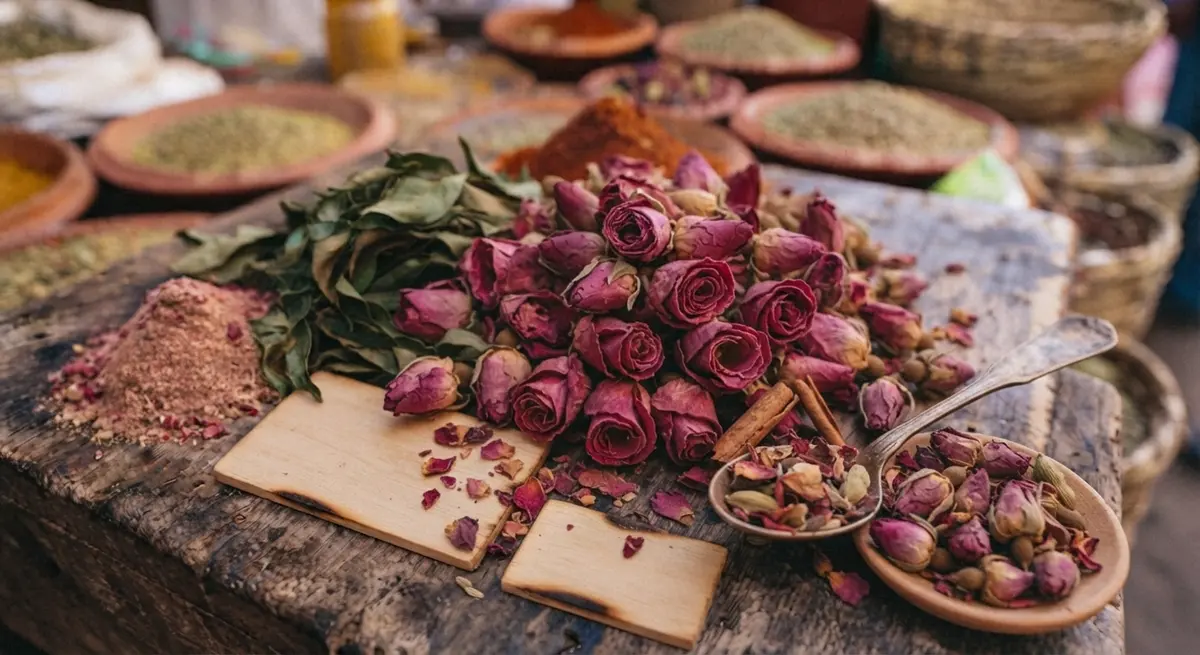
Damask Rose Buds: Flavor Profile, Health Benefits & Culinary Uses
The rose of Damascus, dried into concentrated buds. Its honeyed clove-spice flavor, rose water math, and how to keep it elegant in sweets.
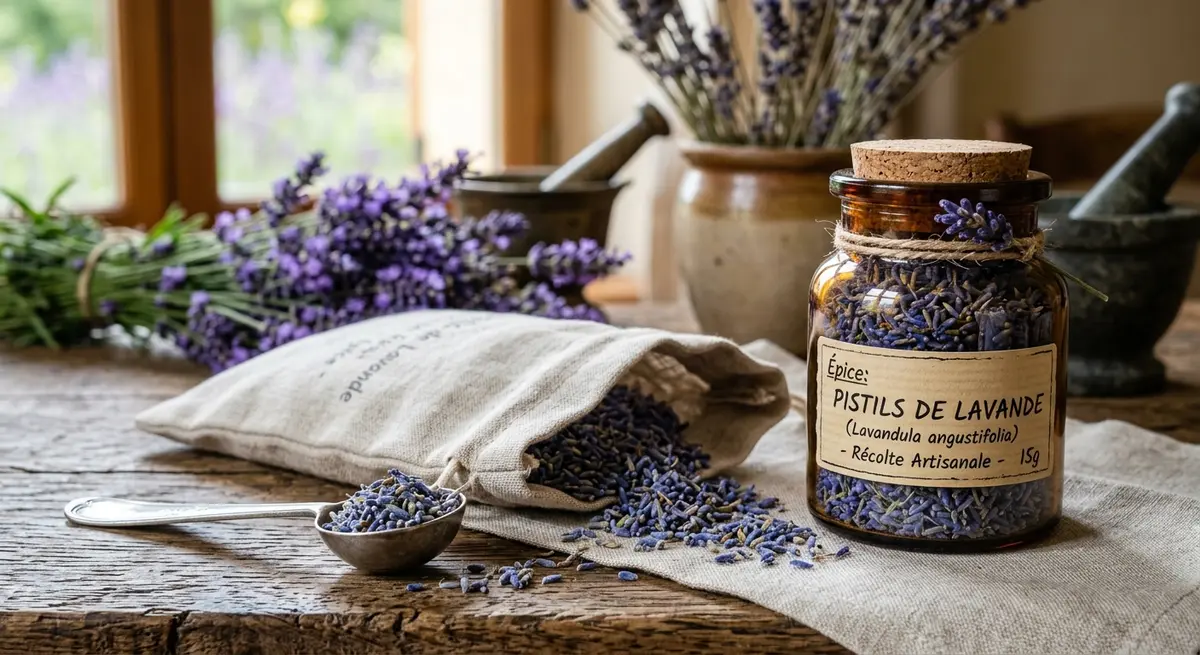
True Lavender Pistils: Flavor Profile, Health Benefits & Culinary Uses
The only culinary lavender worth trusting is Lavandula angustifolia. What it tastes like, how a pinch behaves, and why sachet lavender stays out.
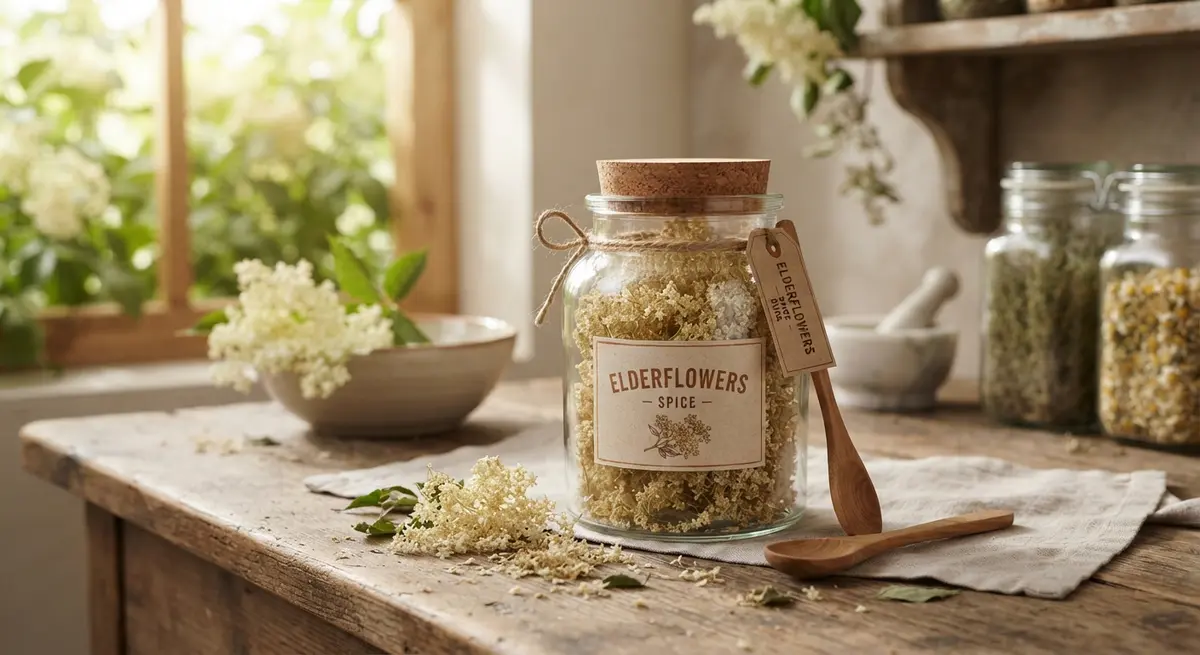
Dried Elderflowers: Flavor Profile, Health Benefits & Culinary Uses
The invisible backbone of a perfect summer: cream blooms with honey-pear perfume. Drying it, steeping cordial, and the lookalike cautions.
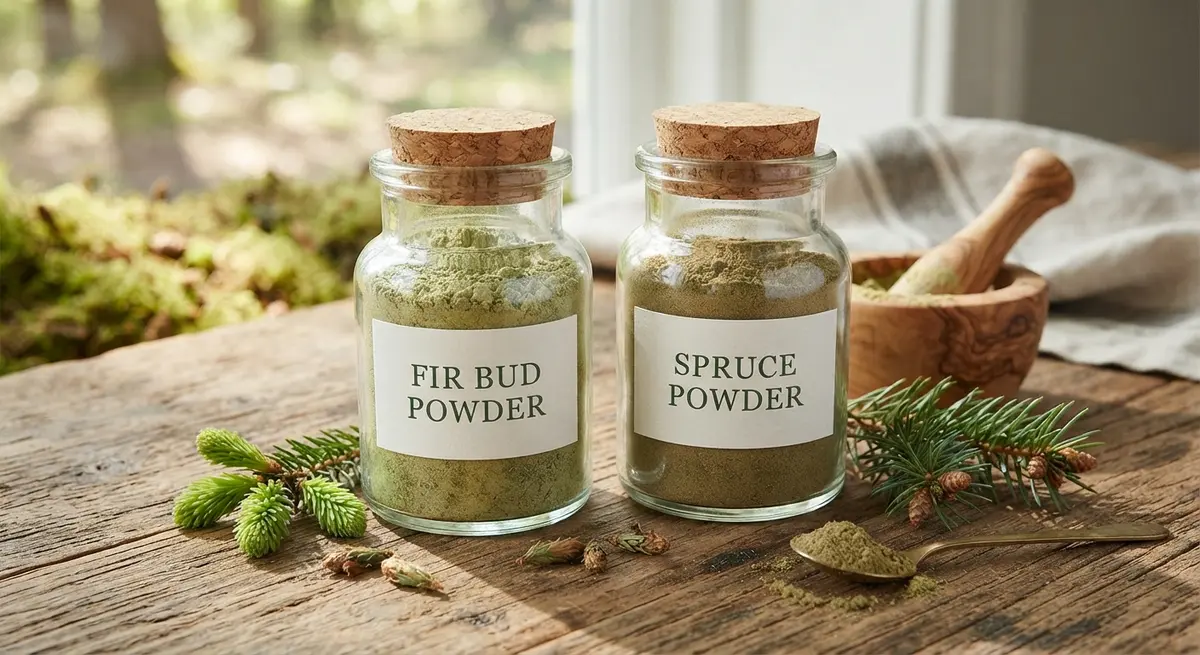
Dried Fir Bud & Spruce Powder: Flavor Profile, Health Benefits & Culinary Uses
Ground spruce tips are a fine-dining forest spice. When to dust, when to steep, how to identify safe conifers, and what plays well with pine.
About the Authors
This recipe and guide was developed, tested, and approved in our home kitchen and daily life. Jamy is a retired Food Service District Manager and Early Childhood Program Manager who spent his career overseeing multi-site restaurant operations, large-scale culinary production, and daycare menu management. Kaïna brings the ultimate real-world test: making sure it brings ease and joy to our kids on a busy weeknight.
Read more about our professional background and philosophy →