Licorice Root: Flavor Profile, Health Benefits & Culinary Uses
By the QuiteRecipes team (Jamy & Kaïna)
The root that whispers, surprisingly of sweetness: what licorice tastes like, where it shows up in drinks and spice blends, and the blood-pressure line you should respect.
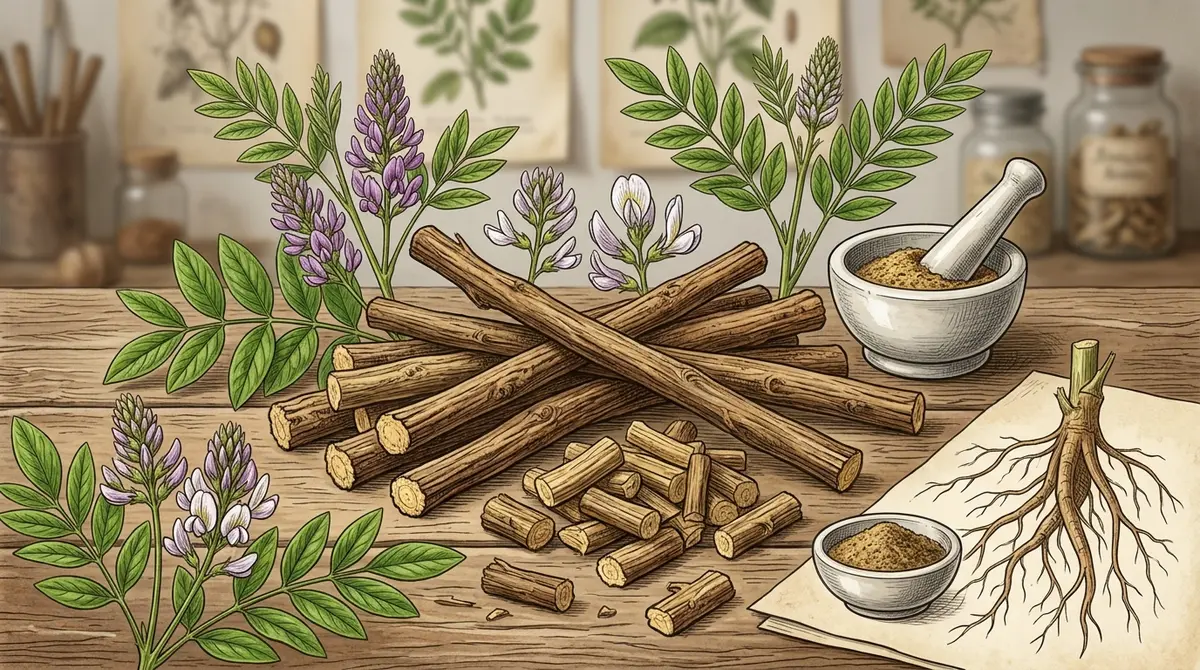
Licorice root is one of those ingredients you can spend a lifetime using without ever meeting — an unglamorous, bark-colored stick that tastes, when you finally chew it, startlingly like licorice candy, only quieter and earthier. It comes from Glycyrrhiza glabra, whose name translates to "sweet root," and it earns the title: the root is about fifty times sweeter than table sugar, thanks to a compound called glycyrrhizin that coats the tongue with slow, woody-sweet persistence. Whole and dried it is a classic sight in bulk herb bins and Indian grocery spice bags, used in teas, spice blends, and small amounts of background sweetness in savory cooking.
Flavor Profile & Notes
The flavor is anise-adjacent but distinct: sweet, woody, and slightly green, with menthol-cool undertones and that long, sticky sweetness that dissolves gradually. Unlike anise or fennel, the sweetness carries the show — the anise note is a suggestion in the margins. Simmer a short piece of the dried bark in tea and it rounds out bitter herbals beautifully. Break a piece and you can sense the root's natural medicinal history. Used in small amounts it quietly sweetens a dish without sugar; used heavily, it flattens everything under its own voice. Moderation is not a style choice here; it is the point.
Health Benefits & Nutrition
Tradition has used licorice root for coughs, sore throats, and digestion for thousands of years, and modern research has shown activity against things like ulcer-causing bacteria in laboratory settings, which keeps scientists interested. Here is the serious note, and it is non-negotiable. Glycyrrhizin, the same compound that makes the root so sweet, can raise blood pressure, drop potassium to concerning levels, and interact with heart and blood-pressure medications when consumed in large or steady amounts. The occasional cup of tea or small piece of root is one thing; daily heavy use is another conversation. Licorice is not a substitute for medical advice — if you have high blood pressure, kidney issues, or take heart medicine, check with your doctor before making it a habit.
Best Culinary Pairings
In drinks it shines: a broken piece simmering with black tea and star anise makes chai sweet without sugar. It rounds out Thai and Vietnamese herbal teas and occasionally appears in Chinese spice blends and braises, where a short piece of gan cao balances the saltiness of soy the way a touch of sugar would. In small amounts it works hand in hand with fennel and anise in homemade five-spice rumored shortcuts, and it makes a lovely herbal infusion with ginger and honey. Steep, taste, and stop — a two-inch piece flavors a whole pot.
Quick Substitutes
Star anise plus a pinch of sugar covers the licorice-anise note for most recipes; fennel seeds are the lighter, sweeter option. For sweetening power without the chemistry, monk fruit or a touch of honey fills the role in teas without licorice's blood-pressure effects. The brilliant fresh taste of actual root has no copy, and for most dishes the substitutes above are honestly the wiser choice anyway.
FAQ / Quick Facts
- Is licorice dangerous? In large amounts yes — heavy regular use can raise blood pressure and lower potassium, and it interacts with medicines. Enjoy it occasionally; ask your doctor before making it a daily habit.
- What does it taste like? Woody, anise-like sweetness — about fifty times sweeter than sugar, with a slow, mentholated finish.
- Form / Best uses: Dried root sticks and powder; a short piece for herbal teas, chai, and small savory sweetening.
Related Articles
Allspice (Pimento): Flavor Profile, Health Benefits & Culinary Uses
Allspice is one dried berry that tastes like clove, cinnamon, nutmeg, and pepper in a single jar, and it swings from jerk chicken to apple pie with ease.
Dried Corn Silk: Flavor Profile, Health Benefits & Culinary Uses
The golden fringe from fresh corn brews a gentle, hay-sweet tisane. How to dry it, steep it, and blend it, plus honest cautions.
Mahlab: Flavor Profile, Health Benefits & Culinary Uses
Meet the quiet secret of Middle Eastern baking: the ground pits of the St. Lucie cherry, which make breads and cookies taste of almonds, rose, and faint cherry.
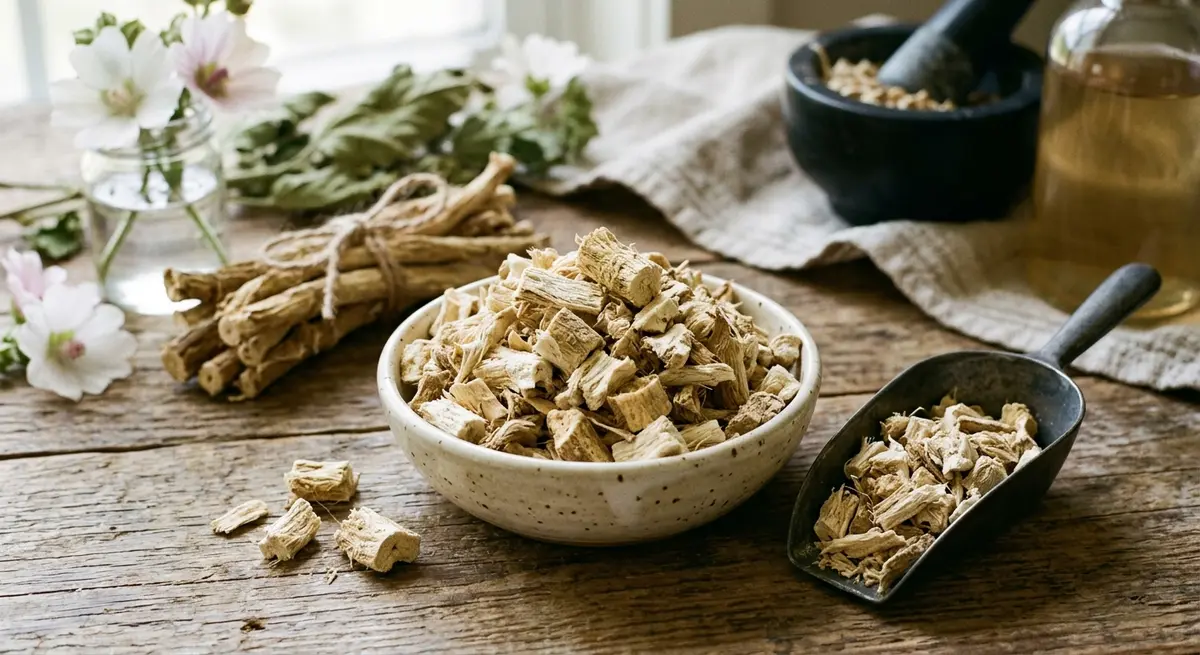
Marshmallow Root: Flavor Profile, Health Benefits & Culinary Uses
An almost-tasteless root whose whole gift is its gel. How to steep the mucilage, where it thickens, and why it is a comfort, not a medicine.
About the Authors
This recipe and guide was developed, tested, and approved in our home kitchen and daily life. Jamy is a retired Food Service District Manager and Early Childhood Program Manager who spent his career overseeing multi-site restaurant operations, large-scale culinary production, and daycare menu management. Kaïna brings the ultimate real-world test: making sure it brings ease and joy to our kids on a busy weeknight.
Read more about our professional background and philosophy →