Zero-Waste Pantry Swaps That Will Save You Money
By the QuiteRecipes team (Jamy & Kaïna)
Cut waste and cut costs with these zero-waste pantry swaps. Bulk staples, glass jars, pasta, beans, and long-game habits that pay you back.
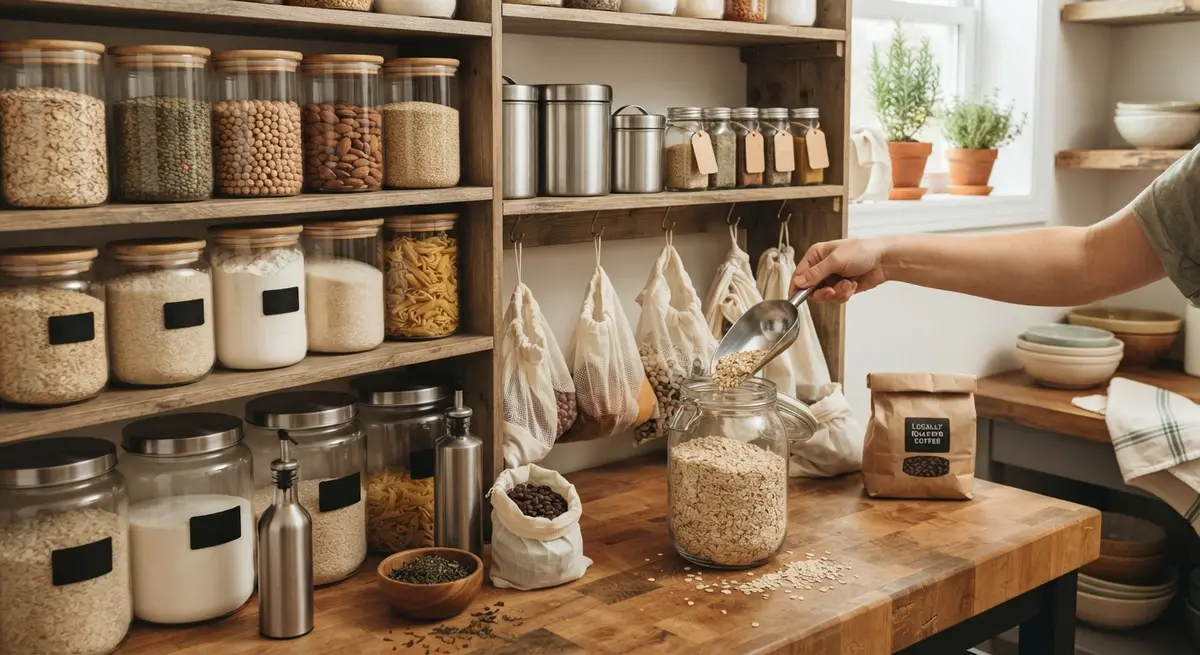
I have a stash of eleven pink reusable mesh produce pouches in my pantry that I never use, still in their little paper envelope, because the day I bought them I realized I don't actually buy anything loose worth bagging. My zero-waste journey didn't start with a jar-wall aesthetic or a shopping boycott. It started with a single, boring, financial realization: I was paying a dollar-fifty for boxed pasta when the same pasta from a bulk bin cost about ninety cents.
So let me be clear about the angle. Plenty of zero-waste articles show you Instagram-ready jars of lentils lined up like they're charging admission. This one is about the money and the long game: the pantry habits that pay for their own containers within a year, and the specific swaps that shrink both your trash bin and your grocery receipt. Running my kitchen this way for three years now saves me about forty to fifty dollars a month versus the packaged equivalent.
One honest caveat before we dive in: not every swap is worth it, and some of the most heavily marketed ones are a scam for your wallet. The guiding question here is simple: does it make my shelf cheaper and my bin lighter over the next twelve months?
The Container Math: Spend Once, Save Forever
Start with the accounting that changes everything. A 16-ounce box of dry pasta costs about a dollar-fifty; the same weight from the bulk bin is roughly ninety cents. Multiply that across oats, rice, beans, lentils, flour, nuts, and coffee, and I now buy about twenty-five packaged items a month from the bulk aisle, saving roughly a dollar-twenty per item. That's about thirty dollars a month before we even talk about containers.
The containers themselves are a one-time cost that pays for itself in months. I built my entire jar wall from thrift stores and jars left over from pasta sauce and pickles, for about thirty-five dollars total, and every container has been in use for over two years. Expensive matching canister sets are decor, not infrastructure. My rule is that anything sitting in my pantry without a seal, a label, or a fair price is waste, whether it's packaged in plastic or in my own marketing.
Label everything with painter's tape and a marker: it peels cleanly, relabels in twenty seconds, and costs about a dollar a roll. The moment you don't know what's in a jar, it becomes garbage-on-a-shelf.
Bulk Beans and Lentils: The Long-Game Champion
Dried beans and lentils are the single highest-value swap in my kitchen, and the math is so lopsided it's almost embarrassing. A one-pound bag of dried pinto beans costs about a dollar-eighty and yields roughly six to seven cups cooked; the same amount canned costs about three dollars plus six steel cans. The saving per pound is over a dollar, and the stack of cans disappears entirely.
The classic objection is time. My answer is that beans take five minutes of active work: soak a pound overnight in a big glass jar, drain and rinse in the morning, then simmer with aromatics for ninety minutes to two hours on a slow afternoon. Cook double and freeze half in labeled jars, and you have pintos or chickpeas on demand at about sixty percent of the canned cost.
Lentils are even faster and laser-focused on the money angle. Red lentils cook from dry to done in about twenty minutes with no soaking; brown or green take about thirty. A bag runs me about a penny a serving. If you're new to this, start with lentils rather than beans: the feedback loop is fast, the failure rate is low, and the savings are real enough to keep you going.
Cook From Scratch: The Prepared-Food Payoff
Prepared foods hide almost all the packaging, and they're also where a zero-waste pantry meets its biggest money leak. A carton of chicken broth costs about three dollars; homemade from the bones and vegetable scraps you already accumulate costs essentially nothing, freezes perfectly in the same jars, and tastes better. I stopped buying stock entirely over two years ago.
My rule is simple: if a prepared food takes under thirty minutes from pantry staples, I make it, and the store-bought jar becomes the backup, not the default. I've converted about six items: broth, tomato sauce, a teriyaki-style sauce, salad dressing, hummus, and pickles. Each one earns back its container cost in the first month. And keep a scrap crock in the freezer: every onion skin and carrot peel, simmered for two hours, is your next batch of broth for zero dollars.
Buy Bulk Where It Counts, Not Just Where It's Photogenic
The savings concentrate in a handful of heavy staples, and everything else is either break-even or actively more expensive. In my kitchen, the bulk-bin "core five" are oats, rice, pasta, lentils and beans, and flour. Those five are cheap per pound in bulk, store well in jars, and move through the kitchen fast enough that they never go stale.
The break-even zone is where most people waste their enthusiasm. Bulk nuts can go rancid before you finish the jar, so keep bulk for the ones you eat quickly, like almonds and peanuts, and buy walnuts and pecans in the smallest size that makes financial sense. Dried fruit in bulk is a trap: heavy, prone to clumping, and often pricier per ounce than the packaged version.
Spices are the fascinating middle ground. Buying whole spices in bulk and grinding them yourself yields brighter flavor at about a third of the per-ounce cost of pre-ground jars. Ground cumin runs about three dollars an ounce; whole bulk cumin is about a third of that. Buy whole, grind small batches in a cheap dedicated coffee grinder, and you upgrade both your wallet and your cooking in one motion.
Tools, Storage, and the Twelve-Month Picture
The tools of a zero-waste pantry shouldn't be expensive, but they should earn their shelf space. My essential kit has five pieces: glass jars in 1 and 2 liter sizes with tight lids, a jar with a bamboo lid for dry goods that need airflow, muslin drawstring bags for bulk shopping, a funnel, and a twelve-dollar digital kitchen scale. That scale is the sleeper tool: it lets me buy weight-accurately from the bins and portion freezable batches, and it pays for itself in about one month.
Skip the frills that don't pay rent: the forty-five-dollar copper popcorn popper and the matching ceramic crock set earn nothing. My core rule is that if a tool doesn't earn back its price in under a year, it goes back.
Storage is the whole secret: airtight, cool, labeled, and dated. The date is the critical detail everyone skips; I run a five-minute "expiration scan" on the first of each month and move anything older than a year onto an "eat soon" shelf. Airtight dated jars turn bulk bargains into a permanent pantry rather than a museum. Three years in, my low-waste pantry saves me between forty and fifty dollars a month, roughly five hundred dollars a year, and my food waste is down about half.
FAQ
Do zero-waste pantry swaps really save money?
For heavy staples like oats, rice, pasta, beans, lentils, and flour, bulk bins are genuinely 20 to 40 percent cheaper than packaged because you're paying for food, not boxes. I save forty to fifty dollars a month. For niche items like expensive nuts or dried fruit, the opposite can be true, so the savings live in a core few staples.
What's the best first swap for a beginner?
Start with dried beans and lentils. They're the most lopsided deal, since cooking from dry is dramatically cheaper than canned and they store forever in glass jars. Red lentils cook in twenty minutes with no soaking, so you get an early, delicious win that makes the next swaps feel worth it.
Do I need expensive specialized containers?
No. The cheapest-and-best setup is thrifted glass jars, jars saved from pasta sauce, and a roll of painter's tape for labels. I built my whole jar wall for about thirty-five dollars. Expensive matching canisters are decor, not infrastructure; the money is earned by the system, not the jar.
How do I keep bulk foods from going stale?
Store everything airtight, cool, labeled, and dated. Keep grains and flours away from heat and sunlight, and grind whole spices fresh. Run a monthly expiration scan and cook or move anything older than a year to an eat-soon shelf. Airtight dated jars are the whole secret.
Key Takeaways
- Bulk-bin staples like oats, rice, pasta, beans, and flour save 20 to 40 percent over packaged goods.
- Dried beans and lentils save over a dollar per pound versus canned.
- Cook broth, tomato sauce, and dressing from pantry staples to cut both cost and packaging.
- Buy whole spices in bulk and grind fresh for about a third of the cost.
- Build a jar wall from thrift and saved sauce jars for under forty dollars.
- Store airtight, cool, labeled, and dated, and scan your shelves monthly.
A Final Word
Three years ago, my pantry was a graveyard of half-used bags and mystery cardboard. Today it's a wall of labeled glass that quietly pays rent, and the loudest thing about it is the math: forty to fifty dollars a month is a modest but absolutely real sum, flowing back into my life because I stopped paying full price for boxes of air and started buying food. The best part is that this isn't a performance; it's a system I actually rely on. Start with the lentils, label everything, and let the saved dollars become the reward that carries you through the first few months. The jars fill, the bins lighten, and the pantry quietly starts paying you back, a dollar-twenty at a time.
Published on 2026-08-13 by the QuiteRecipes team (Jamy & Kaïna).
Related Articles
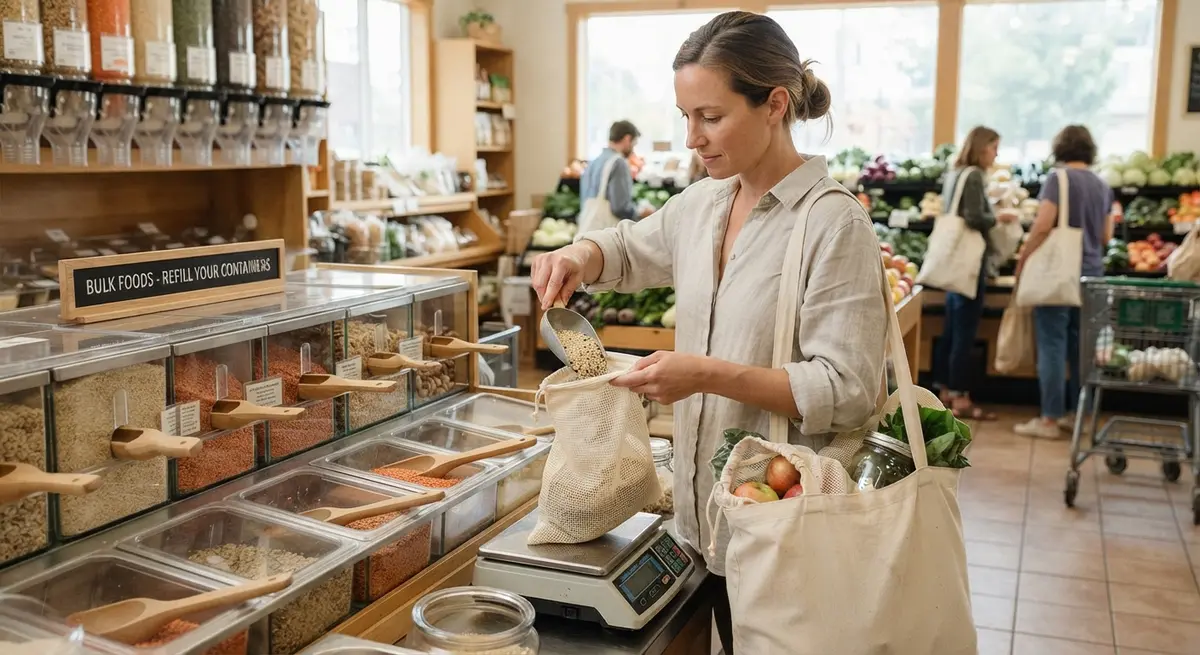
Eco-Friendly Grocery Shopping: How to Reduce Plastic Waste at the Store
Plastic-free grocery shopping is easier than you think. Learn reusable bag systems, bulk-bin strategies, and packaging swaps that actually work.
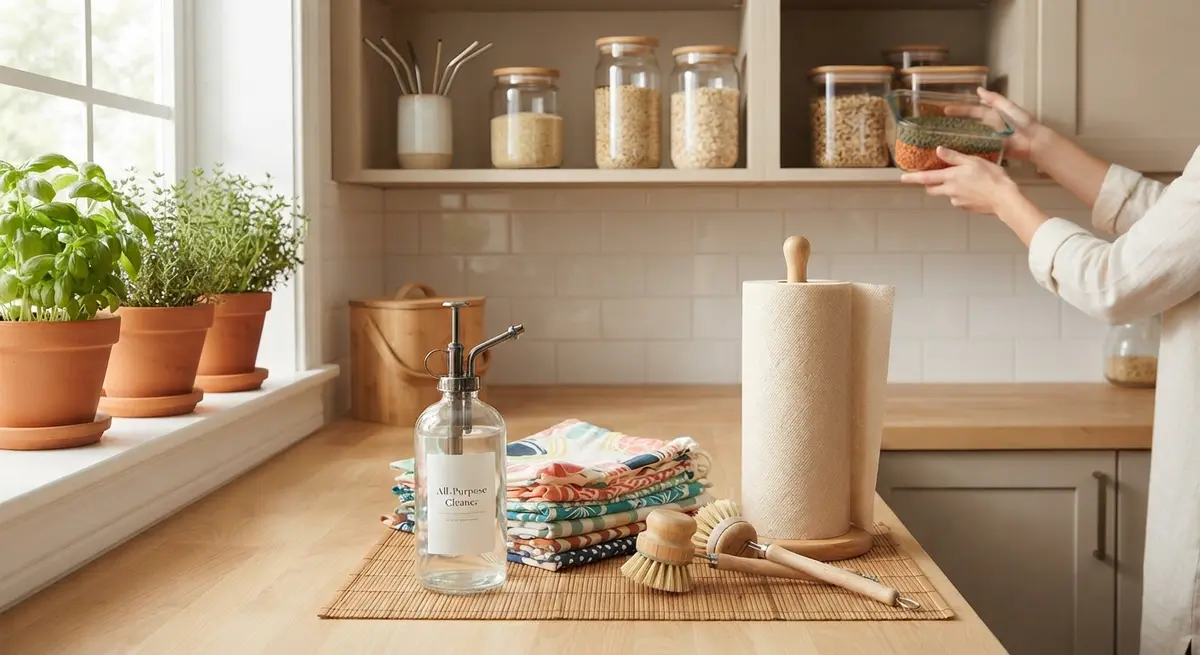
Easy Swaps to Make Your Kitchen More Eco-Friendly Every Day
Going greener in the kitchen doesn't mean a full zero-waste conversion. These small, daily, budget-friendly swaps genuinely cut waste, energy, and cost — without the guilt trip.
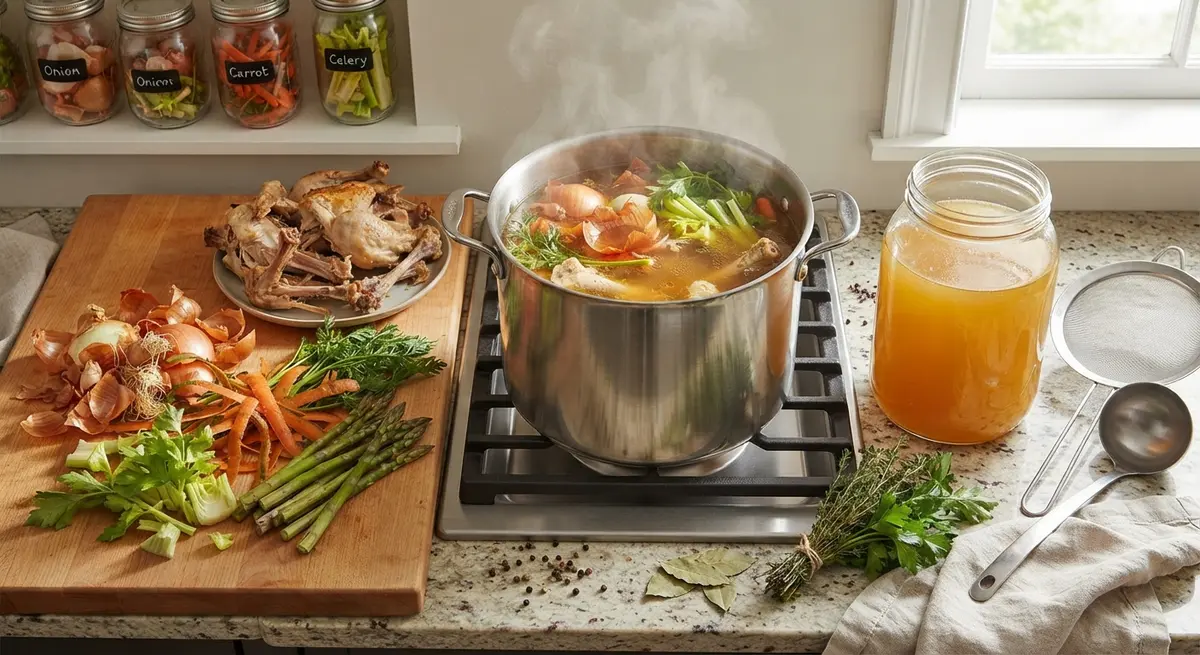
How to Turn Kitchen Scraps into Incredible Homemade Stock
Store-bought stock is fine — homemade stock from scraps is transformative and free. Here's the exact bag-in-the-freezer method, what to save, and what to skip.
5 Simple Ways to Be a More Gracious and Relaxed Dinner Host
Gracious hosting isn't about fancy food. It's five repeatable habits that calm the room — and you.
About the Authors
This recipe and guide was developed, tested, and approved in our home kitchen and daily life. Jamy is a retired Food Service District Manager and Early Childhood Program Manager who spent his career overseeing multi-site restaurant operations, large-scale culinary production, and daycare menu management. Kaïna brings the ultimate real-world test: making sure it brings ease and joy to our kids on a busy weeknight.
Read more about our professional background and philosophy →