Eco-Friendly Grocery Shopping: How to Reduce Plastic Waste at the Store
By the QuiteRecipes team (Jamy & Kaïna)
Plastic-free grocery shopping is easier than you think. Learn reusable bag systems, bulk-bin strategies, and packaging swaps that actually work.
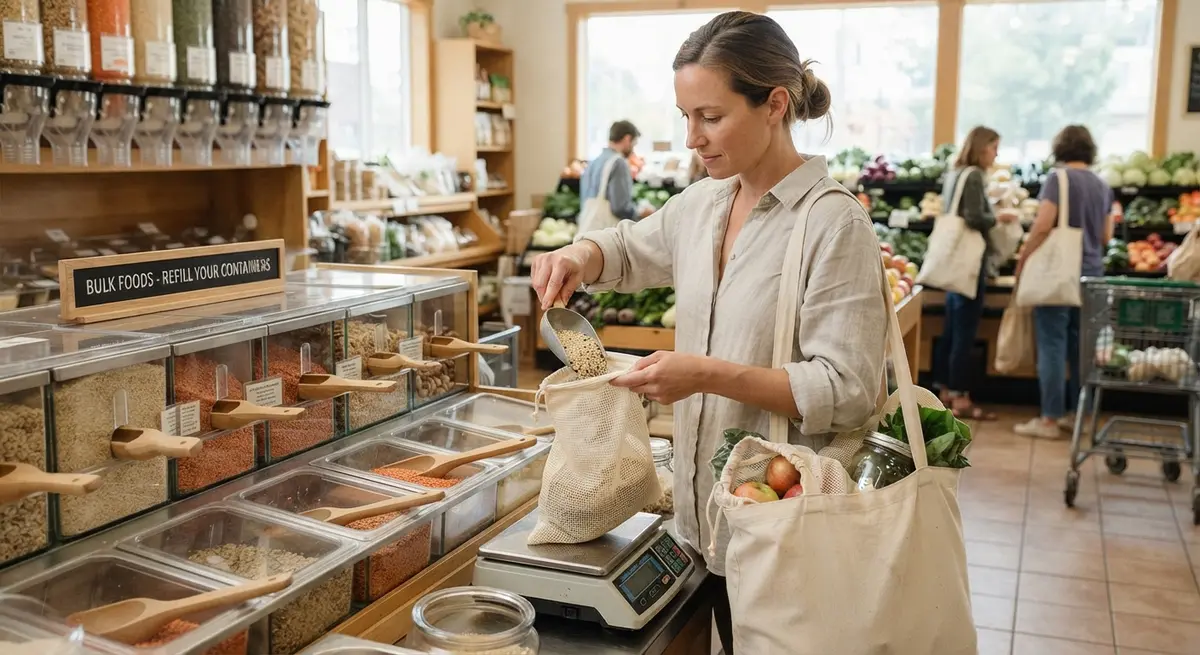
I still remember the exact Tuesday I became obsessed with plastic waste at the grocery store. I was unloading my canvas bags when I noticed the irony: I'd carried everything home in cotton, but every single item inside was swaddled in plastic. Salad in a clamshell, bananas on a foam tray, yogurt in six individual cups. I counted fifty-four pieces of plastic for one week of food.
That night I did the math. The average American family discards over 400 pounds of plastic packaging a year, and the supermarket is where most of it enters our lives. A year later, my household is down to about six plastic items per weekly shop, and I've saved money doing it.
This guide is the practical system I built through a year of trial and error: the grocery kit that survives a Costco run, the bulk-bin strategies that save 20 to 40 percent, the produce tricks that keep greens fresh without a clamshell, and the two swaps that failed for me so you can skip them.
Build a Grocery Kit That Lives by the Door
The entire game is won or lost before you leave the house. If your reusable bags are buried in the car under a gym towel, you will buy plastic. My kit lives in a tall basket by the front door, ready to grab in twenty seconds.
- Eight canvas totes and four insulated bags for cold items.
- Five thin mesh produce bags and ten lightweight cloth bulk bags.
- Two glass jars with lids for the deli and fish counter.
The kit cost about forty dollars once, and every piece is still going strong two years later. The single most important rule is "bags back in the basket instantly after unpacking." That sixty-second habit is the difference between a plastic-free shop and a clamshell emergency.
Master the Bulk Bin
Here's the counterintuitive thing nobody tells you about bulk bins: they're genuinely cheaper, often 20 to 40 percent less than the boxed equivalent, because you're not paying for branding, boxes, or the air in a cereal bag. On a typical month I buy oats, rice, pasta, lentils, beans, nuts, dried fruit, and coffee from bulk bins, saving roughly forty dollars.
- Weigh your cloth bag before filling, or note its weight on a tag for the cashier.
- Bring a small funnel so you can transfer beans into jars without spilling a third.
- Refill oats and rice the same day each month; from first scoop to checkout, it's a six-minute task.
Treat the bins as a fresh inventory moment and buy only what you'll actually use, so nothing sits stale in the cabinet.
Pro tip: most stores list the price per pound above each bin, so you can compare against the packaged aisle without mental math.
The Produce Section: Loose, Mesh, and No Clamshells
The produce aisle is where most plastic waste actually happens, because the clamshell is the enemy of the reasonable shopper. Most supermarkets carry the same items both loose and pre-boxed, and the loose version is almost always cheaper per pound because you're not paying for the tray and shrink wrap.
- Green beans, cherry tomatoes, mushrooms, berries, and greens all have a loose cousin hiding nearby.
- Your mesh produce bags breathe, weigh almost nothing, and let cashiers see the items.
There's a freshness payoff too. Loose produce stored properly outlasts clamshells, which turn slimy in their own condensation. After I switched to mesh-bagged greens with a damp paper towel in the crisper, my salad leaves survived nine days instead of rotting at day four. If an item only exists in a clamshell, buy one and transfer it into glass the day you get home.
Rethink the Inner Aisles
Once you've mastered produce and bulk, the packaged middle of the store becomes a negotiation. Reach for paper, glass, or aluminum before plastic, and buy the biggest size available. Block cheese wrapped in waxed paper beats shredded, which is coated in cellulose powder to stop clumping, and it tastes dramatically better. One large yogurt tub is about 25 percent cheaper per ounce than six individual cups.
- Carry your glass jars to the deli and fish counters; most will happily fill them.
- Once a month, buy durum semolina in bulk and make fresh egg pasta on a lazy Sunday; it freezes brilliantly.
- Put the boxed pasta in your cart over the bagged version; cardboard beats plastic every time.
The Two Swaps That Failed (So You Can Skip Them)
I said I'd be honest, so here are the two eco-swaps that flopped in my kitchen. The first was glass smoothie straws: I used them twice, and they now live at the bottom of a drawer. The failure wasn't the planet; it was that I never used disposable straws at home, so I was creating a solution for a problem I didn't have. Before buying any "eco product," ask whether it replaces something you genuinely use weekly.
The second failure was shopping without a list, relying on environmental virtue to avoid impulse junk. I lasted exactly one week before buying a clamshell of pre-cut mango. A written grocery list is an eco tool, not a courtesy, and it turns the trip into a retrieval mission.
My advice is to adopt one new swap every two weeks rather than going cold turkey. A dramatic purge weekend fails by Tuesday. When I gave up plastic bags but kept clamshells, that was progress; a month later, I gave up the clamshells too.
FAQ
How much plastic can one household really avoid?
A motivated household can cut grocery plastic by 70 to 85 percent within two or three months using bulk bins, loose produce, reusable bags, and packaging swaps. Reaching zero is impractical for most families, but halving your plastic takes about six weeks and minimal effort.
Are bulk bin items really cheaper?
Yes, typically 20 to 40 percent cheaper for staples like oats, rice, pasta, nuts, and dried fruit, because you skip branding and packaging costs. I save roughly forty dollars a month buying bulk versus boxed. The only catch is buying what you'll actually use.
Will stores accept my own bags?
Most chains and nearly all co-ops and natural grocers accept reusable produce and bulk bags. If a store's bulk scale can't tare your hanging bag, weigh it empty first and note the number for the cashier. If you hit resistance, a compostable store bag for a few cents is a fine middle ground.
How do I keep loose produce fresh without plastic?
Store greens in a glass container with a damp paper towel, keep berries dry in a breathable box, and don't wash produce until right before eating. Loose produce stored this way usually outlasts the clamshell version because it isn't trapped in condensation.
Key Takeaways
- Keep a permanent grocery kit by the door and return it instantly after unpacking.
- Buy oats, rice, pasta, lentils, nuts, and coffee from bulk bins and save 20 to 40 percent.
- Choose loose produce with mesh bags; it's cheaper and stays fresher than a clamshell.
- Reach for paper, glass, or aluminum, and buy the biggest size available.
- Adopt one new swap every two weeks with a written list.
- Ask before buying any eco gadget: does it replace something you truly use weekly?
A Final Word
That Tuesday when I counted fifty-four pieces of plastic changed less than I feared and more than I expected. I didn't become a plastic-free champion overnight, and I still buy the occasional clamshell of gorgeous raspberries when loose berries aren't available. But a year into this experiment, my kitchen looks different: a wall of glass jars, a drawer of cheese blocks and waxed paper, and a grocery kit that now works like a second limb. You don't need to be perfect, and you don't need a single special gadget. You need a basket by the door, a list in your hand, and the small repeated decision to reach for the version of dinner that doesn't come boxed.
Published on 2026-08-13 by the QuiteRecipes team (Jamy & Kaïna).
Related Articles
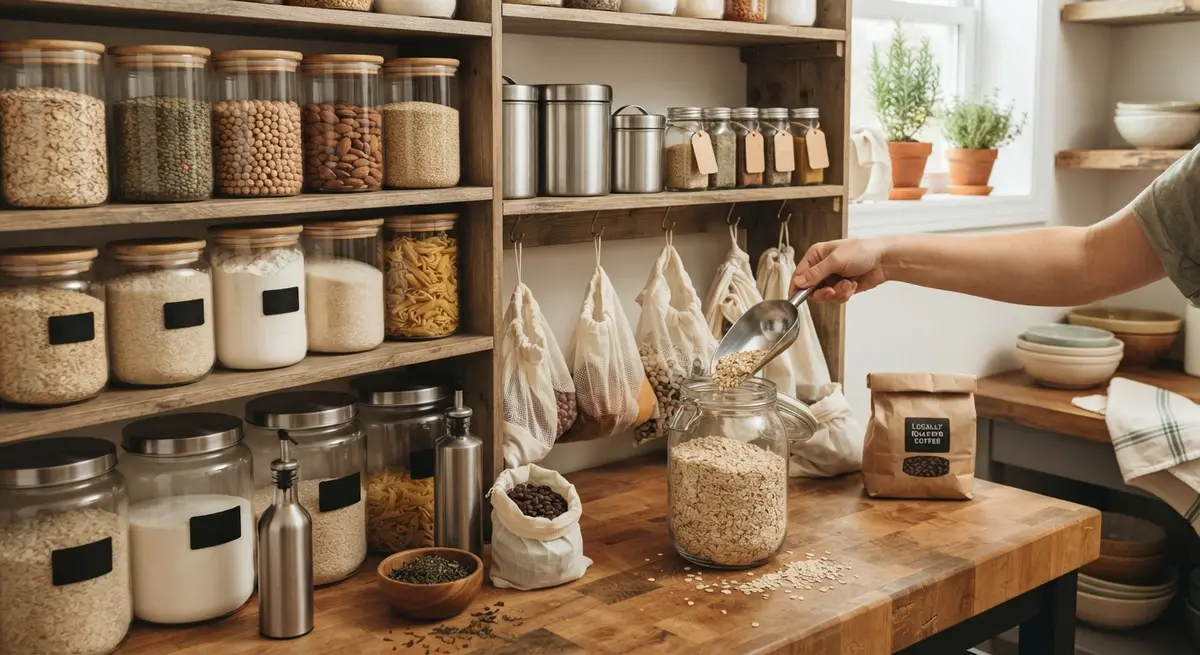
Zero-Waste Pantry Swaps That Will Save You Money
Cut waste and cut costs with these zero-waste pantry swaps. Bulk staples, glass jars, pasta, beans, and long-game habits that pay you back.
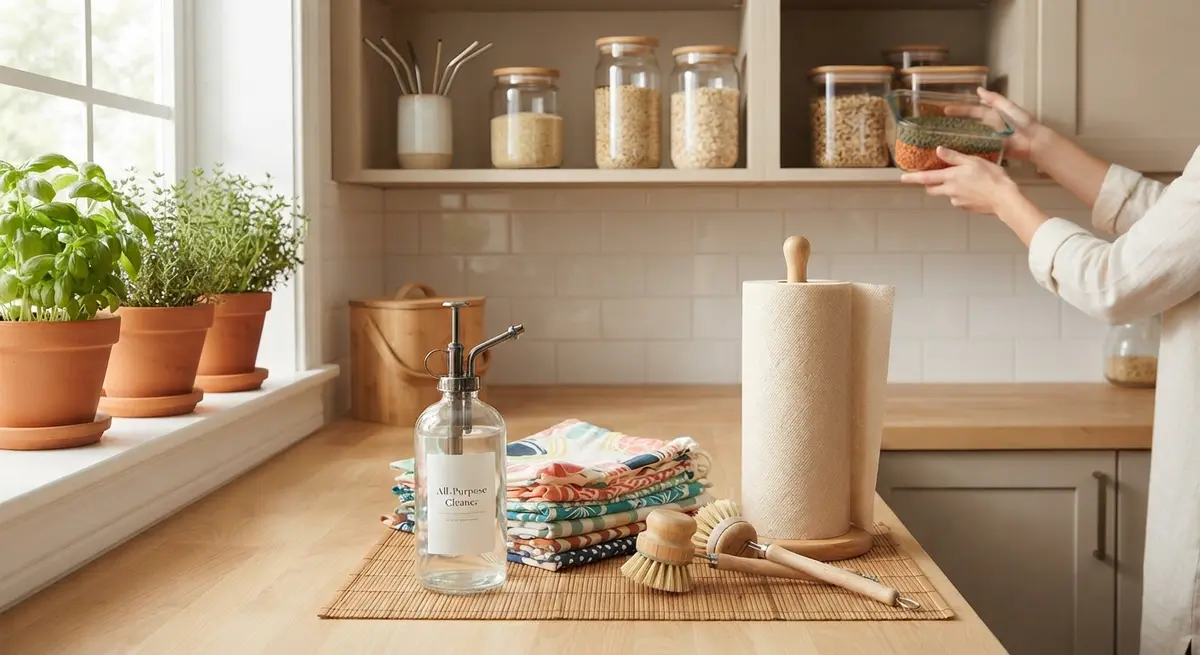
Easy Swaps to Make Your Kitchen More Eco-Friendly Every Day
Going greener in the kitchen doesn't mean a full zero-waste conversion. These small, daily, budget-friendly swaps genuinely cut waste, energy, and cost — without the guilt trip.
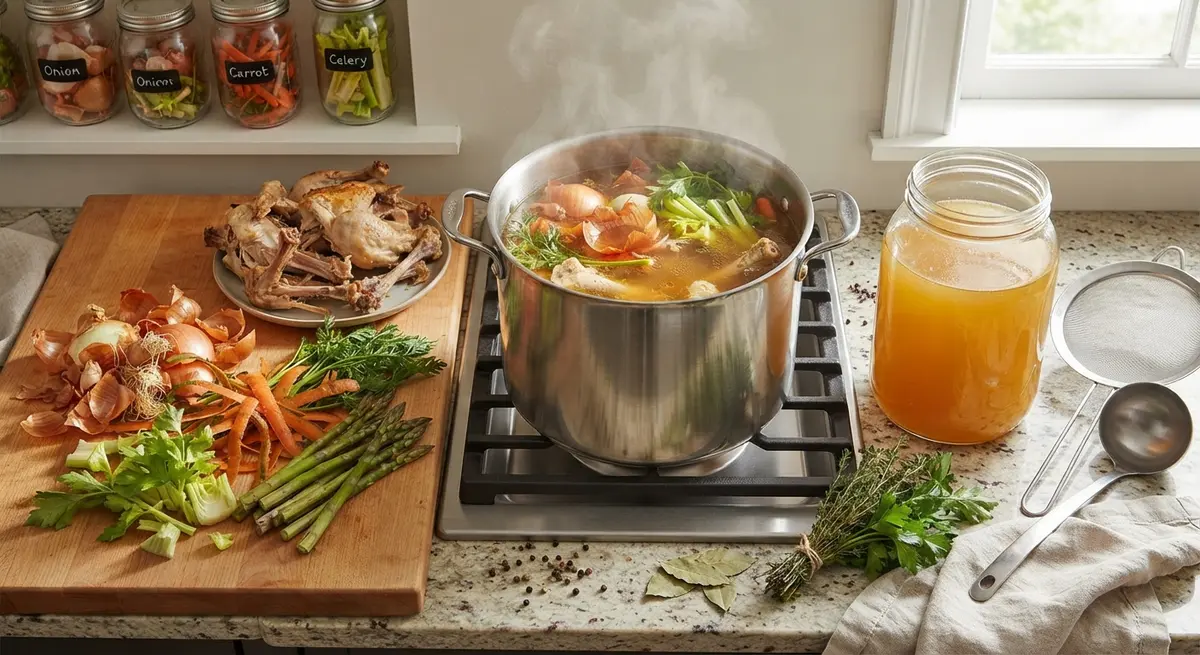
How to Turn Kitchen Scraps into Incredible Homemade Stock
Store-bought stock is fine — homemade stock from scraps is transformative and free. Here's the exact bag-in-the-freezer method, what to save, and what to skip.

5 Simple Ways to Be a More Gracious and Relaxed Dinner Host
Gracious hosting isn't about fancy food. It's five repeatable habits that calm the room — and you.
About the Authors
This recipe and guide was developed, tested, and approved in our home kitchen and daily life. Jamy is a retired Food Service District Manager and Early Childhood Program Manager who spent his career overseeing multi-site restaurant operations, large-scale culinary production, and daycare menu management. Kaïna brings the ultimate real-world test: making sure it brings ease and joy to our kids on a busy weeknight.
Read more about our professional background and philosophy →