5 Simple Ways to Be a More Gracious and Relaxed Dinner Host
By the QuiteRecipes team (Jamy & Kaïna)
Gracious hosting isn't about fancy food. It's five repeatable habits that calm the room — and you.
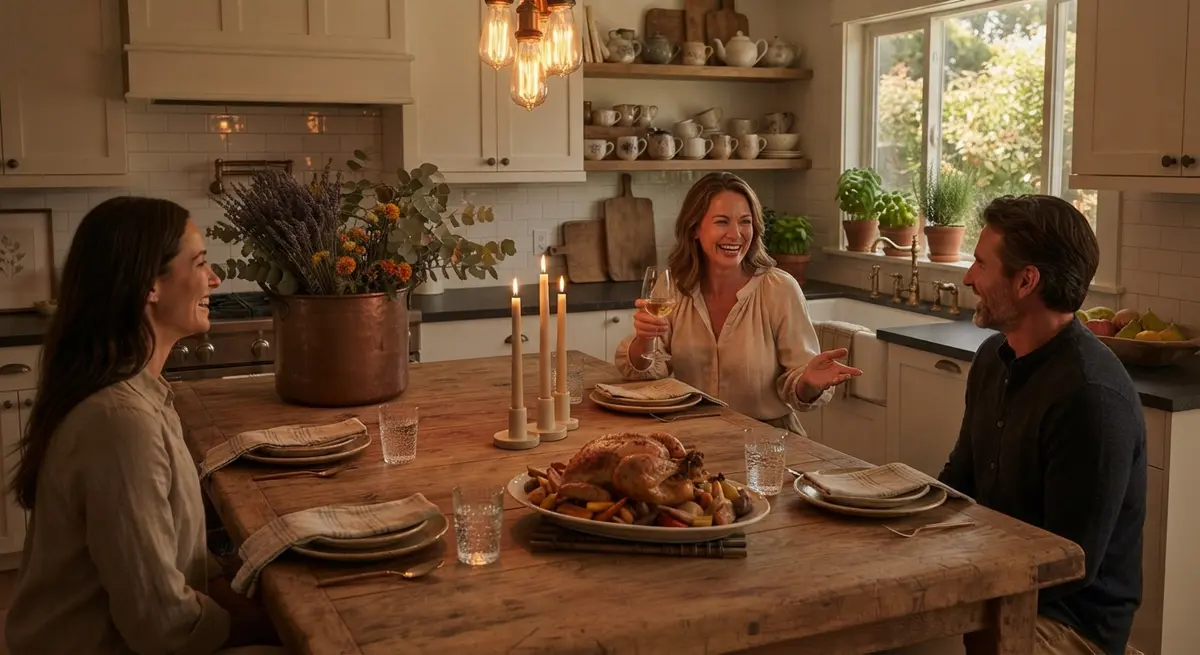
I once spent forty minutes at my own dinner party standing at the stove, flipping something scorched while I shouted conversation over my shoulder. A guest finally stood beside me, took the spatula, and said quietly, "Go sit. Nobody came to watch you cook." She was right, and the roast was fine without me. What I realized that night is that gracious hosting isn't a personality trait — it's a collection of small, learnable behaviors that make the room feel safe.
None of these habits requires a bigger budget, a fancier kitchen, or extraversion. They cost nothing, take about twenty minutes of one-time effort, and each one measurably lowers the temperature of the table. Take even two of them seriously and your next dinner will feel different to your guests even if the menu is identical.
Here are the five that have genuinely changed how I host, in the order I adopted them.
Greet From the Door, Not From the Kitchen
The first thirty seconds decide whether a guest feels invited or merely tolerated.
- When the doorbell rings, stop mid-task — even mid-flip — and go to the door.
- Say their name warmly, hang their coat, and put a drink in their hand within sixty seconds.
- Point them at something concrete: the bathroom, the tour in two sentences, the first available conversation.
Pro tip: The arriving guest's nervous system is mildly activated. Resolve that quickly and you buy yourself a whole evening of relaxed, self-sufficient guests.
Keep One Dish Everyone Recognizes
Guests don't want to be challenged; they want to be fed.
- Always include one familiar dish — roast chicken, lasagna, real mac and cheese — that needs no explanation.
- Let the recognizable plate do the emotional work for the cautious eater, the exhausted friend, or the kid on the sofa.
- Treat the simple dish as your menu's anchor, never its afterthought.
Eat Your Own Food Sitting Down
The quietest upgrade in hosting is also the most visible: the host who sits.
- Plate mains in the kitchen before you sit, so you're not serving from platters at the table.
- Never clear a plate until the guest has put their fork down — that's the universal "done" signal.
- When you sit, everyone sits; shoulders drop, conversation gets louder, and guests stop glancing at the kitchen door.
Choose One Cold Dish That Needs No Timing
A hot menu runs on a clock; a cold dish gives you back your freedom.
- Add one no-reheat plate — a generous salad, charcuterie, cold noodles — that goes down before the hot course lands.
- It makes the table look abundant the second guests sit and keeps them fed while the roast finishes.
- Your timing becomes invisible because the table is always already ready.
Leave the Cleanup Until Tomorrow
The twenty minutes after dinner are the best conversations of the night, and too many hosts spend them scrubbing.
- Stack plates on the counter and stay in the room while the evening does its best work.
- If someone offers to help, hand them the wine and dessert, not the pan.
- Do the dishes tomorrow with breakfast coffee; the sink is just the archaeological record of a good party.
FAQ
What's the first habit to learn if I'm a brand-new host?
Start with the door greeting, because it's free and has the biggest emotional return for the smallest effort. Force yourself to stop what you're doing when the bell rings, greet warmly, and put a drink in hand within sixty seconds. Once that's automatic, add the sit-down-and-eat rule, which changes the whole shape of your evening.
How do I handle a guest who insists on helping?
Take the yes, but steer it. Accept help that needs no skill — pouring drinks, cutting bread, setting the timer — while keeping your actual cooking to yourself. Most guests who offer want to feel useful, not take over the kitchen.
Is it rude to ask guests to bring something?
Not if it's specific and early. The gracious version sounds like: "A bottle of the good stuff or a loaf of bread would be perfect, but honestly nothing is required." Keep it to one or two options and always thank them out loud when it arrives.
What if a guest is quietly miserable?
Notice it in the first half hour, then make one small structural fix — move them next to their favorite conversationalist, hand them the good chair, ask their opinion on the playlist. Sometimes the kindest move is simply letting an introvert sit quietly without circling them with social energy.
How do I end the night gracefully?
Begin winding down about ninety minutes after the last plate: put the kettle on, offer the last cup, and say plainly that it was wonderful. Most guests take the signal within minutes, and a direct, warm "I need to start my evening once you lovely people head out" has never once ended a friendship.
Key Takeaways
- Greet at the door within the first thirty seconds and put a drink in hand within sixty; the opened greeting buys you a relaxed evening.
- Anchor the menu with one familiar dish so even your most cautious guest eats with ease.
- Eat sitting down, plate in the kitchen, and never clear a plate until a fork is down.
- Include one cold, self-timing dish so the table is always ready and your deadlines disappear.
- Defer the cleanup until tomorrow and guard the golden last hour of conversation.
- Learn the habits in order — the door greeting first, then sitting and eating — before layering on the rest.
A Final Word
Grace at the table isn't the polish of the plating; it's making five or six people feel, for a few hours, that they walked into the right room. Every habit in this list is just the mechanics of that feeling — the warm greeting, the familiar bowl, the sitting host, the timing that never panics, the sink that can wait. Learn them lightly, apply them warmly, and your table will do the rest of the work on its own.
Published on 2026-08-13 by the QuiteRecipes team (Jamy & Kaïna).
Related Articles
How to Curate the Perfect Dinner Party Playlist for Any Vibe
The dinner party playlist is a hosting skill. Learn volume math, tempo curves, and a no-fail structure.
How to Host a Stress-Free Dinner Party from Start to Finish
Stress is not a sign of dedication as a host — it's a sign your plan needs fixing. Here's the complete system.
How to Pair Wine with Dinner When You're Not a Sommelier
Wine pairing isn't rocket science. Learn the three simple matches that work for home dinners.
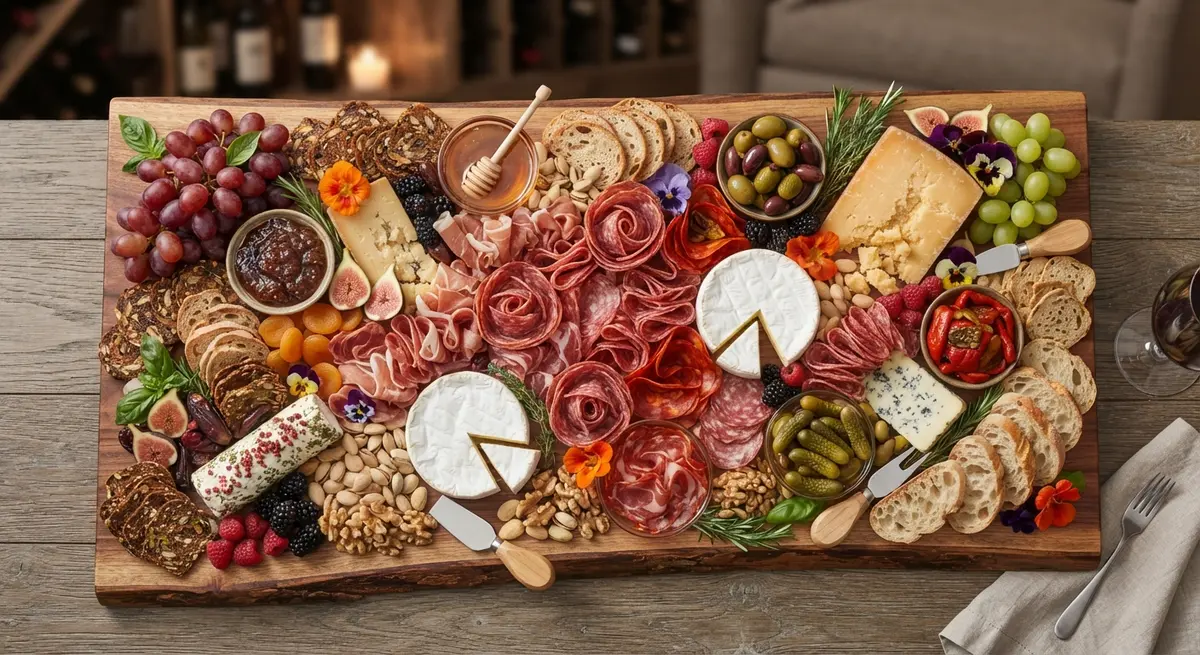
The Art of Charcuterie: How to Build a Show-Stopping Board Every Time
Charcuterie is about structure, not stuffing the board. Here's the ratio-based system pros use.
About the Authors
This recipe and guide was developed, tested, and approved in our home kitchen and daily life. Jamy is a retired Food Service District Manager and Early Childhood Program Manager who spent his career overseeing multi-site restaurant operations, large-scale culinary production, and daycare menu management. Kaïna brings the ultimate real-world test: making sure it brings ease and joy to our kids on a busy weeknight.
Read more about our professional background and philosophy →