The Art of Charcuterie: How to Build a Show-Stopping Board Every Time
By the QuiteRecipes team (Jamy & Kaïna)
Charcuterie is about structure, not stuffing the board. Here's the ratio-based system pros use.
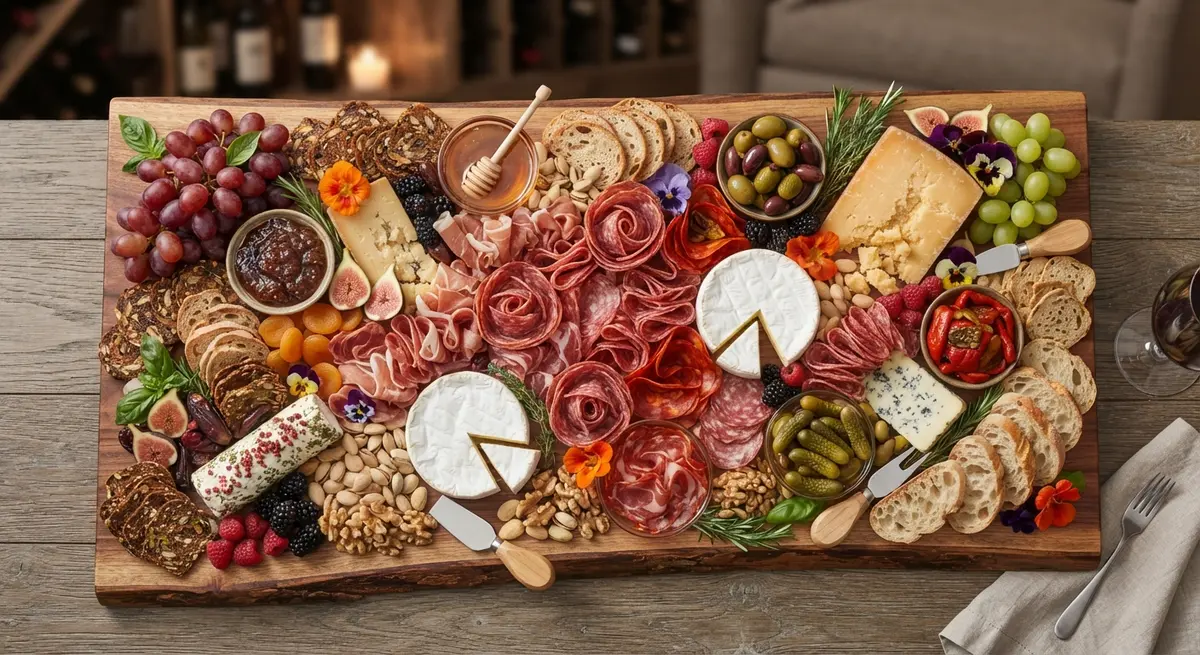
I once stood in a friend's tiny apartment while she built a charcuterie board in twenty minutes as her guests milled around drinking wine, and the dirty little secret was that almost everything on it came from the discount bins. There were three cheeses, two kinds of sausage, a fan of prosciutto she'd spent a dollar more on, a sleeve of crackers, a handful of grapes, olives, and a pot of honey. It looked like a restaurant appetizer. Mine never looked like that, and I'd been cooking professionally for years.
The difference wasn't skill. It was that she understood a board is built on structure, not on money or rare ingredients. Every time I'd failed, I'd been shoving things at a wooden slab with no plan, hoping density would read as abundance. It read as clutter.
This article is the system I rebuilt after that evening: the exact ratios that make a board work, the cheese logic most guides skip, how to budget a gorgeous board for six people under $40, and the styling order that turns groceries into a centerpiece. By the time you're done, you'll be able to walk into any store and leave with a board that draws a crowd.
Lock In a Ratio Before You Shop
Every average board fails on proportion, not quality, so do the math before you leave the house.
- For six people as an appetizer, buy roughly 12 ounces of cheese, 8 ounces of meat, 8 ounces of crackers, and one generous handful each of sweet and pickled extras.
- If charcuterie is the main event rather than a starter, double everything: about 6 ounces each of meat and cheese per person.
- Think in thirds — one part meat, one part cheese, one part everything else — and the board instantly looks deliberate.
Pro tip: Crackers are the budget item nobody budgets for. One sleeve weighs about 4 ounces and disappears faster than anything else, so buy two crackers per guest before you even open the bag.
Pick Cheese for Contrast, Not Prestige
Cheese does the heavy lifting, and contrast matters more than cost. The rule is three textures and a spread of milks.
- One soft, spreadable cheese — triple cream brie, camembert, or goat cheese.
- One semi-hard all-rounder — manchego, gouda, or havarti.
- One firm, crumbly or aged cheese — aged cheddar, parmesan, or mimolette.
- Change the milk type per cheese (cow, goat, sheep) so each bite tastes different even at similar textures.
Build a Meat Lineup With Three Roles
Meat rarely decides whether a board impresses, but the mix does. I use three roles.
- One thinly sliced, air-cured meat — prosciutto, serrano, or capicola — for elegance.
- One firm, sliceable salami or sausage — soppressata, chorizo, or hard salami — for substance.
- One pâté, rillettes, or spreadable meat for a soft, savory counterpoint.
Lay the sliced meats in loose folds rather than flat rows; folds catch light and look intentional in seconds.
Fill the Gaps With Crunch, Sweet, and Brine
The empty spaces on a board are where the wine-bar look really gets built.
- Add briny pops: cornichons, olives, pickled onions, or artichokes.
- Add sweet contrast: grapes, sliced figs, dried apricots, or a small dish of honey.
- Add one crunchy, one fresh, and one toasted element — crackers, apple slices or radishes, and nuts.
- Apple slices and nuts also give you something to offer the guest who skips cheese.
Style in This Order Every Time
Finally, a paint-by-numbers styling sequence that takes five minutes once the groceries are sliced.
- Start with the three cheeses spaced apart and at opposite corners of the board — never clustered.
- Add the largest bowls first (olives, honey), then tuck smaller extras around them.
- Lay the meat next, folding prosciutto into soft ribbons.
- Fill remaining gaps with fruit and nuts, then finish with crackers tucked loosely, not stacked.
- Pull cheese, meat, and the honey out of the fridge forty minutes before guests arrive so everything reaches room temperature.
Pro tip: Embrace empty space. A board with one deliberate gap reads as five-star; a board crammed edge to edge reads as a grocery bag emptied onto a platter. Step back, take two things off, and it will instantly look better.
FAQ
How much charcuterie should I plan per person?
Roughly 3 ounces each of meat and cheese per person when the board is an appetizer, and double that — 6 ounces each — when it's the party's main event. For six appetizer guests, that's about 12 ounces of cheese and 8 ounces of meat.
How far ahead can I assemble the board?
You can build the whole board four to six hours ahead and keep it refrigerated, but pull it out and add the cheese, meat, and honey forty minutes before serving. The crackers and nuts do better added last so they stay crisp.
Should cheese really be served at room temperature?
Yes, and it's the single rule people skip most. Cold cheese loses most of its flavor. Leave the wedge out for thirty to forty minutes before guests arrive, and the same cheddar you thought was boring will suddenly taste twice as nutty.
Can I make a board without meat?
Absolutely. A vegetarian board is simply cheese-forward: skip the meat roles and lean harder on marinated artichokes, roasted peppers, olives, hummus, a good nut crunch, and sliced fruit. Keep the same one-third structure and it reads just as intentional.
What's a realistic budget for a board for six?
Under $40 is very doable: ~$15 for three cheeses, ~$10 for two meats and a small pâté, and the rest for crackers, produce, and olives. The honey, nuts, and fruit are the details that make it look twice as expensive as it was.
Key Takeaways
- Do the ratio math first: for six appetizer guests, 12 ounces of cheese, 8 ounces of meat, and 8 ounces of crackers.
- Buy cheese for contrast — three textures across cow, goat, and sheep milks — and serve it at room temperature.
- Structure the meat in three roles: sliced air-cured, firm salami, and one spreadable pâté.
- Fill gaps with briny, sweet, and crunchy extras; crackers always run out first, so budget two per guest.
- Style in a fixed order — cheeses, bowls, meat, fills, crackers — and leave one deliberate gap.
- Assemble hours ahead but add cheese and meat forty minutes before serving.
A Final Word
That friend's twenty-minute board taught me the most useful secret in entertaining: a show-stopping charcuterie board is a ratio and a sequence, not a splurge. Once you stop buying toward a fantasy and start building toward thirds — texture, color, crunch, and one deliberate pocket of empty space — the same grocery run that used to produce clutter produces a centerpiece. Save the premium money for a better bottle of wine and let structure do the trickery. Your guests won't know how you did it, and honestly, after the third time, neither will you.
Published on 2026-08-13 by the QuiteRecipes team (Jamy & Kaïna).
Related Articles
5 Simple Ways to Be a More Gracious and Relaxed Dinner Host
Gracious hosting isn't about fancy food. It's five repeatable habits that calm the room — and you.
How to Curate the Perfect Dinner Party Playlist for Any Vibe
The dinner party playlist is a hosting skill. Learn volume math, tempo curves, and a no-fail structure.
How to Pair Wine with Dinner When You're Not a Sommelier
Wine pairing isn't rocket science. Learn the three simple matches that work for home dinners.
Game Night Snacks & Setup: How to Be the Ultimate Host
Game night lives or dies on its snacks. A host's guide to hands-free food, smart setup, and friendly rules.
About the Authors
This recipe and guide was developed, tested, and approved in our home kitchen and daily life. Jamy is a retired Food Service District Manager and Early Childhood Program Manager who spent his career overseeing multi-site restaurant operations, large-scale culinary production, and daycare menu management. Kaïna brings the ultimate real-world test: making sure it brings ease and joy to our kids on a busy weeknight.
Read more about our professional background and philosophy →