How to Pair Wine with Dinner When You're Not a Sommelier
By the QuiteRecipes team (Jamy & Kaïna)
Wine pairing isn't rocket science. Learn the three simple matches that work for home dinners.
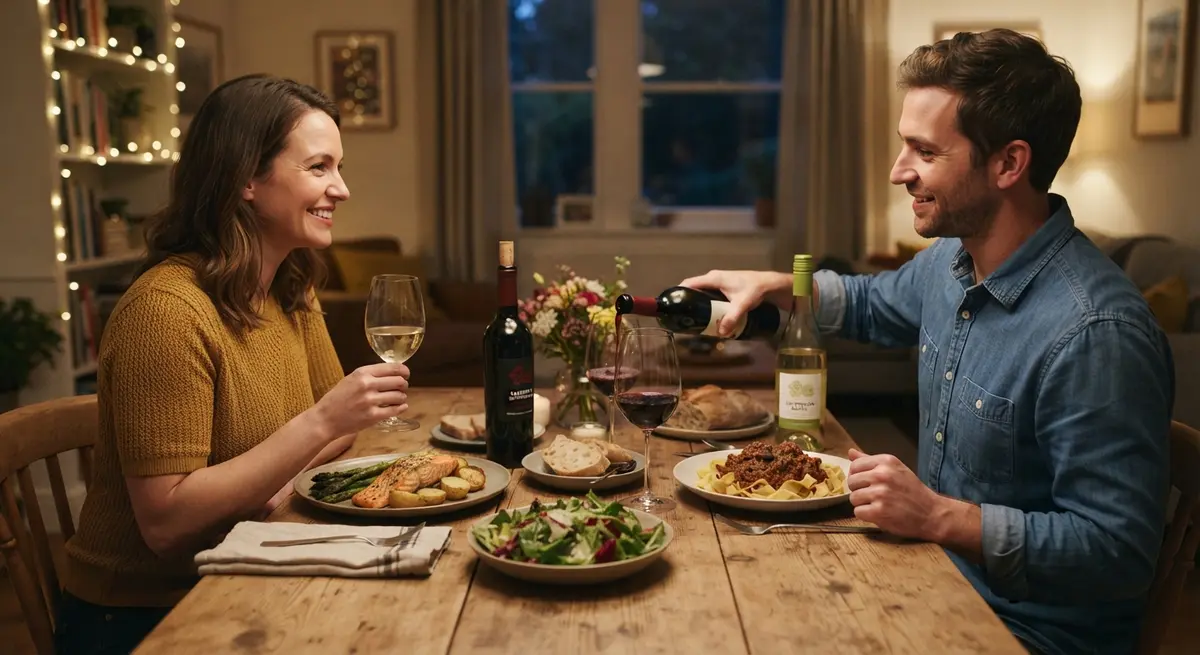
I once sat through an entire dinner while a friend explained, at length, why we were drinking a certain Burgundy with the duck — phrases like "forest floor" and "underripe currant" floated over the table while the rest of us nodded slowly and drank. The wine was lovely. What I remember better is the small door that closed on my confidence that night. That expensive bottle felt like a test I hadn't studied for, and the feeling that wine knowledge is a secret guild is exactly what keeps home cooks from enjoying a good glass with a good dinner.
The truth, learned over years of perfectly drinkable "wrong" pairings, is that pairing wine is not a science and not a secret. It's a small set of practical matches based on how food and wine behave together — weight, sweetness, salt, and acid. Great pairings are less like equations and more like a decent duet: the singers don't need to be identical, only to be listening to each other.
Here's the system I actually use, stripped of every rule I've never once needed.
The Three Matches That Cover 80 Percent of Dinners
Almost every home dinner falls into one of three zones, and each zone has a clear answer.
- Match the weight. A rich beef stew, braised short ribs, or creamy pasta want a wine with body — cabernet with steak, syrah with stew, pinot noir where mushrooms share the plate. If you'd call the dish heavy, pour a wine you'd describe the same way.
- Match the sauce, not the meat. A chicken in lemon butter wants the bright acid of sauvignon blanc; the same chicken in a red wine jus wants the red's company. Appraise what's on top, and half the pair-ability difficulty evaporates.
- Lean on the regional reflex. If the dish is Italian, pour Italian. Spanish tapas get rioja or albariño. Cuisine that grew up in the same dirt as the grapes gets along with them at the table.
Pro tip: When you can't decide between two bottles, pick the lighter-bodied one for the main and keep the richer one for the cheese. You'll be right more often than you expect.
Four Food Facts That Break the Rules
Once you know why the rules exist, you can bend them without fear.
- Salt flatters fruit. Salty food makes wine taste fruitier and less astringent, which is why popcorn with a crisp sparkling wine genuinely works.
- Acid loves acid. A tomato or lemon-dressed dish wants a wine with enough acid to hold its own; reach for sauvignon blanc, dry riesling, or vermentino on pasta nights.
- Sweet tames heat. Spicy dishes pair with slightly sweet wine, because sugar quenches the burn — an off-dry riesling, never a big tannic red on hot curry night.
- Umami is the quiet killer. Mushrooms, parmesan, soy, and cured meats make high-tannin wines taste metallic, which is why a mushroom risotto prefers a fruity, low-tannin red or a rich white.
The One-Bottle Answer for Normal Nights
For a standard home dinner — one main, a side, maybe dessert — a single good bottle beats three nervous ones.
- A dry riesling is the most food-flexible grape in existence: structure for roast chicken, acid for tomato dishes, a whisper of sugar for spice, and lightness that never bulldozes a salad.
- If you want red, a cool, fruity pinot noir or a light Beaujolais does the same one-bottle job.
- Buy by alcohol percentage when the choice paralyzes you: 13 percent and under leans light and food-friendly; 14.5 percent and above leans bold and needs bolder food.
Pro tip: For the most flexible host bottle under twenty dollars, look for a dry riesling from Washington State or the Finger Lakes — check that the residual sugar is low. It's a sommelier in a single glass.
Budget, Quantity, and the Checkout Question
Most pairing advice skips the aisle, where people actually fail.
- The honest sweet spot is $12–$18, where a bottle has been made to drink with food rather than priced for a trophy.
- Plan about half a bottle per guest for a full multi-course dinner, and a full bottle per person for a wine-focused evening.
- Always buy one extra bottle and hide it in the fridge; the "reserve bottle" habit has saved more dinners than any pairing rule.
- Spend the first thirty seconds deciding how much you care. A $12 Tuesday wine with zero expectation of epiphany is a noble thing — the stressing is what ruins the evening, not the label.
FAQ
What wine pairs with chicken?
The sauce and weight rule, not the meat. A lemony or mustardy chicken wants a dry riesling or sauvignon blanc; a creamy mushroom chicken wants a mid-weight pinot noir or light chardonnay; a simple herb-roast bird works with almost anything. A dry riesling covers nearly every chicken that exists.
Can I serve white wine with red meat?
Yes, if the cut is lean and the sauce is light. Pork tenderloin, lean sirloin, and venison are flattered by a rich white — chardonnay, grüner veltliner, or a white Rhône blend. Always trust the dish, not the color of the meat.
What's the safest white if I know nothing else?
A dry riesling, full stop. German, Austrian, and Washington State dry rieslings are your safest bets (the label "trocken" guarantees a dry style). Moderate alcohol, real acid, and a touch of fruit let it flatter salt, spice, cream, and acidity alike.
How much wine should I buy for a dinner party of six?
Half a bottle per guest across three courses means three bottles, plus one hidden reserve. Serve the red slightly cool, mind the sauce on every course, and open the reserve at cheese — it's the classic happy ending.
Do I really need one bottle per course?
Almost never at home. A liquor store will happily sell you three bottles, but for a normal dinner the reserve goes half-drunk and the fridge fills with orphans. One well-chosen bottle per meal, upgraded only when courses genuinely span opposite poles, is the calmest system yet.
Key Takeaways
- Cover 80 percent of dinners with three matches: weight, sauce-not-meat, and the regional reflex.
- Four food facts bend the rules: salt flatters fruit, acid loves acid, sweet tames heat, and umami fights high tannin.
- One well-chosen bottle beats three nervous ones; a dry riesling is the most flexible bottle you can own.
- Use alcohol percentage as the aisle tiebreaker: 13 percent and under is light, 14.5 percent and above is bold.
- Buy in the $12–$18 range, plan half a bottle per guest, and always keep one hidden reserve.
- Stop stressing the label; a shared bottle beats a correct palate every single time.
A Final Word
That Burgundy lecture taught me to ask questions instead of nodding, and the lesson stuck: wine is a friend of the table, not a judge at the door. You don't need vintages or vineyard slopes — you need three matches, four food facts, one decent bottle you actually like, and the freedom to laugh when a pairing turns out odd but delicious anyway. The perfect glass isn't the one that follows the formula to the letter; it's the one where everyone wanted another pour and got it.
Published on 2026-08-13 by the QuiteRecipes team (Jamy & Kaïna).
Related Articles

5 Simple Ways to Be a More Gracious and Relaxed Dinner Host
Gracious hosting isn't about fancy food. It's five repeatable habits that calm the room — and you.

How to Curate the Perfect Dinner Party Playlist for Any Vibe
The dinner party playlist is a hosting skill. Learn volume math, tempo curves, and a no-fail structure.
How to Host a Regional Food Night: A Culinary Trip to Italy
Bring Tuscany or Sicily to your dining room. Here is how to host a regional Italian food night with a real menu, course order, and sourcing.
How to Host a Seasonal Harvest Dinner with Local Produce
Host a memorable seasonal harvest dinner with local produce. Plan your menu, shop the farm stand, and cook with autumn's best for under $60.
About the Authors
This recipe and guide was developed, tested, and approved in our home kitchen and daily life. Jamy is a retired Food Service District Manager and Early Childhood Program Manager who spent his career overseeing multi-site restaurant operations, large-scale culinary production, and daycare menu management. Kaïna brings the ultimate real-world test: making sure it brings ease and joy to our kids on a busy weeknight.
Read more about our professional background and philosophy →