How to Host a Seasonal Harvest Dinner with Local Produce
By the QuiteRecipes team (Jamy & Kaïna)
Host a memorable seasonal harvest dinner with local produce. Plan your menu, shop the farm stand, and cook with autumn's best for under $60.
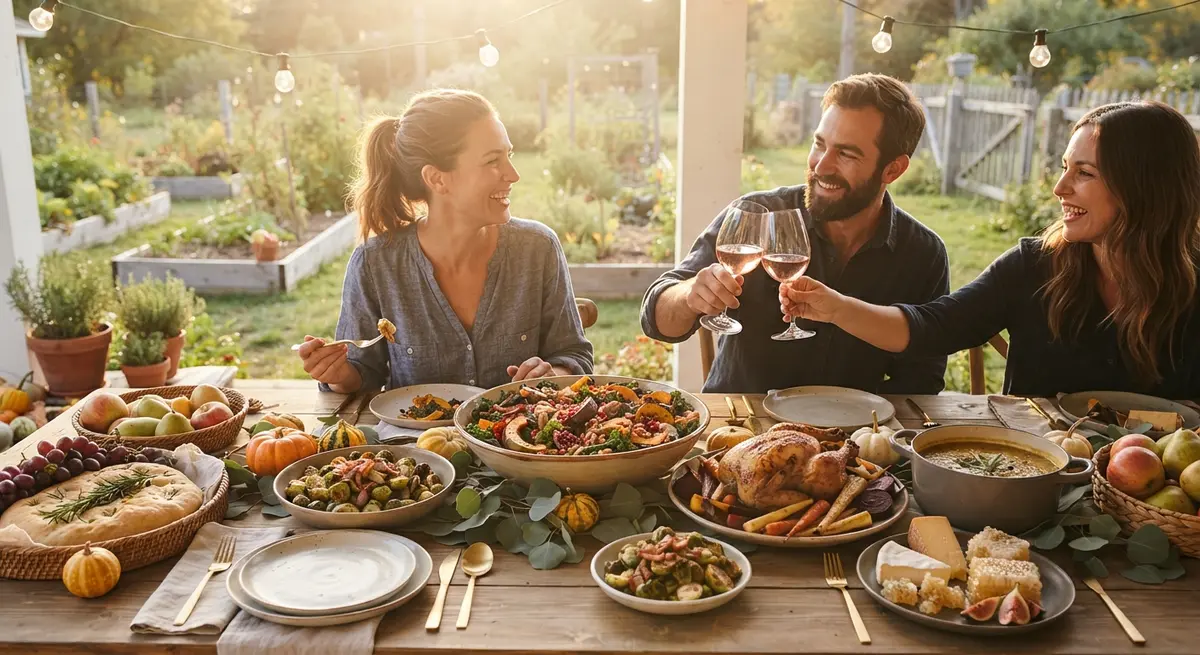
I still remember my first harvest dinner, mostly because it was a near-miss disaster with a happy ending. I'd invited eight people, decided to impress them with an ambitious squash-and-chèvre lasagna, and spent the whole afternoon running between the stove and the front door. We ate at 9:15. Nobody complained, and the squash was glorious in the way overcooked squash can be, masked by a mountain of cheese.
The second time I hosted a harvest dinner, I did it properly, and the whole experience was so different that I finally understood what these dinners are for. It's not about the fanciest squash; it's about the story that comes with food you know the provenance of. I bought apples from the farm where my neighbor carts his kids on hayrides, and heirloom tomatoes from the woman who makes the whole market worth visiting. The dinner was simpler than that first lasagna, and a hundred times better.
This guide is my complete system for hosting a seasonal harvest dinner: the guest math, the six-dish menu design that keeps you out of the kitchen, how to shop a farm stand like a regular, a one-afternoon prep schedule, and a budget that feeds six people for under sixty dollars.
Design the Menu Around the Harvest, Not the Recipe
The cardinal rule is that the season leads and the menu follows. Before writing a single dish, make a list of what's actually in season at your market that week, and build the dinner out of those ingredients rather than forcing a recipe that calls for asparagus in October. Use one or two star ingredients per course so each one shines instead of burying the season under competing flavors.
The classic arc works every time. Start with a soup course built from root vegetables or squash, which is homey, forgiving, and made entirely in advance. Move to the main course: a roasted whole chicken or a pork shoulder that braises unattended, paired with roasted roots and a grain like farro or wild rice. Finish with a dessert built around apples, pears, or pumpkin. That's the whole architecture, and it scales easily.
Add one golden detail: a one-line provenance card by each dish, like "heirloom squash from Rose Hill Farm." Guests love it. It turns the dinner into a story, and it's ten minutes with a sharpie.
The Six-Dish Menu That Keeps You Out of the Kitchen
Nothing ruins a dinner party faster than a host orbiting the stove, so I design every harvest menu around dishes that cook themselves. My standard dinner for six runs six courses, but only three need any real attention during the evening.
- Sourdough with whipped honey butter, done before anyone arrives.
- The soup, made that morning and reheated as guests settle in.
- The main event: a whole chicken or pork shoulder in the oven with a probe thermometer, cooking itself while you pour drinks.
- A farro or wild rice pilaf with roasted root vegetables, finished on sheet pans in the same oven.
- An apple or pear crumble assembled that afternoon and baked during dinner, so the house fills with cinnamon right as people hit coffee.
My total active cooking during the party is a bowl of soup reheated, one pan of vegetables pulled, and a crumble served. If you commit to the six-dish structure, you will actually sit down at your own dinner party.
Cut every vegetable into its final shape the morning of the party and bag them separately by dish. Ten minutes of prep in daylight saves forty minutes of panic at 7 PM.
How to Shop a Farm Stand Like a Regular
If you're near a farmers market or farm stand, the harvest dinner practically writes itself, but only if you shop with a system. Start with a walk-through pass before buying anything, noting what looks at its peak. Then hit the produce stalls with your menu in mind, buying the stars of each course. Farm-stand produce isn't shelf-stable forever, so buy for the dinner plus one extra meal, never a month of kale.
The etiquette is friendlier than at a supermarket. Introduce yourself, ask what came in that morning, and let the grower steer you to the best variety of the week. Ask about slightly imperfect items; growers almost always have a "seconds" box of perfectly good, funny-shaped produce sold at a discount and ideal for soup and roasting. The single best question, which separates a regular from a tourist, is "What are you most proud of this week?"
If there's no farm stand within reach, don't panic. The dinner works just as well with a CSA box, a local delivery service, or even the seasonal aisle of a good supermarket, as long as you choose produce that's in season in your region. Ask the produce manager which items arrived that day.
A One-Afternoon Prep Schedule You Can Follow
The secret to a relaxed harvest dinner is that almost everything happens in a single, well-ordered afternoon. The schedule starts two days out with the shopping list and the soup base locked, a day out with the dessert assembled, then the main afternoon with a tight ninety-minute cooking block that ends with everything done or on autopilot.
- By 1 PM, trim and chop every vegetable, bagging them by dish.
- By 2 PM, start the soup, which simmers while you prep the roast.
- By 3:30 PM, season the chicken or pork, get it into the oven on low-and-slow, and start the grain.
- By 4:30 PM, assemble the crumble and refrigerate it.
- By 5:30 PM, set the table completely, lay out the bread and butter, and light the candles.
Then and only then do you shower. The roast comes out at 6:45, rests while you reheat the soup and pull the sheet pans, and dinner lands at 7:15 clean, calm, and on time. The entire trick is that the meat goes in early enough to be self-sufficient, and every vegetable hits the oven in one wave.
Keep the Budget Honest: Six Guests for Under Sixty Dollars
The fear that "local and seasonal means expensive" is real, but a harvest dinner built on in-season produce is genuinely affordable. My measured average for a six-guest dinner is about fifty-eight dollars: the star protein at fifteen to eighteen dollars, the produce basket at twenty to twenty-five, the grain and pantry staples at eight, the dessert fruit at five, and the remainder for bread and butter.
The two budget-busters are specialty proteins and tiny premium add-ons. A whole chicken is dramatically cheaper per pound than fillets and roasts beautifully, which is why it anchors the menu. For produce, buy the stars loose and in bulk rather than prewashed, pre-cut versions, which carry a massive markup. Resist the boutique root-vegetable trio at four dollars a bulb; the seconds box and the big family bags are where the value lives.
Here's the portion math: one and a quarter pounds of boneless meat per guest if you're generous, or one whole chicken across six if you're realistic, plus a heavy grain pilaf and three robust vegetable dishes. With those ratios the table looks abundant, no one leaves hungry, and you haven't spent prime-rib money to get there.
When the Harvest Surprises You
Every harvest dinner plan eventually collides with reality: the squash that's suddenly twice your budget, the storm that keeps the stand shut. My system has a built-in flexibility layer. I keep two fallback dishes in my back pocket that accept almost any seasonal vegetable: a roasted vegetable tray with an herbed vinaigrette, and a root soup that welcomes whatever roots showed up that week.
The second layer is the swap, and it's a rule I've learned to trust: the menu belongs to the season, not the recipe. If the heirloom squash vanishes, the sweet potatoes and carrots are equally up for the job. The six-dish structure doesn't care which star ingredient sits in the center of each course, and the guests never know the difference.
The third layer is the most important, and it's the one that turned my disastrous first dinner into a lesson rather than a scar: a harvest dinner celebrates the season, not a performance of culinary virtuosity. If the roast runs late, the guests would rather have the conversation, the candles, and the sourdough than a flawless plating schedule.
FAQ
How many guests should I invite to a harvest dinner?
Six is my sweet spot: small enough for one conversation, large enough to feel like a gathering, and manageable with a single whole chicken or pork shoulder. Eight works if you add a side and stretch the grain pilaf. For a first harvest dinner, six keeps the plate calm and the budget about fifty-eight dollars.
What produce is best for an autumn harvest dinner?
Build the menu around what's actually in season where you live: squash, sweet potatoes, carrots, parsnips, turnips, beets, apples, pears, brassicas, and hardy greens. One or two star ingredients should lead each course, and if the market is thriving on something you didn't plan for, let the season steer and swap it in.
How do I find local produce if there's no farmers market near me?
Look for a CSA box, many of which run fall shares, a local delivery service, or a well-stocked supermarket's seasonal aisle. Ask the produce manager which items arrived that day and what's grown regionally. The goal is provenance and freshness, and you can get surprising versions of both without a dedicated farm stand.
Can I prepare the whole dinner in advance?
Almost entirely, yes. The soup, dessert, roasted vegetables, and grain pilaf can all be prepared ahead and reheated or finished at dinner time. The roast benefits from going in early on a low setting, then resting. A one-afternoon prep schedule that starts by 1 PM ends with everything done or on autopilot by dinner.
Key Takeaways
- Let the season lead the menu and build each course around one or two star ingredients.
- Use a six-dish structure where only a few dishes need attention during the dinner.
- Name the provenance on small cards by each dish; it turns the meal into a story.
- Shop farm stands with a system: walk first, ask, taste, and look for the seconds box.
- Prep everything on one afternoon with the roast in early and the vegetables on autopilot.
- Keep a flexible fallback dish and let the season guide swaps when the harvest surprises you.
A Final Word
That first chaotic harvest dinner with mascara on my cheek taught me, in hindsight, exactly what these evenings are really about. It's not about the perfect squash or the flawless timing; it's about the table full of people eating food that has a story, with a season that has a name. The version I host now is calmer, cheaper, and considerably less stressful, because I let the harvest lead and I let the structure carry me. The vegetables roast themselves while I pour wine, the soup waits patiently, and the provenance cards do a charming amount of the talking. Next time autumn peeks through the window, gather six people, buy what your region is proud of this week, and put it on a table with candles and a grateful toast. The harvest will handle the rest, and so will you.
Published on 2026-08-13 by the QuiteRecipes team (Jamy & Kaïna).
Related Articles
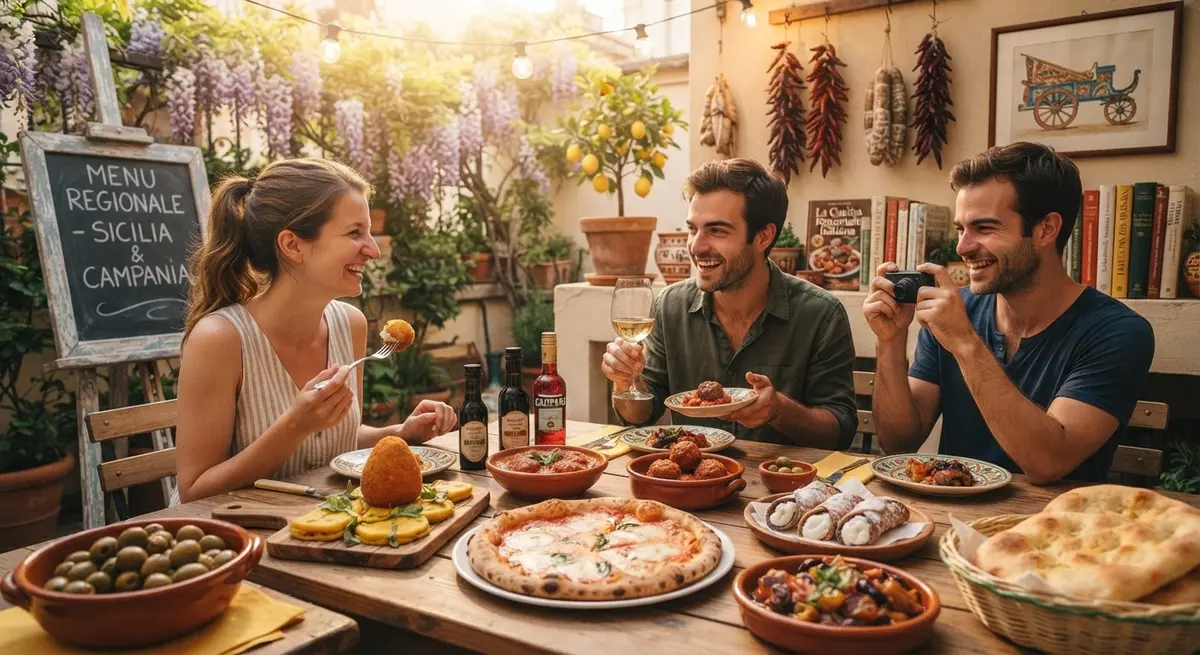
How to Host a Regional Food Night: A Culinary Trip to Italy
Bring Tuscany or Sicily to your dining room. Here is how to host a regional Italian food night with a real menu, course order, and sourcing.
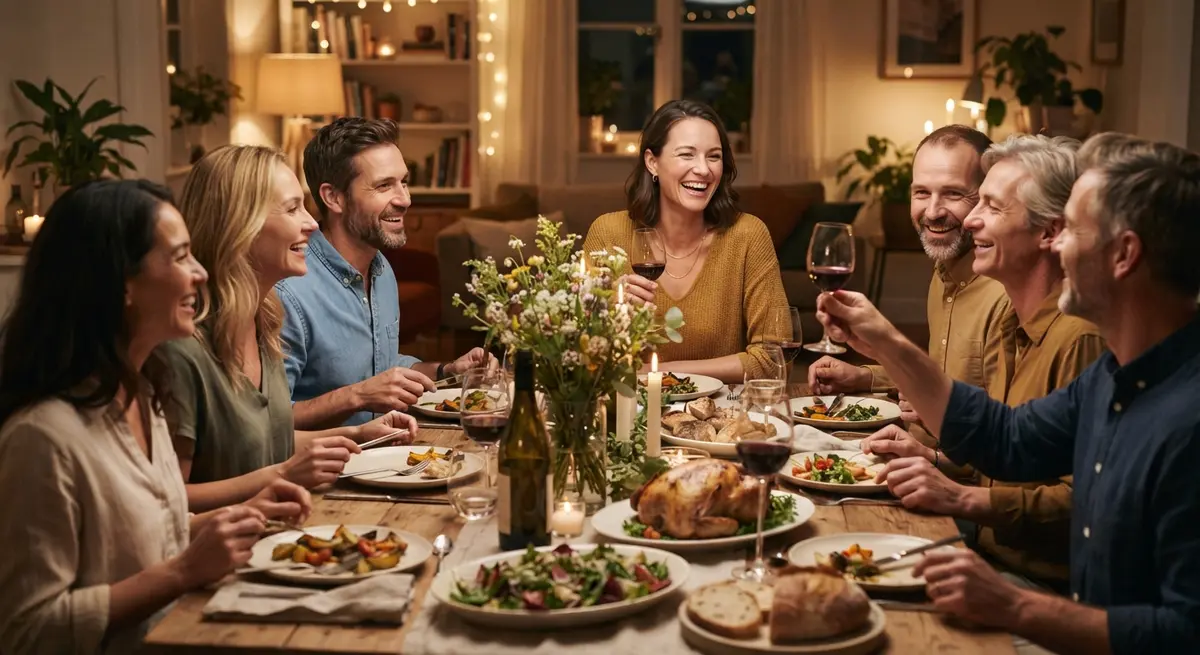
How to Host a Stress-Free Dinner Party from Start to Finish
Stress is not a sign of dedication as a host — it's a sign your plan needs fixing. Here's the complete system.
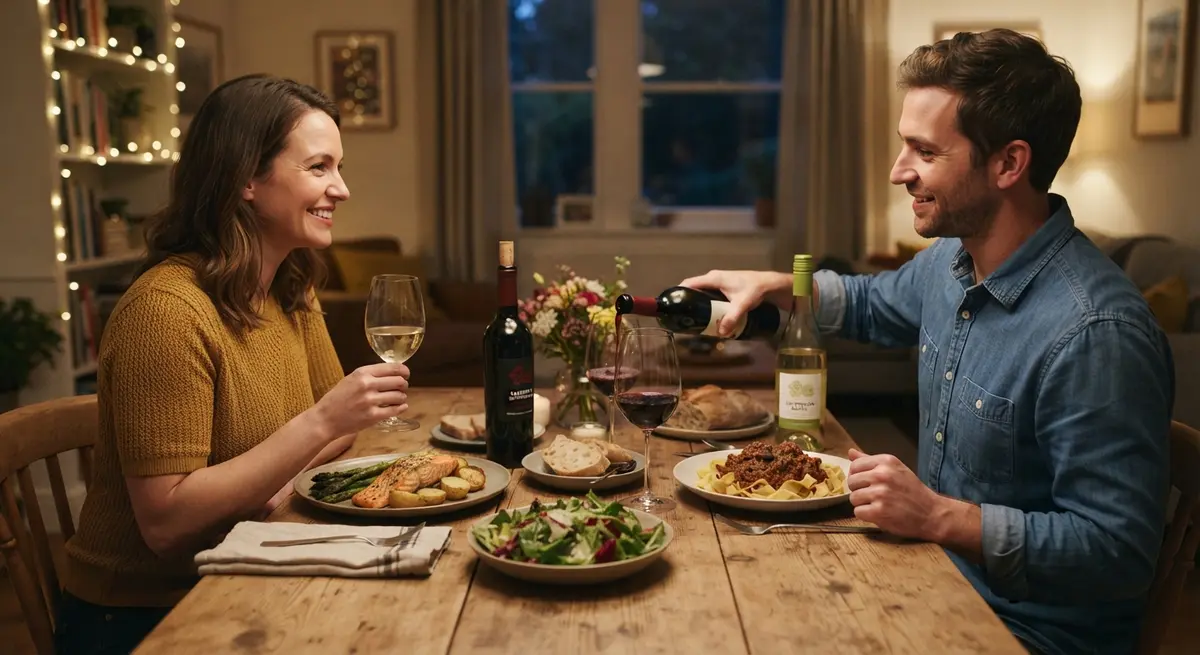
How to Pair Wine with Dinner When You're Not a Sommelier
Wine pairing isn't rocket science. Learn the three simple matches that work for home dinners.
The Art of Tablescaping for Holiday Gatherings
Tablescaping for the holidays, demystified. Learn the layers, the centerpiece rules, and the budget techniques that make any table shine.
About the Authors
This recipe and guide was developed, tested, and approved in our home kitchen and daily life. Jamy is a retired Food Service District Manager and Early Childhood Program Manager who spent his career overseeing multi-site restaurant operations, large-scale culinary production, and daycare menu management. Kaïna brings the ultimate real-world test: making sure it brings ease and joy to our kids on a busy weeknight.
Read more about our professional background and philosophy →