The Art of Tablescaping for Holiday Gatherings
By the QuiteRecipes team (Jamy & Kaïna)
Tablescaping for the holidays, demystified. Learn the layers, the centerpiece rules, and the budget techniques that make any table shine.
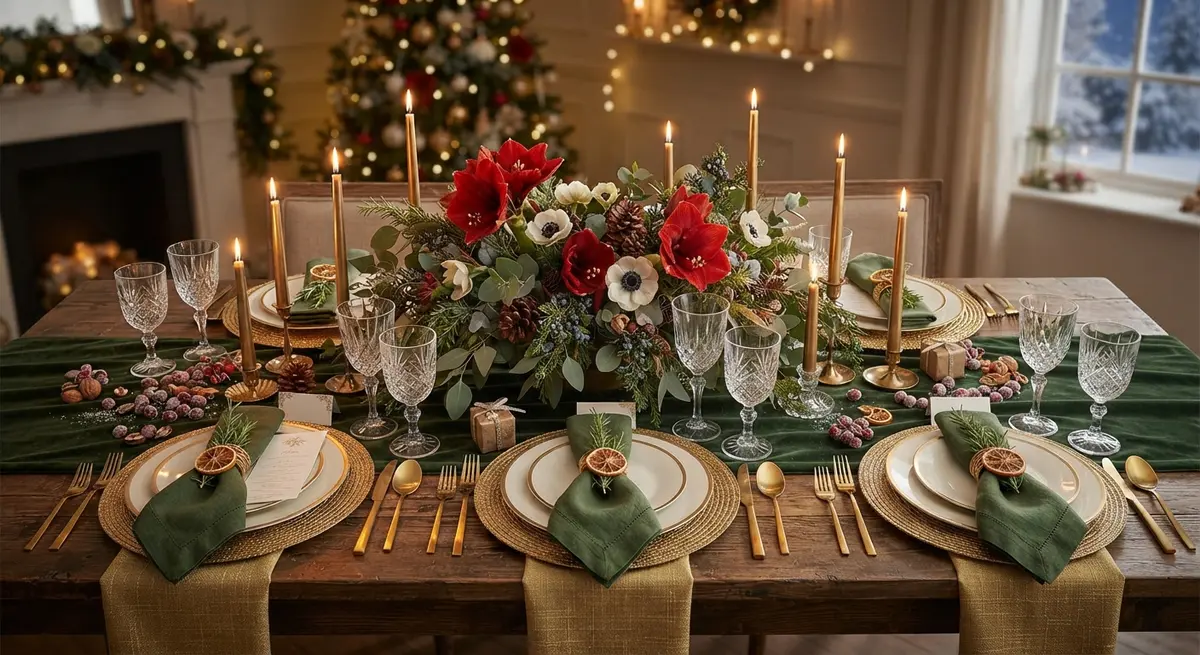
I once spent a full three hours obsessing over a single Thanksgiving centerpiece, arranging and rearranging nine gourds, a burlap runner, and a bushel of dried leaves into approximately forty-seven formations, until my sister, arriving early, stood in the doorway and said, "It looks... like you bought the fall aisle." The real wake-up call came at dinner: we were so busy bumping around the centerpiece trying to reach the stuffing that one guest nearly sent the whole arrangement skyward with a gravy boat. The table looked like a magazine, and it made the meal worse.
The truth about tablescaping is that it's not about creating a magazine spread; it's about making the meal easier for everyone, including yourself. A great holiday table is quietly effective hospitality: it signals celebration, frames the food, and gets out of the way. Every element has a job, and the ones that don't move or go. Once I understood that, tablescaping stopped being a source of three-hour anxiety and became one of my favorite parts of hosting, a ritual that costs about twenty-five dollars in materials and forty minutes of joy.
This guide is the system I use now, refined across a decade of holiday tables: the layers of a proper place setting in an order that never overwhelms, the centerpiece formula that keeps conversation flowing, how to light and scent the table, the realistic budget, and the mistakes that turn a pretty table into an annoying one.
Start with the Layers: The Geometry of a Setting
Every successful holiday table starts with a clear geometry. Think in layers from the bottom up: the base cloth, the runner or charger, the plate, the flatware, and the glass. Each layer has a reason, and if you can name it, the table stops being mysterious. I build the setting in an order that feels like dressing a person: base layer first, then the structure, then the details.
The base layer is the tablecloth or runner: a neutral linen or a dark tone that makes the plates and candles pop. Then the charger, a slightly larger plate under the service plate that adds height and frames the setting. If you don't own chargers, a pasta bowl or a salad plate in a wood tone does the same job for free.
The place setting itself follows a rule almost everyone knows but few execute consistently:
- Forks on the left, knives and spoons on the right, with the knife blade facing the plate.
- Glassware sits above the knife, and the napkin goes to the left of the forks or folded on the plate.
- For multiple courses, work from the outside in, so guests take the outer fork first.
Once it's a habit, the whole table lays itself in under five minutes.
The Centerpiece Formula: Low, Edible, and Out of the Way
The centerpiece is where most holiday tables either soar or sabotage, and the formula I use now is shockingly simple: low, edible, and clear of the sightlines. Keep the tallest element at roughly twelve inches or lower, or place a single taller vertical accent at the very ends where nobody reaches. The height rule is the hill I'll die on, because guests need to see and safely reach across the table without a game of bumper cars with the gravy boat.
The second word is edible, the trick that makes holiday tables feel abundant without costing a fortune. Instead of a florist arrangement, build the centerpiece from the season itself:
- A wooden bowl of apples and pears, a dish of clementines and cinnamon sticks.
- A bundle of dried wheat tied with twine, or a stack of pumpkins and gourds guests take home as favors.
- Everyone touches them, no one worries about a wilted rose, and the table smells faintly of fruit and spice all evening.
The third word, out of the way, is the discipline. Leave a clear corridor running down the center wide enough for dishes to travel, and keep the candles and tall accents at the ends. My rule of thumb: if I can't reach the salt from my seat without the centerpiece interfering, it's too big.
Place Setting Rules People Actually Notice
The rules of a place setting exist to make guests comfortable, and a few are worth knowing cold. The fork on the left, knife and spoon on the right with the blade toward the plate, is the anchor; guests notice when it's right even if they can't say why. The water glass goes above the knife, and if you're serving wine, the wine glasses sit to the right of the water glass, slightly angled.
The napkin is the element that carries the most personality, and I stopped folding origami long ago. The modern approach is a simple envelope fold laid to the left of the forks, or a loose roll slipped through a ring. If you want a detail guests notice, add a small individual touch at each setting: a sprig of rosemary with a name card, a cinnamon stick tucked into the napkin ring, a name tag on a mini clothespin. That's the element people photograph and remember.
Two practical rules are the ones most people get wrong. First, match the style, not the formality: a rustic holiday meal looks better with a linen napkin and a wooden place tag than with formal silver. Second, always set the table before guests arrive, fully and completely, down to the salt and pepper, so the first arrival is a moment of calm rather than a search for the salad fork.
Light, Scent, and the Small Elements That Make It Shine
The physical layers are only half the art; the other half is the atmosphere, and it's cheaper than you think. Overhead dining light is harsh, so rely on candlesticks at the ends of the table and a low, warm dimmable source elsewhere, set to about sixty percent. Candles at table height are the classic move: they light faces kindly and signal that this is a special evening.
Scent belongs in the room, not on the table. I learned this after a tablescaping tangent involving scented hyacinths that made the whole turkey dinner taste like a floral shop. My rule now is that the table's scent comes from the food and from subtle natural elements: cinnamon sticks in the centerpiece, a faintly spiced candle burning well away from the plates. If the centerpiece competes with the aroma of the roast, it's too scented. Let the food be the fragrance.
The small elements are where a table goes from correct to memorable: a single folded note at each place setting, a tiny favor of honey or a cookie wrapped in twine, a hand-written menu card. Each costs five dollars or less, and they're the ones guests carry home in their heads long after the table is cleared.
Set the spoon rest, the butter dish, and the salt cellar within reach of both ends of the table before anyone arrives. Guests feel masterfully hosted without knowing exactly why.
The Realistic Budget, and What to Skip Buying
Terrifying tablescaping budgets exist, but a holiday table's cost is mostly a matter of what you already own. My honest average is about twenty-five dollars per gathering: a small bunch of seasonal greenery, a few candles, a bundle of cinnamon sticks, and whatever edible fruit the centerpiece needs. The expensive pieces, the chargers, the linens, the candlesticks, come from the house and the decades of holidays that have already lived there.
If you're building a table from scratch, thrift stores are the secret weapon, and I've assembled nearly all my tableware from them. Matching isn't the goal; a set of six mismatched vintage plates in a coherent palette reads as intentional charm rather than a shortage. The only place I've ever splurged is cloth napkins, because they're used every single holiday, and a good set of twelve linen napkins costs about thirty-five dollars and lasts for years.
There are also things I've learned to skip entirely. I never buy faux or plastic "silk" centerpieces, because they collect dust and photograph badly. I skip themed paper plates and napkins, because they read as party-store clutter next to real food. And I skip expensive designer candles, because an inexpensive unscented pillar from the grocery store burns just as warmly through dinner.
The Mistakes That Make a Pretty Table Uncomfortable
Every tablescaping failure I've had traces back to one of three mistakes. The first is the oversized centerpiece, which silently hijacks the entire meal: guests can't see each other, can't reach the food, and the table becomes an obstacle course. The fix is ruthless: keep everything under twelve inches tall in the middle and put tall elements at the ends.
The second is over-arranging. A table that takes three hours to build and can't handle a spilled glass is working against the evening. The fix is the forty-minute budget: set the whole table in forty minutes, accept the imperfection, and spend the rest of your energy greeting people. My best tables have always been the ones set at speed.
The third is ignoring the meal's traffic pattern. If you're serving family-style, the center needs to hold platters, which means the centerpiece shrinks further; if you're plating in the kitchen, the table can be denser. Whatever the food needs, the table yields to, because the food is the event and the tablescaping is the frame.
FAQ
What's the basic rule for a proper place setting?
Forks on the left; knife and spoon on the right with the blade facing the plate; glassware above the knife. Work from the outside in for multiple courses. The napkin sits to the left of the forks or on the plate. These rules exist for guest comfort, and getting them subtly right is the whole game.
How tall should a holiday centerpiece be?
Keep the center arrangement under about twelve inches so guests can see and reach across the table. Put taller accents like candlesticks at the ends. If you serve family-style with platters in the center, shrink the centerpiece further so the food has room to travel.
How much does a holiday tablescape cost?
A beautiful table can be built for about twenty-five dollars using seasonal greenery, candles, cinnamon sticks, and edible fruit, plus what you already own. Thrift stores supply chargers, plates, and candlesticks inexpensively, and the one worthwhile splurge is a good set of cloth napkins that lasts for years.
Do I need matching dinnerware for tablescaping?
No. A coherent palette of mismatched vintage plates reads as intentional charm. Choose a unifying color story, then mix heights and patterns freely. Cohesion comes from the palette and the details, not from a matching boxed set.
Key Takeaways
- Build the setting in layers from the cloth up, and work flatware from the outside in.
- Keep centerpieces low, edible, and out of the way so food and conversation travel freely.
- Forks left, knife and spoon right with the blade inward, glassware above the knife.
- Light with candles at the ends and warm light elsewhere at about sixty percent.
- Keep scent subtle and natural, and let the roasting food be the fragrance.
- Budget about twenty-five dollars, splurge on napkins, and thrift the rest.
A Final Word
The three-hour centerpiece saga that ended in my sister's diagnosis of "you bought the fall aisle" feels, in hindsight, like the exact pivot point of everything I now believe about tablescaping. The secret is not ornament; it's order. A holiday table works when it holds the meal gently and lets the people be the point, when the candles are low, the fruit is edible, the salt is reachable, and the host has spent her energy on welcome rather than arrangement. Now I set my tables in forty relaxed minutes, using bowls of apples, a bundle of wheat, mismatched plates that hold a story, and candles lit twenty minutes before the first knock. The guests always notice, in the best possible way, that nothing is in anyone's way. That's the whole art, and it's the most generous holiday gift you'll ever put on a table.
Published on 2026-08-13 by the QuiteRecipes team (Jamy & Kaïna).
Related Articles
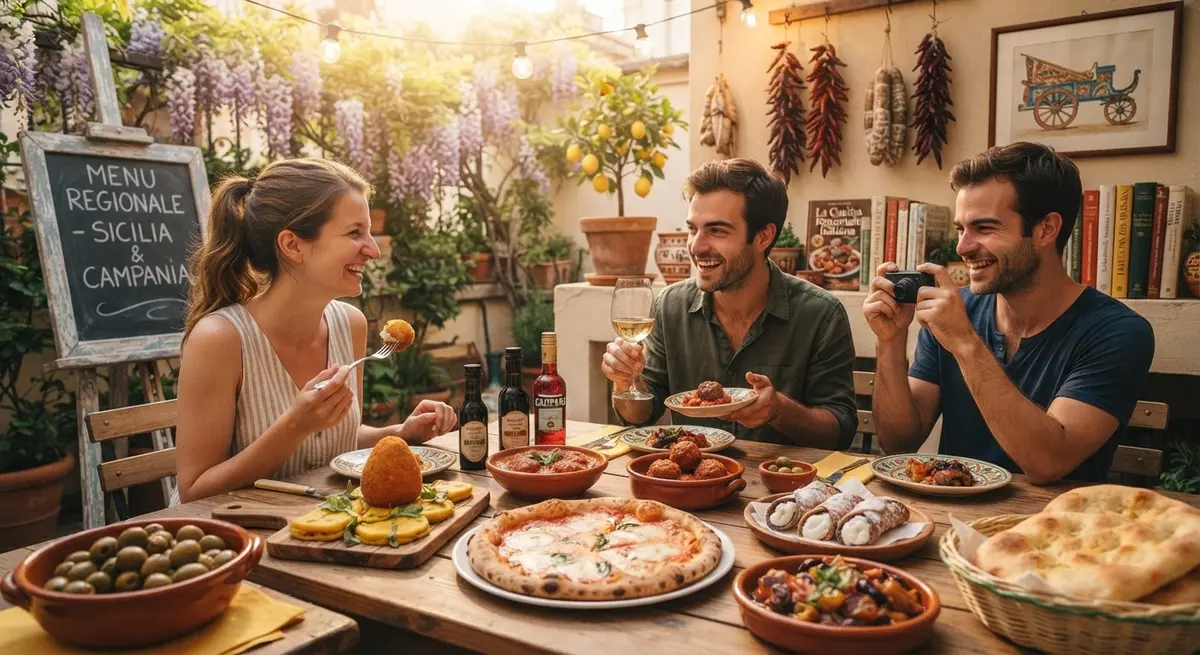
How to Host a Regional Food Night: A Culinary Trip to Italy
Bring Tuscany or Sicily to your dining room. Here is how to host a regional Italian food night with a real menu, course order, and sourcing.
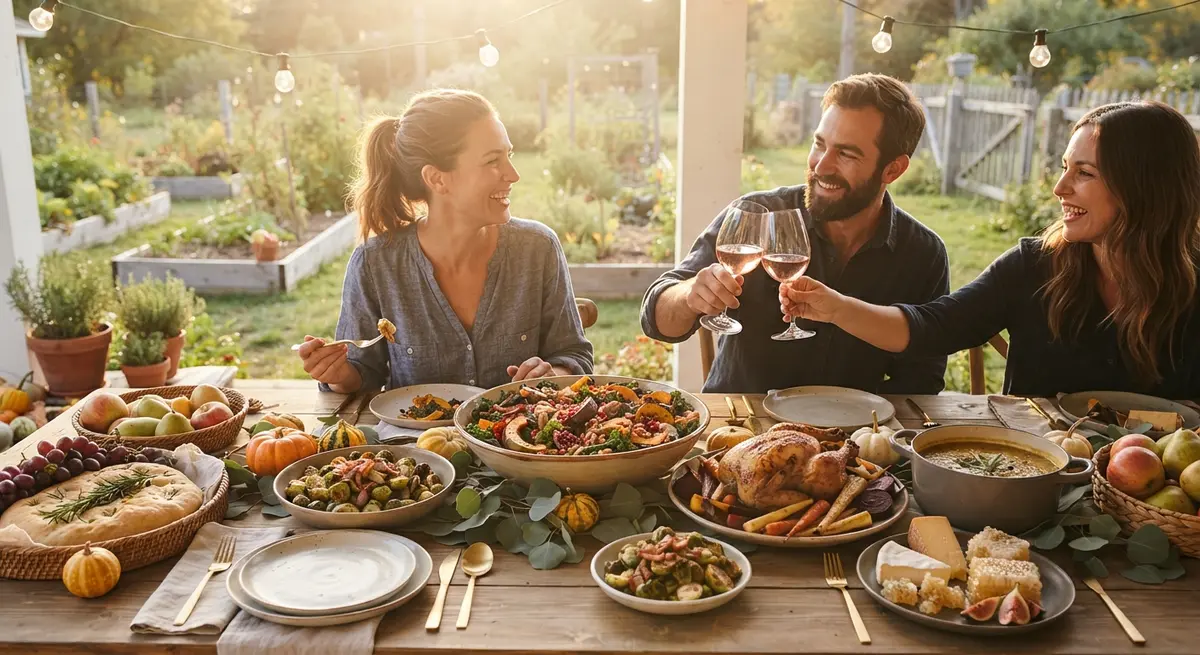
How to Host a Seasonal Harvest Dinner with Local Produce
Host a memorable seasonal harvest dinner with local produce. Plan your menu, shop the farm stand, and cook with autumn's best for under $60.
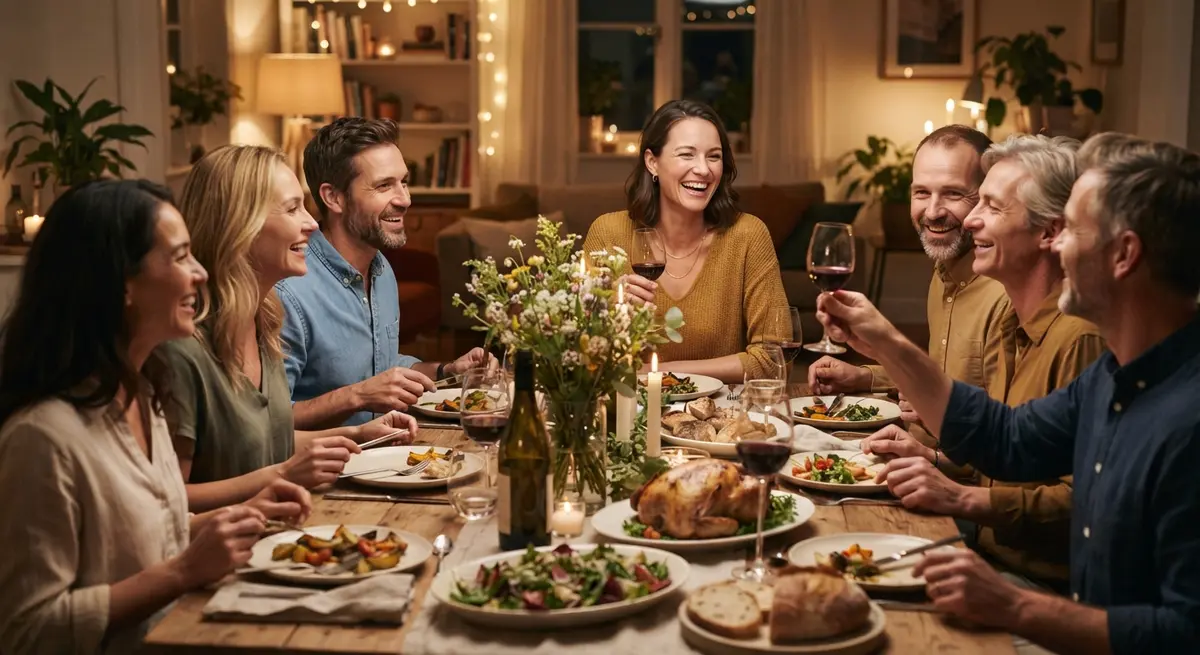
How to Host a Stress-Free Dinner Party from Start to Finish
Stress is not a sign of dedication as a host — it's a sign your plan needs fixing. Here's the complete system.
How to Pair Wine with Dinner When You're Not a Sommelier
Wine pairing isn't rocket science. Learn the three simple matches that work for home dinners.
About the Authors
This recipe and guide was developed, tested, and approved in our home kitchen and daily life. Jamy is a retired Food Service District Manager and Early Childhood Program Manager who spent his career overseeing multi-site restaurant operations, large-scale culinary production, and daycare menu management. Kaïna brings the ultimate real-world test: making sure it brings ease and joy to our kids on a busy weeknight.
Read more about our professional background and philosophy →