How to Host a Stress-Free Dinner Party from Start to Finish
By the QuiteRecipes team (Jamy & Kaïna)
Stress is not a sign of dedication as a host — it's a sign your plan needs fixing. Here's the complete system.

I once spent my entire dinner party trapped in the kitchen, sweating over a pork shoulder that refused to shred while my guests ate the bread I'd put out to tide them over. The main course finally landed at 9:30 p.m., the conversation had flatlined, and by dessert I had silently sworn off hosting forever. That was five years and about thirty dinners ago — and today I'm the friend who insists hosting is the easiest part of my week. My cooking didn't improve. My planning did.
A stress-free dinner party isn't about talent, expensive cookware, or elaborate plating. It's about working backward from the moment the doorbell rings and deciding, in advance, how little can go wrong between now and then. Hosts who look effortless aren't performing magic; they've simply made a dozen small decisions before their guests ever woke up.
Here's the complete system I've refined over those thirty dinners: the guest math most hosts get wrong, a menu built for make-ahead cooking, a night-before checklist, and the single rule that keeps me at the table instead of the stove. Steal it wholesale, adjust the numbers, and you'll end your next party with a fork in one hand and a wine glass in the other.
Do the Guest Math Before You Open a Cookbook
The first decision is never the menu — it's the headcount, and it's where most hosts stumble before they've opened a single recipe.
- Invite one person fewer than your table comfortably seats; a loose table reads relaxed, while a packed one turns you into a permanent napkin-fetcher.
- Budget $12–$15 per head for a casual one-pot dinner, or $20–$28 for a seated three-course evening.
- Plan 1.5 servings of the main course per guest, because somebody always goes back for the thing that took three hours to make.
Build a Menu That's 90 Percent Make-Ahead
Choose dishes where almost everything happens in the 48 hours before guests arrive, and the night itself becomes assembly.
- Braises, stews, and ragu-style mains taste better overnight and reheat in minutes.
- A sheet pan of root vegetables roasts unattended in one tray while you say hello at the door.
- Set custards, tarts, and chilled desserts live happily in the fridge until the sweet moment arrives.
- Anything with a precise timing window — soufflés, delicate fish — is a trap for a first-time host.
Pro tip: Cap every menu at one brand-new recipe. If the other dishes are familiar, tested ground, you'll spend the night talking instead of reading recipe notes.
Set the Table and Chill the Drinks the Night Before
Everything that doesn't need heat belongs to the night before, and it's the closest thing hosting has to cheating.
- Place glasses, plates, and cloth napkins so you're not rummaging for the bottle opener at 7:15.
- Chill the white wine right after dinner so it's pour-ready the second someone walks in.
- Fill the salt cellar and put a large water pitcher on the table, not in the kitchen.
Use a First 30 Minutes Host Script
The arrival window is where hosts unravel. Give yourself a short script instead of improvising.
- Greet guests at the door with a drink already in your hand — it cues everyone to relax immediately.
- Pour the first glass before anyone rings, so the welcome takes ten seconds flat.
- Keep appetizers on the coffee table, never in the kitchen, so nobody drifts into your staging area.
- When someone offers to bring something, say "a loaf of good bread" or "two bottles of something you like." Contributing makes guests genuinely happier.
- Set up a self-serve drinks spot to save yourself a dozen small interruptions every night.
After the Main Course, Just Be a Guest
Once the food hits the table, your job officially changes: you stop being a chef and start being a host.
- Serve family-style from big platters so the table feeds itself.
- If a dish flops, laugh and call it "the experiment" — nobody starved, and nobody is grading you.
- Eat with everyone, then leave the dishes for tomorrow morning; the golden hour of post-dinner conversation is worth more than a clean sink.
Pro tip: Keep one hidden "reserve" bottle of wine in the fridge. It has saved more dinners than any pairing rule I know.
FAQ
How far in advance should I send dinner invitations?
Two to three weeks is ideal, and one week works only for very casual nights. Text invitations are perfectly acceptable for mid-size dinners; guests appreciate a concrete heads-up far more than a pretty card.
How many courses should a dinner party have?
Three — starter, main, dessert — is the sweet spot for a seated dinner. Four works only if two courses are cold and pre-plated, and a single generous main with a salad and dessert reads as elegant, never as lazy.
What should I do if I run out of food?
Keep one "insurer" dish in the wings: a big loaf of bread, a bowl of dressed pasta, or a platter of extra roasted vegetables. Pulling out a backup at the right moment makes you look prepared, not panicked.
How much wine should I buy for six guests?
Plan roughly half a bottle per person for a three-course dinner, which means three bottles for six guests, and keep a fourth hidden as your reserve. You'll likely open the reserve at dessert or cheese — and be glad it's there.
How do I know when the party should end?
Serve dessert when conversation naturally dips, put the kettle on about ninety minutes after the last plate, and close warmly with "that was wonderful" rather than announcing a curfew. Most guests take the signal within minutes.
Key Takeaways
- Work backward from a set "food on the table" time, not from the dish you most want to impress with.
- Cap every menu at one new recipe and let braises, sheet-pan sides, and chilled desserts carry the load.
- Do all non-cooking prep — table, glasses, chilled wine — the night before the party.
- Write a first-thirty-minutes script: greet at the door, pour early, and keep appetizers out of the kitchen.
- Accept specific contributions, like bread or wine, instead of politely deflecting every offer.
- Once the main course lands, your job is to be a guest; leave the dishes for tomorrow.
A Final Word
The point of a dinner party is connection, and connection happens when you're sitting at the table with your glass half full — not hovering over a stove. Give yourself permission to cook less, plan more, and trust that your friends would rather eat with a relaxed you than be served by a stressed one. Do that, and the stress evaporates right around the time the second bottle opens.
Published on 2026-08-13 by the QuiteRecipes team (Jamy & Kaïna).
Related Articles
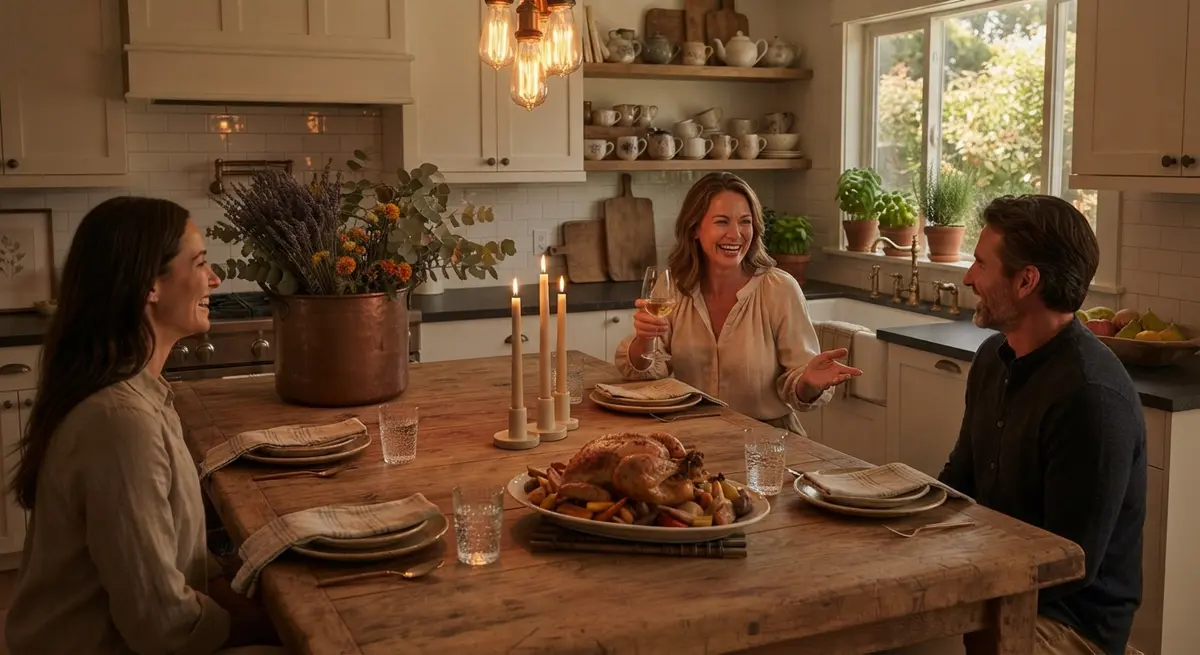
5 Simple Ways to Be a More Gracious and Relaxed Dinner Host
Gracious hosting isn't about fancy food. It's five repeatable habits that calm the room — and you.

How to Host a Regional Food Night: A Culinary Trip to Italy
Bring Tuscany or Sicily to your dining room. Here is how to host a regional Italian food night with a real menu, course order, and sourcing.

How to Host a Seasonal Harvest Dinner with Local Produce
Host a memorable seasonal harvest dinner with local produce. Plan your menu, shop the farm stand, and cook with autumn's best for under $60.
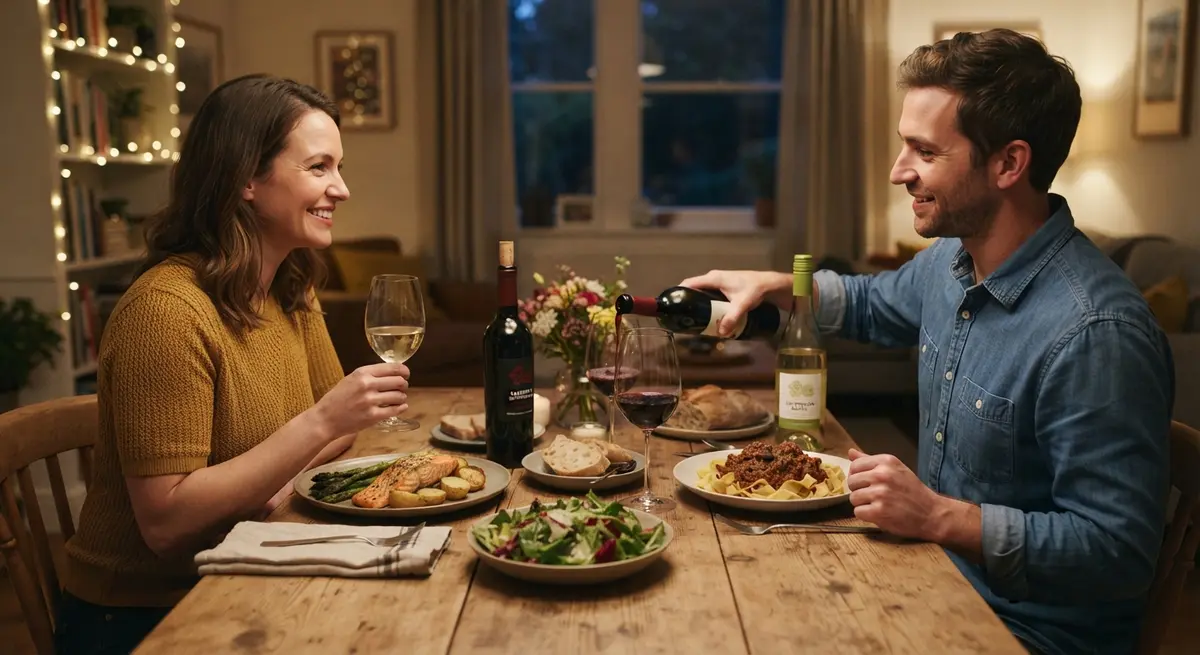
How to Pair Wine with Dinner When You're Not a Sommelier
Wine pairing isn't rocket science. Learn the three simple matches that work for home dinners.
About the Authors
This recipe and guide was developed, tested, and approved in our home kitchen and daily life. Jamy is a retired Food Service District Manager and Early Childhood Program Manager who spent his career overseeing multi-site restaurant operations, large-scale culinary production, and daycare menu management. Kaïna brings the ultimate real-world test: making sure it brings ease and joy to our kids on a busy weeknight.
Read more about our professional background and philosophy →