Road Trip Snacks: Healthy and Satisfying Options for Long Drives
By the QuiteRecipes team (Jamy & Kaïna)
Forget gas-station despair. Here is the four-pillar snack formula, ten make-ahead road trip snacks, and a cooler that survives a 14-hour drive.
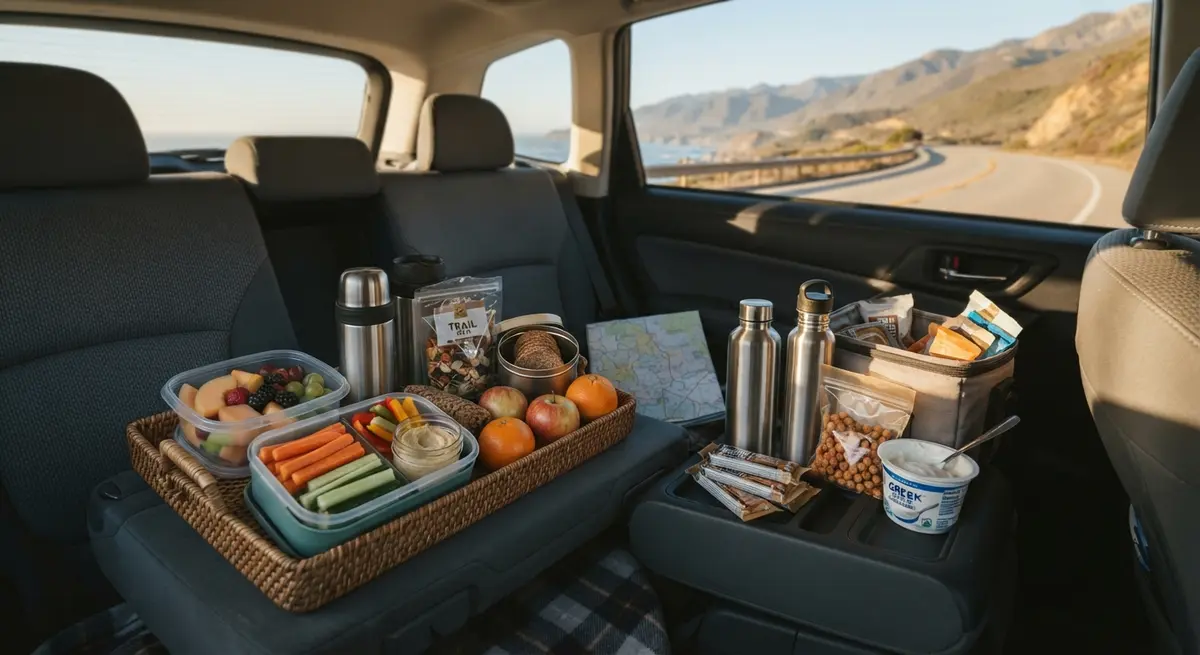
The last time I drove 14 hours straight, I planned the snacks with the seriousness of a mission launch — and it was born of pure, repeated failure. Before that, I knew the road routine too well: the gas station at mile 300, the regretted bag of something aggressively salted, the sugar spike followed by the mid-afternoon eyelid drop while semis blurred past. I once ate a pre-packaged burger that was somehow both overkept and undercooked, and I have not been the same person since.
So I rebuilt it. I spent an evening packing a cooler with deliberate architecture: a protein layer, a crunch layer, a sweet layer, and a hydration layer, each with its own job. Somewhere around hour nine, with the radio recycling the same three songs, I realized everyone in the car was still cheerful and alert, and nobody had once asked whether the next rest area had a drive-through. That's when the road snack stopped being a garnish and became the actual meal of the trip.
Here's the system that got me there — the four pillars, the make-ahead ideas, and the cooler logic that keeps it all fresh past the point your patience drops.
Why Snack Choices Matter
Road snacks are the fuel for your most dangerous hours of driving. Chips and candy spike your blood sugar, then dump it an hour later — right on a long, boring, hypnotic stretch. The classic road-driver nap attack isn't tiredness alone; it's lunch. Gas station fare is engineered to taste extreme so it's addictive, and the salty-sweet cycle keeps hand-to-mouth motion going long after you're full. Dehydration alone measurably drops alertness, and your body can't tell the difference between needs water and needs a nap. The cost of a good system is about an hour of prep; the benefit is that every drive becomes manageable.
The Four-Pillar Formula
Instead of "buy snacks," build plates from four pillars:
- Protein — hard-boiled eggs, roasted chickpeas, turkey or plant-based jerky, hummus, cheese sticks. Protein keeps you full and stable for hours.
- Fiber and crunch — carrot and cucumber sticks, snap peas, bell pepper slices, real popcorn, roasted nuts. Crunch is satisfaction; fiber is fullness.
- Small sweet — an apple, a banana, a few dates, a square of dark chocolate, homemade energy bites. Portion-controlled pleasure without the dump.
- Hydration — water bottles, cold tea, electrolyte sachets for heat or very long days. Caffeine is a tool, not a water substitute.
The magic is the ratio: roughly one protein, one crunchy-savory, one small sweet, and generous water per hour-plus of driving. When the sugar sags, grab protein first, not sugar.
Pro tip: Pre-portion everything at home in small containers or bags. A snack that's already measured is a snack that's already balanced; a family-size bag is the enemy of the whole drive.
Ten Make-Ahead Snacks That Earn Their Seat
These hold up for 10+ hours in a cooler or pantry bag and beat anything at a rest stop:
- Hard-boiled eggs with everything seasoning — hours of stability for minutes of effort.
- Trail mix in your own ratio — almonds, pepitas, dried cherries, a few dark chips.
- Roasted chickpeas — the chip replacement that actually satisfies.
- Veggie sticks with hummus in small cups, so nothing gets soggy.
- Homemade energy bites — oats, nut butter, honey, dried fruit, no bake.
- Cheese and apple pairs — aged cheddar with a crisp apple stays great in a cooler.
- Air-popped or lightly oiled popcorn in portions.
- Low-sodium turkey or plant-based jerky, cut into pieces.
- Greek yogurt cups with a small portion of granola.
- Roasted or raw nuts in small bags — in-shell pistachios if you want a snack that takes twice as long.
Each hits at least two pillars, so you can mix without ever building a sugar-only hour.
The Cooler That Lasts 14 Hours
A well-packed cooler is a travel appliance. Two hard truths: every cube of air is melted ice, and the cooler stays cold because of cold mass, not insulation. So pack it almost full with cold items — a 90 percent full cooler far outperforms a half-full one at the same ice load. Put ice at the bottom, dairy and proteins closest to it, produce above, and drinks at the top where they're grabbed without letting out all the cold. Keep a separate small bag for drinks so the milk and eggs never share a shelf with ambient-temperature pop-top openings. Pre-chill everything before departure, and use large block ice or frozen water bottles, which melt slower and double as drinks.
Pro tip: Keep the sweet pillar away from the eggs' shelf — no one wants a chocolate square that tastes like the egg it shared space with.
The Break Plan
Snacks work best on a schedule. Plan one break every two to three hours for circulation and alertness — sit, chew, hydrate, and walk ten minutes. Portion by the hour: roughly one protein, one crunchy-savory, and one small sweet per two hours, with water after each break. Time caffeinated drinks for when you need them, not the whole trip, and skip sugar bombs before the lonely stretches — a quick power nap at a rest stop beats white-knuckling through a crash. And carry a small rescue kit: a bag of nuts, a protein bar, an apple, and the water bottle that actually stays in the cup holder, so a detour never turns into a junk-food surrender.
FAQ
How much should I pack for a long drive?
Plan one protein, one crunchy-savory, and one small sweet per two hours of driving, plus water at every break. For a 6-hour drive with two people, that's about six to eight packaged items — less than you fear and more than you'll miss.
What are the best non-perishable road trip snacks?
Roasted chickpeas, nuts, jerky, air-popped popcorn, oat-based energy bites, and trail mix all hold for the full drive without a cooler and cover the protein and crunch pillars.
How do I keep dips and dairy cold for 14 hours?
Pre-chill everything, pack the cooler at least 90 percent full, keep dairy and proteins closest to the ice, and use a separate drinks bag. Large block ice or frozen water bottles melt slower than cubes.
Can I still have coffee and sweets on the road?
Absolutely — as tools, not as the whole system. Time caffeine for your alertness windows and skip the sugar bombs before long stretches. A square of dark chocolate in balance is a pleasure, not a problem.
Key Takeaways
- Road snacks are fuel, not garnish; the sugar crash behind the wheel is a chemistry problem the right snacks prevent.
- Build every snack from the four pillars: protein, fiber-crunch, small sweet, and hydration.
- Pre-portion at home and pack the ten make-ahead winners that beat any rest-stop option.
- Pack the cooler like an engineer: cold mass, density, layering, and a separate drinks bag.
- Schedule breaks, stretches, and hydration around the snacks, and time caffeine as a tool.
- Keep a rescue kit of nuts, a protein bar, an apple, and accessible water for roadside reality.
A Final Word
Somewhere around hour eleven of that fourteen-hour drive, with the cooler running on its second round of frozen bottles and the sun doing that long streaky thing at the horizon, one of my passengers said the perfect thing: "This is the best road-trip food I've ever had, and I can't remember what we ate." That's the system working — not as a spreadsheet of proteins but as the quiet freedom of never once wondering whether the next rest area could be trusted. Pack the four pillars, pre-portion at home, fill the cooler with cold mass and discipline, and schedule your breaks like small meals. The highway may be monotonous, but your snack plan doesn't have to be.
Published on 2026-08-13 by the QuiteRecipes team (Jamy & Kaïna).
Related Articles
How to Build a Balanced Weekly Meal Plan Without Burnout
Meal planning without burnout: use the flexible 3-2-1 framework, a 20-minute Sunday session, and batch cooking tricks that survive real life.
The Evening Kitchen Reset Habit That Will Change Your Mornings
Reset your kitchen in 20 quiet minutes tonight and wake up to a calmer, faster, more pleasant morning tomorrow. One habit, real change.
5 Simple Ways to Be a More Gracious and Relaxed Dinner Host
Gracious hosting isn't about fancy food. It's five repeatable habits that calm the room — and you.
Bringing Vacation Home: How to Recreate Food Memories in Your Own Space
You can't bring the trip back, but you can bring its flavors. Here is how to turn travel food memories into weeknight meals in your own kitchen.
About the Authors
This recipe and guide was developed, tested, and approved in our home kitchen and daily life. Jamy is a retired Food Service District Manager and Early Childhood Program Manager who spent his career overseeing multi-site restaurant operations, large-scale culinary production, and daycare menu management. Kaïna brings the ultimate real-world test: making sure it brings ease and joy to our kids on a busy weeknight.
Read more about our professional background and philosophy →