How to Build a Balanced Weekly Meal Plan Without Burnout
By the QuiteRecipes team (Jamy & Kaïna)
Meal planning without burnout: use the flexible 3-2-1 framework, a 20-minute Sunday session, and batch cooking tricks that survive real life.
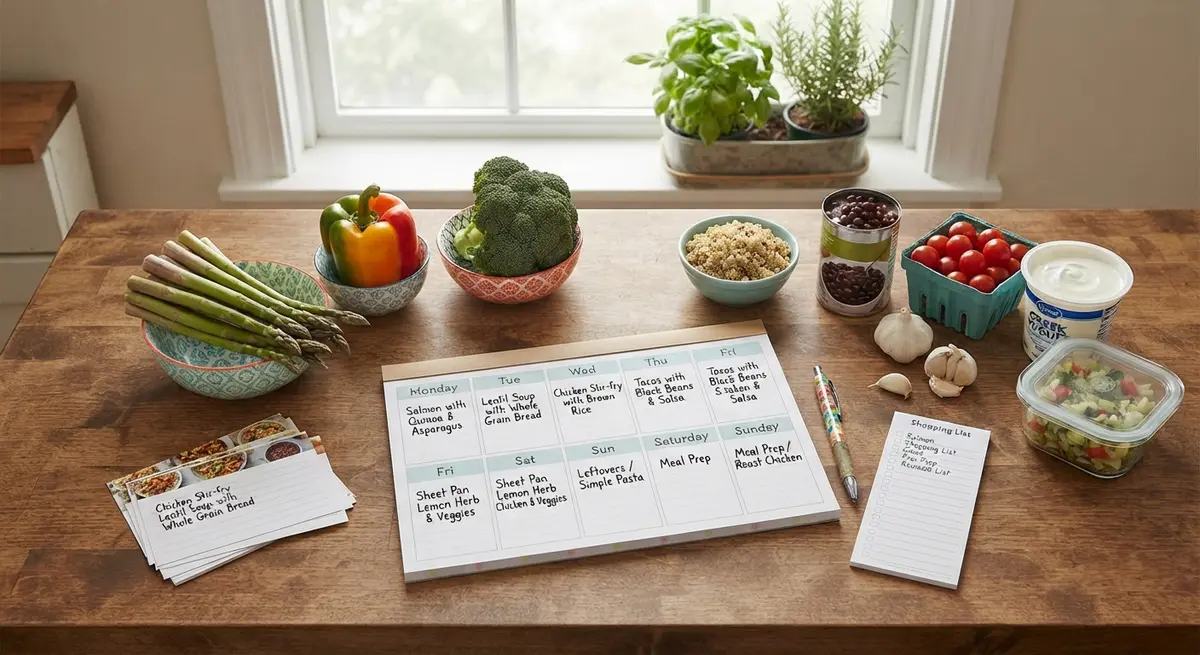
My first serious attempt at weekly meal planning was a masterpiece of organization and a disaster of reality. I spent three hours on a Sunday building a color-coded spreadsheet with seven days of elaborate dinners, cross-referenced nutritional targets, and a shopping list of forty-three items. I bought exactly what the spreadsheet demanded: three types of cheese, two cuts of lamb, tahini for a sauce I'd never made. By Wednesday I had eaten out twice, the lamb was still frozen, and I was staring at nine dollars' worth of wilting kale with the cold realization that my system had never accounted for one tiny variable: on Tuesday nights I don't feel like cooking a seven-layer anything.
Meal planning burnout is almost never a lack of discipline. It's a design flaw. We design plans for a perfect, energetic, fully present version of ourselves, and then the actual version of ourselves shows up tired on a Tuesday and the whole delicate structure collapses. This article is about planning for the real you: flexible enough to survive a bad day, balanced enough to feel genuinely good, and cheap enough in mental energy that it costs less than the chaos it prevents.
One blunt note before the systems: meal planning is not a medical act, and "balanced" doesn't mean a perfect macronutrient spreadsheet that only a pro could decode. If you have diabetes, allergies, digestive conditions, or specific nutrient needs, run your overall eating pattern past a doctor or registered dietitian. What I'm giving you is a flexible, sensible framework that works for most people most of the time — not a prescription.
The 3-2-1 Framework That Leaves Room for Life
Here's the structural fix that changed everything for me. Instead of planning seven nights of from-scratch cooking, plan the week with a repeating rhythm that expects some nights to be easy. I call it 3-2-1:
- 3 cooked dinners: These are your "real" meals, and you plan them for the nights you're most likely to have time and energy. For most households that's Sunday, Wednesday, and Friday.
- 2 assembly or pantry dinners: These need about fifteen minutes and no special trips. Think grain bowls with whatever's in the fridge, loaded canned beans over rice, tortilla wraps with rotisserie chicken, pasta with frozen peas and a jar of good sauce.
- 1 leftover or freezer night: Eat the surplus from earlier in the week, or the frozen pizza/pasta that's been waiting. This night costs you literally zero decisions.
- And 1 wild card: The non-negotiable reality evening — the takeout, the dinner at grandma's, the leftover you didn't count on. Claim it for Sunday, plan nothing, and enjoy it guilt-free.
The brilliance of 3-2-1 is that it builds forgiveness into the design. A plan that assumes every night will be a cooking night is a plan that breaks on Tuesday. A plan that reserves easy nights isn't "giving up"; it's engineering for reality, the same way a marathoner trains with rest days.
The Twenty-Minute Planning Session That Replaces the Spreadsheet
Goodbye, three-hour spreadsheet. Welcome to the twenty-minute check-in, done once a week, ideally Friday or Sunday. Here's the exact flow:
- Minutes 0–5: Check the week. Look at your actual calendar, not your dream calendar. Which dinners have to be fast? Is Thursday the kid's soccer night? Are you hosting anyone? Flag two or three nights that clearly call for the "assembly" tier.
- Minutes 5–10: Pick your three cooked meals from your list. Use a short rotating list of meals you already know you like and can make without looking up a recipe. Twenty favorites is plenty for a month of rotation; you don't need new recipes every week.
- Minutes 10–15: Write the rough shopping list. The secret is ingredient overlap: choose three cooked dinners that share two or three staples. If two meals use bell peppers and one uses garlic and onions, you're buying chilis and aromatics once and spreading them across the week. Check what you already have before you write a single item.
- Minutes 15–20: Assign each night a meal on the calendar. One line per day. Done. If the whole week goes sideways by Tuesday, the framework has two built-in parachutes (assembly nights and the wild card) that catch you.
Pro tip: Keep the plan somewhere visible — a magnetic whiteboard on the fridge, a notes app pinned on your home screen. The plan's job is to end the "what's for dinner?" negotiation at 6 p.m., and it can't do that if it's buried in a drawer or a thirty-tab spreadsheet.
Shopping That Doesn't Waste Money or Food
The single biggest cause of abandoned meal plans is a grocery run that produces a fridge of "ingredients" but nothing to eat. Here are the rules that keep my shopping honest:
- Shop with the skeleton of a plan, not a list of forty items. If you can shop the perimeter (produce, proteins, dairy) with a short center-aisle list for pantry staples, you'll buy less junk and more actual meals.
- Stock the "always shelf." Keep rice, pasta, canned beans, lentils, tomatoes, chicken stock, eggs, and frozen vegetables on hand at all times. These are the raw material for assembly nights and shock absorbers for the week.
- Buy produce that ripens on different timers. Bananas and avocados for early in the week, heartier storage veg like cabbage and carrots that last to Friday. It's a small trick that prevents the wilted-kale Wednesday phenomenon.
- Buy the rotisserie chicken. The one that costs eight or nine dollars and feeds two meals is one of the cheapest convenience foods ever invented. Shred it for Tuesday's wrap and Wednesday's soup.
- Remember the "cook once, eat twice" move. When you make rice, make double and freeze half. When you roast a tray of vegetables, make two trays and stash one. These micro-batches become the surprise asset on a busy Thursday.
One more honest tip: plan for the portion sizes your household actually eats, not the ones from a recipe card meant for a family of six. Leftovers you'll eat are a blessing; leftovers you'll compost are a waste. Cook for tomorrow's lunch, not for next year's apocalypse.
Batch Cooking That Fits a Normal Schedule
Batch cooking doesn't have to mean a six-hour Sunday sweat session. The version that survives real life is smaller, and it's usually one of these three:
- The Big Pot: One Sunday roast-style dish that yields four to six servings — a big pot of chili, a sheet pan of chicken and vegetables, a lentil soup. Portion into single containers, and you've bought yourself two or three future easy nights.
- The Component Bake: Spend thirty minutes cooking one versatile element — a pot of quinoa, a tray of roasted sweet potatoes, a bowl of hard-boiled eggs, a batch of hummus. Now every assembly night gets faster because the hard part is already done.
- The Freezer Deposit: Whenever you naturally cook a family-sized recipe, freeze two single portions for the "1 leftover night" bank. Six weeks of this and your freezer is a rotation of instant, home-cooked meals that cost you almost nothing in weekly effort.
Freeze what freezes well: soups, chilis, curries, cooked grains, shredded meat, tomato sauce. Don't bother freezing anything with delicate textures or creamy dairy-based sauces, which split on thaw. Label everything with the date and contents — future-you will not recognize the mystery container from July.
The Mistakes That Undo Well-Intentioned Planners
After a decade of watching (and doing) meal planning, these are the five failure modes I've seen kill more plans than laziness ever did.
Mistake one: planning recipes you've never made. A new recipe novel is a great weekend adventure and a terrible Tuesday commitment. New-to-you dishes go on weekend nights; weeknights belong to meals you've already mastered.
Mistake two: ignoring the side dish. "Chicken with rosemary" isn't a plan. You'll arrive at 6 p.m. with protein and no idea what's next. Write the whole plate: protein, starch, vegetable. It takes ten extra seconds and prevents the last-minute side scramble.
Mistake three: planning for a family size you don't have. Halve or double recipes to match your table, not the cookbook. Mismatched portions turn leftovers into a mathematical burden and a food waste problem.
Mistake four: treating the plan as sacred scripture. Plans are tools, not vows. If Monday becomes pizza night, you haven't failed; you've used your wild card. The plan only breaks people who demand it never bend.
Mistake five: skipping the check-in. The twenty-minute session is the engine of the whole system. Miss two weeks in a row and you're back to 5:45 p.m. panic — which is precisely what the plan was meant to retire.
A Sample Week, For the Skeptics
Here's a concrete three-2-1 week built on ingredient overlap and realistic energy:
- Sunday (cooked): Sheet-pan chicken thighs with roasted peppers, onions, and potatoes. Make double potatoes for later.
- Monday (assembly): Grain bowls — leftover roasted vegetables, rotisserie chicken, and a vinegary yogurt sauce over rice from the freezer.
- Tuesday (assembly): Black bean and corn tacos with salsa and avocado. Fifteen minutes, zero pre-planning.
- Wednesday (cooked): Big pot of lentil soup with garlic bread, using the aromatics from Sunday.
- Thursday (leftover/freezer): The lentil soup again, or anything lurking in the freezer bank.
- Friday (cooked): Spaghetti with store-bought sauce, frozen peas, and a handful of sautéed mushrooms — classic pantry dinner disguised as something grown-up.
- Saturday (wild card): Takeout, friends' place, or leftovers. No plan, no guilt.
Notice the pattern: three shopping trips' worth of ingredients, one pot that did double duty, and not a single night that demanded more than twenty minutes of active cooking on a workday.
FAQ
How do I actually stick to a meal plan?
Lower the stakes. Design the plan so that even a bad day has a landing zone (that's the assembly tier and the wild card), write it where you'll see it, and keep it to ten to twenty recipes you already know. Consistency doesn't come from more discipline; it comes from fewer ways to fall off.
Can meal planning save me money?
Usually yes, mainly by cutting food waste and impulse purchases. Deciding dinners in advance with an ingredient-overlapping list means you buy what you'll use. As a rough benchmark, a household that stops throwing away a quarter of its groceries can save a noticeable chunk of its weekly food budget — and shrink the "ah, we have nothing to eat" takeout impulse too.
I cook for one. Is this framework overkill?
It adapts beautifully. The 3-2-1 rhythm still works, but your batches get smaller: cook once, eat twice, and bank the rest. Shop for two or three nights at a time rather than seven, and lean hard on the assembly tier. Cooking for one is easier with a plan, not harder.
What if my family refuses the plan?
Involve them in the choosing, not the fixing. Give each person one veto and let them claim one favorite dinner a week. A black bean taco night that the kids picked outperforms a gourmet meal they're sulking through. The plan is yours to manage, but it's everyone's to steer.
How long does the planning session really take?
Once your list of twenty standing meals exists, the whole thing takes fifteen to twenty minutes including the shopping list. The first time is slower as you build your favorites list — budget an hour once, and you may never need to again.
Key Takeaways
- Meal planning fails because of design, not discipline; build forgiveness into the schedule with the 3-2-1 framework.
- Plan three cooked dinners, two assembly meals, one leftover/freezer night, and one wild card.
- Replace the giant spreadsheet with a twenty-minute weekly check-in that reads your real calendar first.
- Shop with ingredient overlap and a stocked "always shelf" so assembly nights always have material.
- Batch with small moves — one big pot, component bakes, freezer deposits — not six-hour Sundays.
- Keep visible, keep it simple, and treat the plan as a tool that bends with real life, never a vow to keep.
A Final Word
The spreadsheet is long gone, and in its place is a fridge whiteboard with seven short lines and a note that says "assembly night" on Tuesday. Some weeks are masterpieces and some weeks Thursday is pizza; the system survives both, because it was built for a human being with a job, a mood, and a Tuesday. That's what sustainable meal planning really is: not a pristine schedule, but a gentle container for a busy week. Start with one 3-2-1 week — twenty minutes tonight — and see how good Thursday felt when you planned it on Sunday.
Published on 2026-08-13 by the QuiteRecipes team (Jamy & Kaïna).
Related Articles

Road Trip Snacks: Healthy and Satisfying Options for Long Drives
Forget gas-station despair. Here is the four-pillar snack formula, ten make-ahead road trip snacks, and a cooler that survives a 14-hour drive.

The Evening Kitchen Reset Habit That Will Change Your Mornings
Reset your kitchen in 20 quiet minutes tonight and wake up to a calmer, faster, more pleasant morning tomorrow. One habit, real change.
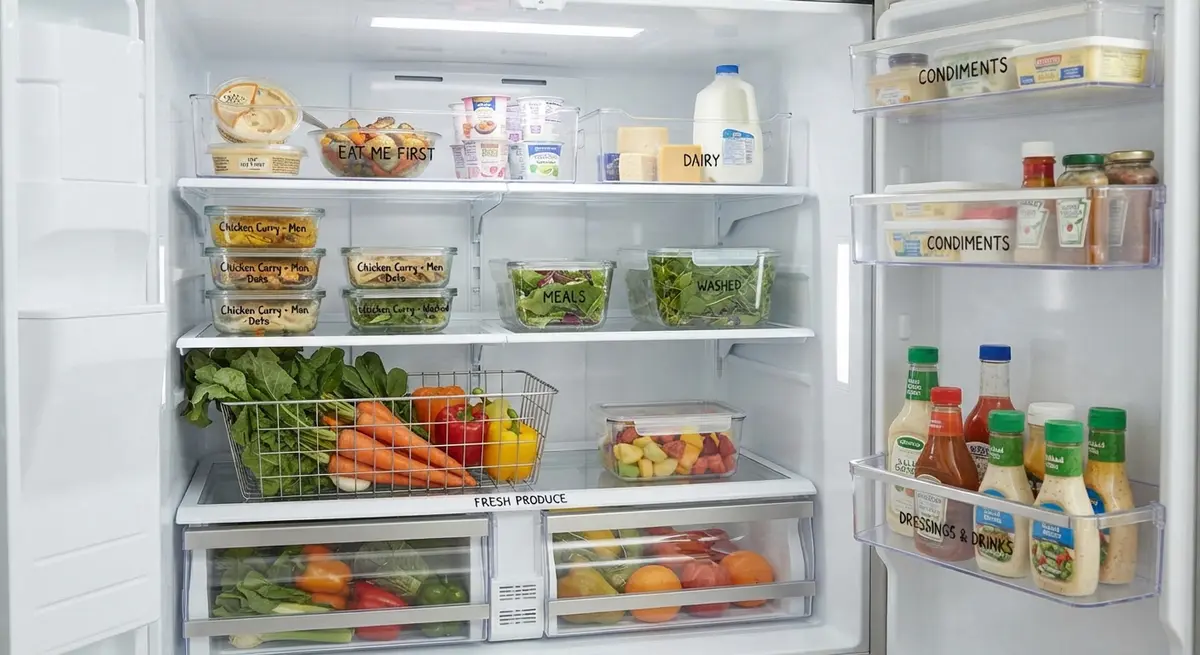
How to Organize Your Fridge and Stop Food Waste
The average household throws away roughly a quarter of the food it buys. Most of it spoils not because you forgot it, but because the fridge was set up to hide it. Here's the temperature-mapped, see-everything system I use.

5 Simple Ways to Be a More Gracious and Relaxed Dinner Host
Gracious hosting isn't about fancy food. It's five repeatable habits that calm the room — and you.
About the Authors
This recipe and guide was developed, tested, and approved in our home kitchen and daily life. Jamy is a retired Food Service District Manager and Early Childhood Program Manager who spent his career overseeing multi-site restaurant operations, large-scale culinary production, and daycare menu management. Kaïna brings the ultimate real-world test: making sure it brings ease and joy to our kids on a busy weeknight.
Read more about our professional background and philosophy →