Regrowing Veggies from Kitchen Scraps: A Simple DIY Guide
By the QuiteRecipes team (Jamy & Kaïna)
Your scraps aren't trash, they're the start of your next plant. Grow spring onions, lettuce, and more from the ends you'd otherwise toss.
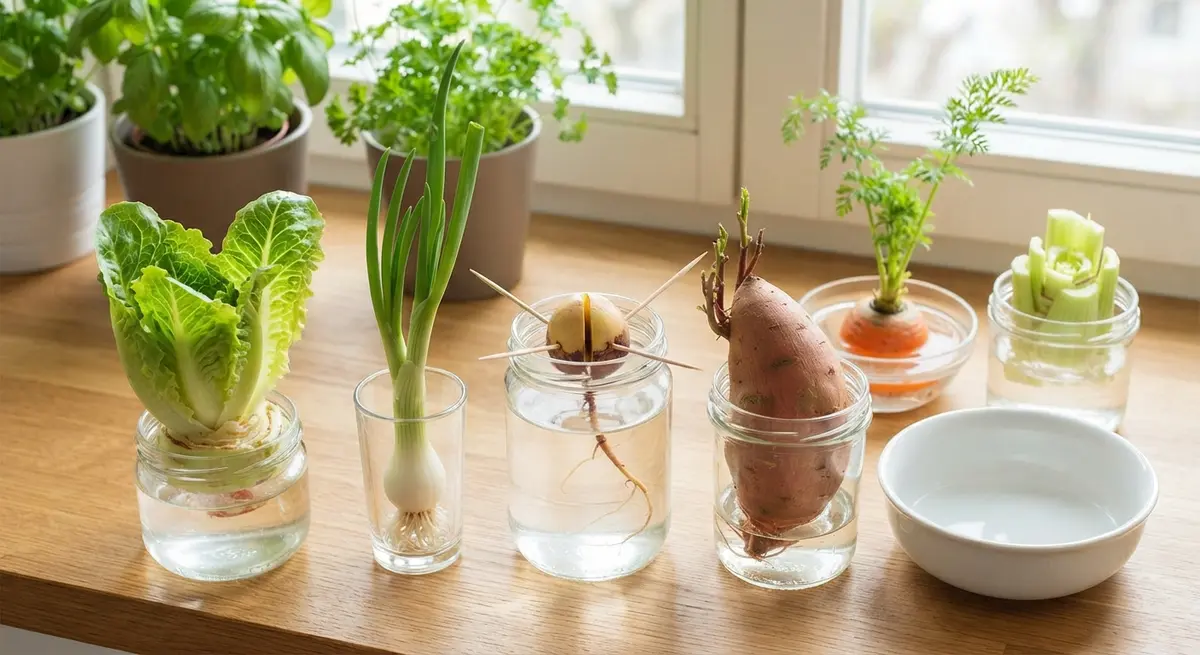
I once threw out a green onion bottom without thinking, then watched a friend stand it in a glass of water on my windowsill, where it grew an inch taller by lunch. It felt like a small betrayal of everything I'd been discarding for years. From that moment, I started seeing my cutting board differently: the rooty end of a scallion, the pale base of a romaine heart, the nub of a ginger knob, all suddenly less like trash and more like a free farmers market.
Here's the honest scoop. Regrowing vegetables from scraps is real, it's cheap, and it works brilliantly for a handful of crops, though it won't feed a family. You get a rewarding stream of fresh greens, herbs, and scallions for roughly the cost of a few jars of water. My glass-and-mason-jar regrow station on the counter supplies spring onions and lettuce hearts all winter for nothing but tap water.
This guide covers which crops actually work, the setups that fit on a windowsill, and the expectations worth keeping.
The Crops That Regrow Like Champions
Not everything regrows, so start with the winners. The key is whether a scrap keeps a growing tip, or "meristem," that can push new roots and leaves. Forget regrowing carrots from a carrot top, which just makes ferny leaves. Focus on this dependable roster:
- Green onions and scallions: snipped tops regrow from their rooty white bases, again and again.
- Lettuce and cabbage hearts: the 1-inch (2.5 cm) pale core regrows leaves after a few days in water.
- Celery: the bottom 2 inches (5 cm) of a stalk regrows ribs, slower and thinner.
- Leeks and lemongrass: the root ends regrow shoots like scallions.
- Garlic cloves and ginger: plant a clove or a knobby ginger piece with one "eye"; chives sprout in days.
- Herbs from cuttings: basil, mint, and rosemary root in a cup of water in one to two weeks.
My star student is the scallion. Trim an inch off the white base, stand the roots in an inch of water, and you'll have new green tops in about four days. Put it in a pot and you get weeks of free harvest from one $1 bunch.
Set Up a Windowsill Regrow Station
A regrow station is a small, tidy shelf that turns water into groceries. It takes about four square feet (0.4 square meters) of counter or a windowsill shelf in indirect light.
- Vessels: short glasses, wide-mouth mason jars, or shallow bowls, supported with toothpicks so the cut end barely touches the water.
- Water discipline: change the water every 2 to 3 days, or it turns sour and slimy. Fill only enough to wet the cut end.
- Light: bright indirect light works for most. Lettuce and celery prefer a little less; scallions are happy anywhere bright.
- Plant-ready upgrade: once roots form (about 5 to 10 days), move scraps into a 4 to 6 inch (10 to 15 cm) pot of potting mix for stronger growth.
The difference between cute and abundant is the transplant step. A scallion that stays in water forever produces thin, pale tops; the one moved to soil thickens up and tastes properly oniony.
Regrow Scallions in Seven Days
The scallion is the purest example of the method and the perfect first project. Here's the exact routine I use weekly:
- Save the bottom 1 to 2 inches (2.5 to 5 cm) of a bunch of scallions, roots attached.
- Stand them in a glass with about 1 inch (2.5 cm) of water, roots down.
- Place on a bright windowsill and change the water every 2 days.
- In 4 to 6 days, green tops grow back; by day 7, harvest by cutting above the white base.
- Keep the base in water and repeat for roughly two to three full regrowths before it runs out of energy.
The same rhythm works for lettuce: set the pale core in water, and new leaves appear in 5 to 7 days. Celery is slower, 8 to 12 days in water before planting out, and yields a smaller, paler stalk than the original.
Plant, Wait, and Harvest With Realistic Timing
Regrowing is cheaper than buying seeds and more rewarding than a kitchen trick, but it's not instant, and it's not a crop machine. Set expectations around the real timing.
- Green onions: 4 to 7 days for usable tops; up to 3 full cycles from one base.
- Lettuce: leaves reappear in 5 to 10 days, then slow; the regrown head is smaller each round.
- Garlic greens: chives grow in 7 to 14 days from a planted clove; the bulb needs 8 months outside.
- Ginger: new shoots in 2 to 3 weeks from a planted knobby piece of rhizome.
- Basil cuttings: roots in 7 to 14 days in water, then transfer to a pot for a full plant.
Treat it as a hobby that saves small money and brings big joy, not a serious harvest. You'll never feed a family from a scrap station, but you'll stop buying scallions in winter, and the freshest salad you'll eat all year is the lettuce core that grew on your own sill.
Care for Regrown Greens Long-Term
The scrap that regrows today is a young plant tomorrow, so treat it like a seedling once it graduates from water.
- Pot size: 4 to 6 inches (10 to 15 cm) for scallions and lettuce; 8 inches (20 cm) for full ginger.
- Soil: light potting mix, always in a pot with drainage holes.
- Watering: let the top inch of soil dry between waterings; greens hate standing water.
- Fertilizer: a half-strength liquid feed every 2 weeks keeps regrown plants lively.
- Prune regularly: snip greens from the outside so the center keeps producing.
When a base stops throwing leaves, it's spent. Compost it and start again with the next bunch. Some enthusiasts regrow for a year from a single purchase; the realistic expectation is a few good cycles.
FAQ
Does regrowing vegetables from kitchen scraps actually work?
Yes, for certain crops. Scallions, lettuce, celery, garlic greens, and ginger all regrow reliably from their bases or eyes with water and light.
How long until I can harvest regrown scallions?
About 4 to 7 days in water, then weeks of regrowth if you move them to a small pot of soil.
Which scraps should I not bother regrowing?
Carrots and potatoes won't give you much from a top, and dried or rotting bits rarely recover. Stick to crisp, fresh bases.
Do regrown vegetables taste the same?
Close enough, usually. Some, like celery and regrown lettuce, come out milder and smaller; scallions and herbs usually taste as good as the original.
Will I actually save money doing this?
A little. You'll trim scallion and herb purchases, but the real value is fresh greens in winter and the satisfaction. Treat it as fun, mostly.
Key Takeaways
- Start with scallions, lettuce, celery, garlic greens, and ginger, the crops that genuinely regrow.
- Set up a small windowsill station with jars and water changed every 2 to 3 days.
- Transplant rooted scraps into small pots of potting mix for stronger, faster growth.
- Expect 4 to 7 days for scallions and 7 to 14 days for herbs, with two to three cycles per scrap.
- Regrowing is a low-cost hobby, not a full harvest; it curbs waste and adds fresh greens in winter.
- Compost spent bases instead of tossing them, and start fresh with the next bunch.
A Final Word
That first scallion on the windowsill quietly retrained how I see a cutting board's scraps. Now the water glistens in the jars, the green tops climb, and the kitchen gains a tiny living shelf. It's cheap, simple, and the first bite of something you grew from a "waste" end is a genuine small triumph.
Published on 2026-08-13 by the QuiteRecipes team (Jamy & Kaïna).
Related Articles
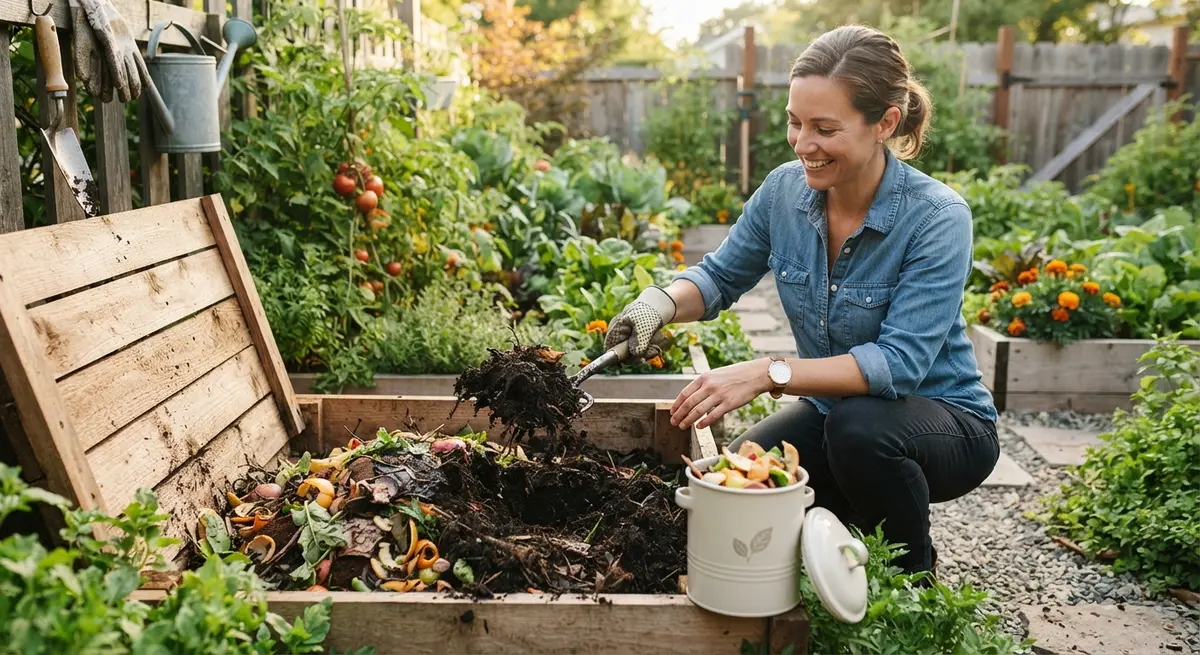
Composting at Home: A Beginner's Guide to Turning Scraps into Gold
Composting is the easiest way to turn food waste into garden gold. Start with a bin, learn the green-to-brown ratio, and watch it work.

5 Simple Ways to Be a More Gracious and Relaxed Dinner Host
Gracious hosting isn't about fancy food. It's five repeatable habits that calm the room — and you.

Bringing Vacation Home: How to Recreate Food Memories in Your Own Space
You can't bring the trip back, but you can bring its flavors. Here is how to turn travel food memories into weeknight meals in your own kitchen.

Creating a Cozy Reading Nook Right Next to Your Dining Area
Create a cozy reading nook beside your dining area without a redesign. Find the right corner, lighting, and chair for under $150.
About the Authors
This recipe and guide was developed, tested, and approved in our home kitchen and daily life. Jamy is a retired Food Service District Manager and Early Childhood Program Manager who spent his career overseeing multi-site restaurant operations, large-scale culinary production, and daycare menu management. Kaïna brings the ultimate real-world test: making sure it brings ease and joy to our kids on a busy weeknight.
Read more about our professional background and philosophy →