How to Start Your Own Kitchen Herb Garden (Even on a Balcony)
By the QuiteRecipes team (Jamy & Kaïna)
A tiny balcony can grow a week's worth of fresh herbs. Here's the honest starter setup, from pots and soil to a watering habit that works.
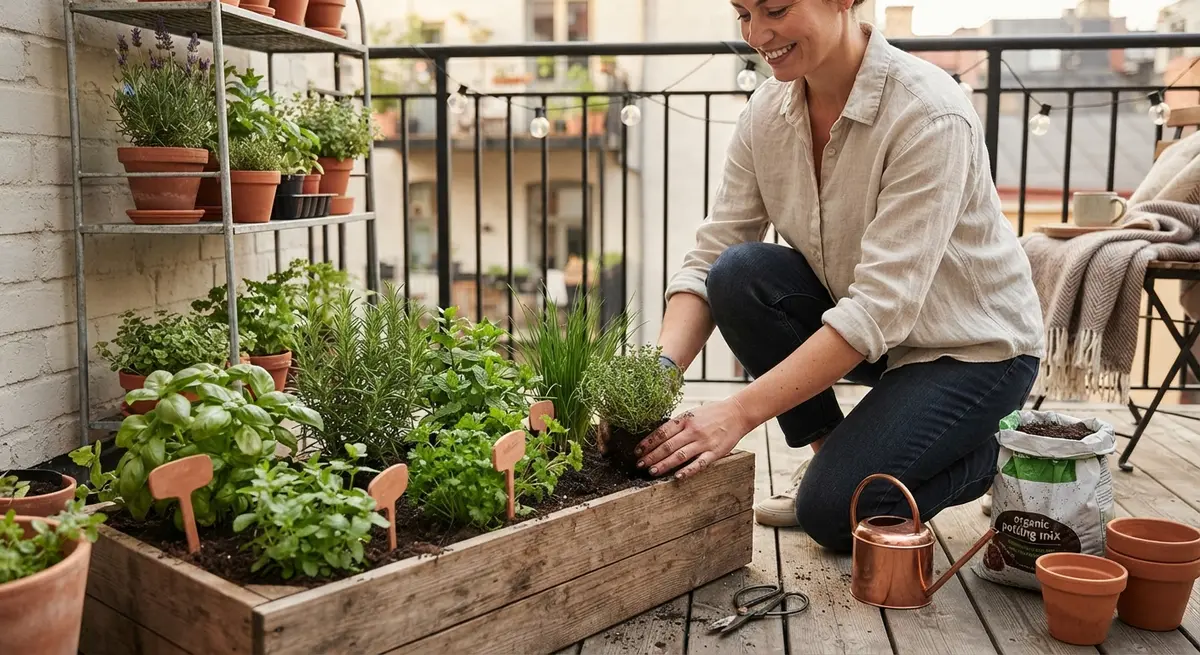
I once killed a basil plant in eleven days. I watered it, moved it to the sunniest corner of my small balcony, and even talked to it a little. It died anyway. The postmortem was humbling: too much water, a pot the size of a coffee mug, and more heat than it could stand. That failure is why I'm writing this guide. Most balcony herb gardens fail from three fixable mistakes, not bad luck.
My balcony is roughly four feet by six feet, and it now feeds my kitchen from April through October. Basil, mint, parsley, thyme, and chives live on a railing and two cheap shelves, and a full setup cost me about $60. If you have any outdoor space at all, even a narrow fire-escape landing, you can do the same. The trick is matching herbs to your light, buying the right pots, and building a watering habit you'll actually keep.
Start With Your Light, Not Your Cravings
The big decision is how much direct sun your balcony gets. Most herbs need 4 to 6 hours of direct sunlight a day. Watch your balcony for one day and count the sunny hours before buying anything.
- 6+ hours of sun: basil, rosemary, sage, thyme, and oregano all thrive.
- 4 to 6 hours: parsley, chives, cilantro, and mint do great; basil will manage.
- Under 3 hours: stick to mint, chives, and parsley, and expect slow growth.
If your balcony gets intense afternoon sun, note that basil can scorch. A sheer curtain clipped to the railing filters it for nothing. When in doubt, buy one basil and one parsley as a two-week test before building the full garden.
Pick the Right Pots and Soil
Almost every dead herb I've seen died in a pot with no drainage holes. Roots that sit in water rot within days, and supermarket herbs usually arrive already drowning. Give every herb a pot with at least one drainage hole and a saucer.
The practical specs:
- Pot size: 6 to 8 inches (15 to 20 cm) wide for parsley, chives, and cilantro; at least 10 inches (25 cm) for basil and mint.
- Pot material: plastic or glazed ceramic holds moisture longer than terracotta, which dries out fast in summer wind.
- Soil: use bagged potting mix, never garden soil. Garden soil compacts in containers and suffocates roots.
- One herb per pot: mint especially will strangle anything sharing its container within weeks.
Mix a handful of perlite into the potting mix if your balcony is very windy and dry. It keeps the soil from turning into a brick.
Build a Watering Routine You'll Keep
Most balcony herbs die from overwatering, not neglect. The classic beginner pattern is to splash water on the leaves daily, encouraging mildew while the roots stay dry. Instead, water at the base, and only when the top inch of soil feels dry.
I still make a "Sunday check" part of my routine: ten seconds pressing a fingertip into each pot, watering only the dry ones, and pinching off any flowering tips. It takes less time than making coffee.
- Water deeply until it runs out the bottom, then let the soil dry before the next watering.
- In summer, check containers daily; on hot balconies they can dry out in hours.
- Window boxes and rail pots dry faster than ground-level ones, so check those first.
- Basil is the biggest drama queen: let it wilt once and those leaves turn black overnight.
Harvest Often, Prune Like a Chef
Frequent harvesting is the secret to bushy herbs. Every time you pinch leaves, the plant pushes out two new branches.
- Cut above a leaf pair, leaving two inches of stem on the plant.
- Never strip a stem bare; always leave a few leaves.
- Pinch off flower buds the moment you see them; flowering turns herbs bitter.
- Harvest in the morning when the oils and flavor are strongest.
This keeps herbs tasting restaurant-bright instead of hay-like. A plant that flowers is telling you it's done for the season, so trimming buys you weeks of extra harvest.
Carry Herbs Through the Off-Season
Outdoor herbs don't last the winter, but you can extend most of them. Parsley, chives, and mint survive light frosts, usually down to about 28°F (-2°C). Basil dies at the first frost.
The smartest move is to grow two crops a year: a spring planting in April and a fall one in September. That gives you fresh leaves for roughly eight months on a balcony.
For the true off-season: bring a pot of chives and mint indoors to a bright windowsill before the first frost, root a basil cutting in water, and dry or freeze the surplus. Growing your own easily saves $80 to $120 a year versus buying fresh bunches weekly, and nothing from the store tastes like a leaf you picked an hour before dinner.
FAQ
What temperature kills balcony herbs?
Most tender herbs like basil die when temperatures drop to 32°F (0°C). Hardy herbs like rosemary and thyme survive down to about 20°F (-7°C).
Can I grow herbs on a balcony with almost no sun?
Yes, but choose mint, chives, and parsley. They tolerate partial shade and still give solid harvests with under three hours of direct sun.
How much does a balcony herb garden cost?
A starter setup of three pots, potting mix, and plants runs about $40 to $60. Seeds are cheaper but add four to six weeks before your first harvest.
Which herbs should I start from seed?
Basil, cilantro, and parsley are easy from seed and germinate in 7 to 14 days. Rosemary and mint are better bought as plants because they're slow from seed.
When is the best time to harvest herbs?
Mid-morning, after the dew dries but before the heat peaks, when volatile oils are highest and flavor is strongest.
Key Takeaways
- Match your herbs to your balcony's sun count first; 4 to 6 hours of direct sun covers most herbs.
- Use pots with drainage holes and bagged potting mix; garden soil drowns roots in containers.
- Water at the base only when the top inch of soil is dry, and check containers daily in summer.
- Harvest twice a week, cut above leaf pairs, and pinch flower buds to keep plants productive.
- Plan a spring and fall planting for about eight months of harvests, plus indoor windowsill herbs in winter.
- A $60 setup can replace $80 to $120 a year of store-bought fresh herbs.
A Final Word
The balcony herb garden that failed me the first time now saves me money and makes dinner taste like a kitchen garden exists outside my door. Start with two pots, get the light and watering right, and let the harvest convince you to go bigger.
Published on 2026-08-13 by the QuiteRecipes team (Jamy & Kaïna).
Related Articles
How to Choose and Care for Outdoor Patio Plants Year-Round
The right patio plant for your sun and season survives; the wrong one fights you. Here's how to choose, plant, and care for them all year.
5 Simple Ways to Be a More Gracious and Relaxed Dinner Host
Gracious hosting isn't about fancy food. It's five repeatable habits that calm the room — and you.
Bringing Vacation Home: How to Recreate Food Memories in Your Own Space
You can't bring the trip back, but you can bring its flavors. Here is how to turn travel food memories into weeknight meals in your own kitchen.
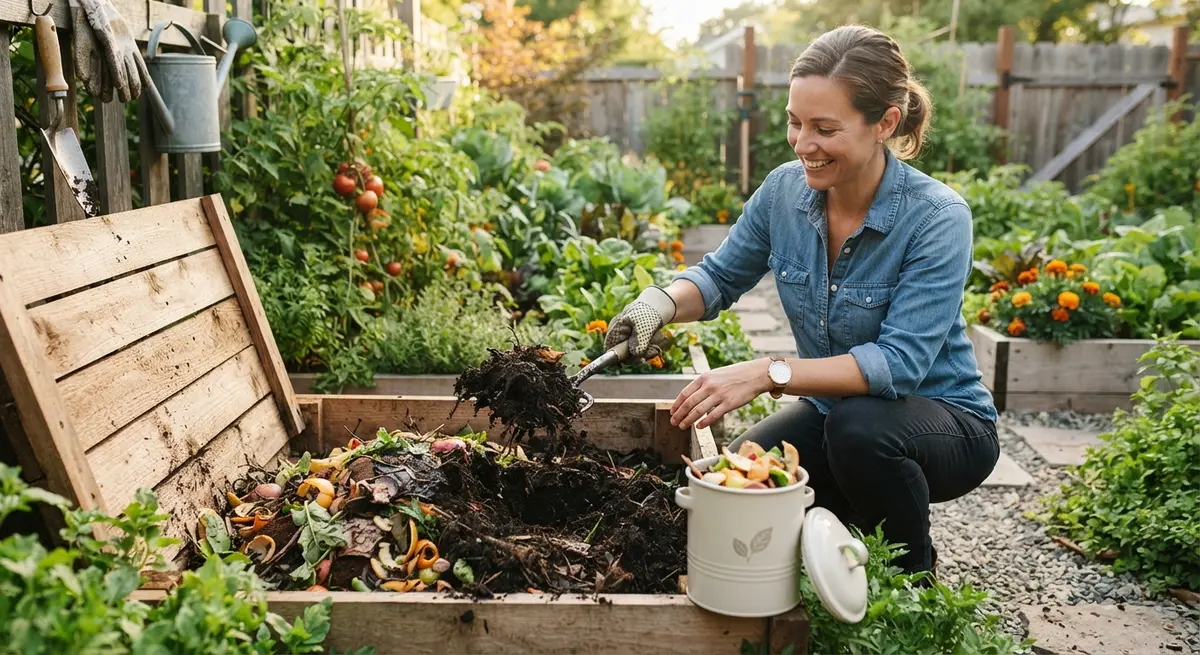
Composting at Home: A Beginner's Guide to Turning Scraps into Gold
Composting is the easiest way to turn food waste into garden gold. Start with a bin, learn the green-to-brown ratio, and watch it work.
About the Authors
This recipe and guide was developed, tested, and approved in our home kitchen and daily life. Jamy is a retired Food Service District Manager and Early Childhood Program Manager who spent his career overseeing multi-site restaurant operations, large-scale culinary production, and daycare menu management. Kaïna brings the ultimate real-world test: making sure it brings ease and joy to our kids on a busy weeknight.
Read more about our professional background and philosophy →