How to Cook Eggs Perfectly: Poached, Soft-Boiled, or Fried
By the QuiteRecipes team (Jamy & Kaïna)
Eggs are the cheapest test of a cook's skill. Runny yolk, tender set whites — here are the exact minutes and methods for poached, soft-boiled, and fried eggs that work every time.
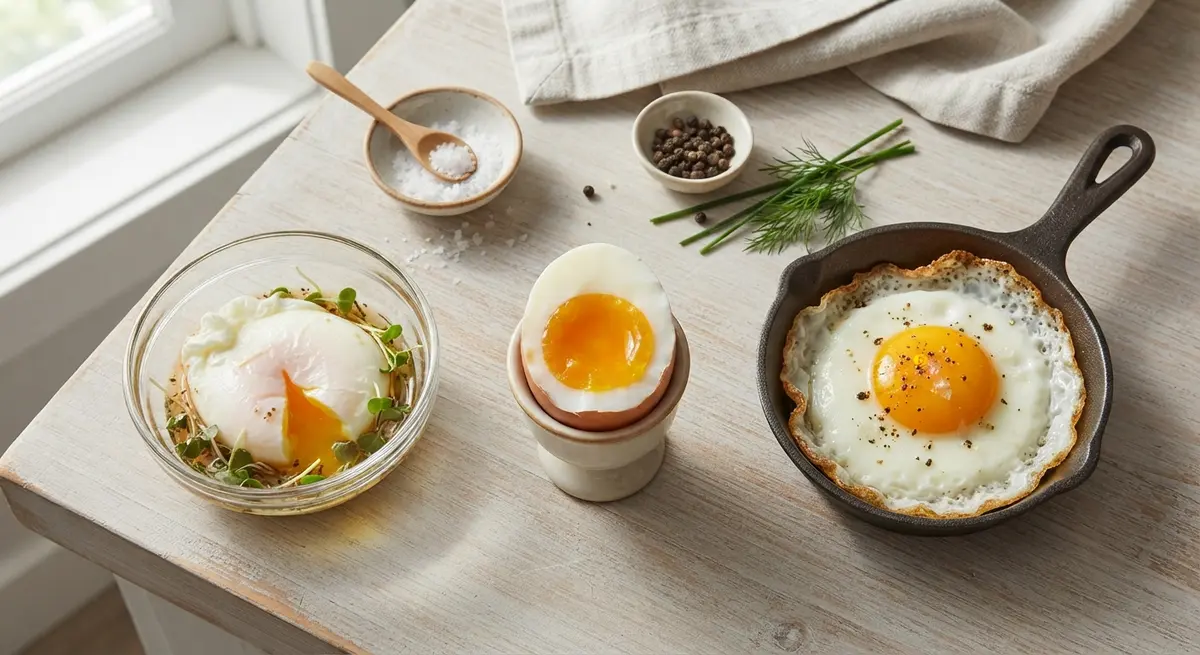
I used to think perfect eggs were luck. Some mornings they'd come out glorious; other mornings the same bowl of eggs would turn into gray rubber or broken water. Then I worked a brunch shift where the same twelve eggs had to come out perfect every single time, all morning long, and I learned the truth: egg perfection is not magic, and it is not luck. It is timing and temperature, pure and simple. Once you know the numbers — the right water temperature, the right minutes on the clock, the right heat under the pan — you can reproduce a perfect egg on demand, every single time. This is the article I wish someone had handed me before that first shift. Everything here is the stuff I actually do, with the exact times I actually use.
The Golden Rule For All Eggs
Every egg technique in this article runs on one piece of science. Egg whites set at around 145°F (63°C), and egg yolks thicken at around 158°F (70°C). That gap is the whole game: you want the white to reach its setting temperature while the yolk stays below its thickening temperature — or right at the edge of it, if you like a jammy yolk.
So everything below is about using heat gently enough that the white cooks completely while the yolk stays soft and liquid. The enemy is never "too much heat" alone — it's a cold, uneven pan, or water that's rolling so hard it batters the egg around. Gentle, even, and timed: those three words are the golden rule, and every method that follows is just a specific way of applying them.
Poached Eggs: The Gentle Swim
A perfect poached egg is a tender, fully set white wrapped around a warm, liquid yolk — no ragged edges, no vinegary taste, no eggy mess in the water. It looks like a professional skill, but it's actually the least impressive one on this list once you know the sequence.
The method:
- Bring a wide pot of water to a gentle simmer — small bubbles rising, not a rolling boil. Boiling water destroys poached eggs by jostling the white apart before it can set. If your water looks like it's boiling pasta, turn it down.
- Crack each egg into a small bowl or cup first — never directly into the water. The bowl lets you slide the egg in slowly, so the white stays together instead of spreading into threads across the pan.
- Optional classic trick: add a splash of white vinegar to the water — about a tablespoon. The acid helps the whites set faster and hold their shape. Keep it to a tablespoon and you won't taste it.
- Gently lower the egg into the water, then swirl the water lightly around it for the first ten seconds. That swirl folds the loose white over the yolk, giving you the neat, teardrop shape instead of stragglers.
- Cook for 3 to 3.5 minutes. Lift it out with a slotted spoon, dab the water off with a paper towel, and serve immediately — poached eggs don't wait.
Key tip: Poaching for a crowd? Poach the eggs, then transfer them straight into a bowl of ice water. They'll hold for hours. To serve, reheat them in hot — not boiling — water for 30 seconds. It's the exact trick brunch restaurants use to serve fifteen perfect eggs at once.
Soft-Boiled Eggs: The Precise Clock
Soft-boiled eggs are the easiest to time of all three — no watching, no swirling, just a clock. The only real variable is your starting temperature, so pick one method and stick with it.
Cold-start method: place the eggs in cold water, bring to a boil, then time from boiling. This works, but the timing drifts with pot size and stove power, so results vary between kitchens.
The reliable method: lower room-temperature eggs into already-boiling water and set a timer for 6.5 to 7 minutes for a soft, slightly runny yolk with fully set whites. At 6 minutes the yolk is very loose; at 7.5 minutes it's jammy; at 8 minutes you're into hard-boiled territory. Everyone's pot and stove differ slightly, so test once with your own setup and adjust by 30 seconds — that calibration is the whole secret.
Then the part everyone forgets: shock the eggs in ice water for 30 seconds the moment the timer goes off. That stops the carryover cooking instantly, so the yolk stays exactly where you timed it. Tap the wide end, peel under running water (it lifts the shell away from the white), and serve in a cup with toast soldiers, on avocado toast, or over noodles.
Fried Eggs: Heat Discipline
Fried eggs have one job: crisp or tender edges with a completely liquid yolk in the middle. Two styles, same foundation — and both fail for the same reason.
Sunny-side up (soft, unflipped):
- Medium-low heat, with butter or oil. Medium-low is the phrase to remember; this is where most people go wrong.
- Crack the egg in, and season the white with a pinch of salt. Save the yolk's salt for the table — salting the yolk early makes it weepy and watery.
- Cook until the white is fully set but the yolk still jiggles — about 2.5 to 4 minutes, low enough that nothing burns or bubbles.
- Optional pro move: cover the pan with a lid for the last 30–60 seconds. The trapped steam sets the top of the white — the part that usually stays glossy and raw — without flipping the egg.
Over easy / over medium (flipped):
- Same low-heat start.
- Once the white is set, carefully flip with a flexible spatula, then cook 20–30 seconds for over easy (still runny yolk) or 45–60 seconds for over medium (jammy yolk).
The most common fried-egg mistake is high heat. It looks fast and efficient, but it browns and crisps the edges, then burns the underside while the top of the white is still raw. Low and slow beats hot and fast every time — the one exception being people who genuinely want crispy, lace-edged whites, which you can get on purpose with more heat and a little more fat.
Key tip: The first egg in a pan is a test run. If you're cooking for people, do a practice egg first to learn your own pan's heat. After one egg you'll know exactly where the dial sits.
The "Diner Trick": Butter That Doesn't Burn
For a restaurant-style fried egg with clean edges and real flavor, use a small knob of butter at medium heat. Butter adds flavor, and because of its milk solids, it creates a slightly higher release point without burning — as long as you keep the heat at medium. This is why diner eggs taste better than they have any right to: the butter, the medium heat, and a pan that's allowed to stay there.
If you like crispy edges, add a touch of neutral oil along with the butter. The oil raises the smoke point enough that you can push the heat a little hotter, and the butter still delivers the flavor. Butter and a whisper of oil is the workhorse combination of every breakfast line I've ever worked.
How To Crack Eggs Without Shells In The Food
There is a technique to cracking, and it takes about thirty seconds to learn. Crack eggs on a flat surface, not on the rim of the bowl. Cracking on the rim pushes shell fragments inward — that's where every stray piece comes from. A quick, firm tap on the counter splits the shell cleanly down the middle, and you can then open it over the pan or bowl. If a piece does fall in, fish it out with the larger half of the shell — shell grabs shell, and it's faster than a finger. One more rule: crack eggs one at a time into a small cup before adding to the pan or bowl. That way a bad egg can't ruin the whole batch.
A Quick Egg-Cooking Cheat Sheet
- Poached: gentle simmer, not a boil; 3–3.5 minutes; slotted spoon out.
- Soft-boiled: boiling water, 6.5–7 minutes, then 30-second ice shock.
- Sunny-side up: medium-low heat, salt the white only, lid for the final 30–60 seconds.
- Over easy: medium-low, flip once, 20–30 seconds.
- Over medium: medium-low, flip once, 45–60 seconds.
- Scrambled (bonus): low heat, stir constantly, pull from the heat slightly early — residual heat finishes them.
Frequently Asked Questions
Why do my poached eggs turn into a mess of white threads?
Almost always because the water is boiling too hard or the egg was dropped from too high. Turn the water to a gentle simmer, crack into a cup first, and lower it in slowly. A swirl for the first ten seconds also folds the loose white in.
Are old eggs or fresh eggs better for boiling and poaching?
Fresh eggs have tighter, rounder whites that hold a beautiful poached shape. But for hard or soft boiling, eggs a week old are actually easier to peel, because the inner membrane pulls away more cleanly. Use fresh for poaching, slightly older for boiling.
Why does my soft-boiled egg come out hard-boiled?
Two usual causes: the water is boiling too gently and the eggs sat in it longer than the clock says, or you skipped the ice shock, so carryover heat kept cooking the yolk. Time precisely and always shock for 30 seconds.
How can I tell if a fried egg's white is done without flipping?
The lid trick handles it — steam sets the top of the white in about 30 seconds. Or, watch the edges: when they've gone completely opaque and the white just above the yolk turns milky white rather than glossy, it's done.
Is it safe to eat runny yolks?
For most healthy adults, yes. If you're cooking for young children, pregnant women, or anyone immunocompromised, choose pasteurized eggs or cook yolks fully set. That's the standard guidance from food safety authorities, and it's worth following.
Key Takeaways
- Whites set near 145°F (63°C), yolks thicken near 158°F (70°C) — the gap is why gentle heat works.
- Poached eggs: gentle simmer, cup first, 3–3.5 minutes, swirl to shape the white.
- Soft-boiled: boiling water, 6.5–7 minutes, and a mandatory 30-second ice shock.
- Fried eggs: medium-low heat, salt only the white, cover at the end for sunny-side up.
- Crack on a flat surface, not the bowl rim, and practice one egg to learn your pan.
The Morning You Master It
Eggs are a test because they're unforgiving of impatience — and they reward you with a result that costs almost nothing to practice. Spend one morning dialing in the numbers: one soft-boiled, one sunny-side up, one poached. Write down the times that work on your stove and your pan, and never cross your fingers over a breakfast again. The last shift I ever worked, the eggs came out perfect all morning — not because I got luckier, but because I finally had the numbers. Now you do too.
Published on 2026-08-13 by the QuiteRecipes team (Jamy & Kaïna).
Related Articles
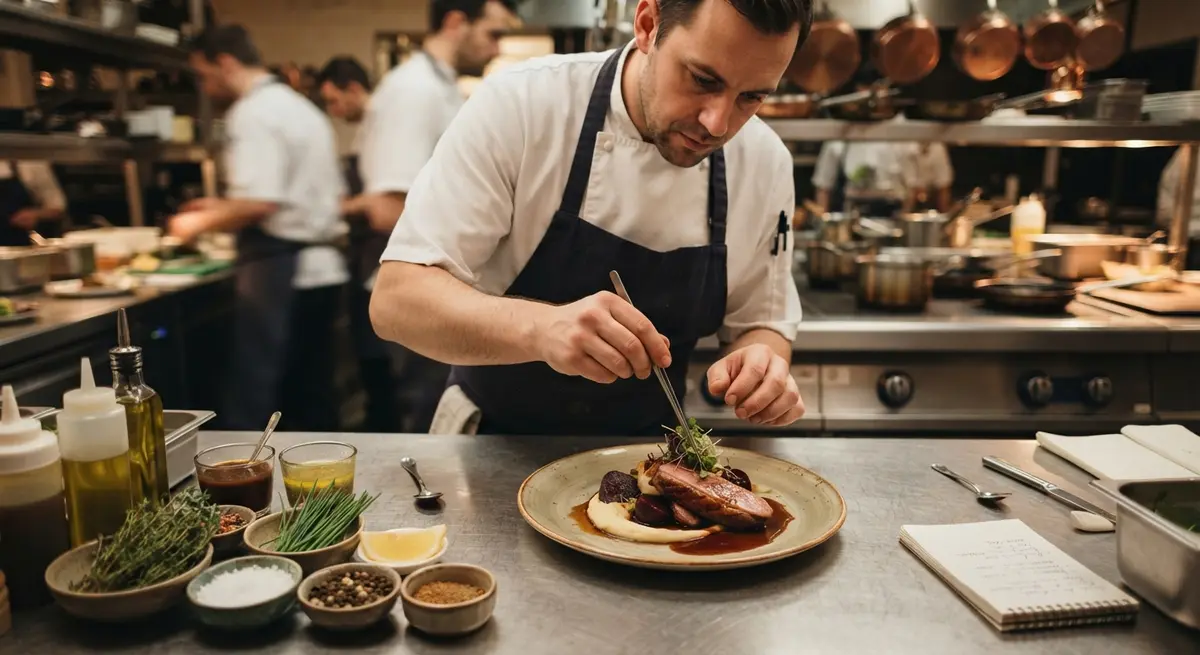
Building Flavor: The Chef's Method for a Balanced Dish
When a dish tastes 'flat,' it's almost never because you needed more ingredients — it's because one of the five tastes is missing. Here's how to diagnose and fix it.
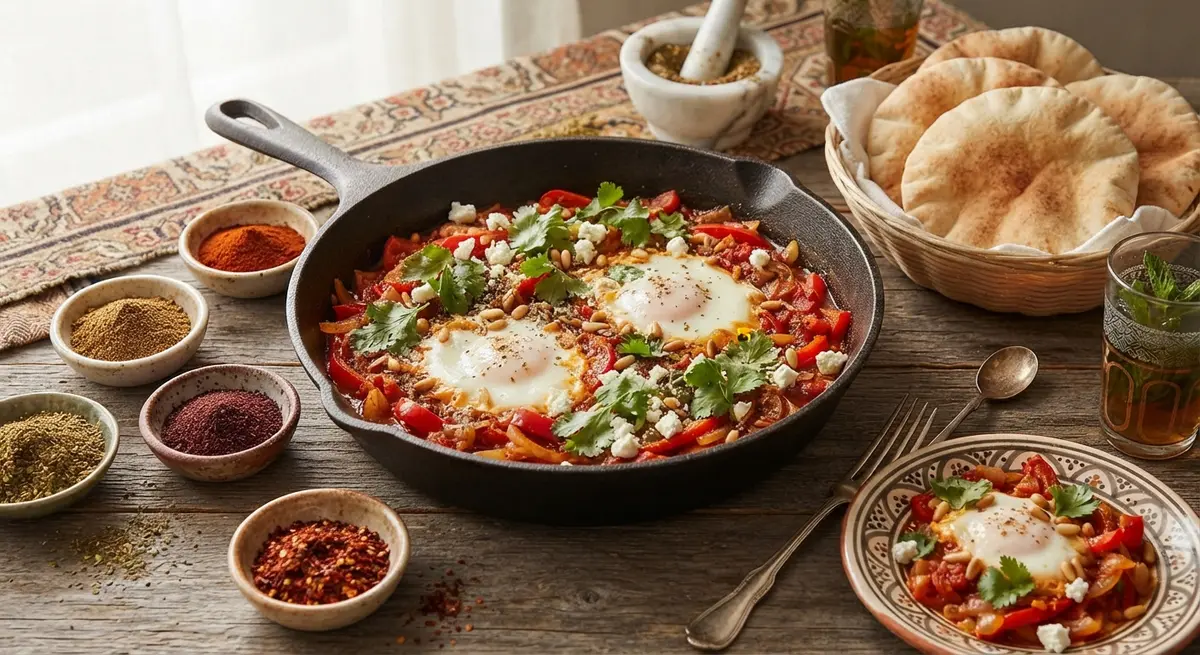
Egg and Spice: Transforming Morning Scrambles with Middle Eastern Flair
Eggs are a blank canvas and a quick meal. A pinch of za'atar or sumac in hot butter turns them into the best part of the morning.
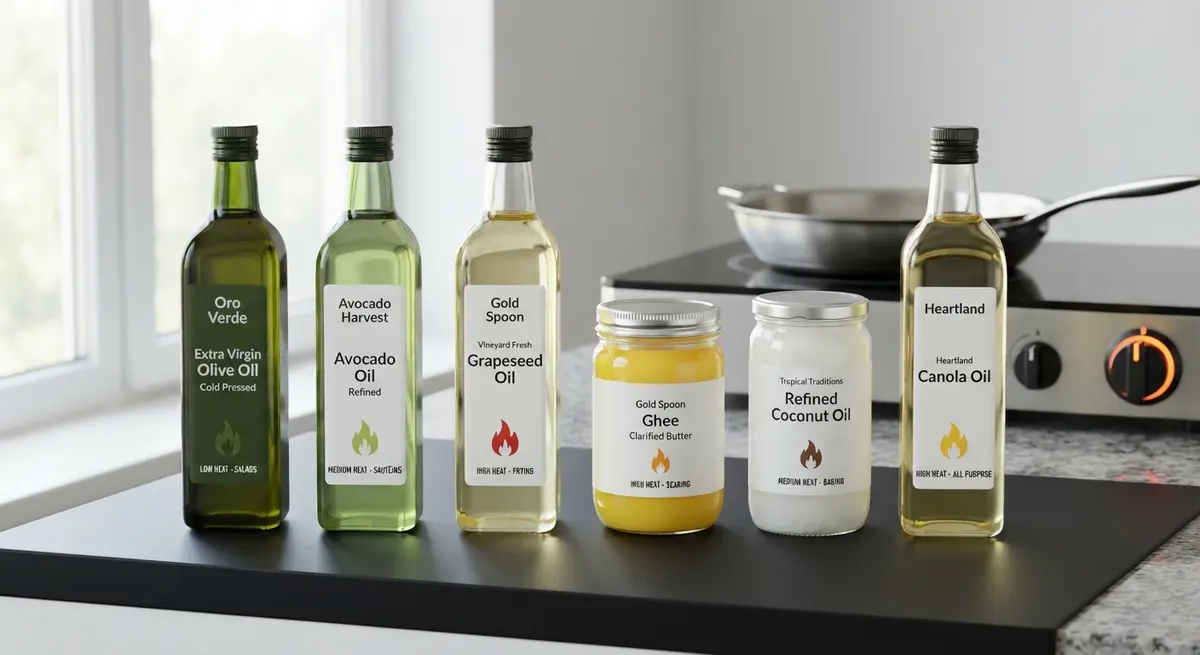
How to Choose the Right Cooking Oil for the Heat
The best oil for a salad is the worst oil for searing. Understanding smoke points — the temperature where oil burns — turns every bottle in your pantry into the right tool.
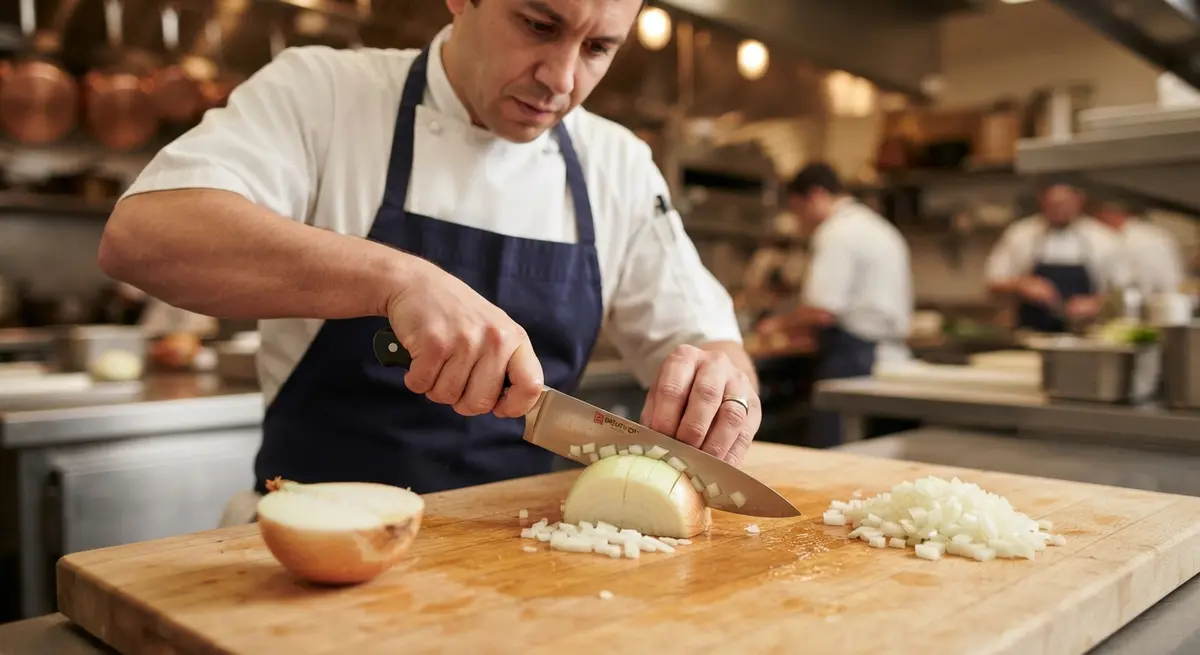
How to Dice an Onion Like a Pro (Without Shedding a Single Tear)
Uniform onion dice aren't just prettier — they cook evenly, which means better flavor. Learn the claw grip, the horizontal cuts, and the fridge trick that stops the tears before they start.
About the Authors
This recipe and guide was developed, tested, and approved in our home kitchen and daily life. Jamy is a retired Food Service District Manager and Early Childhood Program Manager who spent his career overseeing multi-site restaurant operations, large-scale culinary production, and daycare menu management. Kaïna brings the ultimate real-world test: making sure it brings ease and joy to our kids on a busy weeknight.
Read more about our professional background and philosophy →