Building Flavor: The Chef's Method for a Balanced Dish
By the QuiteRecipes team (Jamy & Kaïna)
When a dish tastes 'flat,' it's almost never because you needed more ingredients — it's because one of the five tastes is missing. Here's how to diagnose and fix it.

I remember the exact moment I stopped guessing at cooking. I was a young line cook, and my pasta sauce — a perfectly respectable sauce, I thought — came up to the head chef for the nightly tasting. He took one spoonful, said nothing, and turned to the pass. Then he reached over, squeezed half a lemon into the pot, and stirred. I tasted it again. The difference was so obvious I felt embarrassed that I hadn't tasted it myself. That was my introduction to flavor balance: the invisible system underneath every good dish, the thing chefs mean when they say a plate "works." Once you understand it, you stop adding ingredients blindly and start solving flavor problems on purpose. You stop asking "what should I add?" and start asking "what's missing?" — and that single question changes everything.
The Five Tastes: The Flavor Language
Every taste on your tongue is one of five signals, and a balanced dish combines them the way a chord combines notes. Here are the five, with their easiest sources, so you can name the gap when you taste one:
- Salt — amplifies other flavors and suppresses bitterness. Salt, soy sauce, fish sauce, anchovy.
- Sweet — rounds harsh edges and balances sour and bitter. Sugar, honey, caramelized onions, sweet vegetables.
- Sour — adds brightness and lift, cuts richness and fat. Lemon, lime, vinegar, tomato.
- Bitter — adds depth and complexity in small, deliberate doses. Coffee, dark greens, citrus zest, dark chocolate, some herbs.
- Umami — savory depth, the "meaty" fifth taste. Mushrooms, Parmesan, soy, tomato paste, fish sauce, anchovies.
The chef's trick: when something tastes flat or boring, it is usually a missing element, not a missing ingredient pile. You don't need more stuff. You need the one signal that's absent.
Key tip: Taste your food and ask one question: "Is anything missing?" Not "what should I add?" — "what is missing?" The answer is almost always one of these five.
"Taste, Then Adjust" Is The Whole Method
Chefs don't taste once and stop. They taste at every stage — raw, mid-cook, when the sauce comes together, and again before serving — and each tasting tells them what's missing. This is not an artistic mystery; it's a working loop:
- Cook the base.
- Taste. Ask yourself: Is it flat? Too salty? Too sweet? Does it need brightness? Does it need depth?
- Adjust with the single correct lever — salt, acid, sweet, umami, or fat.
- Taste again. Repeat.
That feedback loop is the difference between "following a recipe" and "can actually cook." Recipes are a snapshot of one moment in time — the moment the writer's pot was at. Your pot is different: your tomatoes are different, your salt is different, your stove runs hotter or cooler. The recipe can't know that. Your tongue can. When a dish goes wrong, the fault is almost never in the recipe's proportions; it's in the absence of this loop.
Building Flavor In Layers (The Order That Works)
Flavor is built in four layers, in a specific order. Skipping a layer is usually why home-cooked food tastes "one-dimensional" — every layer adds something the others can't.
Layer 1: The foundation. Onions, garlic, celery, herbs, and spices, cooked slowly at the start. This is the aromatic base, and it takes time. Rush it and the whole dish tastes like it's missing its floor — because it is. Give the onions their full 8–10 minutes to turn translucent and sweet before you add anything else.
Layer 2: The body. The main ingredients and liquids, cooked down. This is where the dish becomes itself — the vegetables release their juices, the meat browns, the liquids concentrate. This layer rewards patience: reduction is where a thin sauce becomes a flavor carrier.
Layer 3: Umami and depth. Mushrooms, tomato paste, soy, Parmesan, anchovy. These make the flavor feel rounded and "full." A spoonful of tomato paste cooked into the fat until it darkens a shade or two is one of the cheapest depth upgrades in cooking. This is the layer most home cooks skip entirely — and it's why their food tastes "fine but thin."
Layer 4: The finish. Salt, acid, and sometimes sweet, added at the very end. This is where the dish snaps. A squeeze of lemon, a pinch of salt, maybe a touch of sugar — added in the final minutes, tasted, and adjusted. The finish is not decoration; it's the layer that makes the other three audible.
The Acid Fix: The Most Common Missing Element
Walk into any home kitchen with a supposedly flavorless sauce, and most of the time it needs acid, not more salt and not more herbs. This is the single most valuable diagnostic I can give you. People over-salt flat food because salt is the only lever they know; the flatness is usually an acid problem.
Why? Acid does three jobs at once: it brightens everything it touches, it balances richness and fat, and it makes the other flavors pop by giving your palate a contrasting signal. A tomato sauce without acid tastes dull even when it's perfectly salted. Add a few drops of lemon and the tomato flavor suddenly snaps into focus.
Test it yourself right now: take a flat tomato sauce, add a few drops of lemon, and taste. Then you'll understand why chefs keep a lemon on the cutting board at all times — not because it's fancy, but because it's the fastest fix for the most common problem.
Key tip: Acid goes in near the end. Boiling vinegar or lemon for five minutes evaporates the brightness right out of it. Finish with acid, taste, repeat.
When To Add Sweet (And Why It's Not A Cop-Out)
Sweetness exists in cooking to balance the other four tastes, not to make things dessert-like. If a dish is too sour, too bitter, or just harsh, a tiny pinch of sugar rounds it out. This is precision, not sugar-coating.
A few places where a whisper of sweet does serious work:
- A pinch of sugar in a tomato sauce — it tames the tinny sharpness of canned tomatoes.
- A little honey or maple in a vinaigrette — it smooths the vinegar's bite without making it sweet.
- A caramelized edge in a stew or roast — the browning itself is sweetness, which is why properly caramelized onions make a savory dish taste richer.
- A touch of sugar or a sweet component (carrot, corn, pepper) when a braise tastes flat or acidic.
The test: if a dish tastes harsh, sharp, or thin in a bitter way, sweetness is usually the balance lever. Add a pinch, taste, and see the edge disappear. It's a tool, not a treat.
Umami: The Depth Layer That Makes You Say "Wow"
Umami is why mushroom risotto tastes richer than plain rice and why a splash of soy sauce transforms an ordinary soup. It's the savory "fifth taste" that makes food feel satisfying, deep, and finished. And here's the best part for home cooks: the best sources of umami are cheap.
- Tomato paste — concentrated, so add it early and let it caramelize in the fat for a minute or two.
- Miso, soy sauce, fish sauce — a spoonful of any of these in a stew, soup, or sauce adds instant depth.
- Parmesan rind — drop the hard rind into soups and sauces; it infuses while it simmers.
- A single mashed anchovy — invisible in the finished dish, but it makes everything taste meatier.
- Mushrooms, especially dried ones — rehydrate dried mushrooms and use both the mushrooms and the soaking liquid.
- A splash of Worcestershire — the original umami bomb, hiding in plain sight in your fridge door.
If your dish tastes "fine but boring," it's probably missing umami. This is the layer that turns a good home dinner into the kind people ask about.
The "It's Flat" Diagnostic
When a dish tastes flat, don't panic and don't dump. Run this checklist, adding one element at a time and tasting between each. Stop at the first one that makes it taste finished:
- Salt? Add a pinch. Most "bland" food is simply under-salted — but taste it first, because flat and under-salted feel similar.
- Acid? Squeeze lemon or add a dash of vinegar. This is the fix I reach for second, and it's the one most people never try.
- Depth / umami? A splash of soy, a spoonful of tomato paste, a scrape of miso.
- Sweetness? A pinch of sugar or honey, especially if the flatness comes with any harshness.
- Fat? A knob of butter or a drizzle of good oil — this rounds everything out, especially in sauces and reductions.
The order isn't random: salt first because it's the most common fix, acid second because it's the most missed, then depth, sweetness, and fat. One element at a time, taste between each, and stop when it clicks. You'll be surprised how often it's number two.
Balance Is Not Volume
The amateur answer to a "boring" dish is more — more ingredients, more spice, more garlic, more time in the pot. The professional answer is balance: a correctly seasoned carrot beats an over-seasoned everything. Cooking a small number of ingredients well, each with its proper element in its proper place, beats cooking fifteen ingredients flat.
I've eaten in restaurants where a single tomato, a pinch of salt, and a few drops of olive oil were the entire plate — and it was unforgettable. I've also eaten ambitious home dinners with twelve components where nothing tasted of anything. The difference was never quantity. It was that someone had tuned each element and balanced the whole plate. If you're tempted to add more, pause and ask the missing-element question first. It's almost always cheaper and faster than a trip to the market.
Taste As You Go, Always
The single most valuable habit in this entire article: taste at every step. Not at the end, not "when it's done," but throughout. Every time you add an element, taste. It's how you catch a burn before it starts, how you notice an onion turning bitter early, and how you know exactly which lever to pull when something's off — because you've been tasting the whole journey, so you know what changed.
This is also the habit that makes everything else in this article possible. The five-taste checklist only works if you're tasting while there's still time to fix. Taste the foundation before you build on it. Taste the sauce before you reduce it. Taste it again after. It costs two seconds and it's the cheapest insurance in cooking.
Frequently Asked Questions
Is it better to taste raw or cooked?
Cooked, whenever possible. Heat changes everything — garlic mellows, onions sweeten, tomatoes sharpen. Taste the dish at the stage you're about to cook from, and remember that salt and acid both intensify as liquid reduces.
I added too much salt. Can I save it?
You can soften it: add acid (lemon or vinegar) to balance, add a little sweetness, or dilute with water, stock, or a spoon of yogurt or cream. None of these "remove" salt — they rebalance around it. The long-term fix is seasoning in layers so no single pour carries the dish.
My dish tastes bitter. What's missing?
Bitterness is balanced by salt and sweet. Add a pinch of salt first, taste, then a tiny pinch of sugar or a splash of sweet. If the bitterness is burnt (toast garlic, overcooked onions, over-browned butter), no amount of balancing will fully save it — the fix is prevention next time.
Does balance matter for simple food too?
Especially for simple food. With fewer ingredients, each element is more exposed. A plain poached egg, a bowl of lentils, or a pan of roasted carrots all need their salt, their acid, and their finish — often more than a complex dish does, because there's nothing to hide behind.
What's the one thing to try first?
Buy a bottle of vinegar and keep it next to the stove, and get in the habit of tasting then asking "what's missing?" before adding anything. Those two changes — an acid on hand and a diagnosis habit — will fix more flat food than any ingredient you'll ever buy.
Key Takeaways
- A flat dish is a missing element, not a missing ingredient pile — name the gap among salt, sweet, sour, bitter, and umami.
- Taste, adjust with one lever, taste again: that loop is the entire method.
- Build flavor in four layers: foundation, body, umami, finish.
- Acid is the most missed element in home cooking — finish with it off the heat.
- Sweetness balances harshness; umami adds depth; balance beats volume every time.
Your First Balanced Meal
Tonight, make something simple — a tomato sauce, a pan sauce, a stir-fry, a pot of lentils — and go through the layers deliberately: aromatic base, body, umami, then finish with acid and salt. Taste at each step and ask the missing-element question out loud. When you find the answer and feel the dish snap into focus, you'll understand why this method is the only recipe a chef really needs. Flavor isn't random, and it isn't luck. It's balance — and balance is a skill you now know how to build.
Published on 2026-08-13 by the QuiteRecipes team (Jamy & Kaïna).
Related Articles
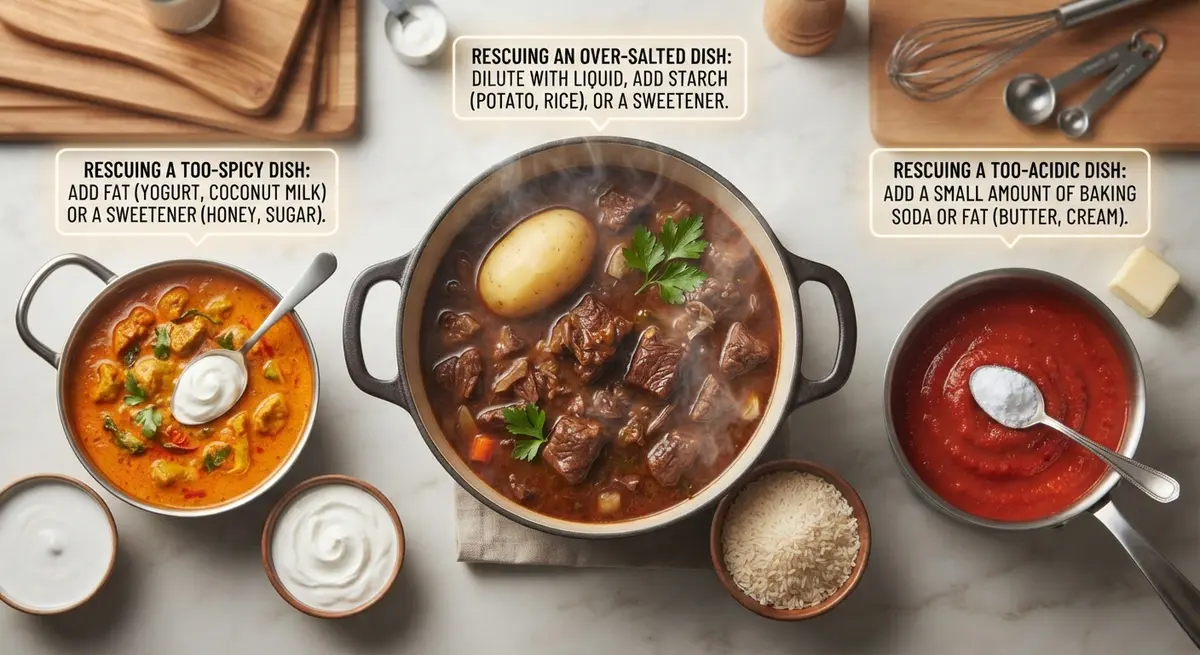
How to Rescue an Over-Salted, Too-Spicy, or Too-Acidic Dish
Every cook has ruined a pot. The good news is that overseasoned food is usually fixable — the trick is knowing which rescue matches the problem.
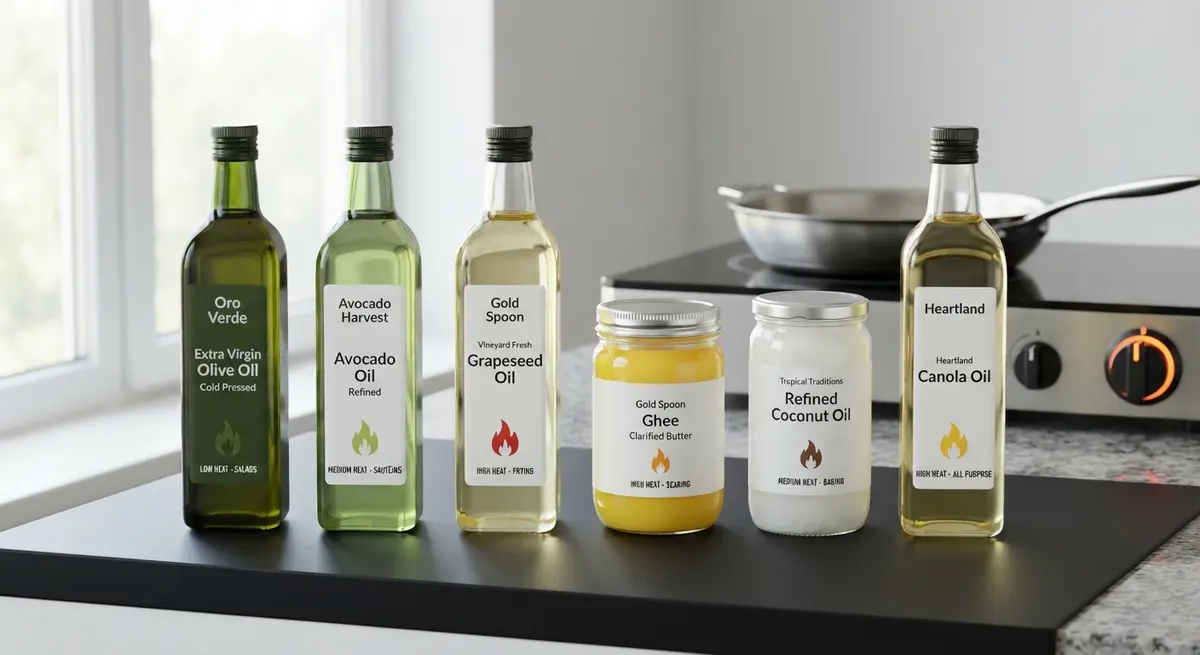
How to Choose the Right Cooking Oil for the Heat
The best oil for a salad is the worst oil for searing. Understanding smoke points — the temperature where oil burns — turns every bottle in your pantry into the right tool.

How to Cook Eggs Perfectly: Poached, Soft-Boiled, or Fried
Eggs are the cheapest test of a cook's skill. Runny yolk, tender set whites — here are the exact minutes and methods for poached, soft-boiled, and fried eggs that work every time.
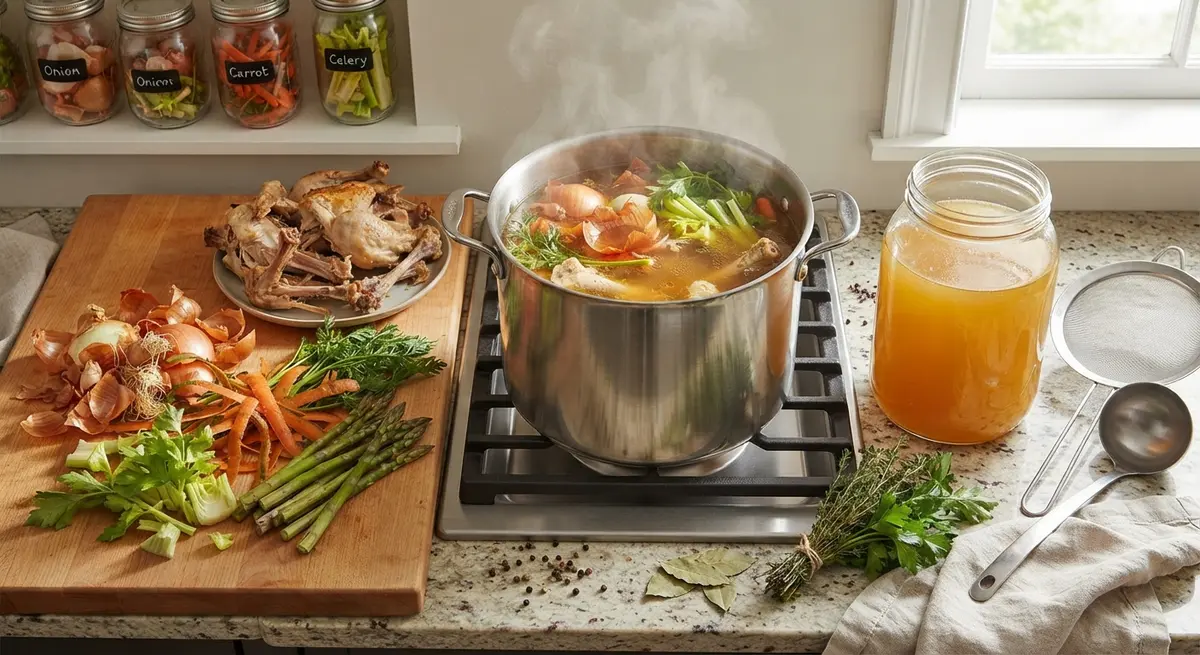
How to Turn Kitchen Scraps into Incredible Homemade Stock
Store-bought stock is fine — homemade stock from scraps is transformative and free. Here's the exact bag-in-the-freezer method, what to save, and what to skip.
About the Authors
This recipe and guide was developed, tested, and approved in our home kitchen and daily life. Jamy is a retired Food Service District Manager and Early Childhood Program Manager who spent his career overseeing multi-site restaurant operations, large-scale culinary production, and daycare menu management. Kaïna brings the ultimate real-world test: making sure it brings ease and joy to our kids on a busy weeknight.
Read more about our professional background and philosophy →