How to Choose the Right Stand Mixer for Your Baking Needs
By the QuiteRecipes team (Jamy & Kaïna)
The right stand mixer survives decades of baking — the wrong one collects dust. This guide cuts through the specs: capacity, bowl, power, attachments, and the decision rule for your kitchen.
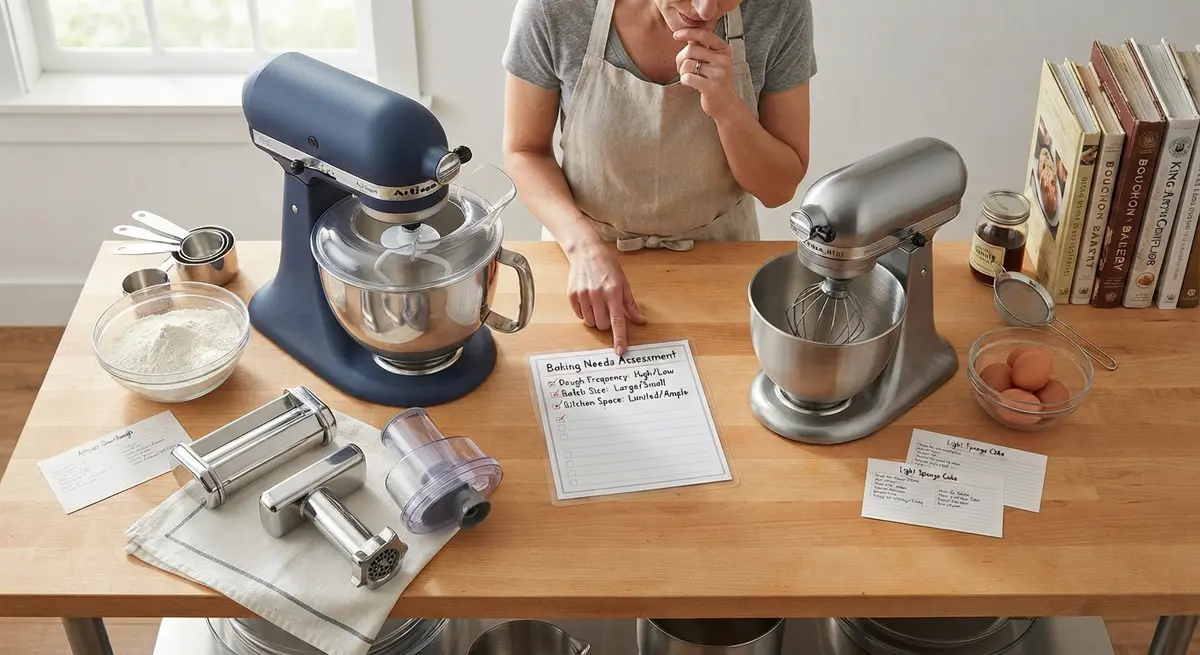
I remember the day I decided a stand mixer was worth it. I was eighteen, kneading bread by hand for the third time that week, and my arms were telling me a story about four-dollar bread that didn't need to be this hard. I saved for six months and bought the famous red one everyone had. I used it for a year and a half, on and off, and then it sat on the counter looking beautiful and guilty while I went back to hand-kneading because I'd bought the wrong machine.
The mixer wasn't bad. It was wrong for me. A stand mixer is a genuine investment — most good ones run $300–$700, and a great one lasts decades. That's exactly why you should compare it like you compare a car, not like you compare a blender.
This guide is how to choose the right stand mixer for your actual baking: the capacity question, the bowl material question, the power question, the brand question — and the honest decision rule so you don't wind up with a beautiful paperweight like I almost did.
Start With How You Bake, Not Which Mixer Is Famous
Before specs, answer three honest questions:
- How often do I bake? Twice a week or two times a year?
- What do I make mostly? Cookies, cakes, and pancakes — or bread, pasta, and pizza dough?
- Do I bake for myself, a couple, or a whole flock of children?
The machine that's perfect for the weekday-cake baker is overkill or underpowered for the weekend-bread baker — and vice versa. Specs matter, but your rhythm decides.
The mental filter: a stand mixer earns its space and price only if it's easier than your arm for the things you actually make. Be brutally honest about that list.
Capacity: The Bowl Size Question
Stand mixers come in a range of bowl sizes, and the right number depends entirely on batch size.
- 3.5–5 quart: the small end. Perfect for 1–2 people, cupcakes, batch-of-cookies recipes, and single loaves. Lightweight, cheaper, a bit cramped for dough.
- 5–6 quart: the sweet spot for most households. Handles two dozen cookies comfortably, a big batch of mashed potatoes, and small-to-medium bread loaves. This is where most buyers should land.
- 7–8 quart and up: big-household and serious-baker territory. Double batches of bread, heavy whole-wheat doughs, and holiday Sweet-Potato Purée for thirty people.
The honest rule: if you bake for yourself and a partner, a 3.5–5 quart is genuinely enough. If you bake bread weekly or feed a family, choose 5–6 quart and never outgrow it.
Bowl Material: Glass, Stainless, or Coated
The bowl matters more than most buyers realize.
- Stainless steel is the professional standard. Light, whisk-friendly, dishwasher-safe, and cheap to replace. You can see the dough from the side, which helps.
- Glass is scratch-see-through and microwave-friendly for melting butter, but heavy, fragile, and it doesn't release dough as cleanly.
- Coated (ceramic/titanium) bowls look gorgeous and are great for batters that pick up metallic flavors, but they're heavy and more expensive.
My honest pick: stainless steel for the everyday workhorse, with a second smaller stainless bowl if you bake a lot (the "bowl of many jobs" trick). Glass is a luxury, not a necessity.
Power and the Dough Question
Stand mixers are often described by "watts" (300–600+), but watts alone don't tell you how well they knead.
The real story:
- If you bake cookies, cakes, and batters once in a while, any modern mixer with 200+ watts will be fine. You'll rarely push it.
- If you bake bread, pizza, or pasta weekly, you want a mixer with genuine torque — a strong motor and a sturdy transmission. This is where cheap "compact" mixers break their gears. Look for a reputable brand, and read the "bread dough strength" reviews, not just the wattage.
Also think about where the motor lives:
- Tilt-head mixers lift the head back for bowl access and mixing tool changes — great for quick bowl swaps and cookies.
- Bowl-lift mixers raise the bowl to the motor and are typically more powerful — the choice of serious bakers and anyone kneading dense dough.
A pro tip: if heavy dough is your goal, prefer a bowl-lift or a tilt-head with a reputation for dough strength. Nothing kills a stand mixer's gearbox faster than straining against a dense bagel dough at speed 2.
Attachments: What You Actually Need vs. Nothing-Burgers
The classic set is three: flat beater, dough hook, and wire whip. That trio covers 90% of everything.
The "flex edge beater" (with a silicone edge that scrapes the bowl) is a genuinely useful upgrade for batters that stick — many mixes include it now.
Beyond that, attachments are where mixer marketing goes wild:
- Pasta rollers and cutters — wonderful if you'd otherwise buy a pasta machine. Genuinely good. But only for the pasta-obsessed.
- Meat grinder — excellent for fresh ground meat, sausage, and kibbeh. Great, but disappears into a drawer otherwise.
- Food processor bowl — a nice add-on, not a replacement.
- Ice cream maker — fun, but the freezer-bowl version has a time cost that surprise-freezes your evening.
The honest filter: buy the base mixer plus the three core attachments. Add a pasta set only if pasta-making was already on your habit list.
Brand and Price: Where It's Actually Worth Spending
Stand mixers span $150 to $700+. Here's how I'd spend:
- Good budget pick (~$150–$250): a reputable tilt-head with a stainless bowl and the three core attachments. Fine for casual bakers, cookies, and occasional batters.
- Value sweet spot (~$250–$400): a tilt-head with flex-edge beater in a size you won't outgrow, plus the bowl-lift version from a solid brand at the upper end. This is what I'd buy for most homes.
- Serious bakers/pros ($400+): a bowl-lift heavy-duty machine. It kneads real bread doughs all day without flinching and does years of weekly work.
Buying used? Older heavy-duty machines in good condition are genuinely excellent value — that "old machine" often outperforms a modern entry-level one. Just check the gearbox and the bowl fit before buying.
Decision Rule: The Mixer That Matches You
- Bake for 1–2 people, cookies/cakes, occasionally? → 3.5–5 quart tilt-head, stainless, ~$200–350. Done.
- Bake bread weekly or feed a family? → 5–6 quart bowl-lift or strong tilt-head, ~$300–500.
- Go pro or feed a crowd weekly? → heavy-duty bowl-lift, ~$500+.
- Bought a mixer before and never used it? → start smaller, use it a month, then decide if you need the big machine.
The Attachments That Matter (and the Ones That Don't)
A mixer is only as good as its bowl-and-beater set. The three to actually use:
- The flat beater (the paddle) — for cakes, cookies, and frostings. This one gets 80% of the wear.
- The wire whip — for eggs, creams, and Swiss and Italian meringues. A good whip turns silky in under a minute.
- The dough hook — for breads, pizza dough, and pasta doughs; kneading that your arms will thank you for.
Everything beyond those three — spiralizers, grinders, pasta rollers, juicers — is a "maybe." Buy the machine with the right core trio, use them hard for a year, and then add the fancy attachments that genuinely earn their cabinet space. Don't pay upfront for a buffet you'll never host.
The Bowl-Lift Question: It's Not Just Height
Bowl-lift versus tilt-head is a genuine ergonomics decision, not a status symbol:
- Bowl-lift mixers handle heavy dough and big batches without jumping — the bowl is locked on a lift arm, so the machine stays planted at high volume.
- Tilt-head mixers are easier to put ingredients in and take out — you tilt the head back and the bowl stays put, ideal for frequent additions and small batches.
- The honest test: if you bake one or two loaves at a time, a tilt-head with a decent motor is plenty. If you're running a weekly bread habit or double-batching cakes, the stability of a bowl-lift is worth the extra reach.
Don't buy the bigger machine because "it's the heavy one." Buy the shape that fits how you actually mix.
Power Versus Quiet: The Real Trade-Off
Manufacturers advertise wattage like it's fate. The real choice is subtler:
- Brushed motors and gearboxes deliver torque but hum audibly through a load; hollow whining under a stiff dough is a cheap-motor tell.
- Higher-power machines power through cold butter and stiff dough without slowing or groaning — a genuine difference in reliability, not marketing.
- The budget trap: the cheapest machine "does cake" fine because cake is easy. It's the bread and the frozen butter that separate the machines — the ones that stall or overheat are the ones to avoid.
If most of your baking is cakes and frostings, a mid-range motor is enough. If bread is a habit, spend on the power you won't have to apologize for at the fifth loaf of the week.
FAQ
Is a stand mixer worth it if I bake rarely?
Only buy one if you want to bake more. If you bake a couple of times a month, a hand mixer or a good whisk does the job for a fraction of the price and counter space. Buy the stand mixer when your arm starts complaining honestly.
What size stand mixer should a family of four get?
A 5-quart bowl handles most family recipes for 4–6 people comfortably: two dozen cookies, a large batch of pancakes, and a decent bread loaf. For serious double-batching, go 6–7 quarts.
Which is better, tilt-head or bowl-lift?
Tilt-head is easier and quicker for cookies and batters — lift, swap, drop. Bowl-lift is more powerful and better for heavy doughs. Most casual bakers are happier with a tilt-head; the dough-addicts should consider bowl-lift.
Do I need the pasta attachment?
Only if you were otherwise going to buy a pasta machine or hand-cut pasta weekly. The rollers are genuinely excellent on good mixers — but they're a luxury add-on, not a need.
How do I clean and care for a stand mixer?
Wash the bowl and beater after each use (if dishwasher-safe, fine; hand-wash the coated bowls). Wipe the machine body with a damp cloth; never immerse it. Oil the gears annually if the manual says so, store the attachments separately, and you'll get decades out of it.
Key Takeaways
- Match capacity to your people count: 3.5–5 quart for couples, 5–6 for families, 7+ for the crowd feeders.
- Stainless bowl is the everyday winner; coated/glass are luxuries.
- Watts matter less than motor torque for bread dough — buy accordingly.
- The three core attachments cover 90% of uses; skip the rest unless you'll use them.
- Buy by your bread-baking reality, not by brand fame — and buy used heavy-duty if you're serious.
A Final Word
That first red mixer of mine taught me the real standard: a mixer is only worth it if it's easier than your arms. I eventually sold it and bought the machine that matched my baking — and I've used that one every week for a decade. Before you spend a cent, answer the questions in this guide, and pick the machine that fits your table. Then knead something wonderful and stop counting the cost.
Published on 2026-08-13 by the QuiteRecipes team (Jamy & Kaïna).
Related Articles
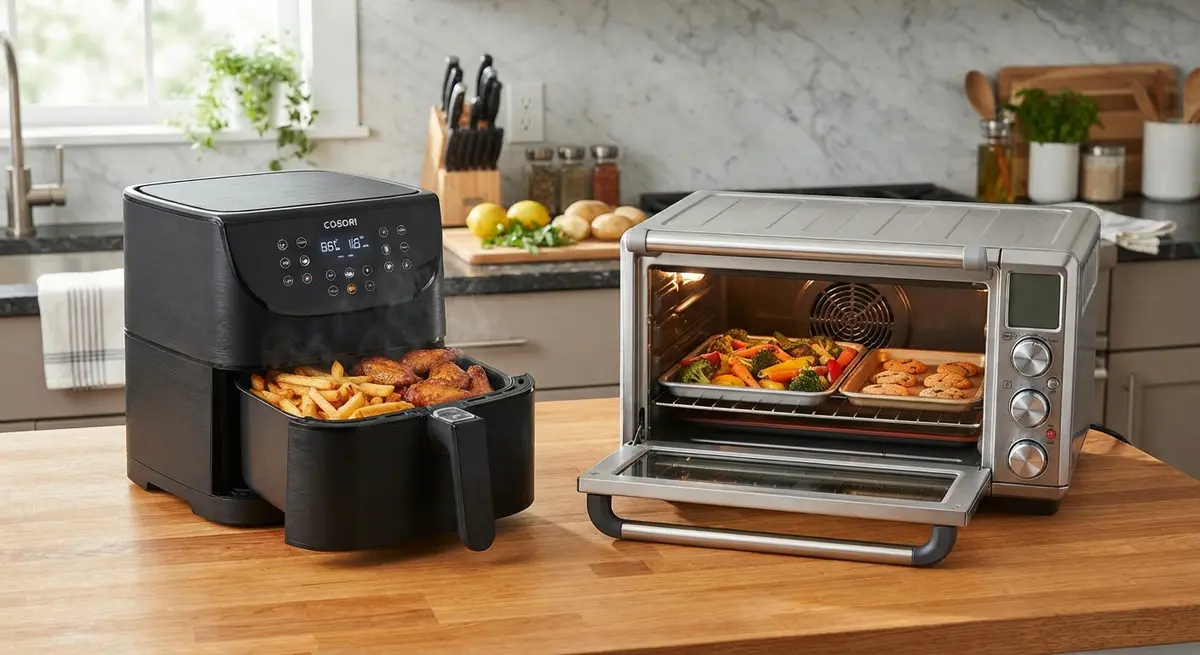
Air Fryer vs. Convection Oven: Which Earns Its Space?
An air fryer is a small convection oven with a built-in fan — but the differences matter. Compare speed, crispiness, capacity, energy, and price to decide what earns your counter.
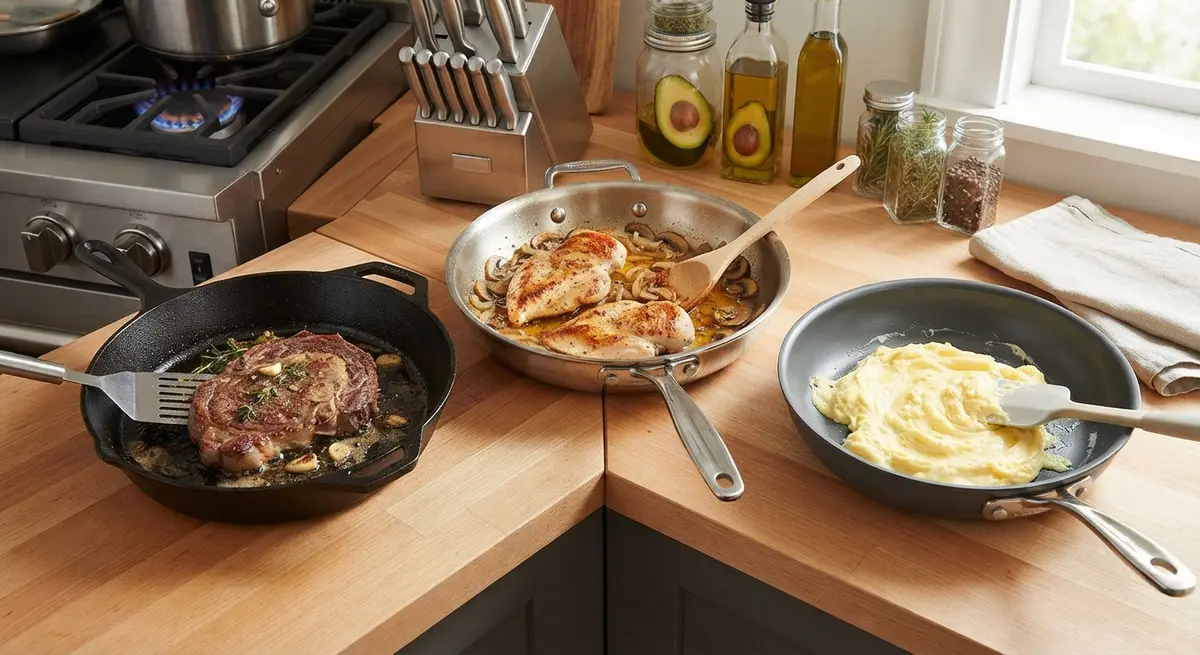
Cast Iron, Stainless, or Nonstick: Which Pans Do You Need?
Cast iron, stainless steel, or nonstick? The answer is usually 'two of them.' Here's the honest breakdown of what each pan does best, what to skip, and the starter set that covers 90% of cooking.
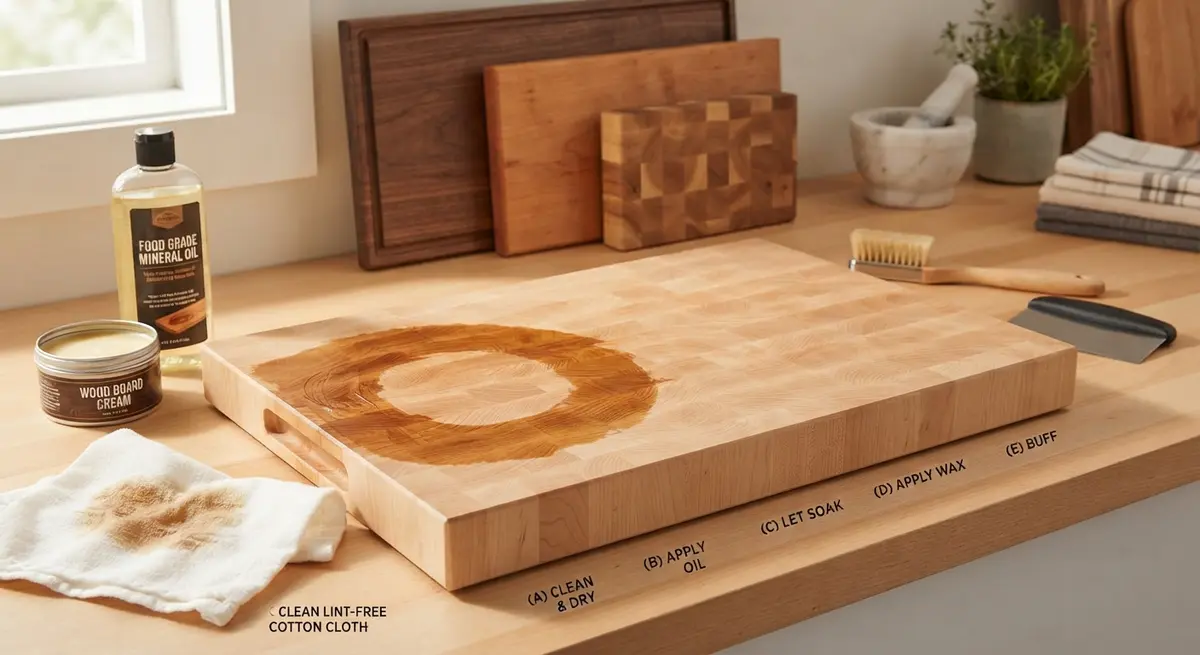
How to Season and Maintain Wooden Cutting Boards
A wooden board isn't fragile — it's forgiving, but not to neglect. With a simple oil-and-wax routine and a few honest habits, yours will stay gorgeous and safe for years.
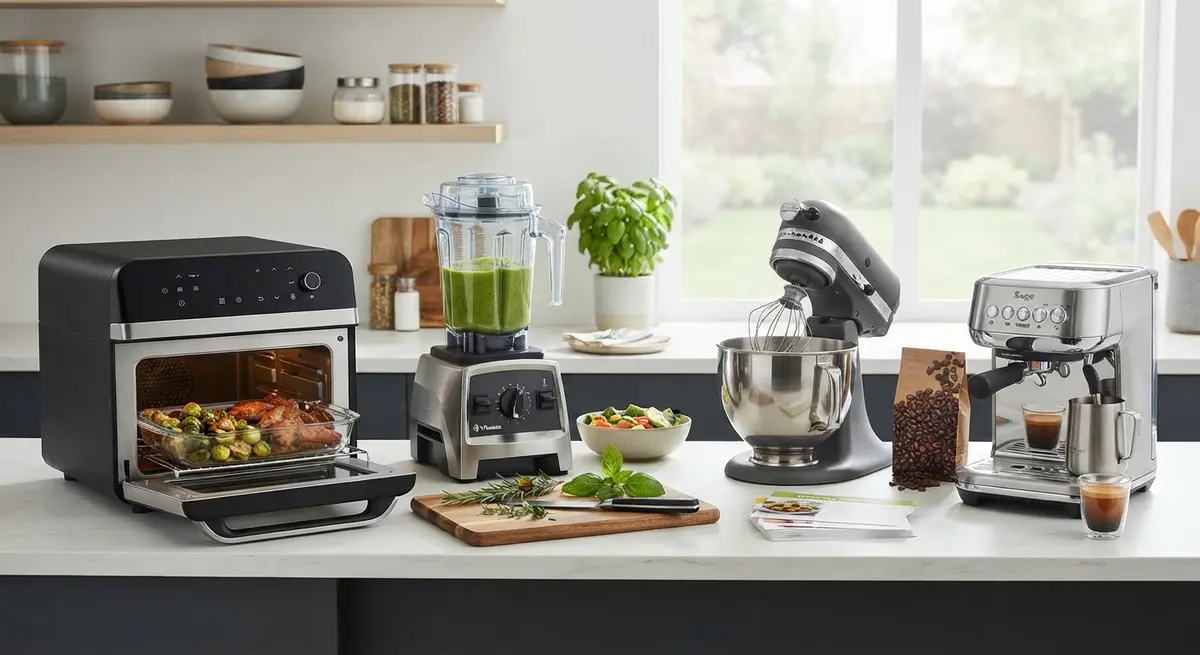
Must-Have Kitchen Appliances Worth the Counter Space
Not every appliance deserves a permanent home on your counter. After testing more than forty machines in home-sized kitchens, these are the twelve that earn their square footage — and the ones I'd ban entirely.
About the Authors
This recipe and guide was developed, tested, and approved in our home kitchen and daily life. Jamy is a retired Food Service District Manager and Early Childhood Program Manager who spent his career overseeing multi-site restaurant operations, large-scale culinary production, and daycare menu management. Kaïna brings the ultimate real-world test: making sure it brings ease and joy to our kids on a busy weeknight.
Read more about our professional background and philosophy →