Air Fryer vs. Convection Oven: Which Earns Its Space?
By the QuiteRecipes team (Jamy & Kaïna)
An air fryer is a small convection oven with a built-in fan — but the differences matter. Compare speed, crispiness, capacity, energy, and price to decide what earns your counter.
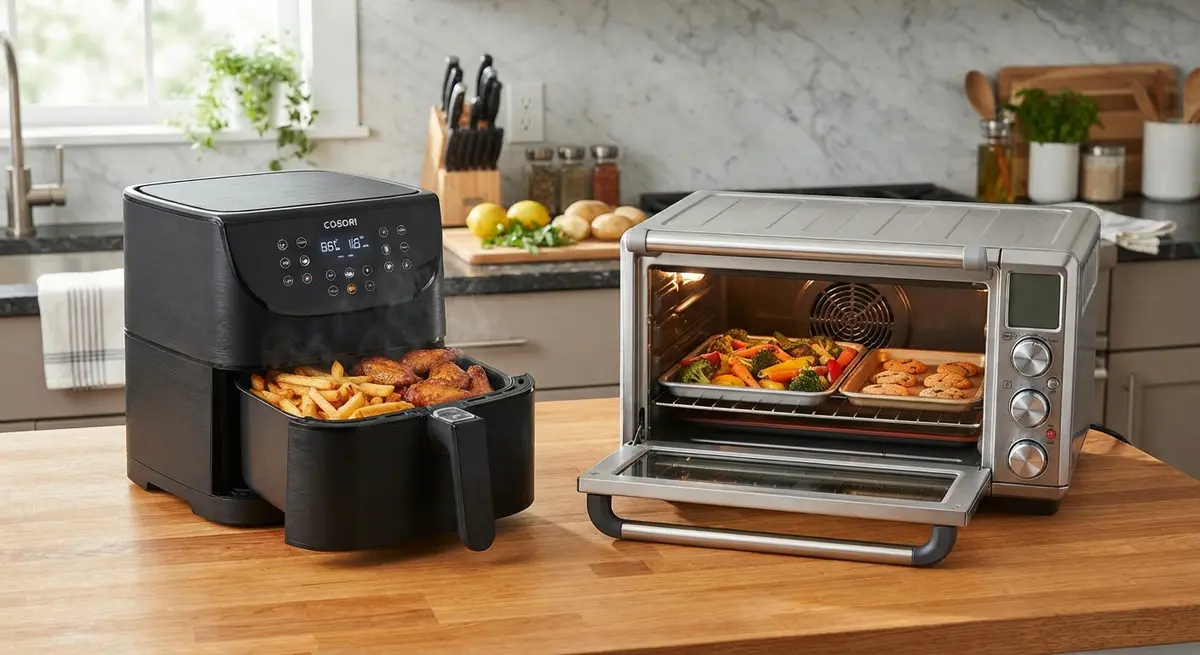
The first time someone told me an air fryer was "just a tiny convection oven," I bristled. I'd spent a fortune on a countertop convection oven and felt sure the fan-forced wizardry was unique to it. Then I used my neighbor's air fryer for a week, and I understood: they weren't wrong, but they were also missing the point. The mechanism is similar; the use is completely different.
This is the comparison everyone actually needs — not "which is the best machine" but "which one fits how you cook." Faster? Browned crispier? Feeds more people? Costs less? The answer depends entirely on your kitchen and your dinners.
Let me take you through the honest, practical differences — heat, speed, crispiness, capacity, energy, noise, price — and give you a clear decision rule at the end.
First, the Honest Truth: Same Principle
Both an air fryer and a convection oven move hot air around food with a fan. Next to still-air ovens, both are faster and more even-browning. That shared DNA is why the confusion exists.
But the scale is completely different:
- An air fryer is a compact, high-velocity basket appliance that blasts food with fast-moving air from a small space. It's optimized for one layer, close to the fan.
- A convection oven is a full oven cavity (countertop or full-size) with a fan that circulates air. It cooks in bulk, multiple racks, bigger portions.
The mechanism is the same idea. The engineering priorities are opposite.
The real question isn't "which is better" — it's which machine matches your food, your people count, and your counter.
Speed and Heat: Who's Faster Where It Counts
Air fryer strengths
- Startup is nearly instant — most reach 200°C in 3–5 minutes versus 10+ for a full oven to equal convective heat.
- One-person-perfect batches — chicken wings crisp in ~20 minutes; fries in ~15; a handful of tater tots in count-it-suppose. The small cavity means less thermal mass to heat.
Convection oven strengths
- Bigger batches at once — a quarter sheet of roasted vegetables, two trays of cookies, a whole chicken for four people. Same cook time whether it's one portion or three trays.
Net: for crisp snacks and singles, the air fryer is faster. For feeding a family in one go, the convection oven's capacity wins the rerun.
Crispiness: The Territory Nobody Wants to Share
This is where the air fryer earned its reputation.
Because an air fryer's basket is small and the fan sits inches from the food, it delivers a fierce, dry, concentrated air blast. That's what creates the "fried" texture with a fraction of the oil. Frozen fries, breaded chicken, even bacon — the air fryer produces that snap-and-crackle exterior that a convection oven, with its gentler airflow over a spread-out batch, approximates but rarely equals.
Trade-off: the air fryer does this only for the single layer in the basket. Overfill it and you get steamed, not crispy.
The convection oven gets you pretty crisp but across a whole tray — and its larger volume means you can crisp a whole sheet pan's worth of vegetables and roast two chicken thighs in one go, which is a kitchen skill in itself.
Rule of thumb: crispy snack-for-one → air fryer. Crispy vegetables-or-a-family-meal → convection oven.
Capacity and What You Actually Cook
Let's be honest about real life:
- Air fryer (basket, ~3.5–7 L): realistically one layer of wings, fries, or a small roast. Great for 1–2 people; awkward for 4+ unless you run multiple rounds.
- Convection oven (countertop or built-in): a whole chicken, a full tray of roasted anything, 2–3 racks of cookies at once.
If you've ever had to cook dinner for a crowd, you already know which one has your back.
Energy and Running Costs
Neither is a power hog, but the small footprint matters:
- An air fryer heats a tiny space fast, so it uses less electricity per batch for small jobs — often about half of running a full oven.
- A full-size convection oven heats a bigger cavity even if you're only cooking one thing. For a single sheet of fries, it's less efficient.
Net: for the small-job daily workflow, the air fryer sips energy. For bulk cooking, the convection oven does more per unit of heat.
Noise
Honest one: an air fryer's concentrated fan is noticeably louder than most convection ovens — think a steady drone rather than a whisper. If your kitchen meets your living room and you hate background noise, the whirr might drive you mad. Convection ovens, even countertop models, tend to run quieter because their fans are bigger and the cavity muffles it.
Price
- Air fryers run from ~$50 to $200 for a good basket model.
- Countertop convection ovens with air-fry settings run from ~$80 to $300.
- If you demand both (an air-fry-capable countertop convection oven), you're shopping the $150–$300 range.
The classic gotcha: paying for "air fryer mode" on a countertop convection oven and then realizing the crisp quality falls short of a dedicated basket air fryer. If crispiness is the whole point, spend on a dedicated air fryer.
Which Should You Buy? (My Honest Decision Rule)
Choose the air fryer if…
- You cook mostly for 1–2 people.
- Crispy proteins and snack foods are your weeknight heroes.
- You want the fastest possible hot dinner on weeknights.
- Your counter already groans under the weight of other appliances.
Choose the convection oven if…
- You feed 3+ people regularly and hate running batches.
- You bake — cookies, casseroles, whole chickens need the cavity.
- You want one appliance that air-fries, roasts, bakes, and reheats.
- You're remodeling and can install a proper convection oven.
Choose neither and keep both if…
You have the counter space and both earn their rent. Many of us run an air fryer for singles and use the full oven with its convection setting for bigger meals. They're complementary, not rivals.
Can an Air Fryer Replace a Full Oven?
Not really. It can't bake a full-size cake or roast a holiday turkey. But it can replace your toaster oven, your dedicated "crispy" appliance, and, for small households, a chunk of your daily oven use.
The Fly Trap of "Crispy": When Each Machine Truly Shines
The crisping debate is really a texture debate. Here's the honest breakdown:
- The air fryer wins on the "chicken-piece" texture — fries, nuggets, wings, roasted chickpeas. The narrow, focused airflow turns moisture into crunch fast, and nothing else at a countertop scale does.
- The convection oven wins on "even, large-surface." Sheet-pan vegetables, whole chickens, pastries, and anything you want to serve at once get the real oven treatment — generous circumference, no stacking, no rotating needed.
- The air fryer loses at "basket-dense." Fill it past a single layer and you've built a steamer. The convection oven tolerates crowded trays and still browns.
The fly trap is buying an air fryer instead of a convection oven and then trying to cook family dinners in a narrow basket. Choose by what you serve most, not by the hype.
The "Second Oven" Play: Round-Robin Cooking
The pragmatic home cooks run both machines in shifts:
- Small sides in the air fryer while the oven roasts — eggs or roasted veg sides on the counter while the main cooks above.
- Holiday platter logistics — the air fryer becomes the warm-holding station for the batch that won't fit on the oven tray, at a serving temperature, not a cooking one.
- Batch-treats — cookie rounds go in the real oven while a single sheet, ready to go, parks in the air fryer, waiting for its turn.
The two machines aren't rivals; they're a two-burner system. The kitchen with both stops bottlenecking on the oven and paced cooking becomes a choreography instead of a queue.
Energy and the Small Kitchen Budget
"If it opens a rack, it's a real oven" is roughly true — but the energy math matters in a small kitchen:
- The air fryer preheats in minutes and heats a fraction of the cavity — for one or two portions, it's genuinely cheaper and faster than firing a full convection cycle.
- The convection oven wins at volume — roasting a whole chicken or a full sheet feeds a family more cheaply than four air-fryer loads.
- The real budget-breaker is firing a full oven for a single potato. Neither machine is better; matching machine to portion is the habit that keeps the bill low.
In a busy household, that's the whole verdict: air fryer for speed and singles, convection for family volume, and the flexibility to use either when it's the efficient one.
The Crossover Menu: Dishes Both Machines Handle Well
Before you decide, know the overlap — it changes the math:
- Sheet-pan chicken and roasted veg work in both: air-fryer single-portion, convection for a whole family. If you mostly cook 1–2 servings, the air fryer's quicker.
- Baked goods are the differentiator. Cookies, tarts, and bread need the convection oven's gentle, even heat and the tray-space — an air fryer does a sad single scone.
- Frozen convenience food — nuggets, chips, "oven"-style snacks — the air fryer turns them crispy in half the time with no preheat; that's its easy win.
The crisp corner of the menu is air-fryer territory in speed, but the pastry corner belongs to convection alone. Pick based on which corner of the menu you eat most, and the two-machines answer becomes obvious.
The Basket-Size Trap and the "Second Batch" Problem
The air fryer's fatal flaw hides in the basket volume:
- Single-layer is the law — crowd the basket and you get steam, not crisp; a dense batch doubles the cook time and halves the crunch.
- The second-batch problem — a meal for more than two means runs: first batch eaten cold or rushed while batch two cooks. For families, that's the case against the air fryer as the primary.
- The wide-basket upgrade — some newer air fryers hold two layers or a full tray; if the basket's the whole story for you, pick size over style.
Size sets the ceiling. Family-of-four since 7 p.m.? That's a convection oven's dinner. Solo supper with snacks at 11 p.m.? Air-fryer-fast wins the counter.
The Final Verdict, In One Paragraph
Keep both when you can, buy the convection oven when you must choose one, and buy the air fryer only when its signature dish — fries, wings, singles, crunch — dominates your kitchen's rhythm. The air fryer is a specialist: excellent at its corner, pointless at the rest. The convection oven is the generalist: slower but broader, and it can do everything the air fryer does, just not as crisply per minute. Match the machine to the menu, not to the hype, and the one that "deserves your counter space" becomes the one that cooks the food you actually cook.
FAQ
Is an air fryer healthier than a convection oven?
Both are dramatically lower-fat than deep frying. An air fryer uses minimal oil for a crispy result; a convection oven does the same with a bit more space. "Healthier" here mostly means "not deep-fried," which both devour.
Do air-fryer and convection oven require different oil?
No. Any high-smoke-point oil works in both — canola, peanut, avocado for high heat. A spritz of olive oil on vegetables is fine too.
Can I put parchment or metal in an air fryer?
Yes, but weigh it down so the fan doesn't blow it around. And never crowd the basket — a single layer is the whole secret of crispiness.
Which one browns breaded food better?
Air fryers win on breaded and battered foods (chicken, fried rice, mozzarella sticks) because of the intense, close-range airflow. Convection ovens brown broader, flatter foods like roasted vegetables and pizzas more evenly.
How do I clean each?
Air fryer baskets and trays are usually dishwasher safe; wipe the interior periodically. Convection ovens need occasional degreasing of the interior and fan grill — a damp cloth and gentle degreaser keeps them healthy.
Key Takeaways
- Same fan-forced principle; different scale and purpose.
- Air fryer: fastest, crispiest, best for 1–2 people and snack-size batches.
- Convection oven: capacity wins for families, baking, and one-appliance versatility.
- Air fryers use less energy for small jobs; convection ovens do more per heat for bulk.
- Buy the air fryer if crispy time-to-table is king; buy the convection oven if you feed a crowd or bake.
A Final Word
My neighbor kept the air fryer and I kept my convection oven, and we still trade cooking tips every other week. Neither of us was wrong — we cook for different tables. That's the whole decision in a sentence: buy the machine that fits your people, your weeknights, and your counter. Whichever side you land on, you'll be eating crispier, faster food than a still-air oven ever gave you — and that's a good place to start.
Published on 2026-08-13 by the QuiteRecipes team (Jamy & Kaïna).
Related Articles
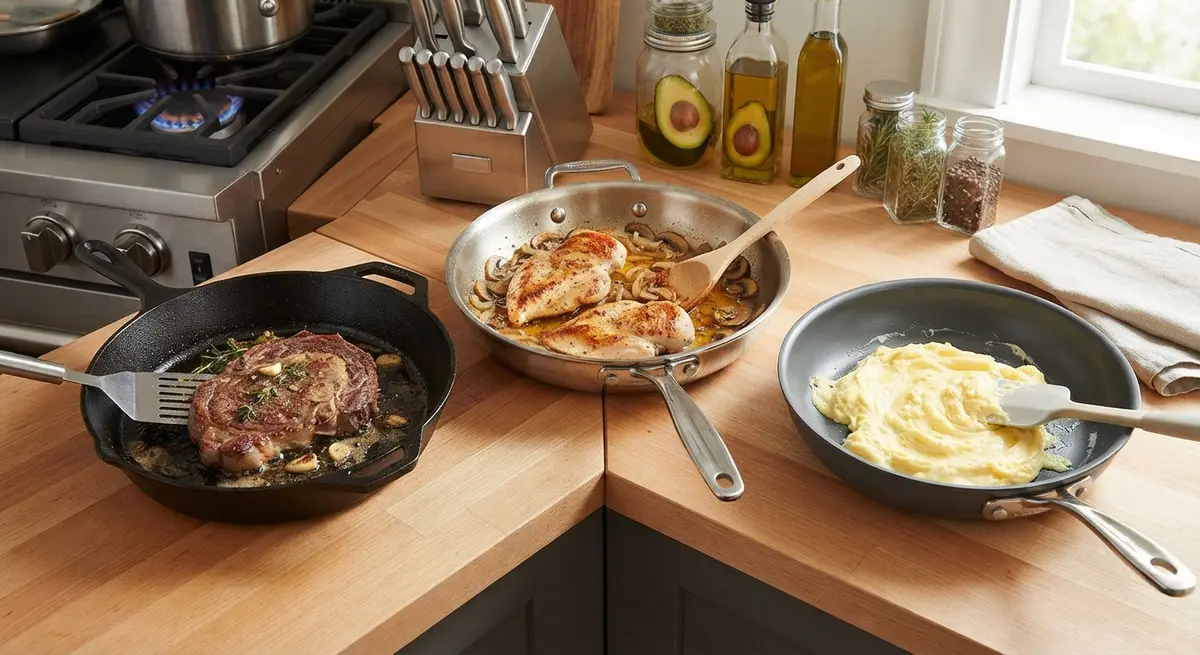
Cast Iron, Stainless, or Nonstick: Which Pans Do You Need?
Cast iron, stainless steel, or nonstick? The answer is usually 'two of them.' Here's the honest breakdown of what each pan does best, what to skip, and the starter set that covers 90% of cooking.
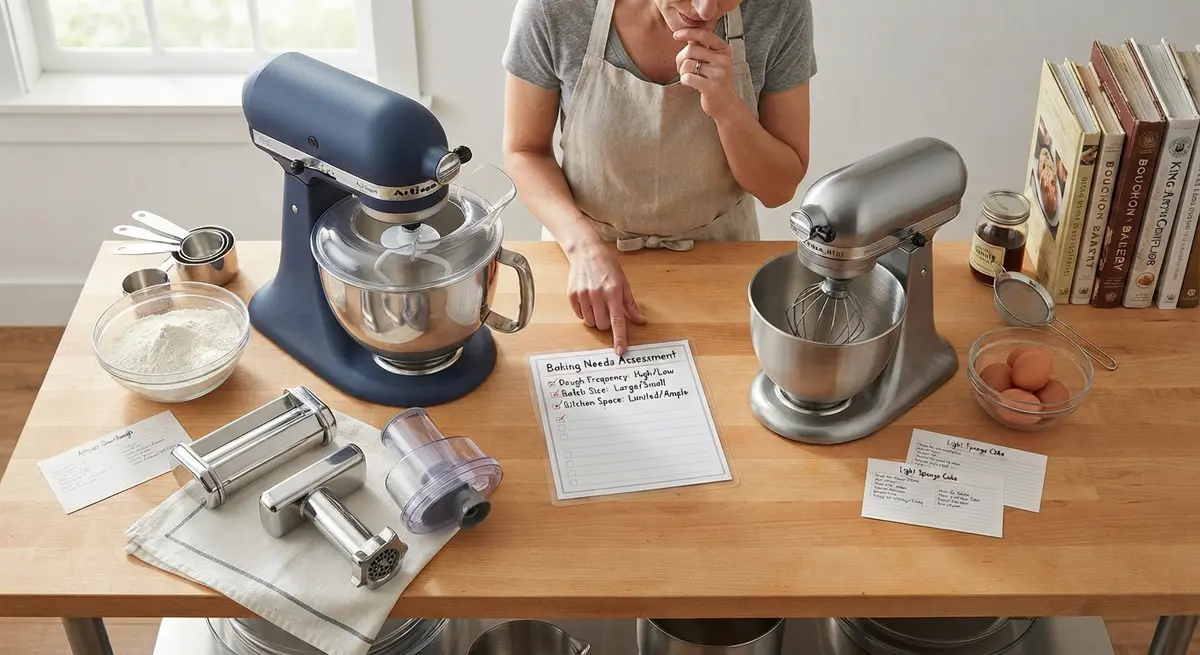
How to Choose the Right Stand Mixer for Your Baking Needs
The right stand mixer survives decades of baking — the wrong one collects dust. This guide cuts through the specs: capacity, bowl, power, attachments, and the decision rule for your kitchen.
5 Cozy Decor Ideas to Make Your Kitchen Feel Like Home
The coziest kitchens aren't magazine spreads — they're layered light, soft textures, living green, good smells, and room to gather. These five ideas make any kitchen feel like home.
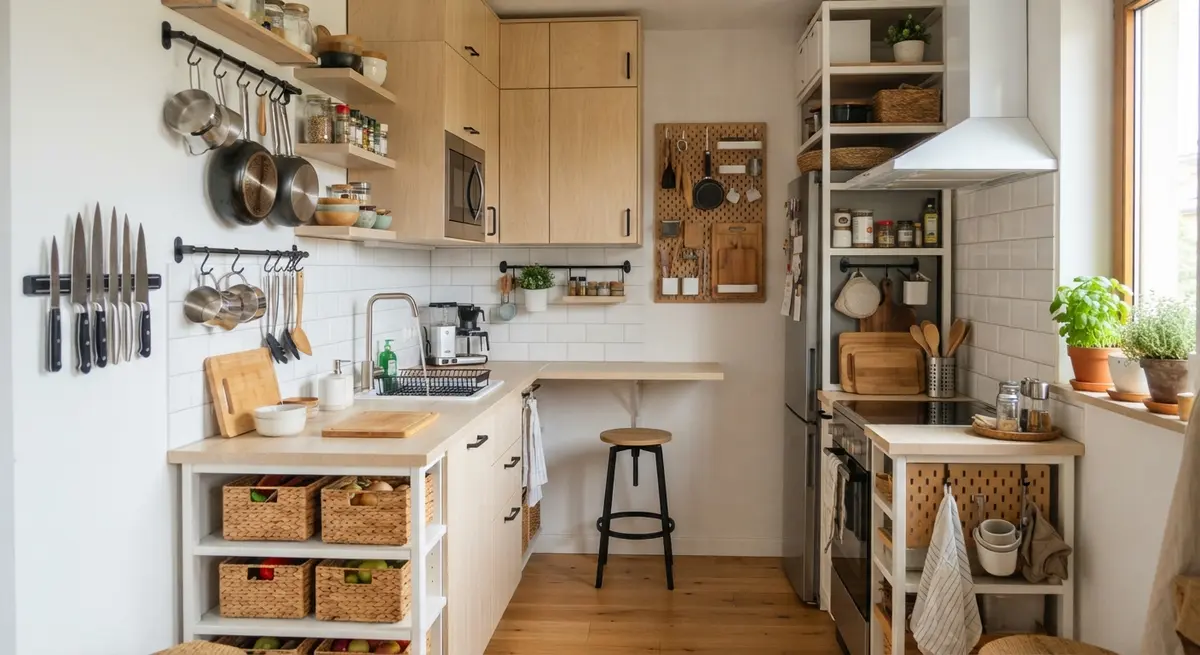
7 Simple Space-Saving Hacks for Small Kitchens
A tiny kitchen can still feel open and work beautifully. These seven hacks — from vertical storage to multitasking tools — double your usable space without a renovation.
About the Authors
This recipe and guide was developed, tested, and approved in our home kitchen and daily life. Jamy is a retired Food Service District Manager and Early Childhood Program Manager who spent his career overseeing multi-site restaurant operations, large-scale culinary production, and daycare menu management. Kaïna brings the ultimate real-world test: making sure it brings ease and joy to our kids on a busy weeknight.
Read more about our professional background and philosophy →