7 Simple Space-Saving Hacks for Small Kitchens
By the QuiteRecipes team (Jamy & Kaïna)
A tiny kitchen can still feel open and work beautifully. These seven hacks — from vertical storage to multitasking tools — double your usable space without a renovation.
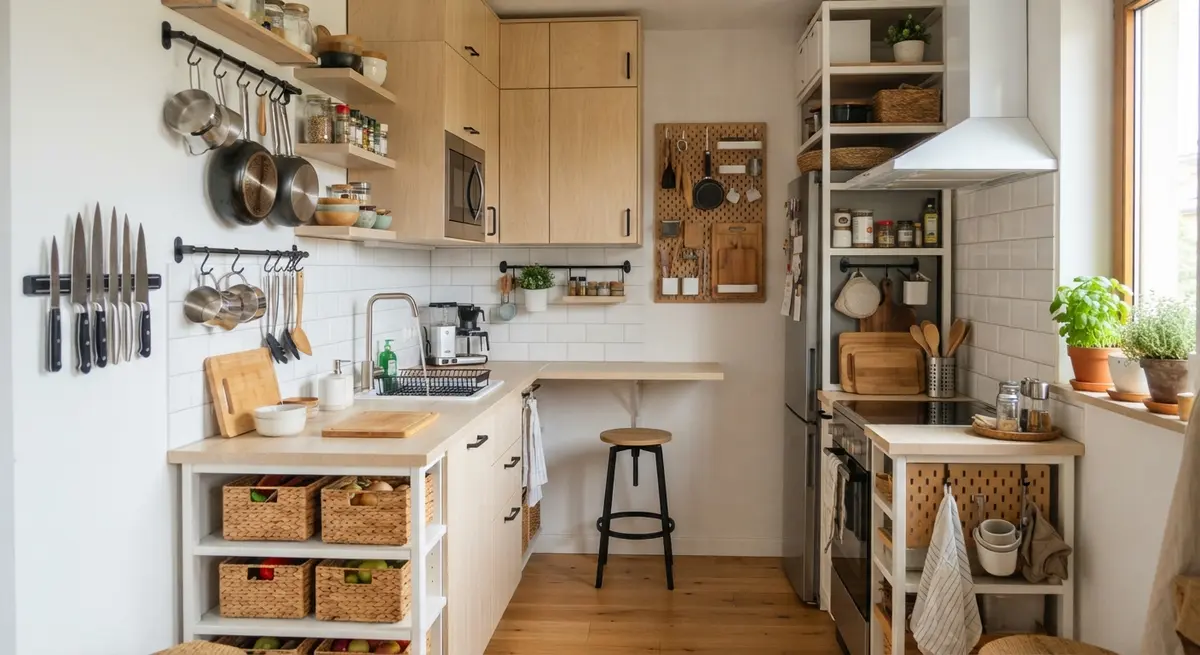
I once paid to live in a place where the entire counter, ready to cook, was about as long as two dinner plates side by side. The oven door couldn't fully open with the dish rack down. There was no pantry at all — I had a shelf above the fridge, a drawer, and grit.
For the first few months I treated it as a hardship. Then I treated it as a puzzle. And somewhere between a magnetic knife strip and a stack-nesting bowl set, I fell a little bit in love with constraint. Because a small kitchen forces you to be clever, and clever is its own kind of luxury.
Nearly everything I learned survives today even though I now have more space. The principles hold: store vertically, use the air, edit without mercy, and let every tool earn its place. Here are the seven hacks that actually moved the needle, in the order I'd implement them if I were starting from zero.
1. Go Vertical With Magnetic and Wall Storage
The most underused real estate in any small kitchen is the wall. Counter-height storage is scarce; everything above the backsplash is wide open.
- Magnetic knife strip — mounting your knives frees an entire drawer and keeps blades from clanking against each other. A 45-centimeter strip holds five to six knives, whisks, and tongs.
- Magnetic spice tins or jar lids — a thin metal strip or magnetic sheets on the cabinet door holds spice jars upright and at a glance, instead of buried.
The payback: a wall-mounted knife strip alone can free an entire drawer of flat space — perfect for the gadgets that actually need it.
2. Vertical Dividers Inside Every Drawer
Drawers are where small-kitchen chaos goes to die. The single cheapest fix: bamboo or metal dividers that separate shallow items from tall ones.
Install dividers to stand:
- Cutting boards and trays on their side instead of flat
- Baking sheets vertically instead of stacked in a way that turns into a tumbling game
- Foil, wrap, and bag boxes upright instead of sliding on their sides
Dividers cost a few dollars apiece and take minutes to place. The payoff is that a drawer that once held two flat sheets now holds twice that, plus boards, plus a cooling rack.
3. Stackable, Nesting, and Collapsible Everything
In a small kitchen, bulk is the enemy and nesting is the cure.
- Nesting mixing bowls — one set of four in diminishing sizes stores inside one another as a single unit.
- Stackable and collapsible containers — silicone collapsible colanders and steamers flatten when idle. Stackable glass containers lose the "matching lids scattered in purgatory" problem.
- Nesting cookware — one pan that holds a second, with two lids, saves a full cupboard of space.
- Foldable cutting boards last, and a collapsible dish rack folds away when dry.
The test: if an item only gets used "when I have space," it forfeits its permanent spot. Give it to the nesters.
4. Claim the Space You Already Own
Small kitchens hide space in plain sight.
- Under-sink and over-sink organizers — stackable racks squeeze the dead space around pipes, and an over-the-sink cutting board or rack gives you a second prep zone.
- Above-the-cabinet and above-the-fridge zones — seasonal gear, platters, and rarely used appliances live up top where they don't crowd you.
- Over-the-door pantry racks — shallow, mountable shelves turn the inside of a cabinet door into extra shelves.
- The backsplash as hanging garden — a simple rail with hooks drops pots, pans, and utensils onto the wall.
5. Make One Multitasking Appliance Earn Its Spot
Every appliance you own should work for rent. In a small kitchen, a single multitasker beats three single-taskers.
- A toaster oven with convection + air-fry settings replaces a toaster, and sometimes a full oven for small batches.
- One immersion blender with a whisk and chopper attachment pulls duty as blender, mixer, and mini food processor.
Before buying anything, ask: how many jobs does this actually do, and how often? If the answer is "one job, once a month," it lives at the goodwill.
A confession: the appliance that earned its place in my tiny kitchen was a single immersion blender. It saved two drawers and covered three jobs.
6. Grocery-Bag and Lid Discipline (Edit Relentlessly)
Space isn't just about storage — it's about subtraction. Small kitchens punish clutter faster than big ones because there's nowhere for it to hide.
- Keep only the lids you use. Match every container to a lid; donate the strays.
- Kill expired duplicates — three half-empty jars of the same spice is space you're paying rent on.
- Restock, don't hoard. Buy one jar, finish it, replace it.
- Digitize the paper — recipes, take-out menus, and chargers can go digital to free a drawer.
7. The Counter Is a Stage, Not a Warehouse
Limit what permanently lives on the counter. In a small kitchen especially, empty surface is the most valuable thing you own.
- Keep only the daily-use trio — salt, oil, and your daily pan within reach.
- Store the rest up, in, or away. A clear, staged counter reads as "bigger" instantly.
- Use a peel-and-stick under-shelf rack or wheeled cart for items that need counter access but not permanent placement.
The audit: once a quarter, take everything off the counter and off the wall. Put back only what you've used in the last month. You'll be shocked at what doesn't return.
The Vertical Layering System: Stack, Hang, and Rail
Small kitchens reward treating walls, cabinet doors, and under-cabinet gaps as prime real estate.
- Rail systems on the toe kick — a mounting bar under upper cabinets frees counter and face space for the utensils you use daily, and gives small kitchens a professional, purpose-drawn look.
- Magnet strips on tile or metal backsplash — knives, spice tins, and frequently used pans live on the wall, off the counter. The hidden bonus: everything you need is exactly where you work.
- Tension rod in the cabinet — a single rod suspended inside a cabinet turns dead vertical space into double-decker storage for baking sheets, cutting boards, and lids.
Small kitchens fail not for lack of cubic feet but because the useful cubic feet are wasted. Layering vertical space compounds on every wall.
Zone by Zone: One Work Triangle, Zero Wasted Steps
Space savings that create extra walking are a false economy. Arrange the triangle and cap each zone:
- Prep zone: cutting boards, knives, and the bowl stack live within arm's reach of the faucet.
- Cook zone: ladles, spatulas, and the fogged cover hang above the cooktop or live in the closest drawer.
- Clean zone: scrub brushes and sponges live at the sink; drainer lifts above it on a second-tier shelf.
The small kitchen that works without stress isn't the emptiest one — it's the one that respects the triangle and keeps each tool one step from its use. Measure the steps. The triangles that save steps save the kitchen itself.
The "Multiplier" Kitchen: One Space, Every Job
A truly small kitchen multiplies rather than adds:
- The island that doubles as a prep table, dining counter, and overflow work surface when folded.
- The rolling cart that moves from prep duty to a serving sideboard to extra counter for big meals.
- The pegboard wall that reconfigures with the season — holiday tools in December, preserving gear in harvest months.
When every large object does two or three jobs, the small kitchen stops being a constraint and becomes an efficiency. The hacks compound, and the space grows with the imagination.
Decluttering As a Space Strategy
Before buying one more shelf, run the subtraction:
- The "last used" test. If you haven't touched it in six months, it's a candidate — the electric slicer you've never plugged in, the garlic press with the broken hinge, the novelty mug collection.
- The "one slot per tool" rule. A drawer that holds two of everything is a drawer of no-slot; declare one home per tool and let the second copy live elsewhere or go.
- The "horizontal tax." Every flat surface you add (a counter-top riser, a cabinet ladder, a wall rack) buys back space at the cost of clutter; add asks first, buy answers second.
Small kitchens aren't a storage problem — they're often a "fewer things" problem in disguise. Solve the subtraction and the hacks work doubly.
The "Double-Duty Countertop" Trick
Every square inch of counter should carry a second job:
- The cutting board-cover system (a board that covers the sink or the stovetop) turns the ring into a landing zone when not in use.
- The fold-out table under the main counter gives temporary prep and dining space that disappears when guests leave.
- The pot-rack-with-knife-block combo clears the top of the counter that pans and knives would otherwise occupy, all while showing off the useful kit.
Every "doubled" object reclaims a vertical wall and a horizontal inch. Count the second jobs; they are the smallest kitchen's best friend.
The Bathroom-Vanity Rule for Kitchen Drawers
The best small-kitchen drawers imitate the bathroom vanity: vertical, narrow, and everything visible:
- Vertical dividers for sheets and cutting boards turn a 30cm-deep drawer into a filing cabinet.
- Hanging utensil cups under the cabinet keep the stirring line out of the "drawer-face zone."
- A narrow pull-out beside the range hood gives the "always reachable" oils and spices their own dedicated column.
Once the vertical phones ring, the cabinet bases stop swallowing tools. The vanity rule — everything up, nothing lost — is the quiet genius of the small-kitchen drawer.
FAQ
How do I organize a really tiny galley kitchen?
Use the walls and the air: magnetic strips, wall rails, over-door racks, and under-shelf baskets. Store vertically in drawers, nest everything stackable, and keep the counter nearly empty.
What's the fastest way to make a small kitchen feel bigger?
Clear the counter. A staged, emptied surface opens the whole room visually, and good lighting multiplies the effect. Then add mirrors or a light backsplash if you can.
Should I stack pans on top of each other?
Yes, but protect them — place a folded towel or pan protector between stacked nonstick surfaces to prevent scratching, and never stack a heavy pan high.
Are collapsible items worth it?
For things you use occasionally, absolutely. A collapsible colander or steamer saves real cupboard volume when idle. But don't buy collapsible versions of your daily tools — you'll just end up combining both.
How do I store a stand mixer or air fryer in a small kitchen?
Keep it where you can reach it: a wheeled cart beside the counter or a sturdy lower shelf. If it's too heavy to move daily, it deserves a permanent visible spot so it doesn't sit half-out.
What's the cheapest space hack of all?
Vertical dividers in drawers, better than a hundred dollars of gadgets. Move boards, trays, and bags upright and your drawers instantly double.
Key Takeaways
- Store vertically — walls, drawer dividers, and over-door racks are free real estate.
- Nest stackables and collapsibles to defeat bulk.
- Use the space you already own: under-sink, over-fridge, inside cabinet doors.
- Let every appliance multitask or go.
- Edit relentlessly — a small kitchen rewards subtraction.
- Keep the counter staged and nearly empty to feel twice as big.
A Final Word
That tiny kitchen with the two-plate counter ended up teaching me to be a better cook than the big ones that came after. Constraint made me aim my tools, plan my prep, and treasure my surface. You don't need a renovation to love your kitchen — you need a handful of smart habits. Start with the magnetic strip and one drawer divider, and watch how quickly the space you have starts feeling like space you chose.
Published on 2026-08-13 by the QuiteRecipes team (Jamy & Kaïna).
Related Articles
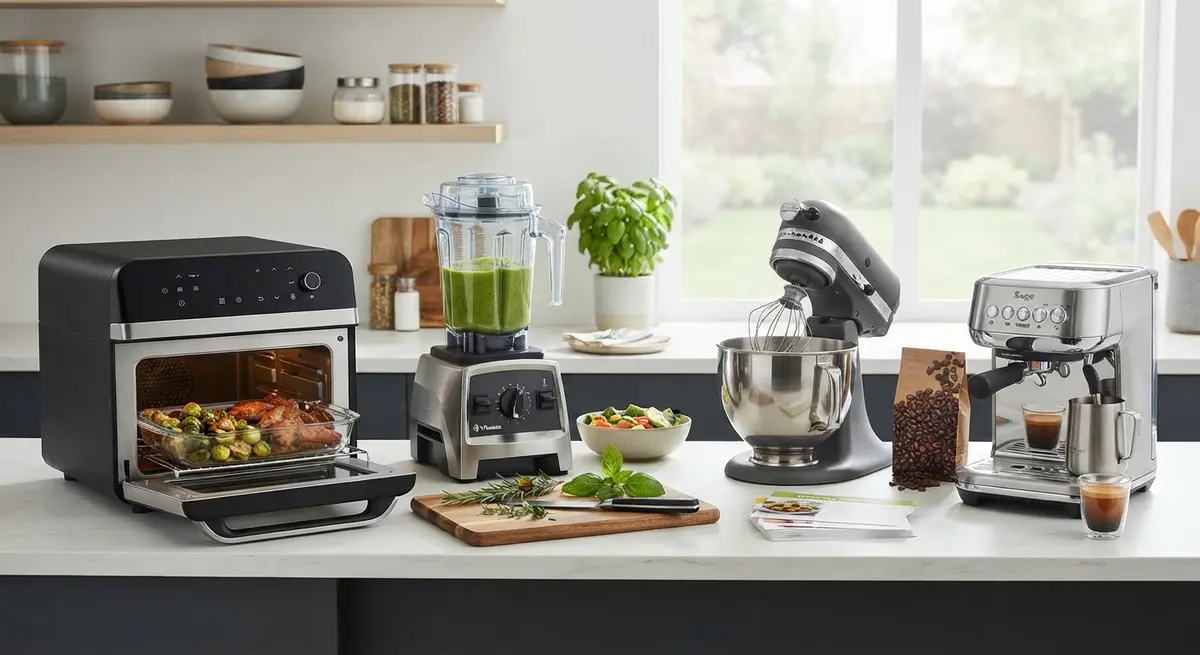
Must-Have Kitchen Appliances Worth the Counter Space
Not every appliance deserves a permanent home on your counter. After testing more than forty machines in home-sized kitchens, these are the twelve that earn their square footage — and the ones I'd ban entirely.
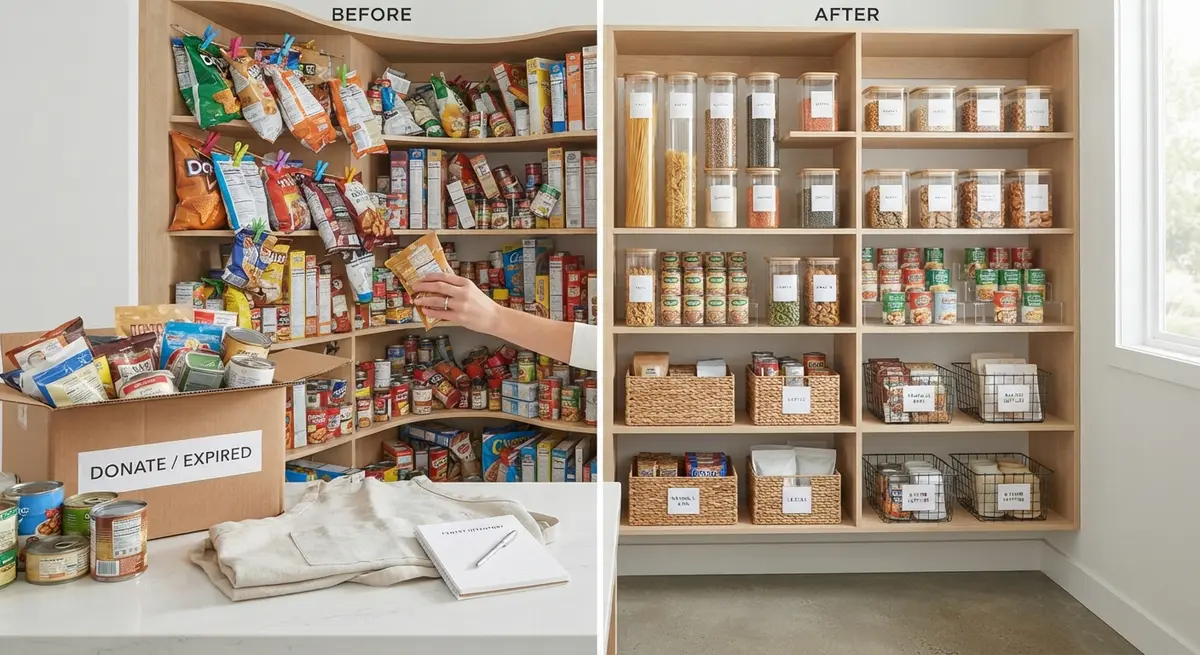
Pantry Reset: The Step-by-Step Cabinets Declutter Method
The pantry reset is a two-hour project that pays for itself all year. Empty everything, discard what's expired, zone by use, label clearly, and restock so dinner gets easier instantly.
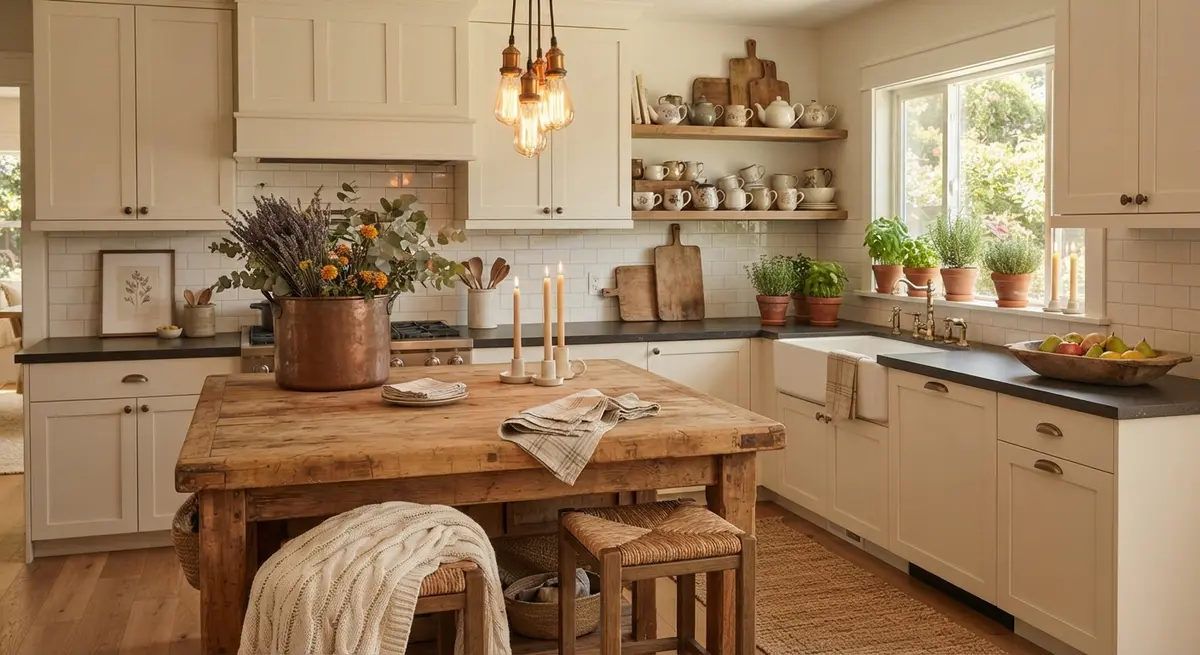
5 Cozy Decor Ideas to Make Your Kitchen Feel Like Home
The coziest kitchens aren't magazine spreads — they're layered light, soft textures, living green, good smells, and room to gather. These five ideas make any kitchen feel like home.
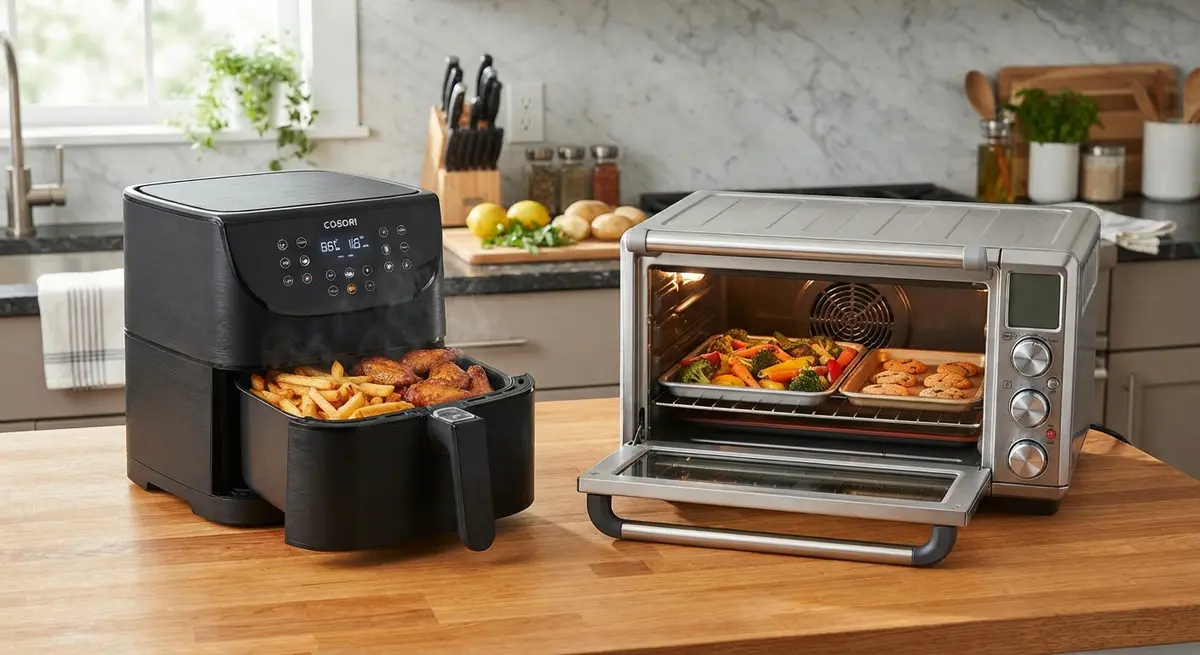
Air Fryer vs. Convection Oven: Which Earns Its Space?
An air fryer is a small convection oven with a built-in fan — but the differences matter. Compare speed, crispiness, capacity, energy, and price to decide what earns your counter.
About the Authors
This recipe and guide was developed, tested, and approved in our home kitchen and daily life. Jamy is a retired Food Service District Manager and Early Childhood Program Manager who spent his career overseeing multi-site restaurant operations, large-scale culinary production, and daycare menu management. Kaïna brings the ultimate real-world test: making sure it brings ease and joy to our kids on a busy weeknight.
Read more about our professional background and philosophy →