Must-Have Kitchen Appliances Worth the Counter Space
By the QuiteRecipes team (Jamy & Kaïna)
Not every appliance deserves a permanent home on your counter. After testing more than forty machines in home-sized kitchens, these are the twelve that earn their square footage — and the ones I'd ban entirely.
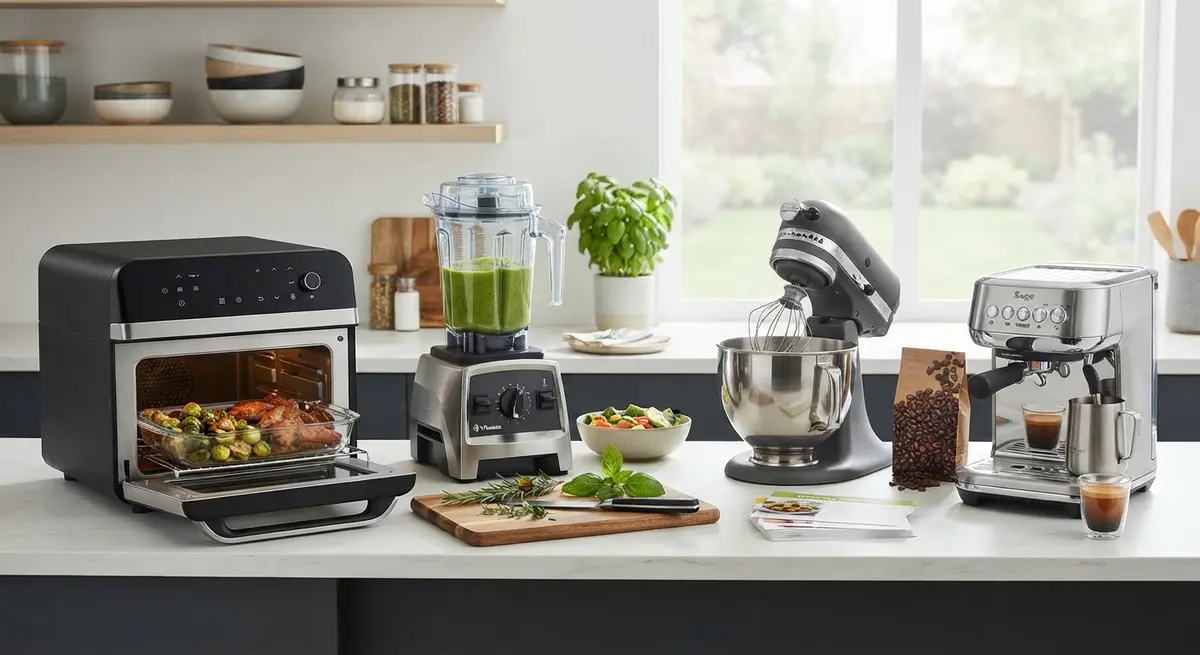
There's an appliance graveyard in my parents' garage. A bread maker in mint condition, an electric raclette grill we used exactly once, a pasta machine that produced three wobbly batches of linguine before being exiled to the top shelf. I used to think the problem was that these things weren't good enough. After years of professional cooking and testing dozens of machines, I've realized the opposite: most kitchens are designed around appliances people wish they'd use, not appliances they actually will use.
Counter space is the most expensive real estate in your home. So when I'm asked, as I constantly am, "which appliances are actually worth it?", my answer always comes from three questions: How often will I genuinely reach for this? Does it do the job meaningfully better than by hand? And does it fit how I actually cook, not how I imagine cooking on a rainy Sunday?
These are the machines I keep on the counter or within arm's reach in my own kitchen — the ones that earn their space every single week.
How I Decided What Makes The Cut
Before I defend any specific machine, let me be honest about my screening process, because it matters more than any model recommendation. I evaluated every appliance by four rules:
- Frequency rule: If I wouldn't reach for it at least once a week, it doesn't live on the counter. Exceptions exist for seasonal machines, but they get stored, not showcased.
- Better-than-hand rule: The machine has to outperform my knives and my hands, not just match them. A gadget that saves nineteen seconds is not worth owning.
- Footprint rule: It has to earn its square footage. A machine used daily pays its rent; a machine used quarterly is a dusty sculpture.
- Upkeep rule: If cleaning it takes longer than using it, it will slowly become a graveyard appliance. This is exactly what happened to my parents' bread maker.
The Daily Workhorses: Appliances That Pay Rent Every Day
The Air Fryer Is Not A Fad Anymore
I was a skeptic. I rolled my eyes through the 2020 air fryer mania, certain it was turbo-charged marketing. Then I spent three weeks with one on loan, and it earned permanent placement by the end of the first day. The modern air fryer — essentially a small, fierce convection oven — preheats in about two minutes, crisps frozen food without oil, and reheats leftovers so well that last night's fried chicken tastes freshly fried.
The honest version of the numbers: wings that take 45 minutes in a conventional oven come out in about 22 minutes. Reheating a slice of pizza yields a crunchy-bottom, melty-top result instead of the soggy microwave tragedy. There are real limitations — it's small, and you can't cook for a family of six in one — but for two-person households, singles, and anyone who reheats takeout, this is the highest-usage appliance on this entire list. I reach for mine more than my microwave on some weeks.
Key tip: Buy the basket-style air fryer, not the oven-door style. The basket version circulates heat more efficiently, produces better crisp, and is dramatically easier to clean — no crevices full of fried crumbs.
The Instant Pot / Pressure Cooker Is A Weeknight Lifeboat
I'll admit my bias: I resisted pressure cookers for years, convinced that slow-and-low was the only honest way to cook. Then I watched a friend make a full beef stew — chuck, root vegetables, a proper braising liquid — in under an hour on a Tuesday. Pressure cooking at about 15 psi raises the boiling point of water to roughly 250°F (121°C), which collapses collagen and tenderizes tough cuts in a fraction of the time of a slow braise.
What I now use mine for, on rotation:
- Dried beans: bag to edible in about 40 minutes, no overnight soaking, versus hours of watchful simmering on the stove.
- Weeknight curries and stews: everything in the pot, high pressure for 20–30 minutes, and the result genuinely tastes like it simmered all afternoon.
- Perfect rice, quinoa, and steel-cut oats with zero stirring — set it and forget about it.
- Tough cuts of meat: pork shoulder or chuck fork-tender in about an hour.
Is it a replacement for a good slow cooker ethos? No. But it's the best single appliance for the "I want a long-braised meal but I got home at 6 p.m." reality of modern life. If you own one and only ever make soup in it, you're driving a sports car to the corner store.
The Immersion Blender Is The Smallest Big Upgrade
This is the cheapest appliance on the list, and arguably the one with the highest return per dollar. A stick blender costs less than a restaurant dinner and will change the texture of your soups, sauces, and dressings permanently. No transferring hot soup into a pitcher blender, no boiling stock that threatens to spray everywhere, no extra bowl to wash — you puree directly in the pot, in seconds, to a silkiness a countertop blender strains to match.
The two things it does that genuinely surprise people:
- Silky soups and sauces in the pan, zero transfer, zero mess. It's the reason I make soup three times as often as I used to.
- Emulsions that don't break. A properly used immersion blender — tilted so the blade creates a vortex — makes a mayonnaise or hollandaise that holds together with almost no effort.
You do not need the thousand-piece set with whisks and food-processor attachments. A plain wand with a detachable blade is the honest version — the machine I most often recommend for the biggest cooking upgrade per dollar.
The Weekend Machines: Worth It If You Cook On Sundays
A Stand Mixer, If You Bake Regularly
I'll write a whole separate guide about choosing one, but the yes-or-no question deserves an answer here: do you bake bread, cookies, meringues, or enriched doughs more than twice a month? If the honest answer is yes, a stand mixer earns its footprint. Kneading by hand takes twenty minutes and a tired wrist; a mixer does it reliably in six to eight minutes at roughly the same hydration. And no hand-whisking marathon beats five minutes in a mixer for meringues or whipped cream.
The rule that applies to all of them: don't buy the biggest one out of misplaced ambition. A 5-quart unit handles virtually all home baking.
The Cast Iron / Sheet Pan Are Not Appliances, But Treat Them Like Tools
I want to make a quick confession: two of the most valuable "appliances" in my kitchen aren't electrical at all. A pre-seasoned cast-iron skillet and a set of rimmed half-sheet pans are, per dollar, the highest-performing cooking hardware I own. Cast iron holds heat evenly, sears a steak better than my stainless pan, and — contrary to myth — cleans in minutes with hot water and a stiff brush. The sheet pans roast vegetables at 450°F (230°C) year-round and make the easiest single-pan weeknight dinners on the planet.
The Debate: Machines I Almost Cut, And Why They Stay
The Rice Cooker Is Oddly Indispensable
Few machines divide people like a dedicated rice cooker. My countertop snobbery insisted my favorite pot-simmered basmati was just as good. Here's the honest gap: a decent rice cooker nails perfect rice every single time — no watching, no timing anxiety — and then keeps it warm for an hour while you finish everything else. The margin of error on stovetop rice is thin; removing that error entirely is worth its modest footprint if rice is a weekly staple. The trick is buying a decent one — cheap units scorch the bottom and steam-trap the top.
The Single-Serve Coffee Maker, With A Caveat
I normally advise a simple drip machine or pourover setup instead of a pod machine, both for taste and for the endless plastic pods — but I have a kitchen where a no-fuss single cup of decent coffee matters more than my espresso snobbery. The honest customer for a pod machine is someone who currently drinks no coffee at home because making it feels like a barrier. If a pod machine changes that calculus, it's earned its spot — just buy the refillable-pod version and skip the environmental guilt.
The Ones I Took Off My Counter (And You Should Too)
Let me counterbalance the praise with the honest deletions. These are the machines I tested, lived with, and eventually donated — the biggest space-wasters:
- Bread makers. The one-batch loaf shape, the 3–4 hour lead time, and the curious fact that a hand-kneaded loaf is better. A Dutch oven and 20 minutes of hands-on time make better bread with fewer parts to clean.
- Electric raclette grills and most "fun" party cookers. They're not bad machines; they're just used three times a year, and counter space should serve the other 362 days.
- The countertop frozen-dessert maker. Genuinely cute, genuinely rare. If dessert is your hobby, fine — own it proudly. Otherwise, the sorbet you can make in a blender with frozen fruit will scratch the itch four times a year.
The pattern here is the tell: machines fail when they're bought for a fantasy version of your kitchen life. When you buy for the meals you actually cook on a Tuesday, the appliance graveyard stays empty.
How To Make Space Before You Buy
Before any of these find a home on your counter, do this five-minute audit — it's the most useful appliance advice I can give you:
- Scan your counter for anything you haven't touched in 60 days. Move it to a cabinet, or donate it.
- Identify your "zone": the coffee corner, the prep corner, the everyday cooking corner. Each appliance should serve one of these clearly.
- Ask of every new machine: What does it replace, and how many times a week do I do that thing? If the answer to the second half is "less than once," it goes on a shelf, not on the counter.
- Measure your usable counter space before you measure your appliance. A machine that requires an outlet in the one spot where you chop vegetables will quietly sabotage you forever.
A Realistic Starter Kit, By Budget
Since a list without guidance is a list you can't use, here's how I'd furnish a kitchen from scratch at three levels — every option a machine that earns its keep:
Under $150 total: a good half-sheet pan ($20), a pre-seasoned cast-iron skillet ($30), an immersion blender ($50–80), and a rice cooker if rice is your staple ($40).
The balanced kitchen (~$450): add the air fryer ($100–150), a proper coffee setup ($40–80), and a pressure cooker ($80–150) to that first group.
The baker's kitchen (~$800 and up): add a stand mixer ($250–600) and a food processor ($150–250) — the processor does earn space if you make doughs, pesto, or do a lot of grating.
The Bottom Line On Counter Space
Here's the philosophy that runs through everything I've written today: an appliance is worth its counter space when it changes what you actually cook on an ordinary night — not when it sits gleaming as a monument to your good intentions. My air fryer earns its spot because I reach for it six nights a week; my bread maker earned its exile because I reached for it once a quarter.
Before you click "add to cart" on the next shiny machine, picture yourself using it on a rainy Tuesday at 7 p.m. when you're tired. If you can honestly picture that, buy it. If you can't, save the money and the space.
Frequently Asked Questions
How many appliances should I keep on my countertop?
As few as your weekly habits demand — a good target is three to five machines used several times a week, with everything else stored in cabinets. Full countertops aren't a sign of a well-equipped kitchen; they're a sign of a kitchen that prioritizes display over function.
Is an air fryer really worth buying if I have a good oven?
Yes, for a specific set of jobs: it preheats in about two minutes, makes small portions crisp better than a conventional oven, and reheats leftovers far better than any microwave. If you mostly cook for one or two, it will become your most-used machine.
Do I need both an immersion blender and a countertop blender?
Only if you do both jobs often: the immersion blender is for hot soups and sauces directly in the pot; the countertop blender is for smoothies and high-volume purees. Most people find the immersion blender is the better first purchase.
How do I stop appliances from making my kitchen feel cluttered?
Practice the "one in, one out" rule: any new machine that lands on your counter means another one leaves it. Store seasonal machines in a labeled drawer, and keep your daily workhorses in the same zone every time so your kitchen settles into a rhythm instead of a visual noise floor.
Key Takeaways
- Counter space is the most expensive real estate in the kitchen — every appliance must earn it through genuine weekly use.
- The highest-value machines are the air fryer, pressure cooker, and immersion blender: frequent use, small footprint, real speed or texture gains.
- Buy for the meals you cook on a Tuesday, not the kitchen life you imagine on a Sunday.
- The biggest space-wasters are "aspirational" machines bought for activities that happen a few times a year.
- Apply the four rules — frequency, better-than-hand, footprint, and cleanup — and keep counters honest with "one in, one out."
Published on 2026-08-13 by the QuiteRecipes team (Jamy & Kaïna).
Related Articles
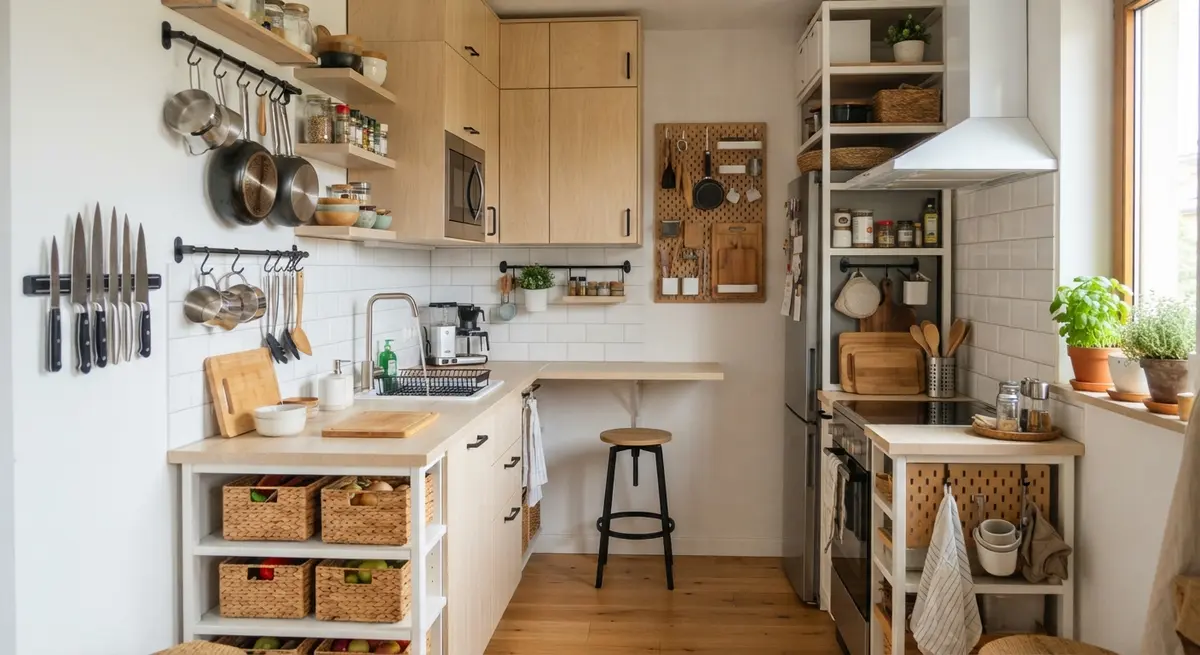
7 Simple Space-Saving Hacks for Small Kitchens
A tiny kitchen can still feel open and work beautifully. These seven hacks — from vertical storage to multitasking tools — double your usable space without a renovation.
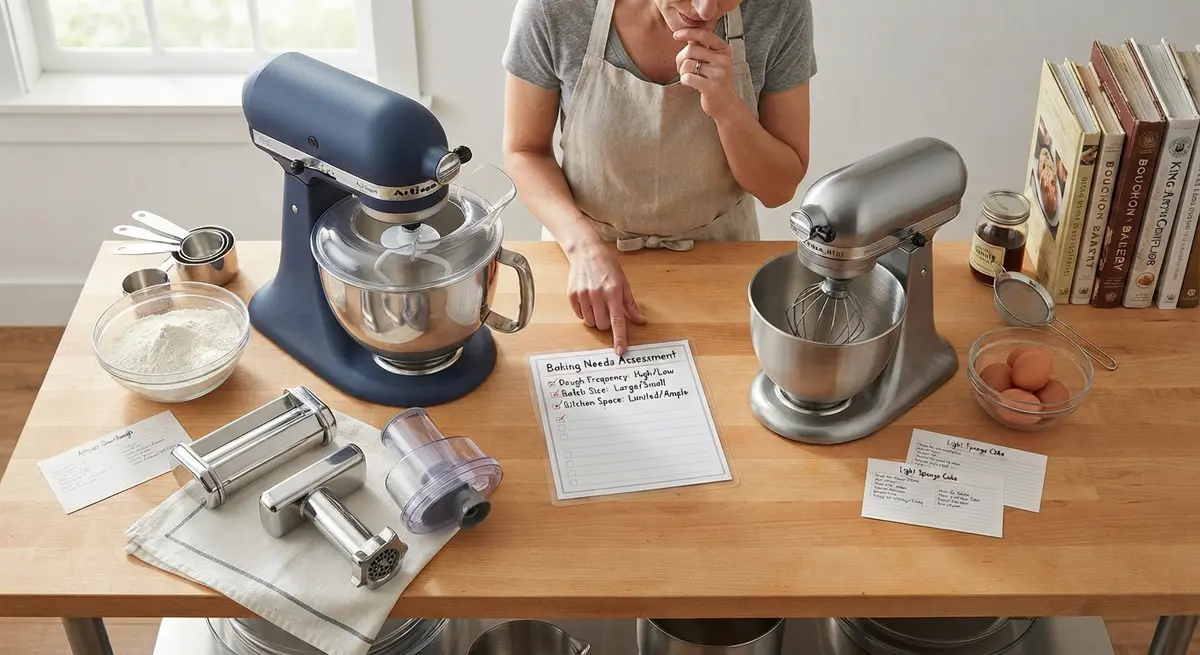
How to Choose the Right Stand Mixer for Your Baking Needs
The right stand mixer survives decades of baking — the wrong one collects dust. This guide cuts through the specs: capacity, bowl, power, attachments, and the decision rule for your kitchen.
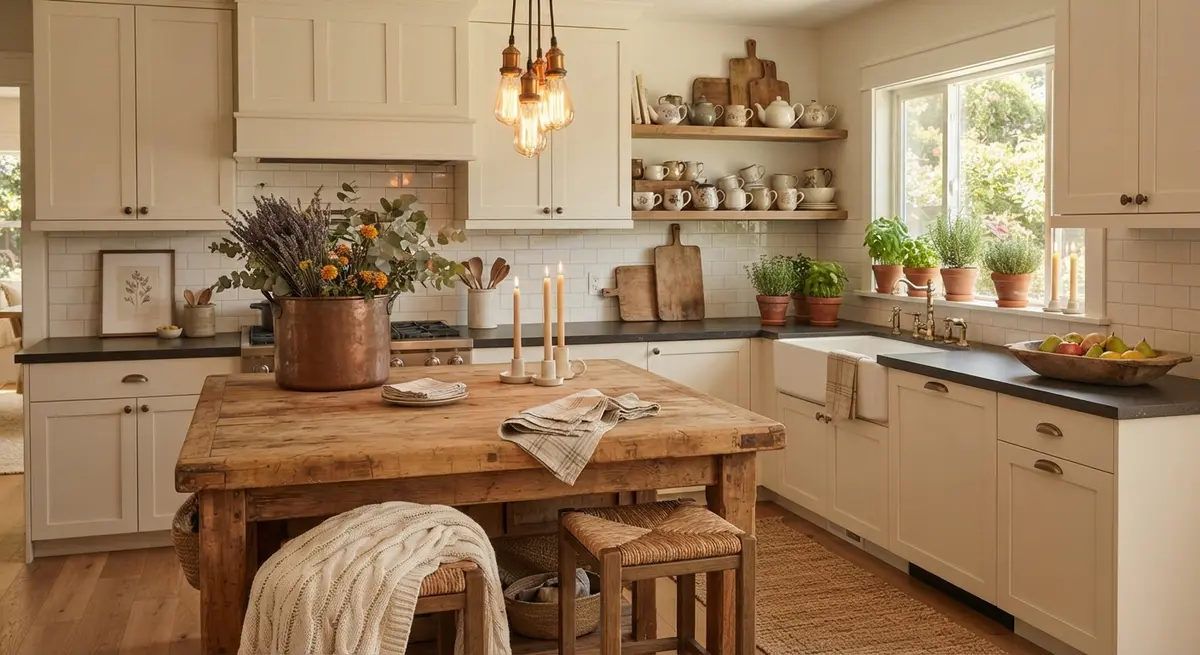
5 Cozy Decor Ideas to Make Your Kitchen Feel Like Home
The coziest kitchens aren't magazine spreads — they're layered light, soft textures, living green, good smells, and room to gather. These five ideas make any kitchen feel like home.
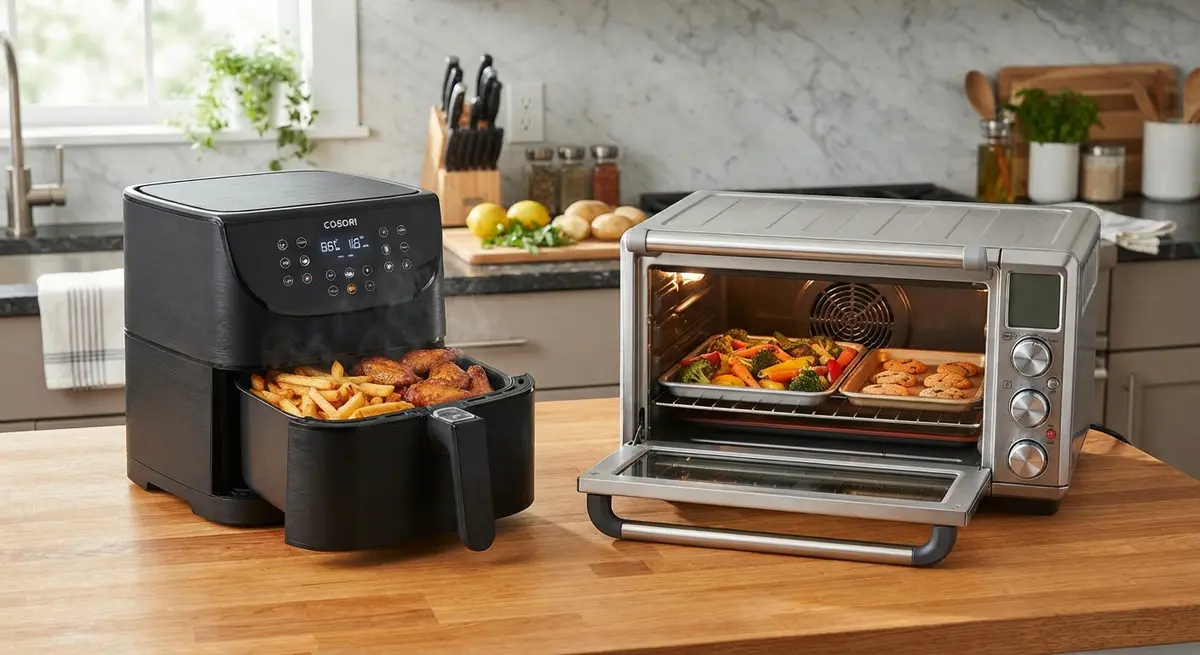
Air Fryer vs. Convection Oven: Which Earns Its Space?
An air fryer is a small convection oven with a built-in fan — but the differences matter. Compare speed, crispiness, capacity, energy, and price to decide what earns your counter.
About the Authors
This recipe and guide was developed, tested, and approved in our home kitchen and daily life. Jamy is a retired Food Service District Manager and Early Childhood Program Manager who spent his career overseeing multi-site restaurant operations, large-scale culinary production, and daycare menu management. Kaïna brings the ultimate real-world test: making sure it brings ease and joy to our kids on a busy weeknight.
Read more about our professional background and philosophy →