Pantry Reset: The Step-by-Step Cabinets Declutter Method
By the QuiteRecipes team (Jamy & Kaïna)
The pantry reset is a two-hour project that pays for itself all year. Empty everything, discard what's expired, zone by use, label clearly, and restock so dinner gets easier instantly.
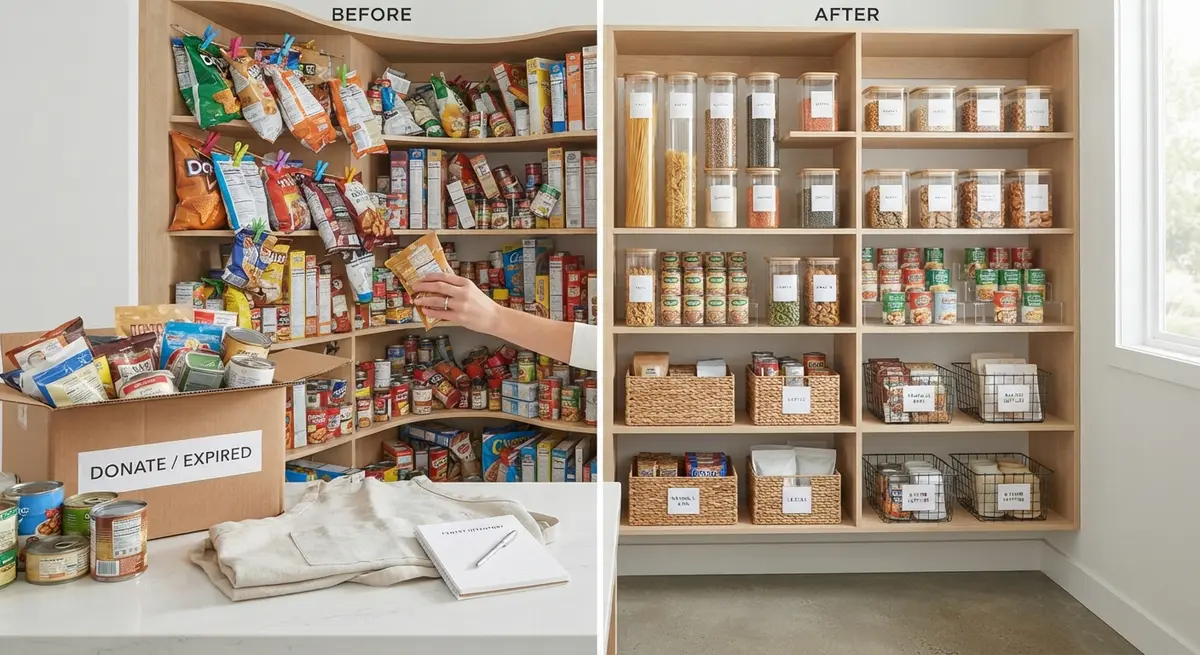
Every January something happens to the walk-in pantry at the end of my street's block: people haul out shopping bags of cans and boxes that have quietly turned into archaeology. Canned tomatoes from three moves ago. A box of pasta with a best-by date older than the dog. Five squeeze bottles of ketchup, each holding one-eighth of a bottle.
I've done my share of these January resets, and I learned a hard lesson: a clean pantry is never the point. The point is a pantry you find easy to use on a Tuesday at 6 p.m. when you're tired and the kids are hungry. A pantry that hides food isn't organized — it's decorated.
This guide is the exact method I use, broken into five honest steps. It takes about two hours with music on, costs almost nothing (you already own the containers), and ends with a pantry that doesn't just look good — it works.
Step 1: Empty Everything (The Courageous Part)
Yes, everything. Resist the urge to "just tidy the top shelf." The whole point of a reset is to see the inventory in full.
- Pull every can, box, jar, bag, and packet out onto the counter or the floor.
- Group items in loose piles as you go: grains, canned goods, baking, snacks, sauces, spices, breakfast stuff, "mystery."
- Keep the "mystery" pile small — those are exactly the items that need the you-attention.
The reason to go this far: you can't organize what you can't see. Half the clutter in most pantries is expired food that's been invisible for months.
The emptied pantry test: when the shelves are bare, actually wipe them. It's the only time all year you'll see the crumbs and dust of a hundred dinners.
Step 2: Sort, Check Dates, and Be Ruthless
Now the piles work. Go through each one with two questions: is it good, and will I use it this season?
- Expired? Trash. Most dried spices lose their punch within a year; old baking powder turns flat; old oils can go rancid. Toss without guilt.
- Nearly expired? Use-it pile. Put these front and center and plan meals around them this week.
- Duplicate? Consolidate. Pour matching bags into one container. One open bag of flour, one open bag of sugar — maximum.
- Never-used three times? Donate or gift. Gently used, still-sealed oddities (that random jar of lime pickling spice) can go to a neighbor who'll actually use it.
A key habit to build here: date everything. When you open a package, write the month on it with a marker. Future-you will thank present-you.
Step 3: Zone the Pantry by How You Cook
The secret to a pantry you keep organized is zoning it by use — not by category alphabet, but by your actual cooking habits.
Here's the framework I use:
- Eye-level = daily drivers. Coffee, oils, salt, pasta, rice, the stuff you grab blind.
- Reach zone = weekly staples. Canned goods, broths, sauces, grains you cook often.
- Low tier = heavy and bulky. Bags of flour, cases of drinks, big stockpots.
- High tier = seasonal and occasional. Baking kits, party supplies, extra stock.
- Door racks = small items. Spices, teas, condiments that would vanish on a deep shelf.
The logic: yes, categorizing helps, but reach frequency matters more. Put what you touch daily where your hand lands naturally.
Step 4: Containers for the Overflow — Not for Everything
You don't need a matching container system to look like a magazine spread. What you need is containment for the messy.
Prioritize containers for:
- Open bags — flour, sugar, oats, nuts. One clear container each, labeled.
- Loose packets — a single bin for sachets prevents the "where did that gravy packet go" hunt.
- Snacks and small packs — small baskets or bins corral bags into tidy groups.
- Cans on their side — a simple can rack or lazy Susan keeps them visible and reachable.
Skip the vanity containers for unopened packaged goods — they're already shelf-stable and self-contained. Spending energy covering a cereal box is organization for the sake of decoration.
Step 5: Label Like a Pilot, and Restock in Order
Labels are the difference between "a clean pantry" and "a usable one."
- Label the front of each container, not the lid (lids get covered by the shelf below).
- Keep it simple: "All-purpose flour," "Brown sugar," "Trail mix" — short, readable, honest.
- Make labels legible from standing height. A marker on tape beats a pretty but unreadable tag.
Then restock deliberately:
- Put the use-it pile where you'll see it first.
- Newest behind, oldest in front — the classic rotation that stops things from expiring in the back.
- Leave a little breathing room on each shelf. A tightly-stuffed pantry is a mess waiting to happen.
The final check: can you find dinner ingredients in under twenty seconds? Then the reset worked.
The Habits That Keep It Reset
A pantry reset isn't a one-off event — it's a reset button on your systems. Keep it working with small habits:
- One-in-one-out rule. New bag of rice out, empty bag out the door. The pantry never grows beyond its walls.
- Weekly ten-second sweep. When you open a can or box, glance at the shelf — anything out of place gets a quick home.
- Monthly expiry check. Ten minutes at the start of each month to pull the soon-expiring items forward.
- Buy from the front. Restock at the back, always. It's the single habit that prevents the "mystery heap in the corner."
The Zone System: Making the Pantry Assign Itself
A pantry that assigns itself is the one that stays clean. Give every zone a job.
- Baking zone: flours, sugars, leaveners, and vanilla together near where you bake.
- Cooking zone: oils, vinegars, stocks, spices, and canned tomatoes at the hands' reach.
- Ready-to-eat zone: snacks, nuts, crackers, and dried fruits near the door for the quick grab.
- Heavy-lifting zone: big bags of grain and large canned goods on the bottom shelf only.
The moment you walk in, your hand knows which zone it wants. Zones breathe: the pantry never needs a "reset" because everything already has a home with room to grow.
The First-In-First-Out Shelf Labeling Trick
Pro kitchens manage rotation with labels; homes manage it with habits. The cheap home version:
- Date the can or jar — a dot marker, not a whole label, says "bought these on the 1st."
- Place new behind old — the newest jar goes at the back of the shelf, pushing old jars forward.
- The 6-month marker — anything not used since its dot goes on the "use first" shelf, giving it one last shot before it becomes waste.
Labels aren't a decoration; they're a contract between you and the pantry. Three minutes of marking at the grocery unpacking saves the entire "what's in here" mystery later.
The Empty-Shelf Test
After the reset, leave one full shelf visibly empty. It's not waste — it's breathing room.
- An empty shelf is the visual cue that the reset worked and the pantry can survive a splurge.
- It absorbs the inevitable overflow (a big bag of onions, holiday chocolate) without begging for another reset.
- It's the difference between a pantry that is managed and one that undergoes management.
If your pantry has no empty shelf after the reset, you've merely rearranged the chaos. Go back, prune again, and make the empty shelf the proof of your new order.
The "Two-Touch" Rule for Everyday Flow
A pantry that stays maintained follows the two-touch principle: every item is handled exactly twice — on the way in and on the way out.
- Touch one: at the grocery chest of drawers the item goes to its zone shelf, label still visible, new-behind-old.
- Touch two: at the recipe it leaves the shelf and goes into the dish. Nothing gets "staged" on the counter, then returned to a middle place, then forgotten.
The mistake that grows chaos is the staging shelf — a "biege step" where things wait, accumulate, and are forgotten. Kill the staging step and the pantry maintains itself on autopilot between resets.
Ask Before You Buy: The Price-Per-Use Test
The pantry clogs on impulse, so shop with a filter:
- "Will I use this in the next three months?" A jar of an exotic spice you've never opened isn't a pantry, it's a museum. Fresh beats aspirational.
- "Does this push out something I use?" Pantry space is zero-sum; the new bottle should literally earn the space it takes with visible frequency.
- "Is this a single recipe's leftover?" Buy the small jar for the guest recipe, plan a second use, or skip it. The 'one-meal wonder' is how cabinets breed half-jars that turn into fridge-fog science projects.
Apply the three questions at the store and the reset becomes a single meaningful event — not a fixed point you re-visit every few months.
The Reward: Cook the Pantry You Built
A reset that rebuilds the trigger of waste ends with a reward — the pantry-stocking session:
- Pick a few versatile recurring recipes (a soup, a grain bowl, a sheet-pan dinner) and build those with what's on the shelves.
- The "use-up" week — one week a quarter, deliberately run down the stale, the partial, and the soon-expiring items with a simple rotation of "what's in the pantry" meals.
- Celebrate the empty shelf — not with guilt at the waste, but as proof the engine works and the tightened list is real.
The pantry consumed, not just organized, is the difference between maintenance and a museum. Reset it, hold the two-touch line, ask the three questions, and the room finally feeds you instead of just showing off.
FAQ
How long does a pantry reset really take?
Two hours for the full version — one hour for emptying and sorting, thirty minutes for wiping and zoning, thirty for restocking and labeling. Going forward, keep the weekly sweep to ten minutes.
Do I need matching containers for it to look good?
No. Containment matters more than aesthetics. Start with what you own — glass jars, old takeout containers, simple bins — and buy a matching set later only if that actually brings you joy.
What's the most common pantry mistake?
Stacking a whole shelf of "out of sight" items and never rotating. Rotating (old in front, new at back) prevents the vast majority of expired-food waste.
How do I keep a small pantry decluttered?
Zone by reach frequency, use door racks and vertical dividers, and apply the one-in-one-out rule without mercy. In small spaces, subtraction is the superpower.
Should I throw away expired dry goods?
Yes. Dried herbs and spices lose quality after about a year; oils go rancid; baking powder goes flat, and baking soda loses lift. If it fails the smell-and-taste test, out it goes.
What spices do I actually need for daily cooking?
Start with salt, black pepper, garlic powder, onion powder, paprika, an Italian-style blend, chili flakes, curry powder, cinnamon, and a good vanilla. Build from there once you've used those up.
Key Takeaways
- Empty everything before you organize — you can't fix what you can't see.
- Toss expired goods and consolidate duplicates without guilt.
- Zone by how often you reach, not by alphabet.
- Contain the messy: open bags, packets, and snacks.
- Label legibly, rotate old-to-front, and keep one-in-one-out.
A Final Word
The best pantry I ever organized belonged to a neighbor who was convinced it couldn't be fixed. Two hours later she opened the door and just stood there, grinning. The system has held for years now, mostly because we didn't try to make it a showcase — we made it easy on a Tuesday. That's the real goal. Give yourself the two hours, and give your Tuesday-night self a pantry that actually helps you cook.
Published on 2026-08-13 by the QuiteRecipes team (Jamy & Kaïna).
Related Articles
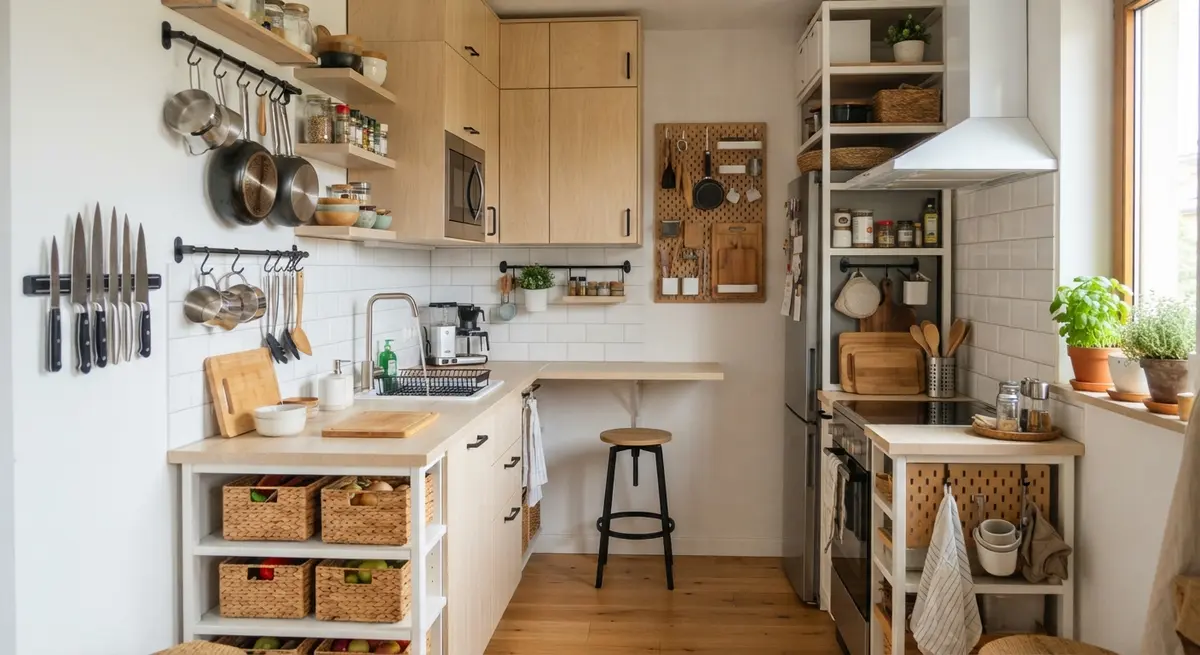
7 Simple Space-Saving Hacks for Small Kitchens
A tiny kitchen can still feel open and work beautifully. These seven hacks — from vertical storage to multitasking tools — double your usable space without a renovation.
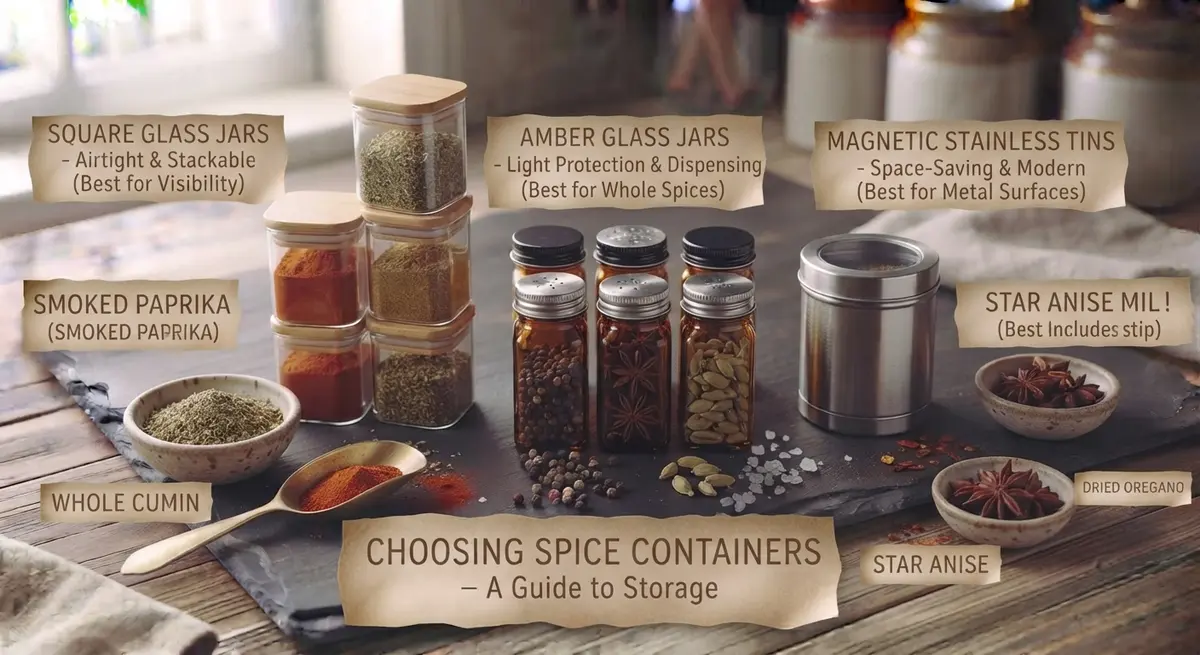
Choosing the Right Containers for Your Spice Stash
Glass, tin, and plastic each suit a different spice job. Match container to use, with little brown jars winning for the everyday shelf.
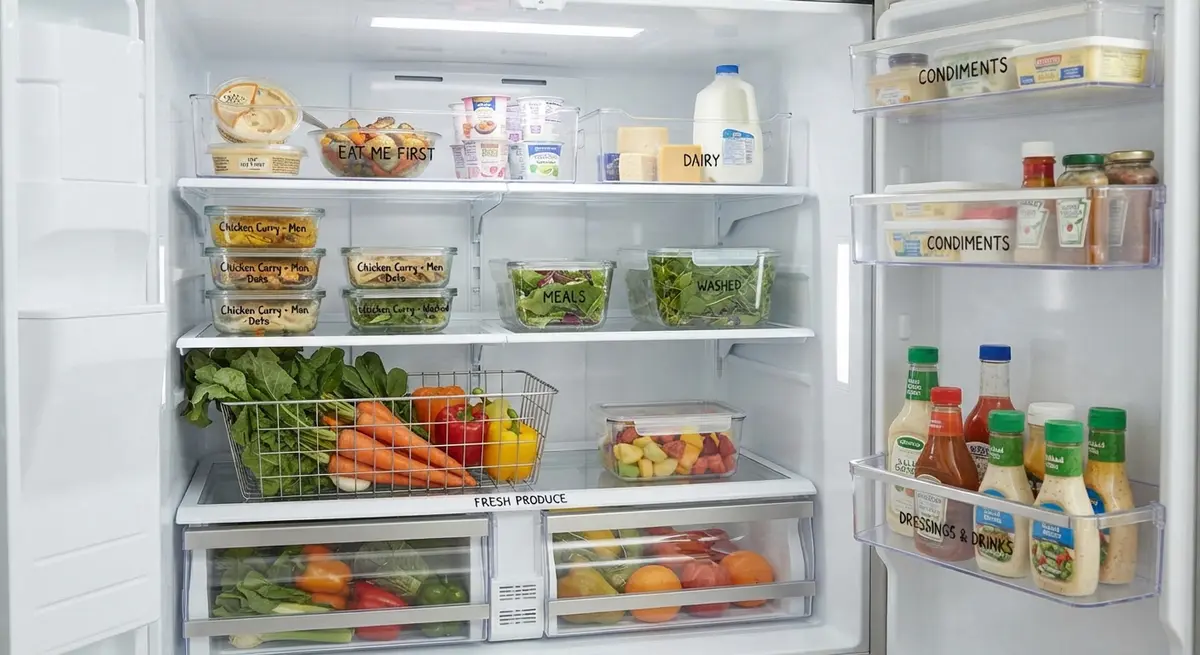
How to Organize Your Fridge and Stop Food Waste
The average household throws away roughly a quarter of the food it buys. Most of it spoils not because you forgot it, but because the fridge was set up to hide it. Here's the temperature-mapped, see-everything system I use.
How to Store Spices So They Stay Loud Longer
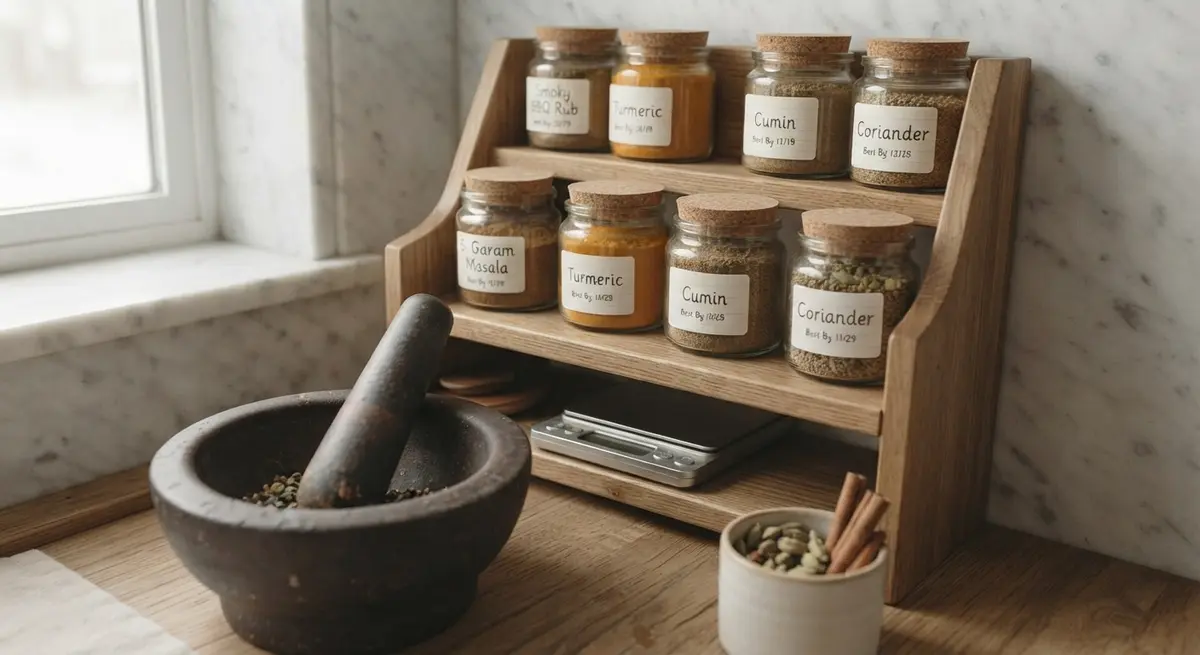
Air, light, and warmth quietly rob your spices. Put them in a cool, dark drawer in airtight jars and they keep their edge twice as long.
About the Authors
This recipe and guide was developed, tested, and approved in our home kitchen and daily life. Jamy is a retired Food Service District Manager and Early Childhood Program Manager who spent his career overseeing multi-site restaurant operations, large-scale culinary production, and daycare menu management. Kaïna brings the ultimate real-world test: making sure it brings ease and joy to our kids on a busy weeknight.
Read more about our professional background and philosophy →