Drying and Preserving Fresh Herbs from Your Garden
By the QuiteRecipes team (Jamy & Kaïna)
A bumper herb harvest shouldn't go to waste. Air-dry, oven-dry, freeze, or oil-infuse your herbs properly, and save the bright flavor for winter.
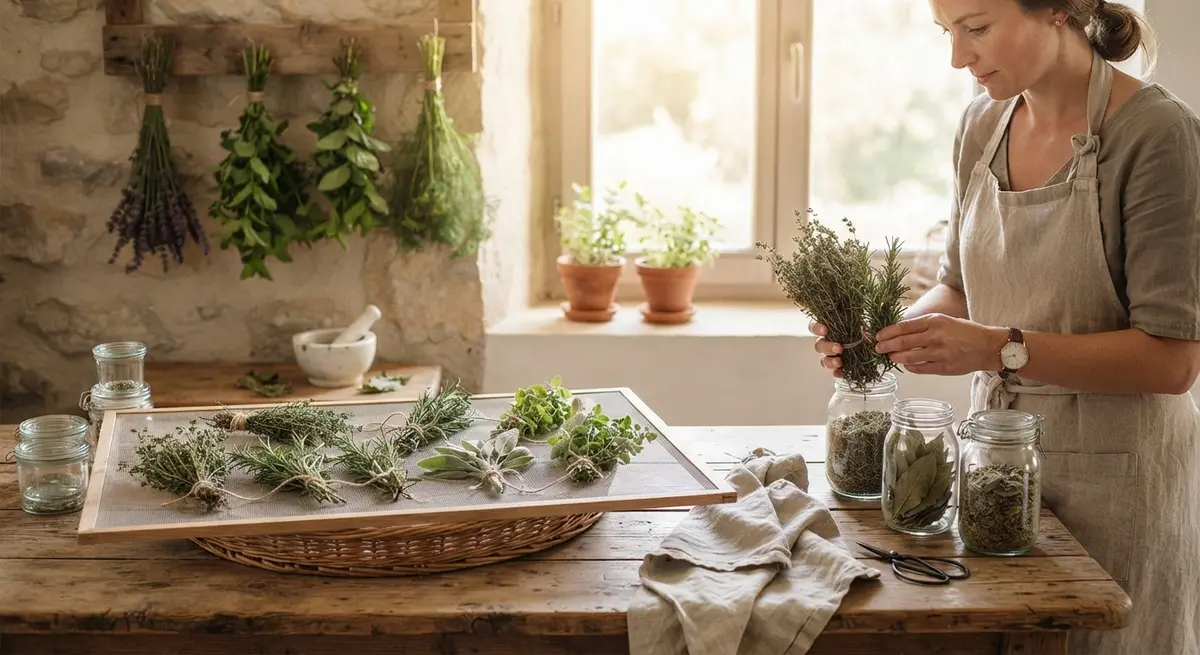
I once dried a huge basil harvest in my car on a ninety-degree afternoon, because the internet said "sun-dried." What I got back was a jar of gray, hay-flavored dust. Basil isn't a sun-drier; it's a flash-blancher and freezer. That mistake is why I now have a system, because the difference between preserved herbs that taste like summer and ones that taste like cardboard is entirely about matching the method to the herb.
Drying and freezing herbs is simple and cheap. A single basil plant can yield half a cup of frozen pesto cubes; a rosemary shrub supplies seasoning all winter from one hour of trimming. Over the years I've preserved rosemary, thyme, oregano, mint, basil, parsley, dill, and sage, and I've dialed in the exact method for each. Here's the full playbook.
Harvest at the Right Moment
Preservation starts with when and how you pick. Harvest in the morning, after the dew dries, when the essential oils are highest. Cut just above a leaf pair with scissors, and never wash herbs unless you must, because wet herbs mold during drying.
- Best time: mid-morning, after dew, before noon heat peaks.
- Harvest at peak: just before the plant flowers, when oil content is highest.
- Cut cleanly: snip stems above a leaf pair; leave two inches so the plant keeps producing.
- Skip the rinse: brush off dirt; only wash and thoroughly dry if grit is an issue.
- Quick move: process within an hour or two of cutting, before leaves wilt.
Harvest before flowers is worth repeating, because flowering drains flavor fast. Pinch off buds early and a plant keeps delivering worthy leaves for weeks.
Air-Drying: Slow and Gentle for Sturdy Herbs
Air-drying is the classic method, cheap and gentle, and perfect for the low-moisture herbs: rosemary, thyme, oregano, sage, and bay. These hold their oils well through a slow, cool process, which takes 5 to 14 days depending on humidity.
- Bundle: gather stems into bundles of 4 to 6, tie with string, and remove damaged leaves.
- Hang: dangle them upside down in a warm, dry, dark place with airflow, like a pantry or closet.
- Cover them: a paper bag with a few holes keeps dust and light out while letting air move.
- Watch the clock: expect 5 to 14 days; herbs are done when leaves crumble between your fingers.
- The best location: away from kitchens and steamy windows; humidity is the enemy of drying.
Air-drying turned my rosemary harvest from "use it or lose it in a week" to a full jar of fragrant needles that last a year. No rush, just patience and dry air.
Oven-Drying and Dehydrating: Fast Results
When you need results in a single afternoon, a dehydrator or a low oven works beautifully, but the heat must stay low to preserve the oils. Dehydrating at 95 to 110°F (35 to 43°C) is your friend for mint, lemon balm, and any sudden bumper crop.
- Dehydrator: spread leaves in a single layer, set 95 to 110°F, run 2 to 6 hours until crisp.
- Oven method: preheat to its lowest setting (170°F / 77°C max), spread herbs on a baking sheet, prop the door open an inch, and check every 15 minutes; most herbs take 1 to 2 hours.
- The quick test: leaves should crumble, not bend, when finished.
- Beware overheating: anything above about 180°F (82°C) toasts the oils and ruins the flavor completely.
Dehydrating turned my mint problem into a perfume solution. An August mint firehose became an airtight jar of tea-grade leaves in ninety minutes at 100°F.
Freezing: The Secret to Basil, Parsley, and Cilantro
Here's the cold truth: basil, parsley, and cilantro will never dry into anything that tastes alive. Their delicate oils degrade so fast that dried parsley is basically green dust. But freezing captures those fresh flavors beautifully.
- Basil: blanch for 5 to 10 seconds in boiling water, chill in ice water, pat dry, then freeze flat in a single layer for an hour before bagging.
- Herb cubes: chop fresh herbs and pack them into ice cube trays with a little olive oil or water; freeze solid, then pop into a freezer bag.
- Parsley and cilantro: freeze whole sprigs flat on a tray, then bag; they keep color and fresh taste for 3 to 4 months.
- Herbal butter: blend herbs into softened butter, roll into a log, wrap, and freeze; slice rounds to finish steaks and vegetables.
- Pesto by the cup: freeze pesto in small containers or cubes; it thaws in minutes.
Basil should never go in the dehydrator. Blanching and freezing is the whole trick. A frozen basil cube dropped into a simmering sauce tastes like July even in February.
Store, Label, and Use Your Harvest
Preserved herbs lose their magic slowly if stored wrong. Light, heat, and oxygen are the three enemies; keep dried herbs in airtight jars, away from the stovetop, in a cool, dark cupboard, and you get a full year of brightness from most crops.
- Airtight and dark: glass jars with tight lids, stored away from heat and light.
- Label everything: name the herb and the date; dried herbs are a guessing game by March without a pen.
- Check for moisture: a damp spot on the jar means re-drying; moisture invites mold.
- Crumble as you use: larger pieces keep flavor longer, so crush right before cooking.
- Adjust the amount: dried herbs are about three times as strong as fresh by volume, and frozen herbs are close to fresh.
The quiet pleasure of a winter pantry is the shelf of labeled jars: rosemary from June, sage from September, mint from August. One careful summer afternoon buys a year of bright cooking.
FAQ
What's the best way to dry herbs?
Air-dry sturdy herbs like rosemary, thyme, and oregano in small bundles in a warm, dark, dry place for 5 to 14 days. It's cheap, gentle, and preserves oils best.
Can I dry basil, or should I freeze it?
Freeze it. Basil dries into gray dust that loses its soul; blanch it for 5 to 10 seconds, then freeze, or blend into pesto cubes.
Is microwave drying an option?
It works in a pinch for small batches but scorches easily. Use 30-second bursts on low power and check constantly; a dehydrator is more forgiving.
How long do properly dried herbs last?
Stored airtight in a cool, dark cupboard, most dried herbs stay flavorful for up to a year, then fade gradually. Frozen herbs last 3 to 6 months.
What's the ratio of dried to fresh herbs?
Use about one-third as much dried as fresh by volume; dried herbs concentrate. Frozen herbs are closer to fresh, so use them nearly one-for-one.
Key Takeaways
- Harvest mid-morning, above a leaf pair, before the plant flowers, and process within a few hours.
- Air-dry sturdy herbs like rosemary, thyme, oregano, and sage in bundles for 5 to 14 days.
- Dehydrate or oven-dry at 95 to 110°F, never above 180°F, for fast, single-afternoon results.
- Freeze basil, parsley, and cilantro; blanch basil, and make herb cubes and pesto logs for winter.
- Store dried herbs airtight, labeled, in a cool dark cupboard, and crumble just before cooking.
- Use one-third the volume of dried herb as fresh, and keep frozen herbs nearly one-for-one.
A Final Word
That sun-dried basil disaster taught me that preserving herbs is about matching method to herb, not just applying heat. Dried rosemary, frozen basil, mint in the jar, and a shelf of labeled promises wait for winter. One careful hour after each bumper harvest keeps the garden's taste alive all year.
Published on 2026-08-13 by the QuiteRecipes team (Jamy & Kaïna).
Related Articles

5 Simple Ways to Be a More Gracious and Relaxed Dinner Host
Gracious hosting isn't about fancy food. It's five repeatable habits that calm the room — and you.

Bringing Vacation Home: How to Recreate Food Memories in Your Own Space
You can't bring the trip back, but you can bring its flavors. Here is how to turn travel food memories into weeknight meals in your own kitchen.
Composting at Home: A Beginner's Guide to Turning Scraps into Gold
Composting is the easiest way to turn food waste into garden gold. Start with a bin, learn the green-to-brown ratio, and watch it work.

Creating a Cozy Reading Nook Right Next to Your Dining Area
Create a cozy reading nook beside your dining area without a redesign. Find the right corner, lighting, and chair for under $150.
About the Authors
This recipe and guide was developed, tested, and approved in our home kitchen and daily life. Jamy is a retired Food Service District Manager and Early Childhood Program Manager who spent his career overseeing multi-site restaurant operations, large-scale culinary production, and daycare menu management. Kaïna brings the ultimate real-world test: making sure it brings ease and joy to our kids on a busy weeknight.
Read more about our professional background and philosophy →