The Low FODMAP Kitchen: A Stress-Free Beginner's Guide
By the QuiteRecipes team (Jamy & Kaïna)
FODMAPs are short-chain carbohydrates that can be poorly absorbed in some people. Learn the three-phase protocol and how to cook without fear.
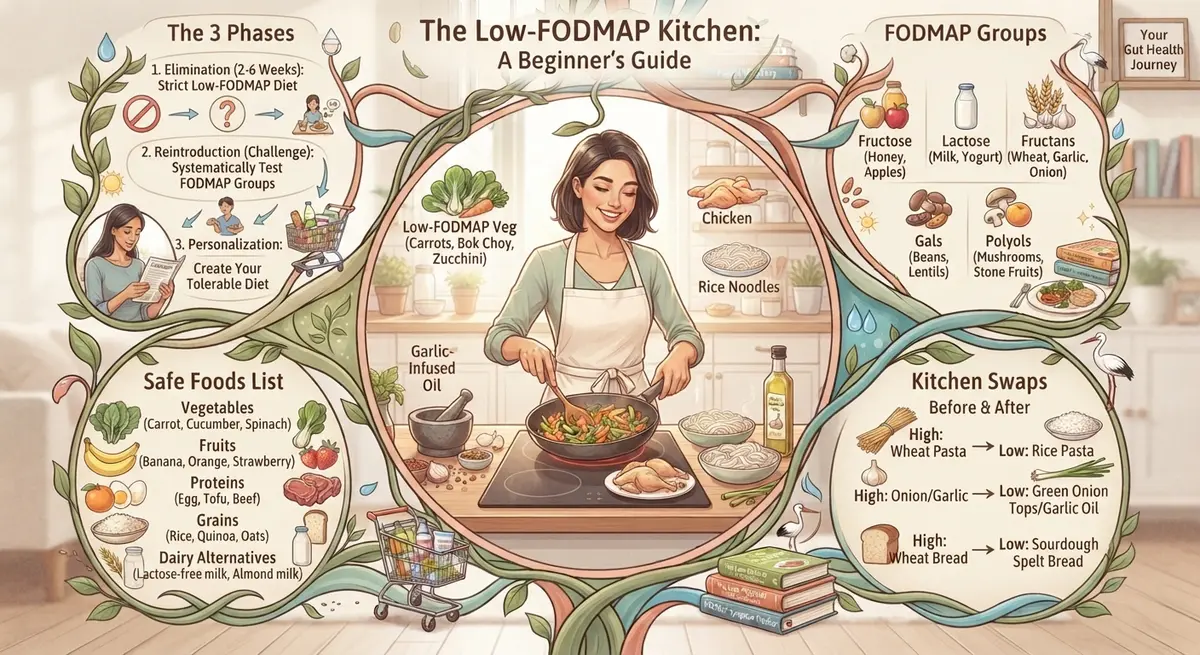
Few dietary topics generate as much panic as "low FODMAP." I completely understand why: the lists are long, the names sound like a chemistry exam, and the internet paints it as an elimination diet where the only safe food is boiled rice forever. Let me calm that down right now.
The low FODMAP diet is used mainly for irritable bowel syndrome (IBS) and related gut symptoms. It is a structured, temporary process — usually with three phases — designed to help you find your triggers and then eat as broadly as possible again. It is general information here, and it's genuinely important to do it with professional guidance: a doctor to make or confirm the diagnosis, and a dietitian to run the phases properly.
What FODMAPs Actually Are
FODMAP is an acronym for Fermentable Oligosaccharides, Disaccharides, Monosaccharides, and Polyols.
In plain language: these are short-chain carbohydrates and sugar alcohols found in a wide range of everyday foods — wheat, onion, garlic, apples, beans, dairy, and more. In many people they digest fine. In someone with a sensitive gut, they may be poorly absorbed, then rapidly fermented by gut bacteria, which produces gas and draws water into the bowel — the recipe for bloating, pain, and the bowel-habit changes that define IBS.
The important word is fermentable: mild, natural fermentation — not a medical catastrophe and not a sign of a broken digestive system.
The Three Phases, Explained Honestly
The low FODMAP diet is not "eat low FODMAP forever." It's a careful, three-phase experiment:
- Elimination (usually 2–6 weeks). You eat only low-FODMAP foods while tracking symptoms. This is a diagnostic tool, not a lifestyle. If symptoms clearly improve, that tells you FODMAPs play a role for you — the point of the whole exercise.
- Reintroduction (the science-y, individual part). One food group at a time, in increasing amounts, you challenge each FODMAP group and note your reaction. This is where the truth lives: most people find they tolerate some groups well and only one or two bother them.
- Personalization (your forever version). Using what you learned, you build a diet as rich as your gut allows — which, for most people, is a lot more foods than 6 weeks ago.
A word a lot of guides skip: if symptoms improve in phase 1, that's a win. Reintroduction is what tells you which foods to welcome back; skipping it means staying needlessly strict forever.
Foods Quickly and Obviously
Let me give you a fast orientation list (a dietitian will give you the complete tables).
Commonly low-FODMAP (go-tos during elimination):
- Proteins: chicken, fish, eggs, firm tofu, tempeh.
- Grains: white and brown rice, oats, quinoa, potatoes, gluten-free sourdough and breads.
- Vegetables: carrots, zucchini, green beans, bell pepper, spinach, cucumber, lettuce, tomato (in normal amounts).
- Fruit: bananas (the firmer, less-ripe end is the lower-FODMAP choice — ripe bananas climb in polyols), oranges, strawberries, blueberries, kiwi, grapes.
- Dairy (lactose-low): lactose-free milk, hard cheeses (cheddar, parmesan, gouda), butter.
- Nuts: almonds and walnuts in small measured portions.
Commonly high-FODMAP (the "suspense" foods to avoid in phase 1):
- Garlic and onion (the big ones!).
- Wheat and rye in large amounts (bread, pasta, some cereals).
- Apples, pears, watermelon, mango, cherries, stone fruit in excess.
- Beans and lentils (in large portions), chickpeas.
- Milk and soft fresh cheeses (lactose), ice cream.
- Sweeteners ending in -ol (sorbitol, mannitol, xylitol) and honey, agave, high-fructose corn syrup.
The portion principle: FODMAP effects are dose-dependent. A small amount of a "high" food may be totally fine; a mountain of a "low" food may not. This is why the dietitian-led phases matter so much.
The Two Disasters Most People Hit — and How to Navigate Them
- "I don't know what to cook anymore." Solution: start from allowed meals, not from a list of forbidden ones. Build simple bowls — protein + a grain + a low-FODMAP vegetable + an easy olive-oil-lemon dressing. Everything else is garnish.
- "All the garlic and onion are gone and now everything tastes flat." This is the number-one complaint. Our handcrafted answers:
- Infused oils are the cheat code. Garlic-infused and onion-infused olive oil carry the flavor — because the FODMAP sugars are not oil-soluble, they stay behind in the solids. Cooking with garlic-infused oil is a legitimate low-FODMAP move, and it transforms flat dishes into satisfying ones.
- Use the green parts of scallions instead of bulb onion; they're milder both for your gut and your recipes.
- Rely on fresh herbs, lemon, smoked paprika, cumin, and ginger to carry flavor the way onion used to.
- Be careful with commercial stocks and sauces — many hide onion and garlic powder. Learn to read labels and make your own simple bases when you can.
A Sample Low-FODMAP Day
- Breakfast: oats cooked in lactose-free milk, with strawberries and a small measured serving of walnuts.
- Lunch: a chicken-and-rice bowl with carrots, zucchini, and green beans, dressed with garlic-infused olive oil and lemon.
- Snack: an orange and a slice of hard cheese.
- Dinner: grilled fish, roasted potatoes, and a big spinach salad with cucumber and bell pepper, olive oil, and lemon.
Simple, colorful, and — with the infused oil — notably more interesting than people expect.
Common Pitfalls
- Skipping reintroduction. You'll end up eating too little forever and resenting the diet. Phase 2 is the point of the exercise.
- Ignoring portions and stacking. Multiple "moderate" FODMAP foods at one meal can add up; that's part of what the phases teach you.
- Going it alone. IBS symptoms overlap with other conditions; a diagnosis matters. And a dietitian shortens the process and prevents malnutrition or unnecessary restriction.
- Letting it wreck social life. You don't need to announce your gut to every waiter — but ordering more strategically (sauce on the side, rice instead of wheat, no garlic-heavy apps) is realistic.
When to See a Professional
See a doctor first if: you have unexplained weight loss, blood in stool, fever, or symptoms that started after 50, or if IBS-like symptoms persist — these warrant medical workup, not a self-authored diet. If you're pregnant, take medication, or have additional digestive conditions, professional guidance is non-negotiable before changing patterns. Some infections and conditions can look like IBS, which is yet another reason not to self-diagnose from a checklist.
From our kitchen: the low FODMAP phase was hard for about ten days, and then it became the calmest our dinners had been in months — because suddenly every meal was simple, whole, and free of guesswork. The reintroduction stage turned out to be fascinating: two of our family's "IBS foods" were totally fine, and one surprise ingredient was the real trigger.
FAQ
Is low FODMAP gluten-free?
They overlap (wheat is high-FODMAP in large amounts) but they're different things. Gluten is a protein; FODMAPs are carbohydrates. The protocol is tested for FODMAPs, not for celiac.
How long does the whole thing take?
Typically 6–8 weeks minimum for all three phases, and some people take longer. The elimination phase alone is usually 2–6 weeks.
Will I stay on low FODMAP forever?
For most people, no. The goal is a personalized diet that's as broad as you can tolerate — usually meaning you'll eat most foods, with only your personal triggers managed.
I only get symptoms sometimes. Does it still apply?
Symptom variability is extremely common in IBS. The phases still work — they just need to be run cleanly enough to get a clear signal. That's what a dietitian is for.
Key Takeaways
- FODMAPs are fermentable short-chain carbs; the diet is for IBS-type symptoms, run as a temporary diagnostic tool.
- Three phases: eliminate (2–6 weeks), reintroduce (groups one at a time), personalize (your forever version).
- Portions and stacking matter as much as individual foods.
- Garlic/onion-infused oils, scallion greens, and strong herbs are the flavor lifeline.
- Do it with a doctor + dietitian: diagnosis, nutrition, and structure all matter.
A Final Word
The low FODMAP kitchen looks restrictive on paper and liberating in practice — because it replaces a fog of random belly mysteries with a clear, evidence-guided map of your own body. Run the process properly, reintroduce boldly, and cook like you mean it. Your gut (and your taste buds) will thank you for the care.
Published on 2026-09-05 by the QuiteRecipes team (Jamy & Kaïna). This article is general wellness information, not medical advice. IBS diagnosis and FODMAP phases should be guided by your doctor and a registered dietitian.
Related Articles

Cooking for Seniors: Nutrient-Dense Meals That Are Easy to Digest
Cooking for aging parents or a partner means fewer empty calories and more protein, fiber, and flavor in every soft, gentle bite.

Eating for PCOS: A Hormone-Supportive Kitchen Guide
The two big themes in PCOS nutrition research are blood-sugar steadiness and anti-inflammatory eating — and both can come from a normal, joyful kitchen.

Eating for Sexual Health and Vitality: A Food-First Guide
Sexual health is whole-body health. Zinc, iron, omega-3s, and the nitrate-rich vegetables that feed your circulation deserve a real place on the plate.
Heart-Healthy Cooking Without Sacrificing Flavor
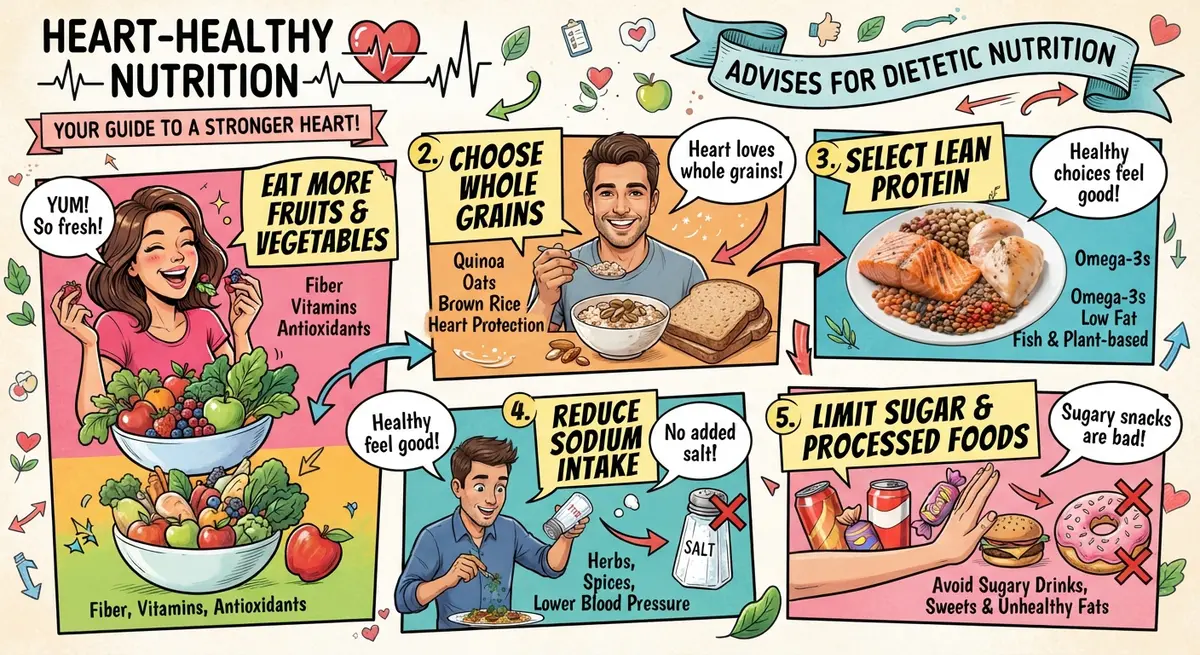
Heart-friendly cooking isn't saltless cooking. It's a smarter flavor strategy built on herbs, acids, and fats that earn their place on the plate.
About the Authors
This recipe and guide was developed, tested, and approved in our home kitchen and daily life. Jamy is a retired Food Service District Manager and Early Childhood Program Manager who spent his career overseeing multi-site restaurant operations, large-scale culinary production, and daycare menu management. Kaïna brings the ultimate real-world test: making sure it brings ease and joy to our kids on a busy weeknight.
Read more about our professional background and philosophy →