The Science of Blooming Spices: Why Fat Beats Water
By the QuiteRecipes team (Jamy & Kaïna)
Most of a spice's aroma dissolves in fat, not water. That is the science behind blooming, and knowing it turns recipes into instincts.
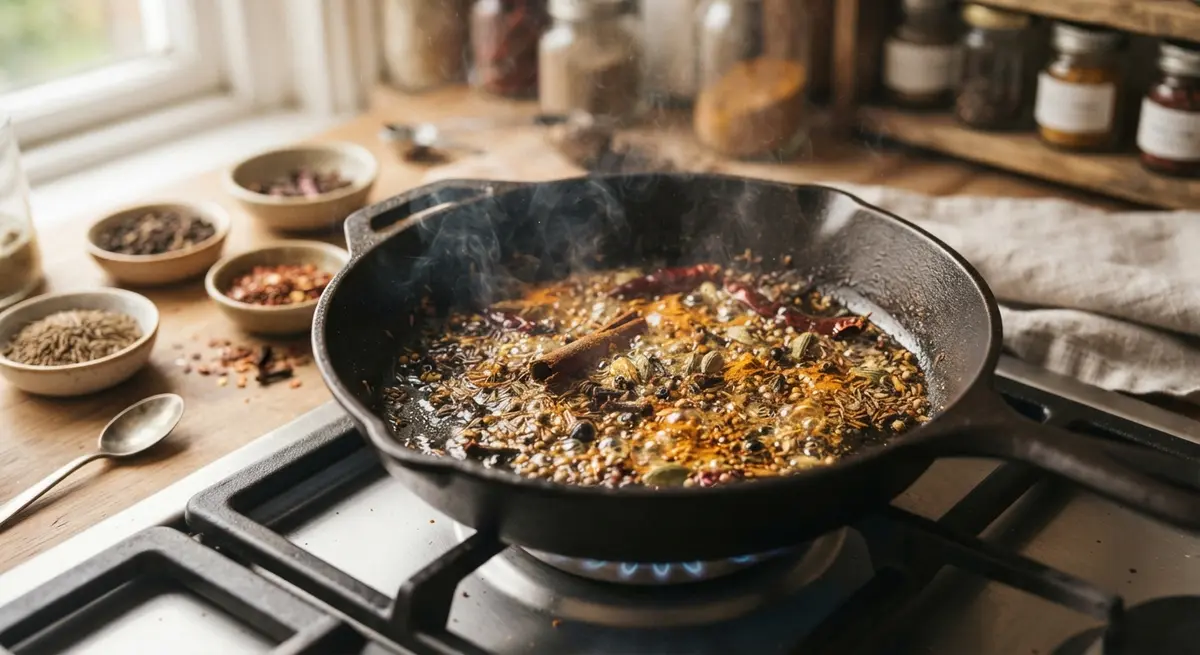
There is a moment in every serious curry where the spice hit the oil and the kitchen fills with scent, and it is not magic, it is chemistry. I used to wonder why recipes bother blooming spices when they are going into a pot of liquid anyway. The answer hid in organic chemistry class notes I never took seriously: most aromatic compounds in spices are fat-soluble, not water-soluble. That one fact explains a decade of kitchen instincts. This guide is the simple science, and how it sharpens every meal you make.
Why It Matters
Aromatic molecules called terpenes and phenols make spices smell and taste the way they do, and most of these molecules dissolve in fat far better than in water. Watery cooking leaves their oils unopened, which is why a spice dumped into stock can taste weaker than the same pinch bloomed in oil. Heating also accelerates the reaction, so warm fat releases more, faster. On top of that, fat coats the palate, carrying flavor across the whole bite. Grasping that one fact explains when to bloom, what carries best, and why some dishes demand it.
The Technique, Step by Step
- Choose a fat: oil, ghee, or butter, because aroma molecules love these carriers.
- Heat the fat until it shimmers, not smokes, and any hot oil moves aromatics.
- Add spices to the warm fat and cook twenty to thirty seconds, baring their oils.
- Keep stirring so nothing scorches, since burnt spice tastes bitter no matter the carrier.
- Pour in your liquid or aromatics quickly, locking the released flavor into the dish.
- Taste and adjust, science sets the table, but your spoon still closes the deal.
Common Mistakes to Avoid
- Water-releasing spices directly into a braise: they stay raw and the oil-phase never happens.
- Overheating the fat to smoke: cooked spice oils turn harsh, not helpful.
- Blooming so long the spice burns: rosé vs rustic is one second apart.
- Thinking all spices are fat-soluble: a few, like salt and some citrus notes, behave differently.
- Skipping the bloom "to save a step": it is a thirty-second step that reroutes the whole flavor.
Quick Wins & Variations
- Bloom curry powders in ghee the moment they enter the kitchen.
- Use the bloomed oil itself as a dressing drizzle for grilled vegetables.
- Bloom paprika in butter for corn and eggs to wake the whole kitchen.
- Test the theory at home: add one pinch to water, one to oil, and taste both.
- Teach the "fat first" habit once and it will ride in every dish you make.
FAQ / Quick Facts
- Why do spices taste stronger in fat? Their aromatic compounds are fat-soluble, so oil carries and releases them.
- Is blooming the same as toasting? Similar, but toasting is dry heat and blooming is in fat, both wake the oils.
- Should I always bloom? In most dishes, yes, or at least bloomed aromatics, since the science rewards the habit.
- Does water ever matter? Yes, for water-soluble flavors like salt, acid, and some fresh notes, but spice aromas favor fat.
Related Articles
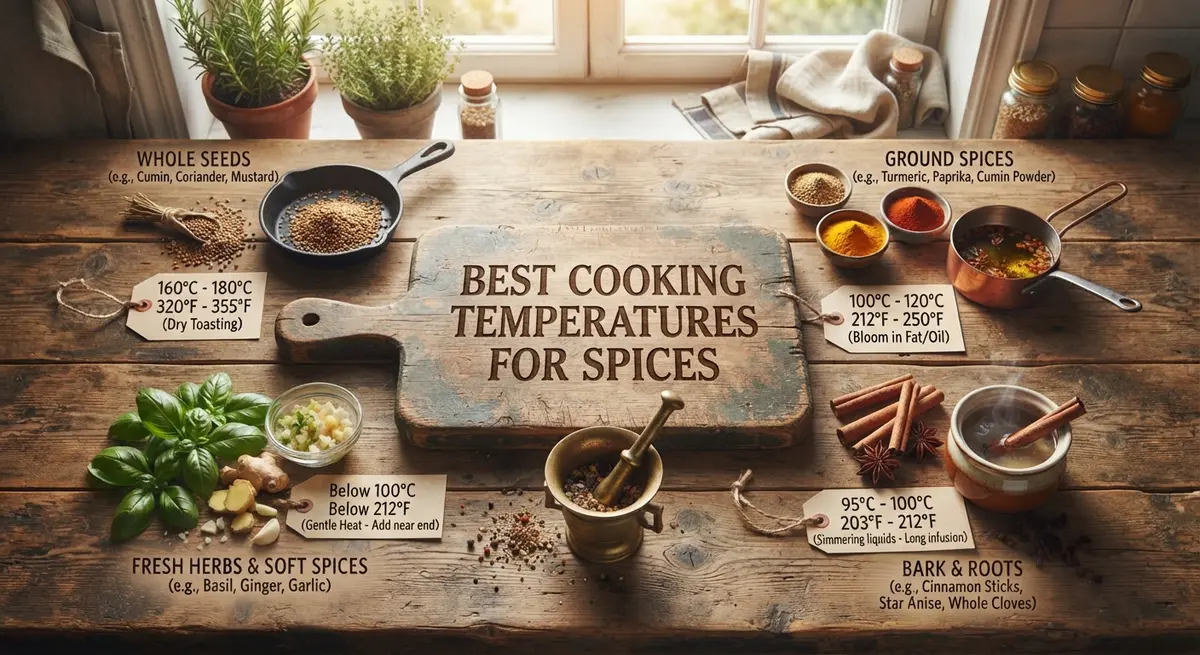
The Best Cooking Temperatures for Every Spice
Heat is a spice's best friend and worst enemy. Learn which spices bloom low, which need a blast, and the burnout marks that ruin a pot.
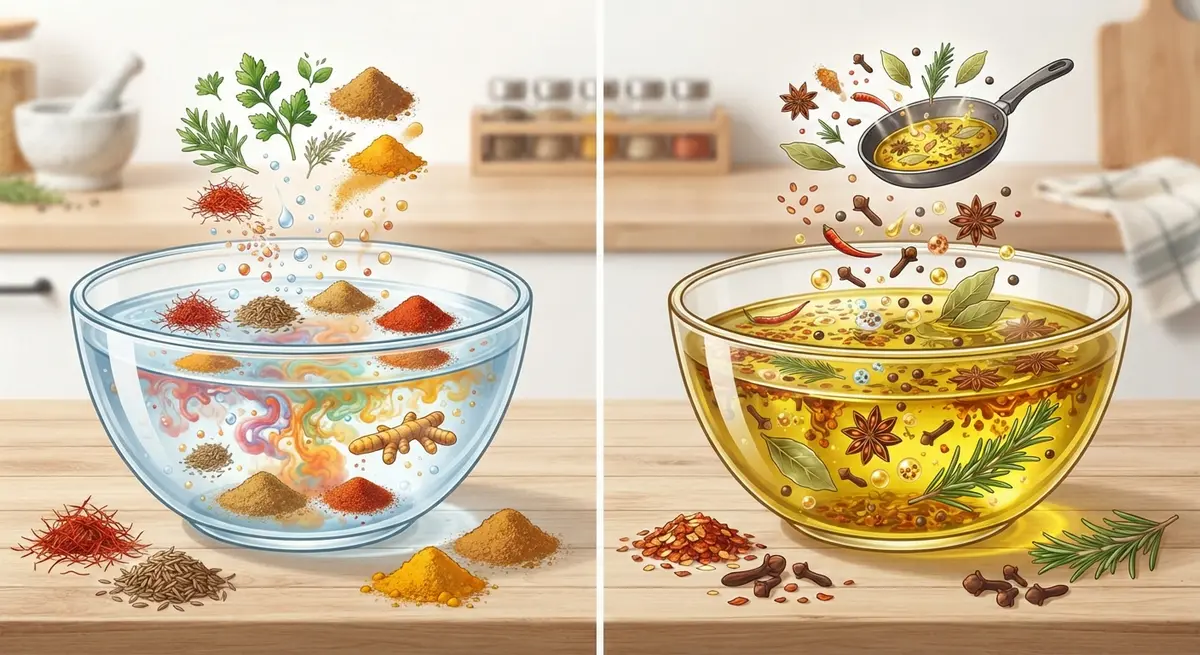
Water-Soluble vs. Fat-Soluble Flavor: How Spice Foods Respond
Flavor rides carriers: water carries some notes, fat carries others. Match the spice to the medium and unlock the flavor it was born with.
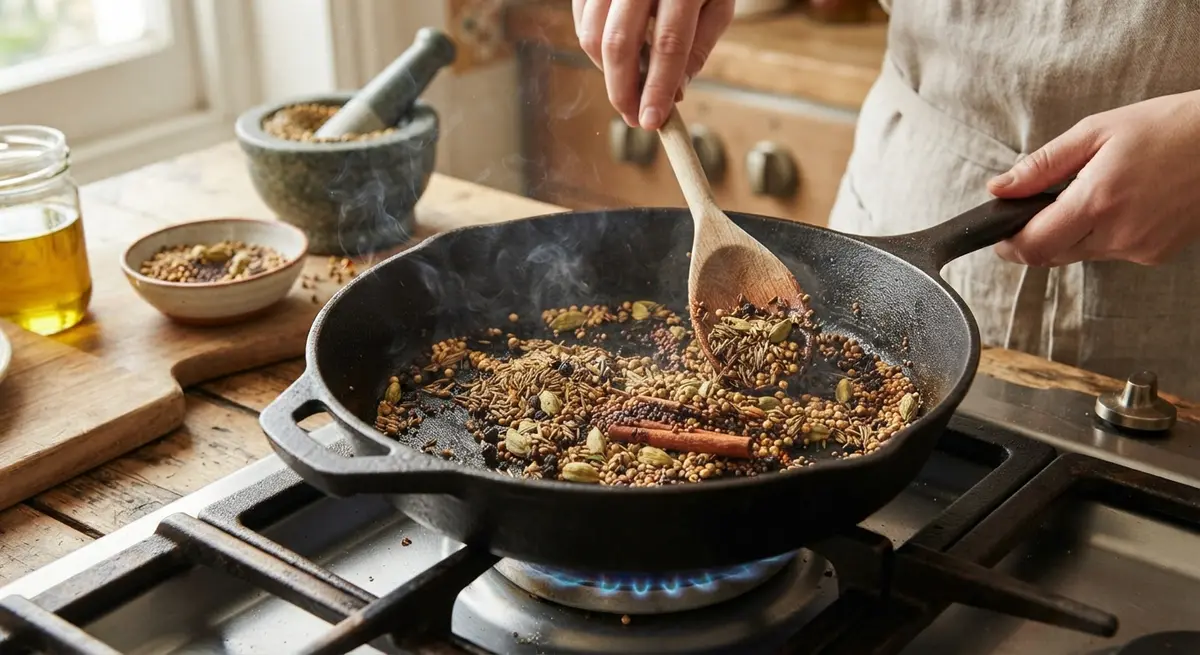
Why You Should Toast Spices Before Cooking, Every Time
Toasting is the fastest way to make any spice taste twice as alive. Dry heat unlocks the oils, sweetens the bite, and perfumes the kitchen.
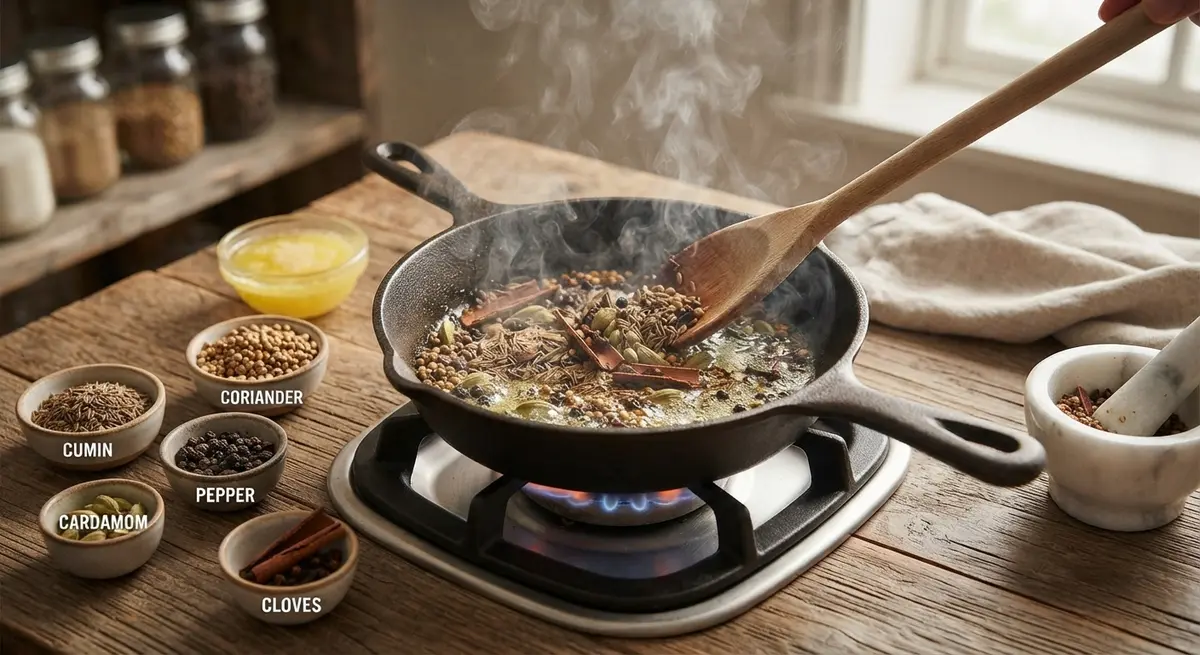
How to Bloom Spices and Why It Changes Everything
Thirty seconds of spice in warm oil unlocks flavor that powders never deliver dry. Blooming is the pro move hiding in plain sight.
About the Authors
This recipe and guide was developed, tested, and approved in our home kitchen and daily life. Jamy is a retired Food Service District Manager and Early Childhood Program Manager who spent his career overseeing multi-site restaurant operations, large-scale culinary production, and daycare menu management. Kaïna brings the ultimate real-world test: making sure it brings ease and joy to our kids on a busy weeknight.
Read more about our professional background and philosophy →