The Best Cooking Temperatures for Every Spice
By the QuiteRecipes team (Jamy & Kaïna)
Heat is a spice's best friend and worst enemy. Learn which spices bloom low, which need a blast, and the burnout marks that ruin a pot.
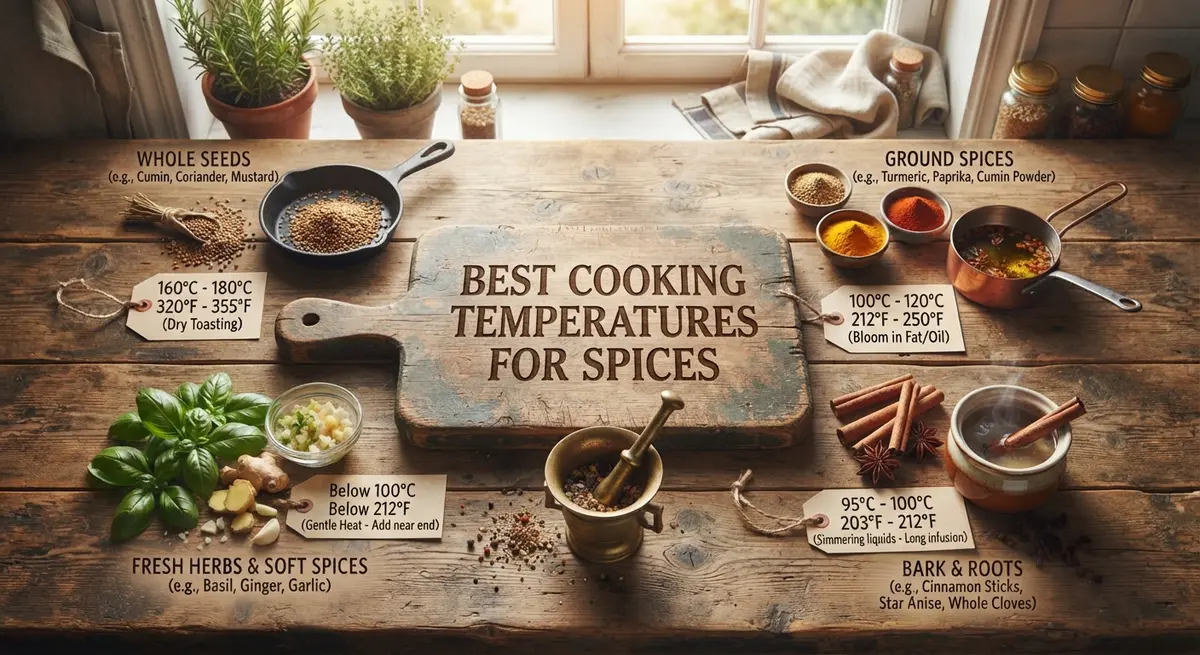
Temperature is the invisible ingredient in every spice, and it cuts both ways. The same cumin that blooms into perfume at gentle heat turns bitter ash under a roaring flame. I burned enough spice to learn the map: whole seeds and ground powder both want a gentle, controlled warmth, while fresh chiles and a few big seeds can shrug off a hotter pan. Matching heat to the spice is the fastest upgrade to a spice shelf that is already fresh. This guide is the temperature map I cook by.
Why It Matters
Heat releases the volatile oils that make spices aromatic, but heat too high burns them, turning sweet warmth into sour bitterness. Ground spices are the most fragile, scorching in seconds, while whole seeds tolerate a little more before their husks protect them. Fresh chiles and hard seeds handle bigger heat. A simply correct start, medium for most, a quick dry-blast for whole seeds, and low for ground, keeps every pinch tasting like itself. Temperature control is half of all flavor control.
The Technique, Step by Step
- Start at medium-low and let the pan warm slowly, never pounce with high heat.
- For whole seeds, a dry pan at medium works, they pop and perfume within a minute.
- For ground spices, use a lower heat or a fat base and move them fast.
- For fresh chiles and sliced peppers, a hotter pan is fine, a little char is their friend.
- For delicate powders like paprika and turmeric, cook them in fat, gently, for color and depth.
- Smell as you go: the moment the scent rises is the exit signal, not the invitation.
Common Mistakes to Avoid
- Cooking ground spice over high heat: one second past gold is a bitter packet.
- Letting paprikas smoke: they brown fast and the dish turns flat and acrid.
- Dropping fresh chiles into boiling oil without a move: they scorch, not char.
- Judging spice-by-stovetop-glass when the pan is thin: thin pans spike hot spots fast.
- Believing a low-flame dish can carry heavy spice: some spice wants a fat bloom and a simmer, not a boil.
Quick Wins & Variations
- Finesse ground spices over medium-low and finish with a high-heat sear later.
- Quick-fry whole seeds in oil for a fiery, short bloom.
- Layer heat: char fresh chiles then lower the pan for the ground spices.
- Sheet-roast a spice-dusted tray and watch the color change from the oven's even heat.
- Keep a deep oil thermometer: around 275 to 300 degrees is a gentle spice bloom.
FAQ / Quick Facts
- What temperature should I use for spices? Low to medium for most, medium for whole seeds, and hot only for fresh chiles and sears.
- Why does my spice taste bitter? Most likely it burned, high heat and one too-long minute do it every time.
- Do fresh chiles need high heat? They tolerate it well and even enjoy a little char for smoky depth.
- What is the fastest way to ruin a spice? High heat, especially for ground paprika, turmeric, and cumin, in a thin pan.
Related Articles
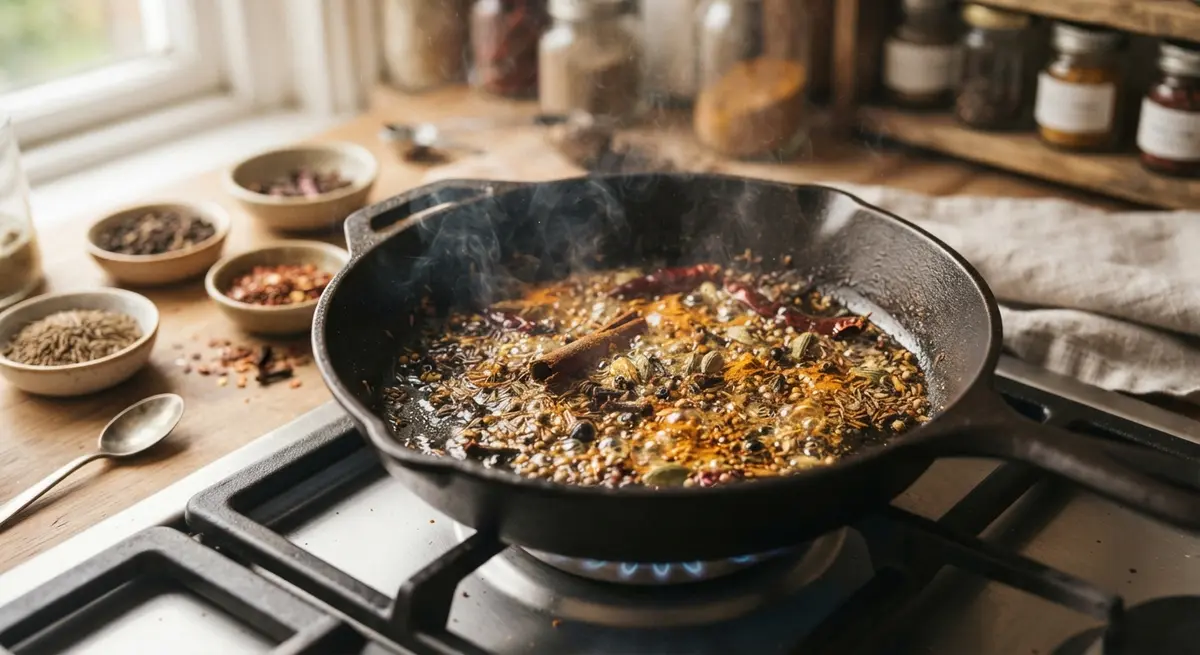
The Science of Blooming Spices: Why Fat Beats Water
Most of a spice's aroma dissolves in fat, not water. That is the science behind blooming, and knowing it turns recipes into instincts.
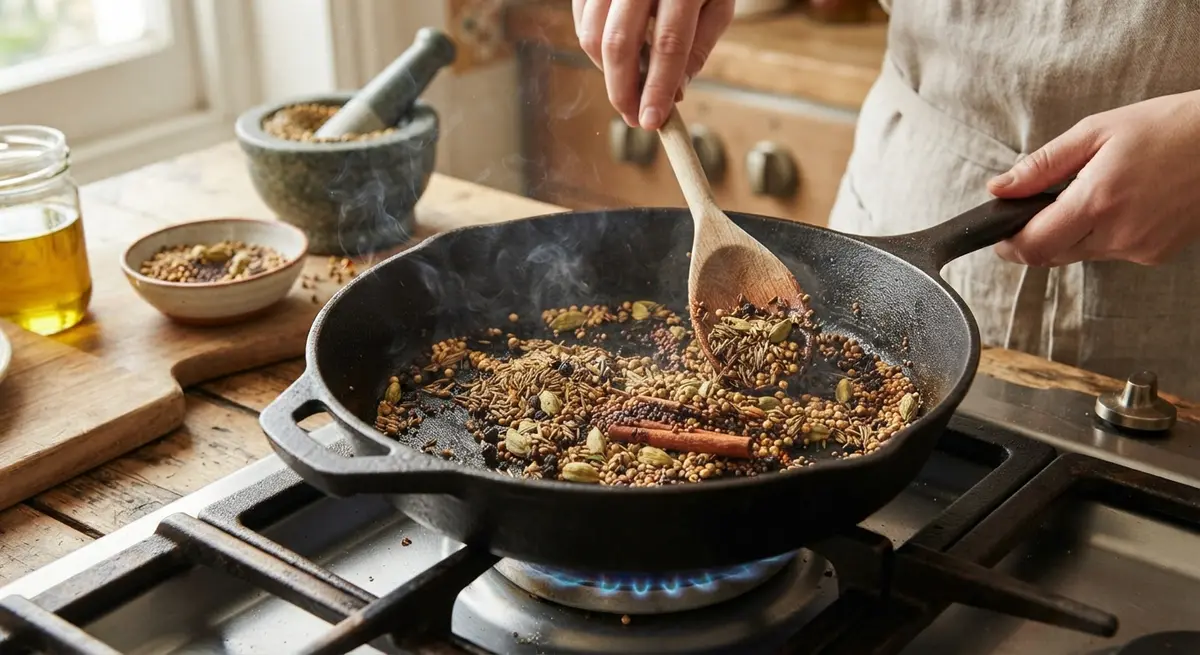
Why You Should Toast Spices Before Cooking, Every Time
Toasting is the fastest way to make any spice taste twice as alive. Dry heat unlocks the oils, sweetens the bite, and perfumes the kitchen.
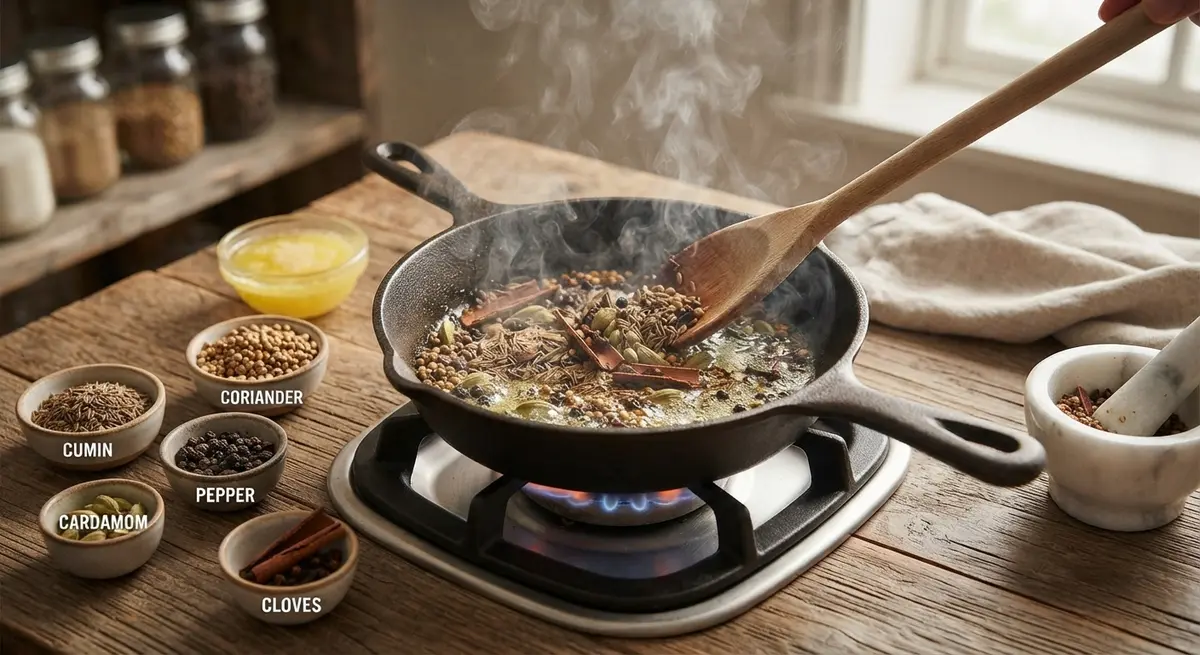
How to Bloom Spices and Why It Changes Everything
Thirty seconds of spice in warm oil unlocks flavor that powders never deliver dry. Blooming is the pro move hiding in plain sight.
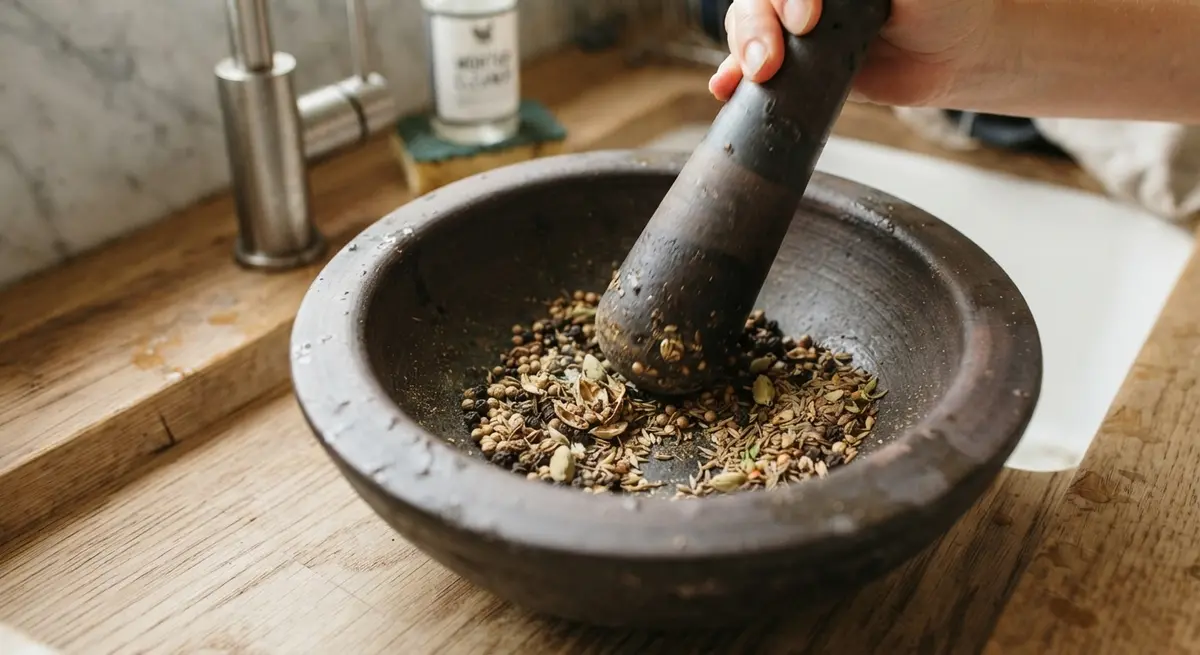
How to Crack Spices Without Making a Mess
Cracking opens a spice's oils without making powder. A few twists, a pan, a towel, and your stews will taste freshly live.
About the Authors
This recipe and guide was developed, tested, and approved in our home kitchen and daily life. Jamy is a retired Food Service District Manager and Early Childhood Program Manager who spent his career overseeing multi-site restaurant operations, large-scale culinary production, and daycare menu management. Kaïna brings the ultimate real-world test: making sure it brings ease and joy to our kids on a busy weeknight.
Read more about our professional background and philosophy →